

Overview
Saudi Arabia is a land of dramatic contrasts, shifting from the cool, mountainous peaks of the south to the endless red dunes of the interior and the coral-rich waters of the Red Sea. For families, the Kingdom offers a blend of education and entertainment that is hard to find elsewhere. The culture is incredibly family-centric; children are welcomed everywhere, from fine-dining restaurants to late-night markets. While the country is conservative, it is rapidly opening up, offering a warm welcome to visitors who respect local customs.
Travel here is an adventure into the unknown for many Western families. You might spend one day exploring centuries-old mud-brick villages and the next visiting Boulevard World, a massive entertainment complex that feels like a global expo. The pace of life is nocturnal, with families often heading out to parks and playgrounds late into the evening to avoid the daytime heat. It is a safe, clean, and fascinating destination that rewards curiosity.
Key Attractions
The crown jewel of Saudi tourism is AlUla, a living museum of human history. Here, families can marvel at Hegra (Mada'in Salih), a UNESCO World Heritage site featuring over 100 preserved tombs carved into sandstone outcrops, similar to Petra but without the crowds. Nearby, the massive natural formation of Elephant Rock (Jabal AlFil) provides the perfect backdrop for a desert sunset picnic that kids will never forget. Don't miss wandering through AlUla Old Town to see how people lived for centuries in this oasis.
In the capital, Riyadh, the scale of entertainment is staggering. Boulevard World allows you to walk through miniature versions of countries like Italy, Japan, and Mexico in a single evening, while Boulevard City offers endless gaming and dining options. For a dose of history, the National Museum of Saudi Arabia provides a captivating, interactive journey through the region's past that engages children with its modern exhibits. Nature-loving families should head to Wadi Hanifa, a beautiful valley running through the city with picnic spots and walking paths.
The Western Region offers a different vibe with the historic port city of Jeddah. The coral architecture of Al-Balad (Historic Jeddah) is magical to explore at night when the lanterns are lit. On the coast, seeing King Fahd's Fountain-the tallest in the world-blast water 300 metres into the air is a guaranteed hit with the kids.
Practical Advice
The best time to visit is between November and March, when temperatures are pleasant (20°C–30°C). Summer (June–September) is fiercely hot, often exceeding 45°C. Visas are now easily available online (e-Visa) for many nationalities. While the strict dress codes of the past have relaxed, modest dress is still expected; men should cover shoulders and knees, and women should wear loose-fitting clothes covering arms and legs. Shops may close briefly during prayer times, though this is becoming less strictly enforced.
Safety
Crime levels in Saudi Arabia are very low, making it physically safe for families walking around cities, even late at night. However, due to regional tensions, you should stay alert and avoid protests or large gatherings. The primary risk for tourists is actually the heat; always carry water and avoid direct sun in the middle of the day. Driving can be aggressive, so exercise caution if renting a car.
Food & Drink
Typical meal times: Lunch is usually eaten late, from 2:00 pm to 4:00 pm. Dinner is a late-night affair, typically served from 9:00 pm to 11:00 pm or even later on weekends.
Typical meal costs: SAR 40–80 (approx. $10–21 USD / €9–19 EUR) for a mid-range meal; SAR 150–300+ (approx. $40–80 USD / €35–70 EUR) for fine dining.
Dietary requirements: All food is Halal. Vegetarian and vegan options are becoming common in major cities like Riyadh and Jeddah, though less so in rural areas where meat is a staple. Nut allergies are generally understood in hotels but exercise caution in local eateries.
Family-friendly dining: Children are treated like royalty. Most restaurants have "family sections" (private booths), which can be great for containing energetic toddlers. Highchairs are widely available.
Signature dishes:
- Kabsa – The national dish of spiced rice and meat (usually chicken or lamb), often served on a large communal platter for the whole family to share.
- Jareesh – A comforting, porridge-like dish made from crushed wheat and yoghurt, mild enough for young children to enjoy.
- Mutabbaq – A fried, stuffed pancake often filled with minced meat, eggs, and leeks, cut into easy-to-hold squares perfect for snacking.
- Luqaimat – Sweet, deep-fried dough balls drizzled with date syrup and sesame seeds-a guaranteed favourite for anyone with a sweet tooth.

A family of four can expect to spend around SAR 1,000–1,500 (approx. $265–400 USD / €245–370 EUR) per day. This includes staying in mid-range hotels, car rental, and a mix of local dining and attraction entry fees. While local food and fuel are cheap, accommodation in <a data-region-id="6835689309485664525">AlUla</a> and <a data-region-id="-1275504045975734607">Riyadh</a> can be pricey.
Age Suitability





Did you know? Saudi Arabia welcomes approximately 29.7 million international visitors per year. Most visitors come from Middle East.
Explore Regions
3 Regions
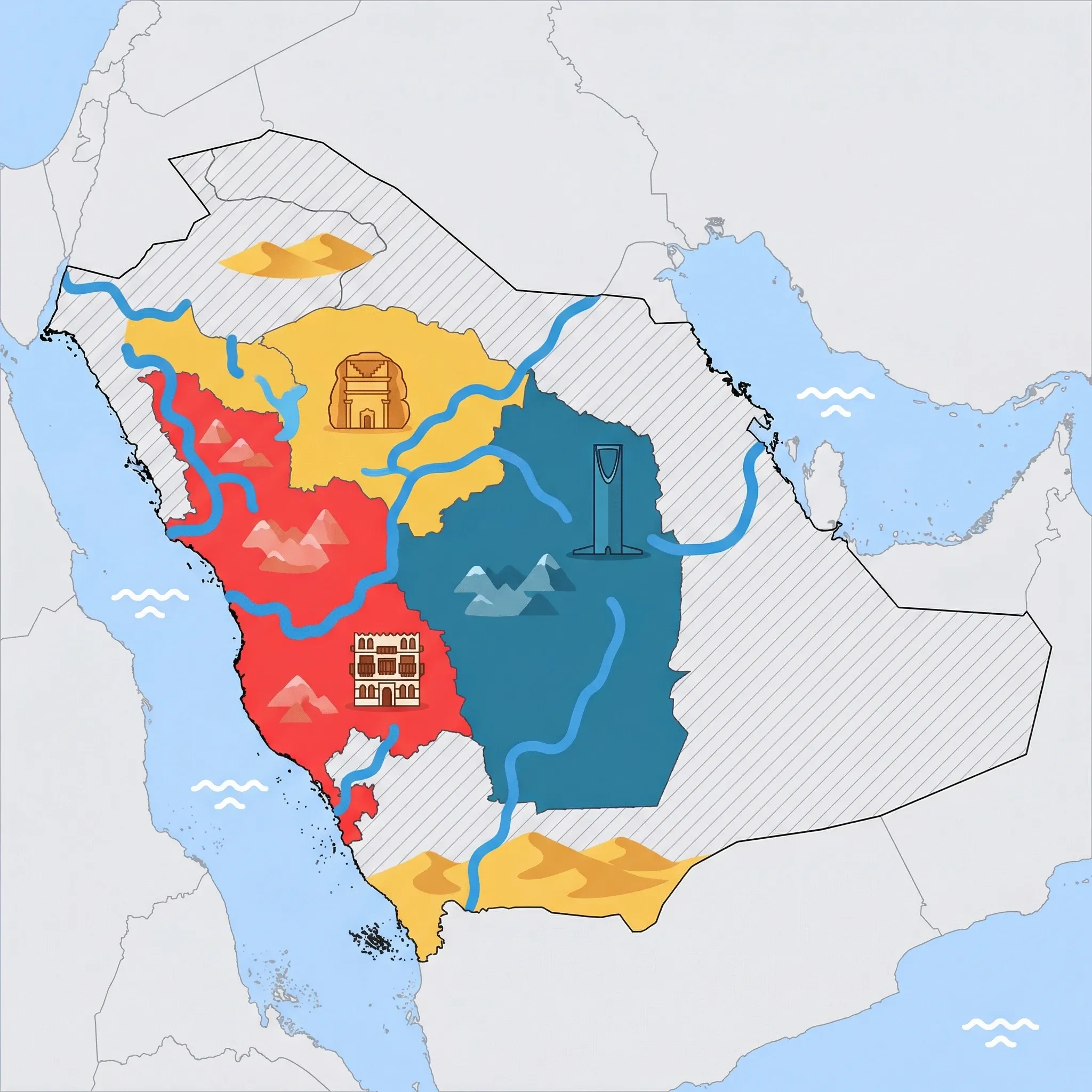
AlUla (ancient sites)
Time travel through open-air museums and desert starlight 🌌🐪
Riyadh
Where futuristic skylines meet Arabian heritage 🎢🏙️
Western Region (Jeddah, Mecca & Medina)
Red Sea coral reefs and the cradle of Islamic history 🕌🌊
Click on a region marker to explore details. Use the dropdown to color regions by activity suitability.

Getting There & Around
Getting There
- By Air – The main gateways are King Abdulaziz International Airport (JED) in Jeddah and King Khalid International Airport (RUH) in Riyadh. Both are well-connected to major global hubs.
- By Land – Families driving from Bahrain can cross the King Fahd Causeway. It is a busy border crossing, so allow extra time on weekends.
- Entry Requirements – Most tourists from North America, Europe, and Oceania can obtain an eVisa online. Check your government website for the latest visa requirements, or use the IATA Travel Centre entry-requirements checker.
Getting Around
- Car Hire – The most flexible way to explore, especially for reaching remote sites in AlUla. Roads are generally excellent, but local driving styles can be aggressive. Fuel is very affordable.
- Trains – The high-speed Haramain Railway is a fantastic, modern option connecting Jeddah with the holy cities (note: non-Muslims can enter Medina but not Mecca). The Riyadh-Dammam line is also useful for crossing the desert.
- Ride-hailing – Uber and Careem are widely available in cities like Riyadh and Jeddah. They are reliable, safe, and overcome the lack of comprehensive metro systems in some areas.
Official Links

Packing List
You will frequently remove shoes at traditional restaurants, carpets, and when visiting local homes.
The desert air is extremely dry (often <10% humidity), which can cause nosebleeds and discomfort for kids.
Midday heat can be intense even in shoulder seasons; a water-misting fan helps cool children down.
While not mandatory for tourists, having a loose outer layer helps women blend in and feel more comfortable in traditional areas.
Saudi Arabia uses the British-style three-pin plug (Type G), not the European or American types.

Activities & Best Times

Adventure & Nature
ExcellentHiking, wildlife, outdoor exploration, ecotourism
World-class sandstone landscapes and the lush AlUla Oasis provide unique desert immersion; winter months are optimal for hiking and exploration while summer temperatures exceeding 40°C make outdoor activity unsafe.
The dramatic Edge of the World escarpment and Wadi Hanifa offer high-quality desert trekking and geological exploration. Conditions are optimal during the cooler winter, whereas extreme desert heat from May to September makes outdoor nature exploration dangerous for families.
While Al-Wa'bah crater and Al Hada mountains are spectacular, 'excellent' should be reserved for globally top-tier adventure destinations (New Zealand, Patagonia, Alps). These are nationally outstanding but not internationally premiere adventure destinations. Downgrade to very_good maintains high rating while applying international calibration.

City & Cultural
ExcellentUrban tourism, museums, historical sites, architecture
Jeddah's UNESCO-listed Al-Balad district and the profound historical significance of Makkah and Medina offer an unparalleled cultural immersion into Islamic heritage. The pleasant winter climate is ideal for exploring the atmospheric old town and vibrant contemporary art galleries like Hayy Jameel.
Riyadh offers a sophisticated blend of UNESCO heritage at At-Turaif and world-class museums, appealing to discerning travelers. The city's cultural life is most vibrant and walkable in the winter, as extreme summer temperatures effectively halt outdoor heritage tourism.
The UNESCO site of Hegra and the iconic Maraya offer unparalleled Nabataean heritage and world-class contemporary art; the expansive outdoor sites are best visited in mild winter weather.

Sports & Active
Very GoodSport tourism, fitness activities, active recreation
Purpose-built trails in Wadi Hanifa and the Diplomatic Quarter provide excellent cycling and hiking infrastructure for active families. These activities are highly seasonal, as physical exertion becomes untenable once temperatures exceed 30°C in the spring.
Purpose-built infrastructure including bike parks, skate parks, and adventure hubs provide world-class facilities for active families; activity is peak in winter, as summer heat renders facilities unusable.
Historic camel routes and hiking trails are culturally significant but don't constitute 'very_good' sports/active infrastructure by international standards. The rating seems to conflate cultural/historical interest with sports appeal. Good is appropriate for available hiking and cycling opportunities.

Educational & Exploratory
GoodLearning experiences, scientific sites, historical education
Specialized facilities like Mishkat and the King Salman Science Oasis offer destination-level discovery experiences for children. While these are climate-controlled indoor venues, the extreme heat of the mid-summer months significantly deters international family travel to the region.
Purpose-built facilities like the Makkah Clock Tower Museum and Fakieh Aquarium provide destination-level educational insights into Islamic science and marine biology. While these are mostly indoor, they are best visited during the peak tourism window when city infrastructure is fully operational and accessible.
The historic Hejaz Railway Museum and Manara AlUla provide focused educational insights into regional history and science; these facilities are best accessed during the peak winter tourism season.

Road Trips & Scenic
GoodScenic drives, countryside tours, route-based travel
High-quality infrastructure facilitates scenic drives to the Edge of the World and the Najd heritage routes. These trips are best enjoyed when daytime temperatures allow for comfortable stops and photography, which is not feasible during the intense heat of the plateau summer.
The dramatic Al Hada Mountain Road and the Red Sea Coastal Highway offer scenic driving experiences that connect coastal plains to high-altitude plateaus. Driving is safest and most visually rewarding during the winter months when visibility is high and mountain temperatures are refreshing.
Spectacular scenic drives through the Ashar Valley and to the Harrat viewpoint feature exceptional desert vistas and high-quality roads; peak season offers the best conditions for outdoor photo stops.

Beach & Sea
GoodBeach resorts, marine activities: diving, snorkelling, kite surfing, wind surfing, sailing
Theme Park & Entertainment
MarginalAmusement parks, family entertainment venues
Zero theme parks or amusement parks listed in database. Boulevard complexes are entertainment districts, not theme parks. Without evidence of actual theme parks comparable to international standards (Disney, Universal, Europa-Park), this rating is inflated. Downgrade to marginal pending addition of actual theme park attractions.
Zero theme parks or water parks listed in database. Claims of 'several established family entertainment centers' are not substantiated. Downgrade to marginal until specific theme park attractions are added.

Festivals & Seasonal
MarginalEvents, celebrations, seasonal attractions
The Red Sea International Film Festival in December has become a major global cultural event, drawing sophisticated international crowds to Jeddah. While Hajj is a massive event, its lunar-based timing and specific entry requirements make it a specialized religious pilgrimage rather than a general seasonal festival.
Internationally recognized events like Winter at Tantora and Desert X define the high-end seasonal appeal; these luxury cultural celebrations are strictly limited to the cooler winter months.

Relaxation & Wellness
MarginalSpa retreats, wellness centers, peaceful getaways

Public Holidays & Calendar Next 12 months
Public holidays, festivals, cultural celebrations, and seasonal natural phenomena coming up in Saudi Arabia over the next 12 months.
Loading holidays and events...

Climate & Weather
AlUla (ancient sites)
Show Details
| Month | Temp °C | Rain | Humidity |
|---|
Riyadh
Show Details
| Month | Temp °C | Rain | Humidity |
|---|
Western Region (Jeddah, Mecca & Medina)
Show Details
| Month | Temp °C | Rain | Humidity |
|---|

Travel Advisory
Due to a significant regional military escalation and the persistent threat of drone and missile attacks, all major agencies currently recommend reconsidering the need for travel to Saudi Arabia. Security conditions are volatile and may change without notice.
Safety Topics
Traveller Advice (4 groups)

Same-sex relations and transgender identity are illegal and can lead to severe legal penalties, including imprisonment. Travellers should exercise extreme discretion and be aware of the lack of legal protections.

Those attending Hajj or Umrah must follow specific health and safety regulations, including mandatory vaccinations and permit requirements. Crowds at holy sites present significant safety and health risks.
Strict regulations govern photography and social media posts. Critiquing the government or capturing images of sensitive buildings can lead to detention or exit bans.

Visitors should respect local customs by dressing modestly in public. While restrictions have eased, social norms remain conservative, and it is advisable to be aware of gender-specific expectations in traditional areas.
Agency Summaries
The safety rating has been raised due to a volatile regional security situation. Citizens are advised to shelter in place in major cities like Riyadh and Jeddah during security incidents and to avoid proximity to military or energy infrastructure which may be targeted.
Irish citizens are advised to avoid non-essential travel following regional military escalations and airspace disruptions. Those currently in the country should monitor local media and be prepared to shelter in place if instructed by authorities.
Guidance recommends against all but essential travel to the Riyadh and Eastern Provinces due to frequent missile and drone activity. Regional escalation has increased security risks across the country. A total travel ban is in place for areas within 10km of the Yemen border.
Increased caution is required nationwide, with a recommendation to avoid non-essential travel due to the deteriorating regional security situation. There is a high risk of cross-border attacks and terrorism, particularly near the southern border.
Officials advise against any non-essential trips to the country due to heightened regional tensions, the potential for airspace closures, and the threat of falling debris from intercepted missiles. Travel to the Yemen border region and Al Qatif governorate should be avoided entirely due to active conflict and security operations.
Travellers are urged to reconsider visiting due to the risks of armed conflict, terrorism, and strict local laws concerning social media. The departure of non-emergency government personnel has been authorized. Specific areas near the Yemen border and Qatif are under a Do Not Travel warning due to drone attacks and civil unrest.
Information is provided for general guidance only and does not constitute travel, safety, medical, or legal advice. Conditions may change. Users are responsible for independently verifying information before travel.