
AlUla (ancient sites)
Time travel through open-air museums and desert starlight 🌌🐪
Click a region to explore
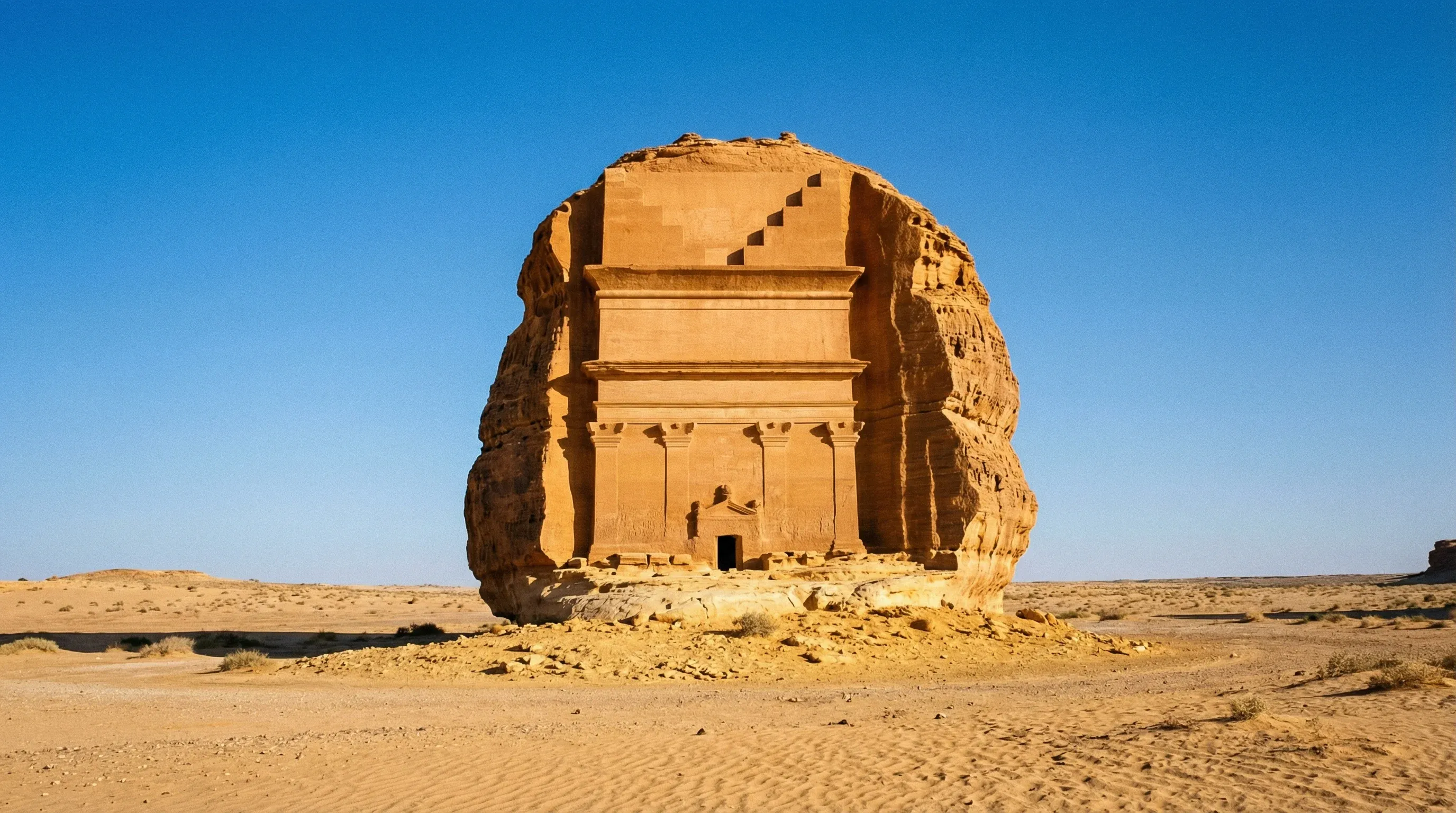
AlUla transforms the concept of a history lesson into a cinematic adventure that captures the imagination of children and adults alike. Hidden for centuries in the canyons of north-west Saudi Arabia, this region is an open-air library of inscriptions, tombs, and natural sculptures. For families, the sheer scale of the landscape—giant sandstone monoliths rising from golden sands—provides a stunning backdrop for exploration. Unlike the bustle of major cities, AlUla offers a serene, almost mystical atmosphere where the silence of the desert is broken only by the wind and stories of ancient caravans.
The climate here shapes the experience; the days are illuminated by a piercingly bright sun that turns the rocks fiery orange, while nights are famously dark, offering some of the best stargazing in the Middle East. Culturally, it is a place of deep heritage, where visitors are welcomed with traditional Arabic coffee and dates. Families can expect a mix of raw adventure—hiking through canyons or riding camels—and high-end comfort, as the region has developed a sophisticated tourism infrastructure that respects its ancient roots.
Key Attractions
The crown jewel is undoubtedly Hegra (Mada'in Salih), Saudi Arabia’s first UNESCO World Heritage site. Kids are often fascinated by the monumental tombs carved into solitary rocks, especially the lonely Qasr al-Farid. Tours are well-organized with storytellers who bring the Nabataean civilization to life. Just a short drive away is Elephant Rock (Jabal AlFil), a massive natural rock formation that looks exactly like an elephant; the area has sunk-in seating in the sand, making it a perfect, relaxed evening spot for families to enjoy hot cocoa under the stars.
For a taste of local life, AlUla Old Town offers a maze of over 900 mudbrick houses and a restored market street where children can see artisans at work. It is a pedestrian-friendly area safe for wandering. Meanwhile, the Maraya concert hall is a visual marvel—the world's largest mirrored building reflects the surrounding cliffs, creating mind-bending photo opportunities that teenagers particularly enjoy.
Practical Advice
The best time to visit is between October and April when daytime temperatures are pleasant (15°C to 25°C). Summers are intensely hot. Booking tours for Hegra in advance is essential as access is controlled. Families should note that accommodation here leans towards luxury and high-end camping; budget options are scarce.
Food & Drink
Typical meal times: Lunch is typically served from 1:00 pm to 3:00 pm, while dinner is a late affair, usually starting from 8:00 pm to 10:00 pm, though tourist areas serve earlier.
Typical meal costs: Dining in AlUla is generally upscale. A main course in a resort or Old Town restaurant costs SAR 80–150 (approx. $21–40 USD / €19–37 EUR). Casual cafes offer snacks for SAR 30–50 (approx. $8–13 USD / €7–12 EUR).
Dietary requirements: High-end resorts cater excellently to allergies, vegan, and gluten-free needs. Traditional menus rely heavily on meat and wheat, but rice dishes and salads are always available.
Signature dishes:
- Kabsa – The national dish of spiced rice and meat (chicken or lamb), often garnished with toasted nuts and raisins.
- Jareesh – Crushed wheat cooked with yogurt and meat, creating a creamy, porridge-like comfort food loved by children.
- AlUla Dates – Specifically the Barni variety, which are locally grown and served everywhere as a symbol of hospitality.
Why this score?
The region offers a rugged desert landscape characterized by sandstone canyons, volcanic plateaus, and ancient rock art that requires active exploration. Families can engage in guided 4x4 tours, rock climbing, and hiking through the oasis or the Ashar Valley's dramatic terrain. While luxury infrastructure is growing, the primary appeal remains the stark, off-the-beaten-path feel of the Arabian desert wilderness.
Why this score?
Medical facilities in AlUla are functional but relatively basic compared to the Kingdom's major urban centers, primarily consisting of a general hospital and local clinics. While luxury resorts offer high-standard initial care and emergency services are available, specialized treatments or serious medical emergencies usually require transport to Medina or Jeddah. English-speaking staff are present in tourist-facing medical areas, but the overall capacity remains limited for a remote region if complex needs arise.
Why this score?
While globally recognized as a luxury heritage destination with the UNESCO site of Hegra, AlUla remains a niche destination with lower visitor volumes than the major cities. It is a high-end, emerging site that draws a mix of domestic weekenders and international luxury travelers interested in archaeology. The government's significant investment is rapidly increasing its profile, though it has not yet reached the mass-market status of global anchors like Bali or Tuscany.

AlUla is positioning itself as a luxury destination. Accommodation is significantly more expensive than the Saudi average, with resorts often starting at SAR 1,500–2,500 (approx. $400–665 USD / €370–615 EUR) per night. Entry to <a data-attraction-id="31729">Hegra (Mada'in Salih)</a> requires a ticket, typically around SAR 95 (approx. $25 USD / €23 EUR) per adult.

Getting Here & Around
Getting Here
- Airports – AlUla International Airport (ULH) receives direct flights from Riyadh, Jeddah, and Dubai. It is a small, boutique airport approx. 35 mins from the Old Town.
- Driving – It is a long drive from major cities (approx. 3.5 hours from Medina or 7 hours from Jeddah). The roads are well-paved but remote.
Getting Around
- Car – Rental cars are available at the airport and are the most flexible way to explore. Navigation is easy as there is essentially one main road running through the valley.
- Ride Hailing – Apps like Uber and Kaiian operate here, but availability can be spotty late at night or in remote corners.
- Shuttle Bus – A AlUla Old Town shuttle often connects the Winter Park visitor centre to key sites like Elephant Rock (Jabal AlFil) during the peak season.
Nearby Airports (1 airport)
Prince Abdul Majeed bin Abdulaziz Airport
ULHAl Ula
View full flight map for Saudi Arabia →
Official Links

Packing List
The desert air is extremely dry and can cause nosebleeds in children unaccustomed to the climate.
Fine desert dust gets everywhere; protect phones and cameras when not in use.
The sand gets surprisingly hot and rocky trails require toe protection while letting feet breathe.
Desert temperatures drop sharply at night, even after hot days.
You will frequently remove shoes at traditional restaurants, carpets, and when visiting local homes.
The desert air is extremely dry (often <10% humidity), which can cause nosebleeds and discomfort for kids.
Midday heat can be intense even in shoulder seasons; a water-misting fan helps cool children down.
While not mandatory for tourists, having a loose outer layer helps women blend in and feel more comfortable in traditional areas.
Saudi Arabia uses the British-style three-pin plug (Type G), not the European or American types.

Activities & Best Times

Hiking, wildlife, outdoor exploration, ecotourism
World-class sandstone landscapes and the lush AlUla Oasis provide unique desert immersion; winter months are optimal for hiking and exploration while summer temperatures exceeding 40°C make outdoor activity unsafe.

Urban tourism, museums, historical sites, architecture
The UNESCO site of Hegra and the iconic Maraya offer unparalleled Nabataean heritage and world-class contemporary art; the expansive outdoor sites are best visited in mild winter weather.

Sport tourism, fitness activities, active recreation
Purpose-built infrastructure including bike parks, skate parks, and adventure hubs provide world-class facilities for active families; activity is peak in winter, as summer heat renders facilities unusable.

Scenic drives, countryside tours, route-based travel
Spectacular scenic drives through the Ashar Valley and to the Harrat viewpoint feature exceptional desert vistas and high-quality roads; peak season offers the best conditions for outdoor photo stops.

Learning experiences, scientific sites, historical education
The historic Hejaz Railway Museum and Manara AlUla provide focused educational insights into regional history and science; these facilities are best accessed during the peak winter tourism season.

Events, celebrations, seasonal attractions
Internationally recognized events like Winter at Tantora and Desert X define the high-end seasonal appeal; these luxury cultural celebrations are strictly limited to the cooler winter months.




Public Holidays & Calendar Next 12 months
Public holidays, festivals, cultural celebrations, and seasonal natural phenomena coming up in AlUla (ancient sites) over the next 12 months.
Loading holidays and events...

Travel Advisory
Due to a significant regional military escalation and the persistent threat of drone and missile attacks, all major agencies currently recommend reconsidering the need for travel to Saudi Arabia. Security conditions are volatile and may change without notice.
Safety Topics
Traveller Advice (4 groups)

Same-sex relations and transgender identity are illegal and can lead to severe legal penalties, including imprisonment. Travellers should exercise extreme discretion and be aware of the lack of legal protections.

Those attending Hajj or Umrah must follow specific health and safety regulations, including mandatory vaccinations and permit requirements. Crowds at holy sites present significant safety and health risks.

Strict regulations govern photography and social media posts. Critiquing the government or capturing images of sensitive buildings can lead to detention or exit bans.

Visitors should respect local customs by dressing modestly in public. While restrictions have eased, social norms remain conservative, and it is advisable to be aware of gender-specific expectations in traditional areas.
Agency Summaries
The safety rating has been raised due to a volatile regional security situation. Citizens are advised to shelter in place in major cities like Riyadh and Jeddah during security incidents and to avoid proximity to military or energy infrastructure which may be targeted.
Irish citizens are advised to avoid non-essential travel following regional military escalations and airspace disruptions. Those currently in the country should monitor local media and be prepared to shelter in place if instructed by authorities.
Guidance recommends against all but essential travel to the Riyadh and Eastern Provinces due to frequent missile and drone activity. Regional escalation has increased security risks across the country. A total travel ban is in place for areas within 10km of the Yemen border.
Increased caution is required nationwide, with a recommendation to avoid non-essential travel due to the deteriorating regional security situation. There is a high risk of cross-border attacks and terrorism, particularly near the southern border.
Officials advise against any non-essential trips to the country due to heightened regional tensions, the potential for airspace closures, and the threat of falling debris from intercepted missiles. Travel to the Yemen border region and Al Qatif governorate should be avoided entirely due to active conflict and security operations.
Travellers are urged to reconsider visiting due to the risks of armed conflict, terrorism, and strict local laws concerning social media. The departure of non-emergency government personnel has been authorized. Specific areas near the Yemen border and Qatif are under a Do Not Travel warning due to drone attacks and civil unrest.
Information is provided for general guidance only and does not constitute travel, safety, medical, or legal advice. Conditions may change. Users are responsible for independently verifying information before travel.