
Western Region (Jeddah, Mecca & Medina)
Red Sea coral reefs and the cradle of Islamic history 🕌🌊
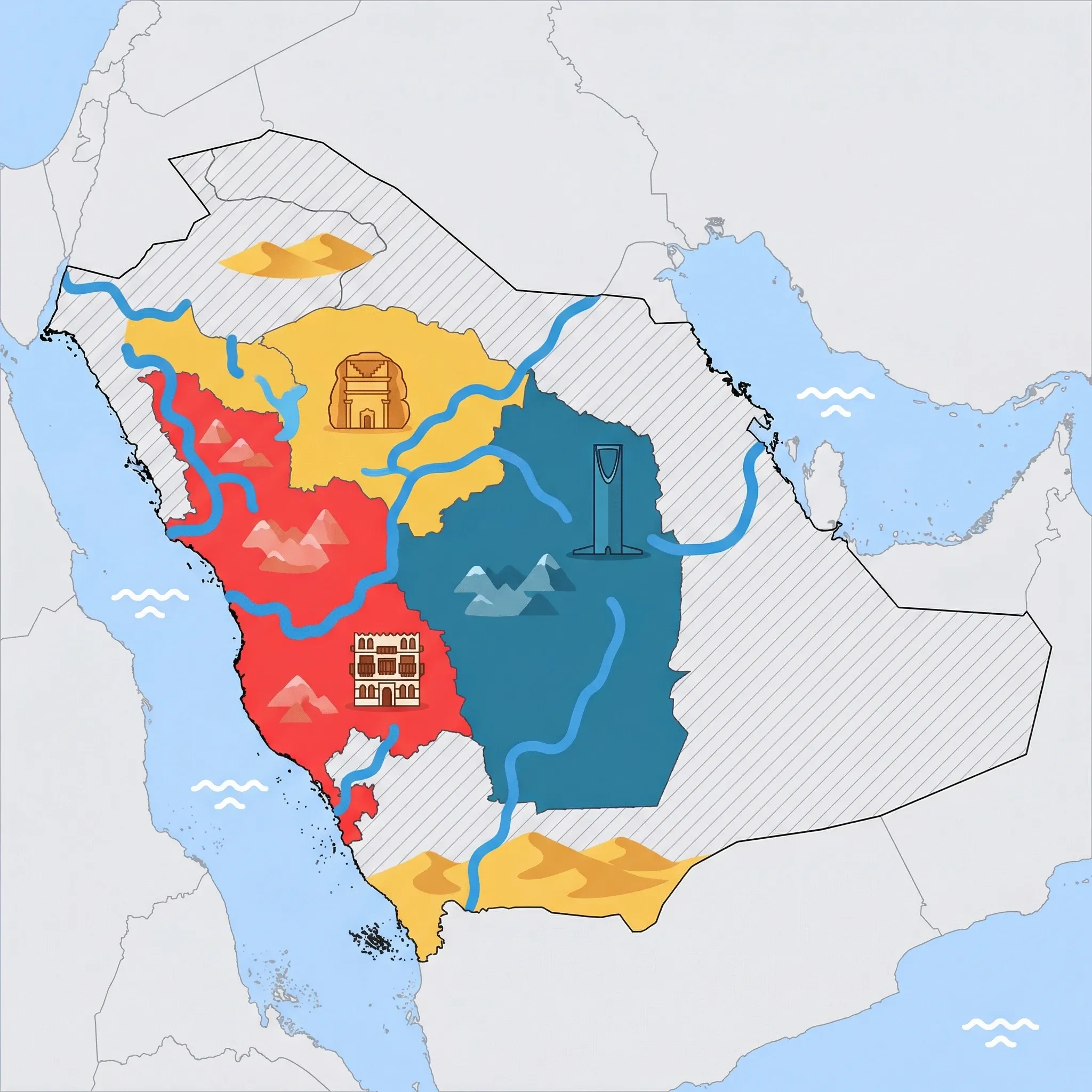
Click a region to explore
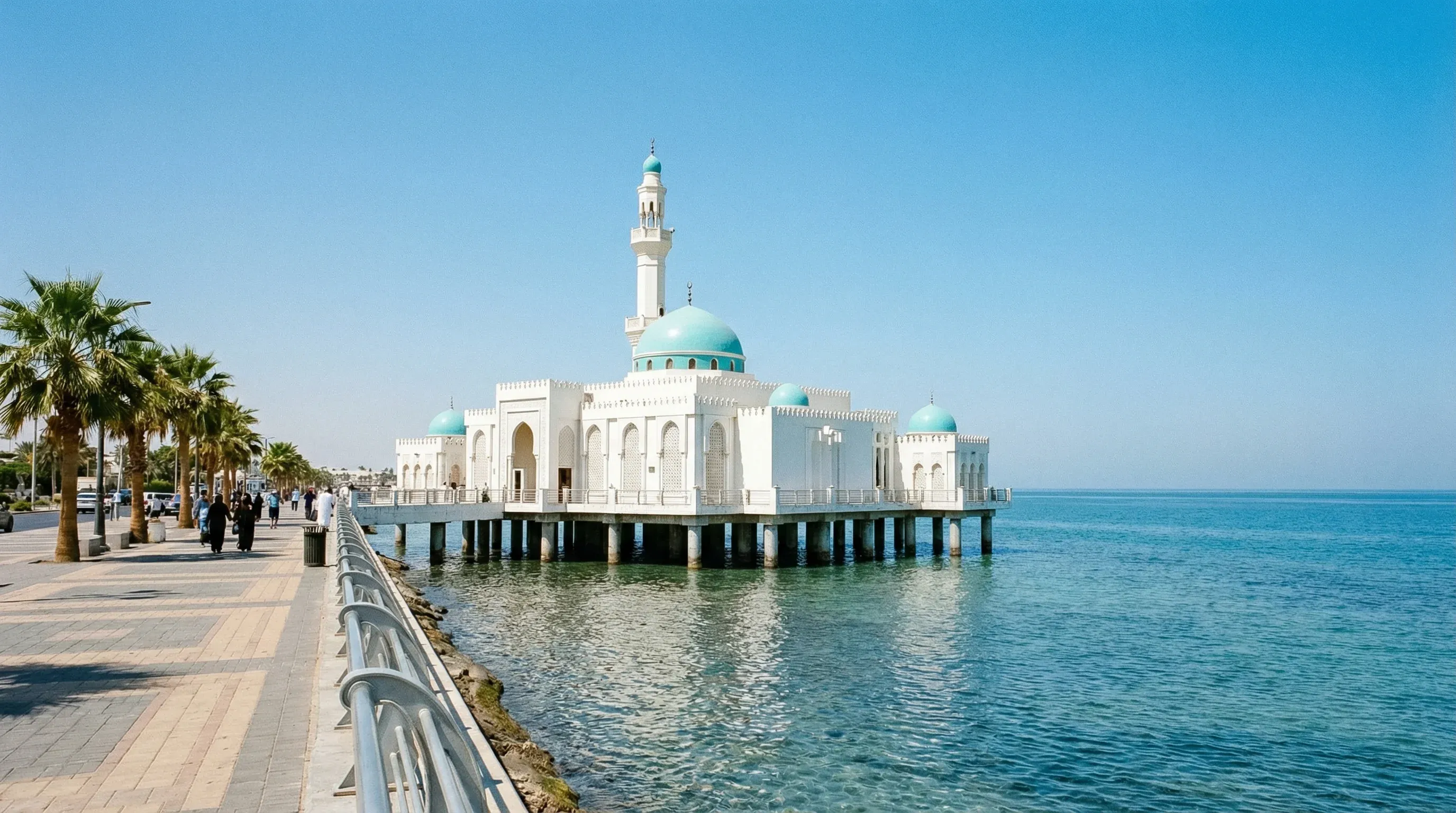
The Western Region (Hejaz) offers a distinct flavor compared to the rest of Saudi Arabia; it is more humid, more diverse, and deeply historical. For international tourists, Jeddah is the primary hub—a bustling port city known for its liberal atmosphere, artistic sculpture-lined waterfronts, and world-class diving. The air here is thick with the scent of the sea and spices, reflecting centuries of trade. Families will find the Corniche—a 30km coastal resort area—perfect for evening strolls, with playgrounds and fountains lighting up the night.
Culturally, this region is the gateway to the Holy Cities. Important note: Mecca is strictly forbidden to non-Muslims. Medina is largely open to visitors, though the immediate vicinity of the Prophet's Mosque is restricted to Muslims. For Muslim families, visiting these sites is often the trip of a lifetime. For non-Muslim families, Jeddah offers rich history in its UNESCO-listed old town, where houses are built from Red Sea coral, standing as a testament to pre-modern engineering. The region is also the culinary capital, offering the freshest seafood and a melting pot of cuisines from across the Islamic world.
Key Attractions
In Jeddah, Al-Balad (Historic Jeddah) is unmissable. Its leaning, multi-story coral houses with intricate wooden latticework (roshan) are fascinating to explore; many have been converted into museums or cafes. On the waterfront, King Fahd's Fountain jets water over 300 meters into the air—visible from across the city, it is a sight kids rarely forget.
For Muslim families performing Umrah or visiting Medina, Al-Masjid an-Nabawi (The Prophet's Mosque) is the spiritual center, with its giant retractable umbrellas providing shade in the courtyards. Nearby, Mount Uhud offers a significant history lesson regarding early Islamic battles, with climbable mounds that give a view over the city. While Hajj (The Great Pilgrimage) is a specific annual event, the sites associated with it, like Jabal al-Nour (the Mountain of Light), are accessible year-round for those physically able to make the steep hike.
Practical Advice
Jeddah is warm year-round and very humid. The best time to visit is November to March. During Hajj (dates vary lunar-ly), the region becomes extremely crowded and hotel prices skyrocket; general tourists should avoid this period unless participating. Jeddah is generally more relaxed regarding dress codes than other regions, but modesty is still required.
Food & Drink
Typical meal times: Lunch 1:30 pm to 3:30 pm. Dinner is very late, often 9:00 pm to midnight, with street food active until 2:00 am.
Typical meal costs: Seafood feasts are a treat here; expect to pay SAR 100–200 (approx. $26–53 USD / €24–49 EUR) per person. Standard meals are SAR 40–70 (approx. $10–18 USD / €10–17 EUR).
Dietary requirements: Seafood is king, so pescatarians will be happy. Vegetarian options are available but check for meat stocks in rice dishes.
Signature dishes:
- Sayadieh – A fisherman’s dish of white fish cooked with caramelized onion rice, giving it a brown color and sweet-savory flavor.
- Saleeg – A creamy, risotto-like dish made with white rice and milk, usually served with chicken; very mild and kid-friendly.
- Al Baik – Not a traditional dish but a cultural phenomenon; this Jeddah-born fried chicken chain is a must-try "pilgrimage" for foodies.
Why this score?
The region offers a balanced mix of adventure and development, from world-class diving and snorkeling in the Red Sea to the high-altitude mountains of Taif. Families can explore the dramatic Al-Wa'bah volcanic crater or take cable cars up the Sarawat Mountains, providing moderate physical activity. While many areas are highly developed, the natural geography of the coast and the interior mountains provides significant outdoor appeal.
Why this score?
Medical services in the Western Region are excellent and highly experienced in managing massive numbers of international visitors, particularly in Mecca and Jeddah. The hospitals are modern, well-staffed with multilingual professionals, and integrated into a robust emergency response network. While Riyadh is the primary specialist hub, the Western Region's facilities are world-class and routinely cater to a global demographic with diverse healthcare needs.
Why this score?
This region is a top-tier international destination, driven by the millions of pilgrims who visit the Holy Cities of Mecca and Medina for Hajj and Umrah annually. Jeddah serves as the cosmopolitan gateway, offering a popular Red Sea corniche and the historic Al-Balad district to a massive global audience. The volume of international arrivals here is among the highest in the world, supported by massive airport and rail infrastructure.

Jeddah is generally good value compared to Riyadh. A family suite near the Corniche might cost SAR 400–700 (approx. $105–185 USD / €98–172 EUR). However, in Mecca and Medina, prices are highly seasonal; during Ramadan or Hajj, a room near <a data-attraction-id="55950">Al-Masjid an-Nabawi</a> can jump from SAR 500 to SAR 5,000+ per night.

Getting Here & Around
Getting Here
- Airports – King Abdulaziz International Airport (JED) in Jeddah is the main hub. Prince Mohammad bin Abdulaziz Airport (MED) serves Medina.
- Train – The Haramain High Speed Railway is excellent, linking Jeddah Airport, Jeddah City, Mecca, and Medina in under 2 hours.
- Ferry – While commercial ferries are rare for tourists, cruise ships often dock at the Jeddah Islamic Port.
Getting Around
- Car – Useful for the Jeddah coast, but traffic is chaotic. Parking in Al-Balad (Historic Jeddah) is difficult.
- Train – The High Speed train is the best way to move between Jeddah and Medina.
- Taxi – Uber and Careem are the standard for city transport. Local taxis are available but require haggling.
Nearby Airports (4 airports)
King Abdulaziz International Airport
JEDJeddah
Madinah
MEDMadinah
Taif
TIFTaif
Yenbo
YNBYanbu
View full flight map for Saudi Arabia →
Official Links

Packing List
If swimming in the Red Sea, ordinary sunscreen can damage the delicate coral reefs.
Essential for visiting mosques where shoes must be removed; keeps them organized and with you.
For Muslim families performing Umrah/Hajj, Ihram rules strictly forbid scented soaps or lotions.
Public beaches in Jeddah require modest attire; bikinis are generally only for private beach clubs.
You will frequently remove shoes at traditional restaurants, carpets, and when visiting local homes.
The desert air is extremely dry (often <10% humidity), which can cause nosebleeds and discomfort for kids.
Midday heat can be intense even in shoulder seasons; a water-misting fan helps cool children down.
While not mandatory for tourists, having a loose outer layer helps women blend in and feel more comfortable in traditional areas.
Saudi Arabia uses the British-style three-pin plug (Type G), not the European or American types.

Activities & Best Times

Urban tourism, museums, historical sites, architecture
Jeddah's UNESCO-listed Al-Balad district and the profound historical significance of Makkah and Medina offer an unparalleled cultural immersion into Islamic heritage. The pleasant winter climate is ideal for exploring the atmospheric old town and vibrant contemporary art galleries like Hayy Jameel.

Hiking, wildlife, outdoor exploration, ecotourism
While Al-Wa'bah crater and Al Hada mountains are spectacular, 'excellent' should be reserved for globally top-tier adventure destinations (New Zealand, Patagonia, Alps). These are nationally outstanding but not internationally premiere adventure destinations. Downgrade to very_good maintains high rating while applying international calibration.

Beach resorts, marine activities: diving, snorkelling, kite surfing, wind surfing, sailing
Jeddah serves as a gateway to the Red Sea's renowned marine biodiversity, offering upscale private beach clubs and world-class diving sites with exceptional visibility. The summer months are designated off-season due to extreme humidity and heat that make coastal recreation uncomfortable for families.

Learning experiences, scientific sites, historical education
Purpose-built facilities like the Makkah Clock Tower Museum and Fakieh Aquarium provide destination-level educational insights into Islamic science and marine biology. While these are mostly indoor, they are best visited during the peak tourism window when city infrastructure is fully operational and accessible.

Scenic drives, countryside tours, route-based travel
The dramatic Al Hada Mountain Road and the Red Sea Coastal Highway offer scenic driving experiences that connect coastal plains to high-altitude plateaus. Driving is safest and most visually rewarding during the winter months when visibility is high and mountain temperatures are refreshing.

Sport tourism, fitness activities, active recreation
Historic camel routes and hiking trails are culturally significant but don't constitute 'very_good' sports/active infrastructure by international standards. The rating seems to conflate cultural/historical interest with sports appeal. Good is appropriate for available hiking and cycling opportunities.

Events, celebrations, seasonal attractions
The Red Sea International Film Festival in December has become a major global cultural event, drawing sophisticated international crowds to Jeddah. While Hajj is a massive event, its lunar-based timing and specific entry requirements make it a specialized religious pilgrimage rather than a general seasonal festival.

Spa retreats, wellness centers, peaceful getaways
Wellness is a niche offering centered around natural hot springs like Ain Al Harra, which provide a traditional therapeutic experience. These thermal sites are most comfortable during the peak of winter when ambient air temperatures provide a refreshing contrast to the water.

Amusement parks, family entertainment venues
Zero theme parks or water parks listed in database. Claims of 'several established family entertainment centers' are not substantiated. Downgrade to marginal until specific theme park attractions are added.

Attractions (20 total)



Public Holidays & Calendar Next 12 months
Public holidays, festivals, cultural celebrations, and seasonal natural phenomena coming up in Western Region (Jeddah, Mecca & Medina) over the next 12 months.
Loading holidays and events...

Travel Advisory
Due to a significant regional military escalation and the persistent threat of drone and missile attacks, all major agencies currently recommend reconsidering the need for travel to Saudi Arabia. Security conditions are volatile and may change without notice.
Safety Topics
Traveller Advice (4 groups)

Same-sex relations and transgender identity are illegal and can lead to severe legal penalties, including imprisonment. Travellers should exercise extreme discretion and be aware of the lack of legal protections.

Those attending Hajj or Umrah must follow specific health and safety regulations, including mandatory vaccinations and permit requirements. Crowds at holy sites present significant safety and health risks.

Strict regulations govern photography and social media posts. Critiquing the government or capturing images of sensitive buildings can lead to detention or exit bans.

Visitors should respect local customs by dressing modestly in public. While restrictions have eased, social norms remain conservative, and it is advisable to be aware of gender-specific expectations in traditional areas.
Agency Summaries
The safety rating has been raised due to a volatile regional security situation. Citizens are advised to shelter in place in major cities like Riyadh and Jeddah during security incidents and to avoid proximity to military or energy infrastructure which may be targeted.
Irish citizens are advised to avoid non-essential travel following regional military escalations and airspace disruptions. Those currently in the country should monitor local media and be prepared to shelter in place if instructed by authorities.
Guidance recommends against all but essential travel to the Riyadh and Eastern Provinces due to frequent missile and drone activity. Regional escalation has increased security risks across the country. A total travel ban is in place for areas within 10km of the Yemen border.
Increased caution is required nationwide, with a recommendation to avoid non-essential travel due to the deteriorating regional security situation. There is a high risk of cross-border attacks and terrorism, particularly near the southern border.
Officials advise against any non-essential trips to the country due to heightened regional tensions, the potential for airspace closures, and the threat of falling debris from intercepted missiles. Travel to the Yemen border region and Al Qatif governorate should be avoided entirely due to active conflict and security operations.
Travellers are urged to reconsider visiting due to the risks of armed conflict, terrorism, and strict local laws concerning social media. The departure of non-emergency government personnel has been authorized. Specific areas near the Yemen border and Qatif are under a Do Not Travel warning due to drone attacks and civil unrest.
Information is provided for general guidance only and does not constitute travel, safety, medical, or legal advice. Conditions may change. Users are responsible for independently verifying information before travel.