
Overview
Senegal is often called the "Gateway to Africa," not just for its location at the continent's westernmost point, but for its welcoming embrace. Known as the "Land of Teranga"-a Wolof word meaning hospitality-it offers a vibrant, safe, and culturally rich experience for families. The climate is tropical, with a dry, sunny season from November to May that is perfect for beach holidays and wildlife viewing. Unlike many safari destinations that require long flights and complex logistics, Senegal offers accessible adventures just a short drive from the capital.
For families, the country blends the comforts of the Petite Côte (beaches) with the bustle of Dakar & Cap-Vert Peninsula. Children will be fascinated by the colourful pirogues (fishing boats), the giant baobab trees that dot the landscape, and the approachable wildlife. Whether you are exploring the colonial architecture of Saint-Louis & North or navigating the mangrove channels of the Sine-Saloum Delta, the atmosphere is vibrant yet laid-back. It is a destination that rewards curiosity, offering a profound cultural education alongside fun in the sun.
Key Attractions
For a guaranteed wildlife sighting that won't bore the kids, the Bandia Nature Reserve is unmissable. This fenced reserve allows families to see giraffes, rhinos, zebras, and ostriches from a safari truck in just a few hours-perfect for short attention spans. Nearby, the Île de Fadiouth (Shell Island) offers a magical walking experience on an island made entirely of clam shells, connected by a long wooden bridge that kids love to cross. In the north, the Djoudj National Bird Sanctuary is a world-class spectacle where thousands of pelicans congregate, a sight that feels like stepping into a nature documentary.
History comes alive on Gorée Island, a short ferry ride from Dakar. Its car-free streets, colonial houses, and the poignant House of Slaves (Maison des Esclaves) offer a powerful history lesson, though parents can tailor the visit to their children's age. Back on the mainland, the colossal African Renaissance Monument-taller than the Statue of Liberty-offers sweeping views of the city. For a unique natural wonder, visit Lake Retba (the Pink Lake), where high salt content allows you to float effortlessly, and the water turns distinct shades of pink and mauve depending on the sunlight.
Adventure-seeking families heading south should visit the Fathala Wildlife Reserve in the Sine-Saloum Delta. It offers guided game drives and boat trips through the mangroves. While the famous "lion walk" is strictly for adults and older teens (height restricted), the general park experience is fantastic for all ages. In Dakar, the Museum of Black Civilizations provides a modern, interactive look at African art and history that is spacious and stroller-friendly.
Practical Advice
The best time to visit is the dry season (November to May), when temperatures are pleasant and malaria risk is lower (though anti-malarial medication is still essential). French is the official language; while hotel staff speak English, a phrasebook is useful for taxis and markets. Tap water is not safe to drink; stick to sealed bottled water. Senegal is a Muslim-majority country known for tolerance; dress modestly when away from resort beaches.
Food & Drink
Typical meal times: Lunch is the main meal, typically served from 1:00 pm to 2:30 pm. Dinner is eaten late, usually from 8:00 pm to 10:00 pm.
Typical meal costs: 6,000–12,000 XOF (approx. $10–20 USD / €9–18 EUR) for a mid-range meal. Street food is cheaper (2,000 XOF), while hotel dining can reach 20,000 XOF.
Dietary requirements: Vegetarian options are available but limited in local restaurants, often restricted to salads or rice sides. Peanuts (groundnuts) and seafood are ubiquitous; inform staff of allergies immediately. Gluten-free is difficult to guarantee outside luxury hotels.
Family-friendly dining: Senegalese culture loves children. Most restaurants are informal and welcoming. Kids will enjoy fresh juices (bissap, bouye) and simple grilled chicken or fish dishes with chips (frites) or rice.
Signature dishes:
- Thieboudienne (Ceebu Jën) – The national dish of fish stewed with vegetables (carrots, cassava, eggplant) and broken rice in a rich tomato sauce.
- Poulet Yassa – Chicken marinated in onions, lemon, and mustard, then grilled and simmered. Mild, tangy, and usually a hit with children.
- Mafe – A hearty meat stew (beef or lamb) cooked in a rich, creamy peanut butter sauce, served with white rice.
- Nems – Fried spring rolls filled with meat or shrimp and vermicelli. A popular street snack influenced by Vietnamese cuisine.
- Jus de Bouye – A thick, creamy, white juice made from the fruit of the baobab tree. Sweet and packed with vitamins, kids often call it "monkey bread juice."
Safety
Senegal is generally one of the safest countries in West Africa, but vigilance is required. Petty crime like bag snatching is common in crowded parts of Dakar (such as Sandaga Market) and on beaches. Avoid walking alone at night. There is a specific advisory for the Casamance (south) region due to historical separatist activity; air travel to Cap Skirring is safe, but road travel in the region should be undertaken with caution and local advice. Road safety is a major concern; avoid inter-city travel at night and hire a professional driver with a well-maintained vehicle.

While local street food is cheap, a comfortable family trip is mid-range. A meal in a nice restaurant costs 8,000–15,000 XOF (approx. $13–25 USD / €12–23 EUR). Hotel prices vary wildly, but a good family room is 60,000–120,000 XOF (approx. $100–200 USD / €90–180 EUR). Imported goods and private tours increase costs significantly.
Age Suitability




Did you know? Senegal welcomes approximately 1.4 million international visitors per year. Most visitors come from Africa.
Explore Regions
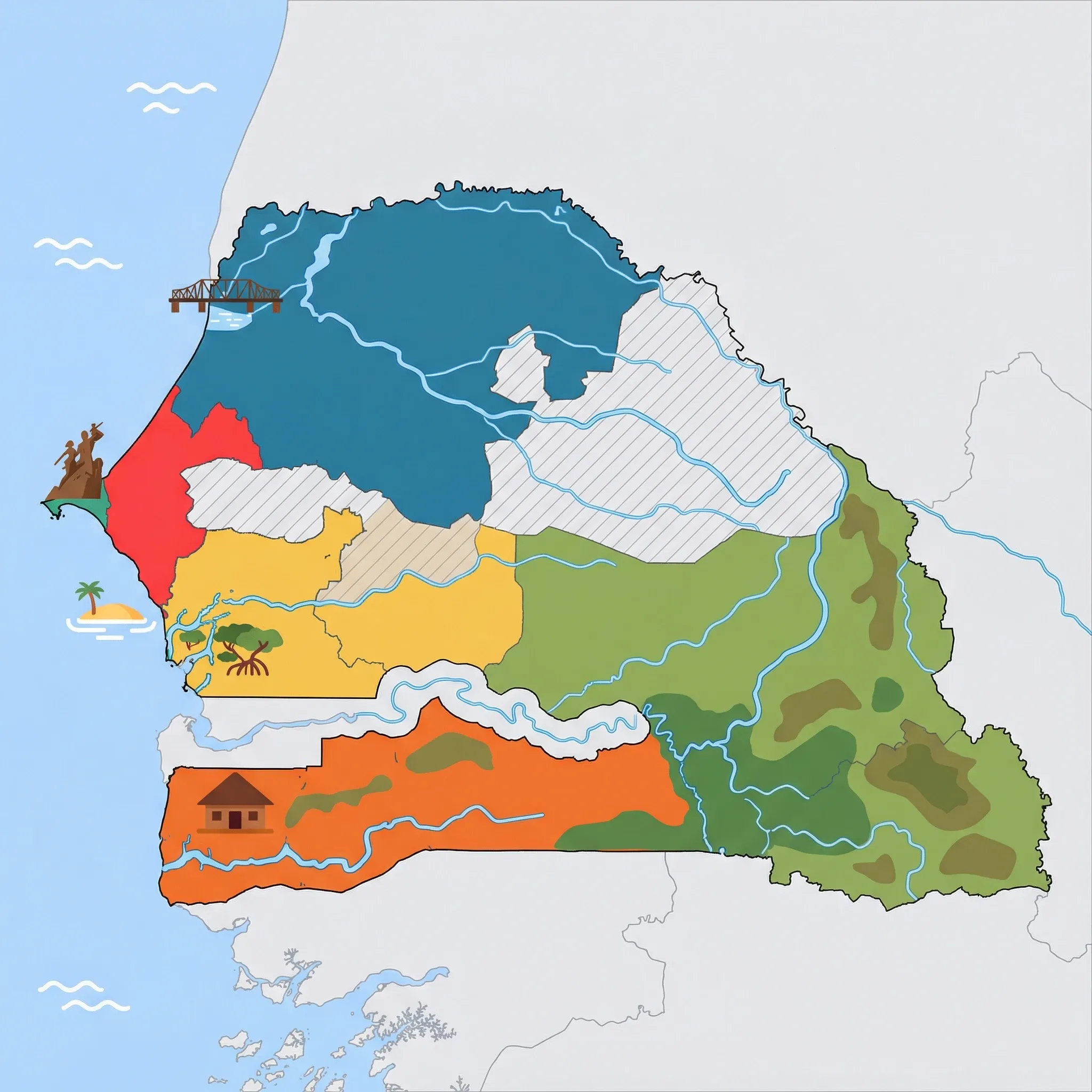
5 Regions
Casamance (south)
Where the river meets the rainforest 🌴🛶
Dakar & Cap-Vert Peninsula
West Africa's vibrant cultural capital 🇸🇳🎨
Petite Côte (beaches)
Sun, safari, and shells 🦒🐚
Saint-Louis & North
Colonial history meets desert dunes 🎷🏜️
Sine-Saloum Delta
An eco-adventure in the mangroves 🦁🛶
Click on a region marker to explore details. Use the dropdown to color regions by activity suitability.

Getting There & Around
Getting There
- By Air – Blaise Diagne International Airport (DSS) is the main gateway, located about 50km from Dakar and close to the Petite Côte (beaches). Direct flights arrive from Paris, Brussels, New York, and Washington DC.
- By Land – The main borders are with The Gambia. The Karang and Rosso borders can be chaotic; families often prefer flying or using private transfers.
- Entry Requirements – Citizens of the US, UK, and EU can typically enter visa-free for up to 90 days, though rules can change. A Yellow Fever vaccination certificate is often required. Check your government website for the latest visa requirements, or use the IATA Travel Centre entry-requirements checker.
Getting Around
- Car Hire with Driver – The safest and most stress-free way for families to explore. Self-driving is chaotic and not recommended. A vehicle with a driver costs approx. 40,000–60,000 XOF ($65–100 USD) per day plus fuel.
- Regional Express Train (TER) – A modern, air-conditioned train connecting Dakar & Cap-Vert Peninsula to the new city of Diamniadio. It is safe, fast, and comfortable for families avoiding traffic.
- Taxis – Abundant in cities. They do not use meters; you must negotiate the fare before getting in. A short city hop is 1,500–3,000 XOF ($2.50–5.00 USD).
- Domestic Flights – Air Senegal connects Dakar (DSS) to Ziguinchor and Cap Skirring Beach in the south, bypassing the long road journey.
Official Links

Packing List
Power cuts are common even in hotels; red light keeps bugs away.
Hotel nets often have small holes; a needle and thread or patches ensure safety.
English is rarely spoken outside major hotels; basic French is essential for drivers.
Essential for spotting wildlife at Bandia and birds at Djoudj.
Useful for wet bathrooms and dusty, sandy streets where shoes are removed often.

Activities & Best Times

City & Cultural
ExcellentUrban tourism, museums, historical sites, architecture
The Island of Saint-Louis is a UNESCO World Heritage site offering an authentic, world-class colonial atmosphere and vibrant street life. Peak visitation occurs during the cooler dry season, while the humid rainy months of July to September are less comfortable for walking tours.
A premier West African cultural hub featuring the UNESCO-listed Gorée Island and the world-class Museum of Black Civilizations. Peak visitation aligns with the cooler, dry Harmattan season, providing the best conditions for walking tours of the historic Plateau district.
Home to the unique shell-island of Fadiouth and ancient shell middens, providing deeply authentic West African heritage. Best visited during the dry season to comfortably explore the car-free islands and attend local community gatherings.

Adventure & Nature
Very GoodHiking, wildlife, outdoor exploration, ecotourism
Home to the Djoudj National Bird Sanctuary, one of the world's premier ornithological sites, and the Lompoul Desert dunes. Optimal conditions for wildlife viewing and desert trekking are in the cooler winter months; Djoudj becomes largely inaccessible during the peak rainy season.
A UNESCO Biosphere Reserve offering unique mangrove ecosystems and the Fathala Wildlife Reserve for family-friendly safaris. Peak season offers optimal conditions for birdwatching and wildlife viewing when the weather is dry and temperatures are manageable.
Features a unique ecosystem of mangroves, 'bolongs' (creeks), and the Basse Casamance National Park, offering immersive wildlife and forest exploration. The dry season from December to April provides optimal trail conditions and birdwatching, while the peak monsoon (July-September) makes wilderness access difficult.

Sports & Active
Very GoodSport tourism, fitness activities, active recreation
Highly regarded for its surfing at N'Gor Right and the dedicated mountain bike trails around Lac Rose. Surfing conditions are at their international peak with northern swells from November to March, while summer heat makes active sport difficult.
Offers internationally recognized cycling routes through the delta and guided desert treks in Lompoul. Activity is highly seasonal, restricted to the coolest months to avoid the extreme interior heat of May and June and the heavy late-summer rains.
Offers excellent flat-water kayaking through bolongs and established hiking trails like the Giraffe Trail. Activity levels are highest in the cooler winter months; summer heat and humidity make intensive physical activity uncomfortable.

Beach & Sea
GoodBeach resorts, marine activities: diving, snorkelling, kite surfing, wind surfing, sailing
Features tranquil estuarine beaches and sandbars around Palmarin and Mar Lodj island, ideal for calm-water exploration. The experience is best when humidity is low and water visibility is high during the dry months.
Cap Skirring and Boucotte offer some of West Africa's most beautiful and authentic palm-fringed beaches with a relaxed atmosphere. The season aligns with the European winter (November-May) when seas are calm and skies are clear, whereas the monsoon brings rougher water and heavy rain.
Offers pleasant Atlantic resort experiences at Saly and eco-conscious coastal stays at La Somone with calm waters. Peak season aligns with the European winter when dry, sunny conditions prevail; the rainy season (July-September) brings high humidity and less ideal sea conditions.

Road Trips & Scenic
GoodScenic drives, countryside tours, route-based travel
Established scenic routes like the Route du Fleuve offer unique vistas of the Senegal River and rural landscapes. Driving conditions are best when the weather is dry and visibility is high; seasonal rains in August and September can impede access to secondary rural roads.
The Palmarin Peninsula and the crossing at Foundiougne offer spectacular scenic driving routes through delta landscapes. Off-season travel is discouraged as heavy rains can make unpaved regional roads difficult to navigate for families.
The scenic drives from Ziguinchor to Cap Skirring and the cultural loops around Oussouye showcase lush tropical landscapes and rural life. Travel is recommended during the dry season when unpaved secondary roads remain navigable and visibility is highest for enjoying the scenery.

Educational & Exploratory
GoodLearning experiences, scientific sites, historical education
Offers profound historical learning at the House of Slaves and unique marine biology at the IFAN Marine Museum. These sites provide internationally significant educational narratives, though accessibility to Gorée Island is most reliable outside the stormy rainy season.
The Saloum Delta Interpretation Center (CIDS) provides context on the region's environmental and cultural history. While significant, it is a secondary attraction to the natural and cultural sites themselves.

Festivals & Seasonal
MarginalEvents, celebrations, seasonal attractions
Features the internationally renowned Saint-Louis International Jazz Festival in May and the peak of the global bird migration at Djoudj. These specific events drive international interest, while the rest of the year has fewer high-profile cultural gatherings.
Anchored by Dak'Art, the Biennale of Contemporary African Art, which is a major global event but occurs only once every two years. Peak months reflect the typical schedule of this internationally recognized cultural festival.

Theme Park & Entertainment
MarginalAmusement parks, family entertainment venues
Accrobaobab offers a unique aerial adventure course set among ancient baobab trees, providing a distinctive regional alternative to traditional theme parks. Best visited when temperatures are moderate and the ground is dry for safe climbing conditions.
Limited to regional-standard facilities like the Piscine Olympique, which serves as a notable local leisure hub but lacks international destination-level attractions. Best visited during warm, non-rainy months when aquatic facilities are most appealing.

Public Holidays & Calendar Next 12 months
Public holidays, festivals, cultural celebrations, and seasonal natural phenomena coming up in Senegal over the next 12 months.
Loading holidays and events...

Climate & Weather
Casamance (south)
Show Details
| Month | Temp °C | Rain | Humidity |
|---|
Dakar & Cap-Vert Peninsula
Show Details
| Month | Temp °C | Rain | Humidity |
|---|
Petite Côte (beaches)
Show Details
| Month | Temp °C | Rain | Humidity |
|---|
Saint-Louis & North
Show Details
| Month | Temp °C | Rain | Humidity |
|---|
Sine-Saloum Delta
Show Details
| Month | Temp °C | Rain | Humidity |
|---|

Travel Advisory
The majority of international agencies recommend exercising a high degree of caution throughout Senegal. While the country is generally stable, risks from street crime, civil unrest, and regional instability near borders warrant increased vigilance.
Safety Topics
Traveller Advice (5 groups)

Be aware that quality medical facilities are largely concentrated in the capital, Dakar. Access to specialized healthcare is extremely limited in rural and inland regions.

Local customs are conservative; it is recommended to dress modestly and avoid walking alone after dark, particularly in isolated areas.

Ensure you have comprehensive travel insurance that covers medical evacuation. Register your travel plans with your national consulate and maintain a high level of personal security awareness in public spaces.

Same-sex relations are criminalized and can lead to imprisonment. Societal discrimination is significant, and discretion is advised as public displays of affection may attract negative attention or legal consequences.

Extreme caution is required in remote border regions near Mali and Mauritania, where there is a documented risk of kidnapping by extremist groups targeting Westerners.
Agency Summaries
A high level of caution is advised because of the risk of civil unrest and common crime. Public health concerns also exist, including a reported outbreak of Rift Valley Fever in multiple regions, including Dakar.
Visitors should be particularly alert to street crime in urban areas like Dakar. It is recommended to avoid travel within 25 kilometers of the borders with Mali and Mauritania due to the threat of extremist activity and kidnapping.
The overall security situation is stable, but there is an underlying threat of terrorism and potential for civil unrest. Authorities advise against travel to certain border regions and the Casamance province due to ongoing security risks.
Travellers should remain highly vigilant due to prevalent crime. There are specific regional warnings advising against non-essential travel to the Casamance region (excluding Ziguinchor and Cap Skirring) and areas near the border with Mali due to security concerns.
Increased vigilance is required due to the risk of violent crime, including armed robberies, and the frequency of public demonstrations that can turn violent. Regional restrictions are in place for the eastern border and Casamance.
While the country is generally safe, visitors should be aware of heightened risks in certain areas. Increased caution is recommended in the Casamance region due to crime and the presence of landmines. Avoid showing signs of wealth to minimize the risk of petty theft.
Information is provided for general guidance only and does not constitute travel, safety, medical, or legal advice. Conditions may change. Users are responsible for independently verifying information before travel.