
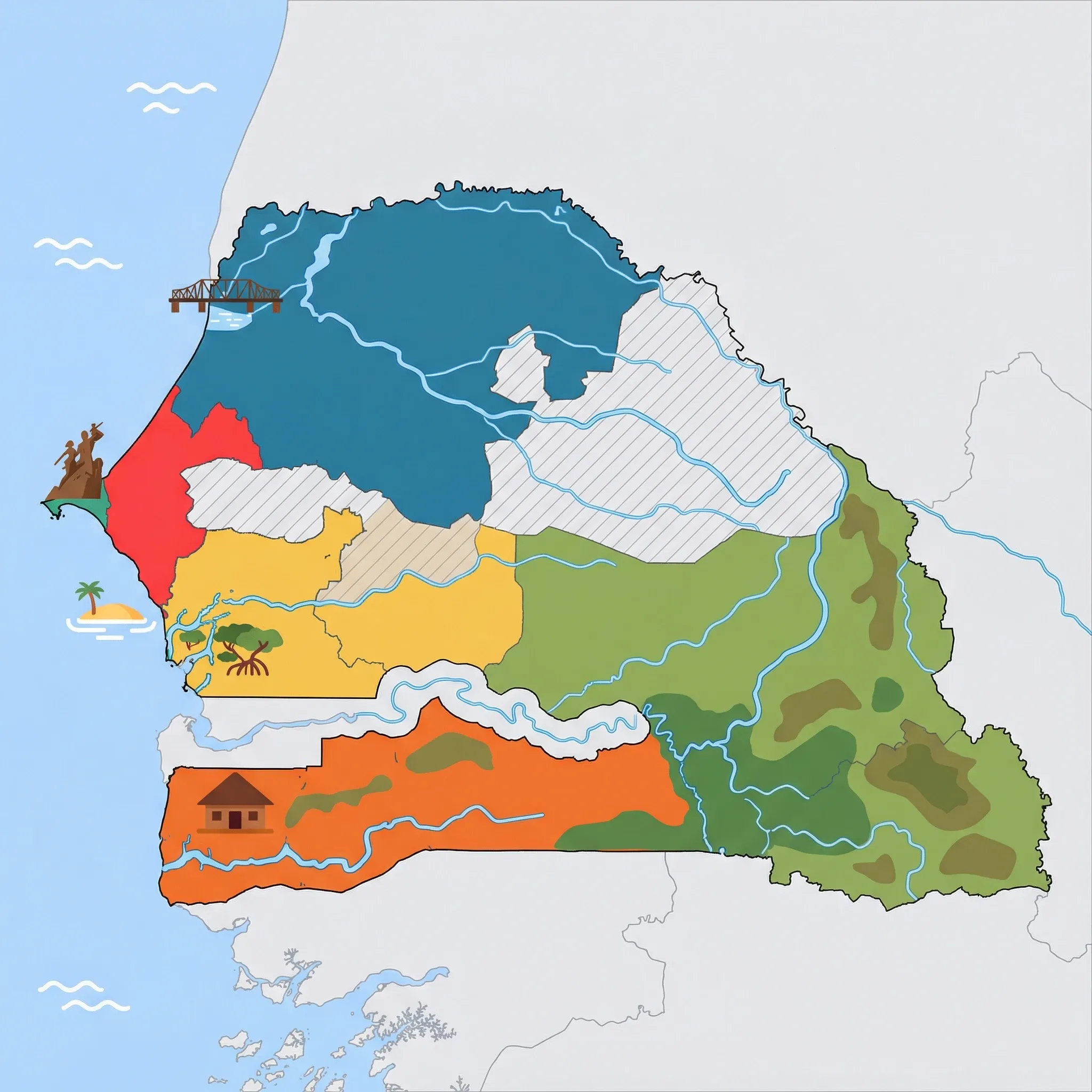
Click a region to explore
⚠️ SAFETY WARNING: Due to a history of civil unrest, the presence of armed groups, and landmine risks in rural areas, government agencies (including the US, UK, NZ, and Canada) advise travelers to reconsider travel to parts of this region. While tourist hubs like Cap Skirring and Ziguinchor are often considered accessible, travel on secondary roads and near the Guinea-Bissau border is dangerous. Families are strongly urged to consult their own government's official travel advisory before considering a trip, as circumstances and risk assessments vary.
Overview
Casamance offers a striking contrast to the arid north of Senegal. Known as the country's "breadbasket," this region is defined by massive silk-cotton trees, lush mangroves, and a labyrinth of river bolongs (channels). The culture here is distinct, dominated by the Diola people, whose traditions and animist beliefs are deeply woven into daily life. For families who do visit the secured tourist zones, the pace is slower, the vegetation greener, and the welcome incredibly warm. It feels more like a tropical escape, with tranquil waterways replacing the frenetic energy of Dakar.
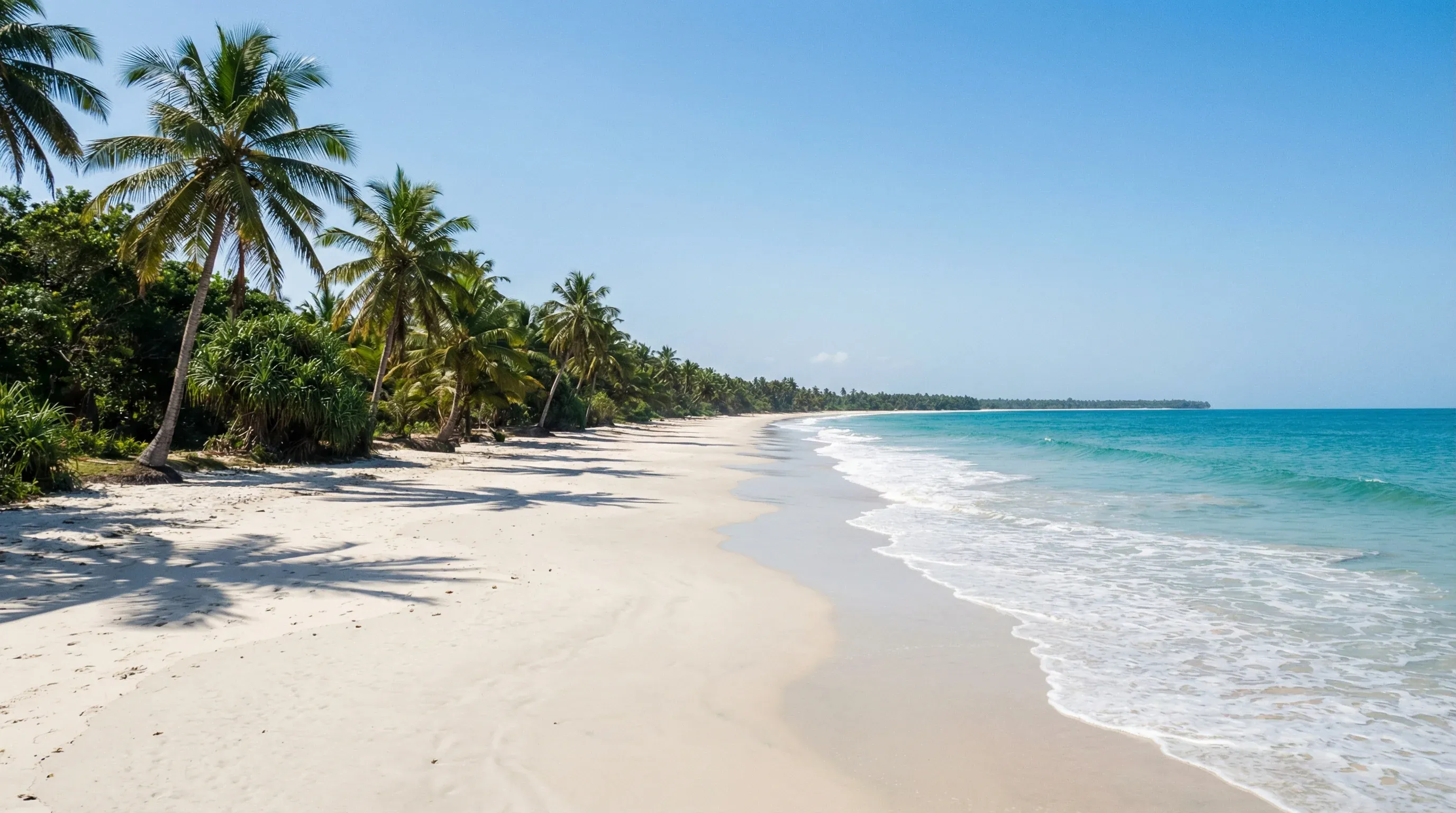
The region is geographically isolated from the rest of Senegal by the nation of The Gambia, which has helped preserve its unique character. The coastline boasts some of West Africa's finest beaches, wide and fringed with coconut palms. Inland, the river delta offers opportunities for pirogue (traditional boat) excursions where children can spot dolphins and diverse birdlife. While the security situation requires strict adherence to main routes and tourist zones, the accessible areas provide a rich, nature-focused experience.
Key Attractions
The primary draw for relaxation is Cap Skirring Beach. Unlike the rocky parts of Dakar's coast, the sand here is powder-soft and flat, making it safer for children to play and swim. The resort infrastructure is well-developed, offering a comfortable base for families.
For a day of history and adventure, a boat trip to Carabane Island is unforgettable. Once a colonial trading post, the car-free island is now a peaceful sanctuary where ruins are slowly being reclaimed by the forest. It offers a safe, quiet environment for walking with children, who will be fascinated by the boat ride through the mangroves to reach it.
Practical Advice
The best time to visit is during the dry season (November to May). The rainy season here is intense and can make travel difficult. Malaria prophylaxis is essential as this is a tropical zone. Always stick to paved main roads and avoid night driving.
Food & Drink
Typical meal times: Lunch is usually served from 1:00 pm to 3:00 pm, while dinner is a later affair, typically 8:00 pm to 10:00 pm.
Typical meal costs: A meal in a tourist restaurant costs around 6,000–10,000 XOF (approx. $10–16 USD / €9–15 EUR). Local eateries (tangana) are cheaper, around 1,500–3,000 XOF (approx. $2.50–5 USD / €2.30–4.50 EUR).
Dietary requirements: Seafood is the staple here. Vegetarians can rely on rice and fruit, but vegan options in restaurants may be limited to salads or adapted side dishes. Nut allergies (peanuts) require vigilance.
Signature dishes:
- Caldou – A light fish stew cooked with palm oil, vegetables, and lime, often served with white rice.
- Soupou Kandia – An okra and palm oil sauce usually cooked with fish or seafood; the texture is slimy (like gumbo) which some kids may find challenging, but the flavor is rich.
- Etoile – A pork dish with palm oil sauce, specific to the Christian/animist Diola culture (unlike the Muslim majority north).
Why this score?
The region offers a lush, tropical landscape of mangroves and bolongs that are best explored by pirogue, providing a more rugged experience than the north. Visiting traditional villages like Oussouye requires navigating remote river systems and dense vegetation, adding a significant sense of discovery.
Why this score?
Medical facilities are limited outside of Ziguinchor, and even there, they are basic by international standards. Families in the remote Cap Skirring or island areas would face long transport times for any serious medical emergency.
Why this score?
Casamance attracts a mix of French beach-goers to Cap Skirring and eco-tourists exploring the Diola culture. While popular within West Africa, its geographic isolation by The Gambia and past security concerns keep international numbers lower than the Petite Côte.

Casamance is generally cheaper than Dakar but resort areas like Cap Skirring charge international prices. A family bungalow near the beach ranges from 30,000–60,000 XOF (approx. $50–100 USD / €45–90 EUR) per night. Fresh fruit markets are incredibly cheap, with huge bunches of bananas costing under 1,000 XOF (approx. $1.65 USD / €1.50 EUR).

Getting Here & Around
Getting Here
- Ferry – The Aline Sitoé Diatta ferry is the most scenic and safe way to arrive, sailing overnight from Dakar to Ziguinchor. Cabins are available for families.
- Airports – Cap Skirring (CSK) has seasonal international flights and domestic links. Ziguinchor (ZIG) handles daily domestic flights from Dakar.
- Driving – Possible via the Trans-Gambia Highway (cutting through The Gambia), but border crossings can be time-consuming and stressful for young children.
Getting Around
- Taxi – In Ziguinchor and Cap Skirring, taxis are plentiful. Negotiate the fare before getting in.
- Boat (Pirogue) – Essential for visiting Carabane Island or exploring the delta. Ensure life jackets are provided for children before departing.
- Private Driver – Highly recommended for safety and convenience if moving between towns.
Nearby Airports (1 airport)
Cap Skirring Airport
CSKCap Skirring
View full flight map for Senegal →
Official Links

Packing List
Essential for protecting electronics during pirogue (canoe) trips in the river delta.
Casamance is more tropical than the north; mosquitoes are aggressive here.
Power cuts can occur, and street lighting in rural areas or on islands like Carabane is minimal.
ATMs are unreliable outside Ziguinchor/Cap Skirring; small change is needed for markets.
Power cuts are common even in hotels; red light keeps bugs away.
Hotel nets often have small holes; a needle and thread or patches ensure safety.
English is rarely spoken outside major hotels; basic French is essential for drivers.
Essential for spotting wildlife at Bandia and birds at Djoudj.
Useful for wet bathrooms and dusty, sandy streets where shoes are removed often.

Activities & Best Times

Hiking, wildlife, outdoor exploration, ecotourism
Features a unique ecosystem of mangroves, 'bolongs' (creeks), and the Basse Casamance National Park, offering immersive wildlife and forest exploration. The dry season from December to April provides optimal trail conditions and birdwatching, while the peak monsoon (July-September) makes wilderness access difficult.

Urban tourism, museums, historical sites, architecture
Home to the distinctive Diola culture, the historic colonial remains on Carabane Island, and the vibrant architecture of Ziguinchor and Mlomp. Peak visitation occurs during the cooler dry months when walking tours and cultural interactions are most comfortable; high humidity and heat degrade the urban experience in late summer.

Beach resorts, marine activities: diving, snorkelling, kite surfing, wind surfing, sailing
Cap Skirring and Boucotte offer some of West Africa's most beautiful and authentic palm-fringed beaches with a relaxed atmosphere. The season aligns with the European winter (November-May) when seas are calm and skies are clear, whereas the monsoon brings rougher water and heavy rain.

Scenic drives, countryside tours, route-based travel
The scenic drives from Ziguinchor to Cap Skirring and the cultural loops around Oussouye showcase lush tropical landscapes and rural life. Travel is recommended during the dry season when unpaved secondary roads remain navigable and visibility is highest for enjoying the scenery.

Sport tourism, fitness activities, active recreation
Offers specialized infrastructure for mountain biking (VTT) and established coastal hiking routes between traditional villages. The core dry months of December to March are best for active sports to avoid the intense heat of late spring and the torrential rains of the summer months.




Public Holidays & Calendar Next 12 months
Public holidays, festivals, cultural celebrations, and seasonal natural phenomena coming up in Casamance (south) over the next 12 months.
Loading holidays and events...

Travel Advisory
The majority of international agencies recommend exercising a high degree of caution throughout Senegal. While the country is generally stable, risks from street crime, civil unrest, and regional instability near borders warrant increased vigilance.
Safety Topics
Traveller Advice (5 groups)

Be aware that quality medical facilities are largely concentrated in the capital, Dakar. Access to specialized healthcare is extremely limited in rural and inland regions.

Local customs are conservative; it is recommended to dress modestly and avoid walking alone after dark, particularly in isolated areas.

Ensure you have comprehensive travel insurance that covers medical evacuation. Register your travel plans with your national consulate and maintain a high level of personal security awareness in public spaces.

Same-sex relations are criminalized and can lead to imprisonment. Societal discrimination is significant, and discretion is advised as public displays of affection may attract negative attention or legal consequences.

Extreme caution is required in remote border regions near Mali and Mauritania, where there is a documented risk of kidnapping by extremist groups targeting Westerners.
Agency Summaries
A high level of caution is advised because of the risk of civil unrest and common crime. Public health concerns also exist, including a reported outbreak of Rift Valley Fever in multiple regions, including Dakar.
Visitors should be particularly alert to street crime in urban areas like Dakar. It is recommended to avoid travel within 25 kilometers of the borders with Mali and Mauritania due to the threat of extremist activity and kidnapping.
The overall security situation is stable, but there is an underlying threat of terrorism and potential for civil unrest. Authorities advise against travel to certain border regions and the Casamance province due to ongoing security risks.
Travellers should remain highly vigilant due to prevalent crime. There are specific regional warnings advising against non-essential travel to the Casamance region (excluding Ziguinchor and Cap Skirring) and areas near the border with Mali due to security concerns.
Increased vigilance is required due to the risk of violent crime, including armed robberies, and the frequency of public demonstrations that can turn violent. Regional restrictions are in place for the eastern border and Casamance.
While the country is generally safe, visitors should be aware of heightened risks in certain areas. Increased caution is recommended in the Casamance region due to crime and the presence of landmines. Avoid showing signs of wealth to minimize the risk of petty theft.
Information is provided for general guidance only and does not constitute travel, safety, medical, or legal advice. Conditions may change. Users are responsible for independently verifying information before travel.