
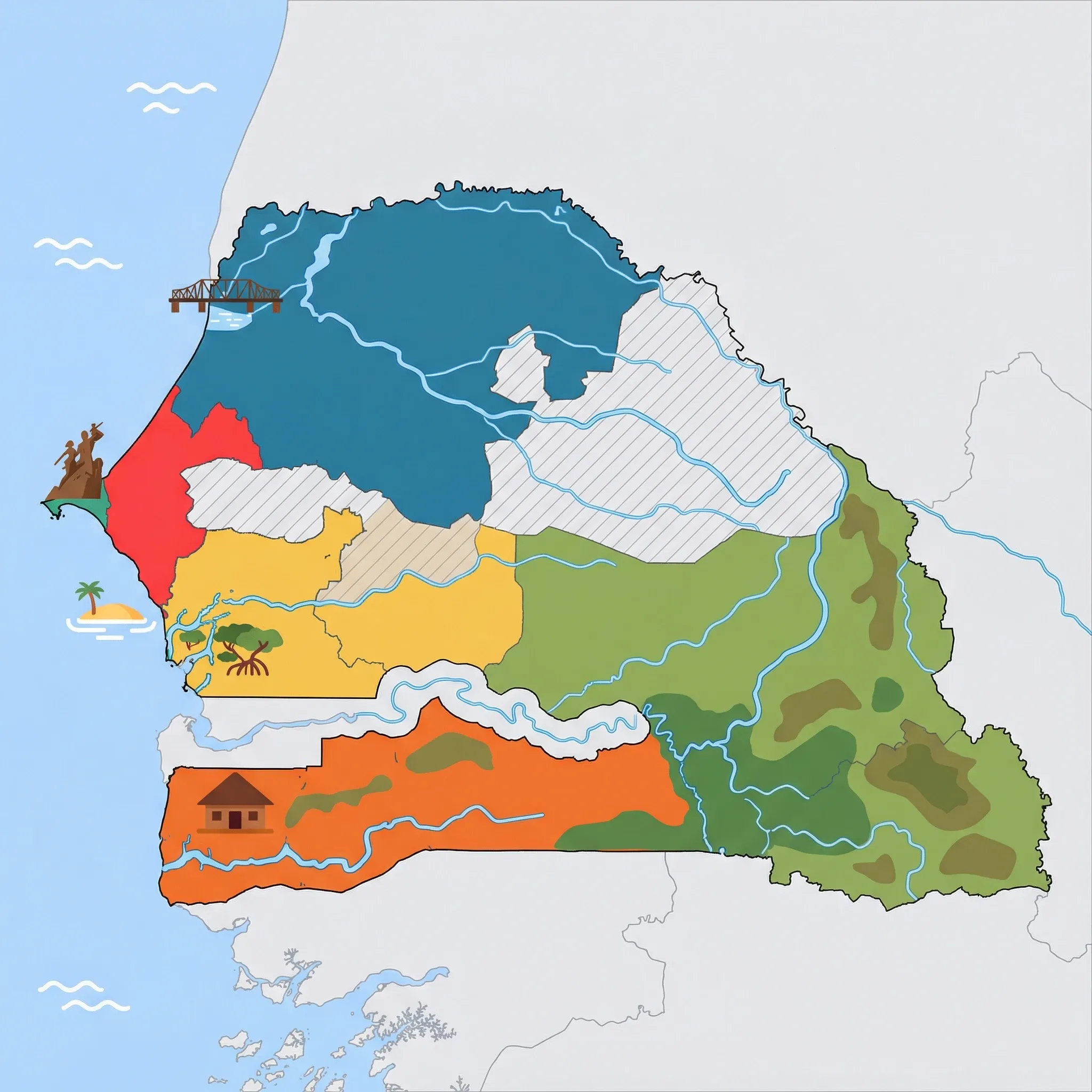
Click a region to explore
Overview
The Petite Côte (Small Coast) is Senegal's primary tourist hub, stretching south from Dakar. Unlike the capital's rocky shores, this coastline features long, sandy beaches protected from the strongest Atlantic waves, making it ideal for swimming with children. The resort towns of Saly and La Somone offer a wide range of family-friendly hotels with pools and kids' clubs, providing a "soft landing" for visitors new to West Africa. The vibe here is laid-back, focused on sunshine and relaxation.
However, the region isn't just about sun loungers. It is home to accessible wildlife experiences and fascinating cultural sites that don't require long travel times. The proximity to the new international airport makes it incredibly convenient for families who want to minimize transfer times after a long flight. It is the perfect balance of comfort and adventure, allowing you to see African wildlife in the morning and build sandcastles in the afternoon.
Key Attractions
The absolute highlight for families is the Bandia Nature Reserve. This small, fenced reserve guarantees sightings of giraffes, rhinos, zebras, and monkeys from the safety of a safari truck. It’s perfect for children with short attention spans as you don't have to search for hours to see animals.
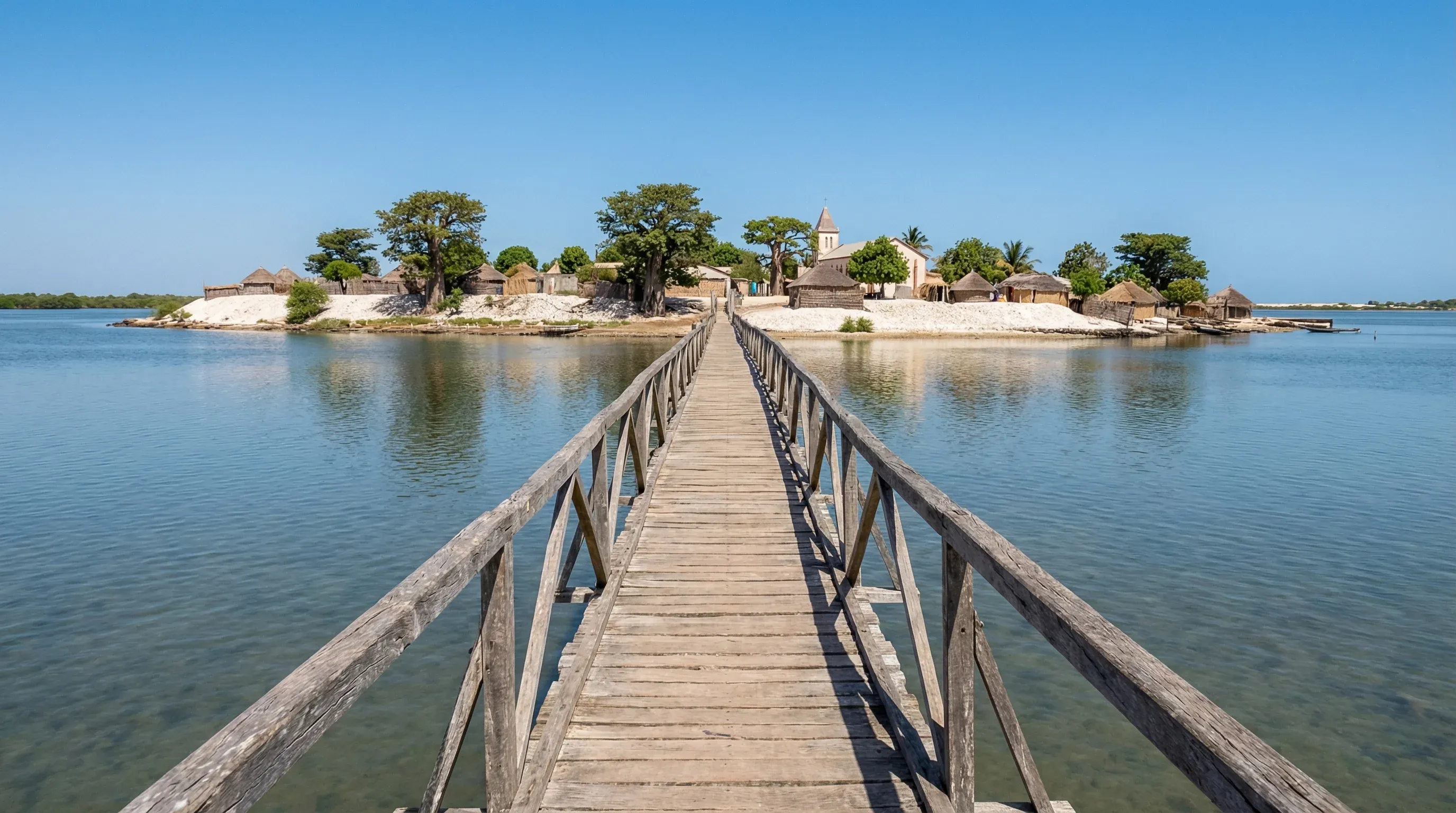
Further south lies the incredible Île de Fadiouth (Shell Island). Connected to the mainland by a long wooden footbridge, the entire island is paved with clam shells. It is a car-free zone where pigs and goats roam freely, and the community is a beautiful example of religious tolerance, with mixed Christian and Muslim families living together. Walking on the crunching shells is a sensory experience kids love.
Practical Advice
The region is very tourist-oriented, so English is more widely spoken here than in remote areas. The best weather is November to May. Weekends can be busy with Dakar residents escaping the city; weekdays are quieter.
Food & Drink
Typical meal times: Lunch 12:30 pm to 2:30 pm; Dinner 7:30 pm to 9:30 pm. Resort hotels often offer all-day dining.
Typical meal costs: Tourist restaurants in Saly charge 7,000–12,000 XOF (approx. $11–20 USD / €10–18 EUR). In Mbour or Joal, local meals are 2,000–4,000 XOF (approx. $3.30–6.50 USD / €3–6 EUR).
Dietary requirements: This is the easiest region for dietary needs due to the high volume of tourists. Pizzas, pastas, and salads are readily available alongside local dishes.
Signature dishes:
- Capitaine à la Saint-Louisienne – Local perch fish (Capitaine) stuffed with spices and herbs, often grilled.
- Fruits de Mer (Seafood Platter) – Huge platters of gambas (prawns), thiof (grouper), and calamari are a specialty of the coastal towns.
- Maafe – A rich meat stew (beef or lamb) cooked in a peanut butter sauce, very popular with children who like peanut flavors.
Why this score?
Tourism here is centered on high-end resorts, golf courses, and accessible beaches, making it very comfortable but low on ruggedness. Even the nearby Bandia Reserve is a highly managed safari experience where animals are easily spotted from vehicles on established tracks.
Why this score?
The concentration of international tourists in Saly and Mbour has led to better-than-average private medical clinics and pharmacies. While not on par with Dakar's major hospitals, it offers the most reliable emergency care for travelers outside the capital city area.
Why this score?
This is Senegal's most developed tourism zone, centered on the resort hub of Saly Portudal which hosts many French and European package holidaymakers. It accounts for a significant portion of the country's hotel bed capacity and leisure visitor nights.

While luxury resorts exist, there is a wide range of mid-budget guesthouses. An average family meal in Saly is 25,000–35,000 XOF (approx. $40–58 USD / €38–53 EUR). Entry to <a data-attraction-id="32367">Bandia Nature Reserve</a> is relatively pricey for the region (approx. 12,000 XOF / $20 USD per adult plus vehicle rental), so budget accordingly for excursions.

Getting Here & Around
Getting Here
- Airports – Blaise Diagne International Airport (DSS) is actually located in this region, just 30-45 minutes by car from Saly, making it the most accessible region for international arrivals.
- Driving – A toll highway connects the airport and Dakar to the Petite Côte, ensuring a smooth transfer.
- Taxi – Official airport taxis have fixed rates to Saly and La Somone (approx. 15,000–20,000 XOF).
Getting Around
- Taxi – The standard way to move between Saly, Mbour, and attractions like Bandia Nature Reserve.
- Walking – Within the resort towns of Saly and La Somone, walking is easy, though sidewalks can be sandy.
- Horse Cart (Calèche) – A fun way for kids to travel short distances within the resort areas, though slow.
Nearby Airports (1 airport)
Blaise Diagne Interantional Airport
DSSDakar
View full flight map for Senegal →
Official Links

Packing List
Enhances the safari experience at Bandia Reserve significantly for children.
Some beaches have sea urchins or sharp shells, especially near rocky outcrops.
The sun is strong and you will be in the water often; local selection is limited/expensive.
Easier for kids than sprays, useful for evenings dining outdoors near the lagoons.
Power cuts are common even in hotels; red light keeps bugs away.
Hotel nets often have small holes; a needle and thread or patches ensure safety.
English is rarely spoken outside major hotels; basic French is essential for drivers.
Essential for spotting wildlife at Bandia and birds at Djoudj.
Useful for wet bathrooms and dusty, sandy streets where shoes are removed often.

Activities & Best Times

Hiking, wildlife, outdoor exploration, ecotourism
Home to the Bandia Nature Reserve and Somone Lagoon, offering high-quality wildlife viewing and mangrove birdwatching perfect for families. The late dry season is optimal for wildlife spotting as animals congregate at water holes, while heavy rains in August and September make navigation and animal tracking difficult.

Urban tourism, museums, historical sites, architecture
Features the globally unique Joal-Fadiouth (Shell Island) and the vibrant artisanal fishing port of Mbour, offering deep cultural authenticity. Cooler, dry months provide comfortable conditions for walking tours of these historic sites, whereas the mid-year monsoon heat and rain degrade the experience.

Beach resorts, marine activities: diving, snorkelling, kite surfing, wind surfing, sailing
Offers pleasant Atlantic resort experiences at Saly and eco-conscious coastal stays at La Somone with calm waters. Peak season aligns with the European winter when dry, sunny conditions prevail; the rainy season (July-September) brings high humidity and less ideal sea conditions.

Sport tourism, fitness activities, active recreation
Established facilities for golf in Saly and excellent trail hiking around the Popenguine cliffs cater well to active families. Outdoor physical activity is most enjoyable during the cooler Harmattan wind season, avoiding the oppressive humidity of the tropical summer.

Scenic drives, countryside tours, route-based travel
The route through the Petite Côte offers scenic glimpses of baobab forests and coastal villages, though the network is relatively compact. Travel is best during the dry season when dirt access roads to smaller villages like Fadial remain easily navigable.

Amusement parks, family entertainment venues
Accrobaobab offers a unique aerial adventure course set among ancient baobab trees, providing a distinctive regional alternative to traditional theme parks. Best visited when temperatures are moderate and the ground is dry for safe climbing conditions.




Public Holidays & Calendar Next 12 months
Public holidays, festivals, cultural celebrations, and seasonal natural phenomena coming up in Petite Côte (beaches) over the next 12 months.
Loading holidays and events...

Travel Advisory
The majority of international agencies recommend exercising a high degree of caution throughout Senegal. While the country is generally stable, risks from street crime, civil unrest, and regional instability near borders warrant increased vigilance.
Safety Topics
Traveller Advice (5 groups)

Be aware that quality medical facilities are largely concentrated in the capital, Dakar. Access to specialized healthcare is extremely limited in rural and inland regions.

Local customs are conservative; it is recommended to dress modestly and avoid walking alone after dark, particularly in isolated areas.

Ensure you have comprehensive travel insurance that covers medical evacuation. Register your travel plans with your national consulate and maintain a high level of personal security awareness in public spaces.

Same-sex relations are criminalized and can lead to imprisonment. Societal discrimination is significant, and discretion is advised as public displays of affection may attract negative attention or legal consequences.

Extreme caution is required in remote border regions near Mali and Mauritania, where there is a documented risk of kidnapping by extremist groups targeting Westerners.
Agency Summaries
A high level of caution is advised because of the risk of civil unrest and common crime. Public health concerns also exist, including a reported outbreak of Rift Valley Fever in multiple regions, including Dakar.
Visitors should be particularly alert to street crime in urban areas like Dakar. It is recommended to avoid travel within 25 kilometers of the borders with Mali and Mauritania due to the threat of extremist activity and kidnapping.
The overall security situation is stable, but there is an underlying threat of terrorism and potential for civil unrest. Authorities advise against travel to certain border regions and the Casamance province due to ongoing security risks.
Travellers should remain highly vigilant due to prevalent crime. There are specific regional warnings advising against non-essential travel to the Casamance region (excluding Ziguinchor and Cap Skirring) and areas near the border with Mali due to security concerns.
Increased vigilance is required due to the risk of violent crime, including armed robberies, and the frequency of public demonstrations that can turn violent. Regional restrictions are in place for the eastern border and Casamance.
While the country is generally safe, visitors should be aware of heightened risks in certain areas. Increased caution is recommended in the Casamance region due to crime and the presence of landmines. Avoid showing signs of wealth to minimize the risk of petty theft.
Information is provided for general guidance only and does not constitute travel, safety, medical, or legal advice. Conditions may change. Users are responsible for independently verifying information before travel.