

Overview
Serbia is a landlocked gem in the heart of the Balkans where history feels alive and hospitality is a national pastime. For families, it offers a fascinating blend of Ottoman and Austro-Hungarian influences, visible in everything from the architecture to the food. The landscape shifts dramatically from the flat, fertile plains of Novi Sad & Vojvodina in the north to the rugged limestone mountains and deep gorges of Western Serbia (Zlatibor, Tara, Mokra Gora). Summers are warm and perfect for river swimming, while winters bring snow to the mountain resorts.
What truly sets Serbia apart for parents is the culture's deep affection for children. You will find that kids are welcomed everywhere, from late-night dinners in bustling kafanas (traditional taverns) to city parks filled with families until late in the evening. While it lacks a coastline, it makes up for it with river beaches, interactive museums, and grand fortresses that spark young imaginations. It is a destination that feels adventurous yet safe, offering high-quality experiences at a fraction of Western European prices.
Key Attractions
Belgrade is the natural starting point, where the sprawling Belgrade Fortress dominates the skyline. Kids can climb on old cannons, explore the open-air dinosaur park, and visit the Belgrade Zoo located right within the fortress walls. Just across the river, Ada Ciganlija-a river island turned peninsula-offers miles of pebble beaches, cycle paths, and playgrounds, making it the city's favorite summer playground. For budding scientists, the Nikola Tesla Museum provides an electrifying interactive demonstration of the famous inventor's work.
Heading north to Novi Sad & Vojvodina, the pace slows down. The majestic Petrovaradin Fortress overlooks the Danube and is famous for its "Drunken Clock" tower. Nearby, Fruška Gora National Park offers gentle hiking trails suitable for little legs. In the west, the Šargan Eight (Šarganska osmica) steam train is an absolute must-do; this narrow-gauge railway loops through stunning mountain scenery and tunnels, feeling like a ride through a storybook.
For families who love knights and legends, Eastern Serbia (Đerdap Gorge, spa towns) is home to the fairytale-like Golubac Fortress, which guards the entrance to the Iron Gates gorge. Further down the Danube, the Lepenski Vir archaeological site reveals one of Europe's oldest settlements, complete with mysterious stone sculptures that fascinate children and adults alike.
Practical Advice
The best times to visit are late spring (May–June) and early autumn (September–October) when temperatures are pleasant. July and August can be very hot in the cities. Serbia uses the Cyrillic alphabet, which can be a fun code-breaking game for older kids, though Latin script and English are widely used in tourist areas.
A note on smoking: Serbia has less restrictive smoking laws than much of Europe. Smoking is still permitted inside many restaurants and cafes. When booking accommodation or choosing a restaurant, specifically ask for non-smoking sections or choose places with outdoor terraces, which are plentiful in summer.
Food & Drink
Typical meal times: Lunch is the main meal of the day, typically eaten between 2:00 pm and 5:00 pm. Dinner is lighter and often served late, from 8:00 pm to 10:00 pm, though restaurants serve food all day.
Typical meal costs: 3,000–6,000 RSD (approx. $27–55 USD / €25–50 EUR) for a hearty family lunch at a traditional tavern. Street food like pljeskavica costs around 300–500 RSD (approx. $2.75–4.50 USD / €2.50–4.25 EUR).
Dietary requirements: Traditional Serbian cuisine is very meat-heavy. Vegetarians may find options limited to salads, grilled vegetables, and cheese pies in traditional kafanas. However, Belgrade and Novi Sad have a growing scene of international and vegan-friendly restaurants. Bakeries are excellent for vegetarian pastries.
Family-friendly dining: Children are treated like VIPs in Serbian restaurants. Highchairs are common, and while specific kids' menus aren't always available, kitchens are usually happy to prepare half-portions or simple grilled chicken and fries.
Signature dishes:
- Ćevapi – Small, skinless grilled sausages made of minced meat, usually served with flatbread and onions. A kid favorite.
- Burek – A flaky pastry filled with cheese, meat, or spinach, bought from a pekara (bakery). The ultimate breakfast.
- Karađorđeva šnicla – Rolled veal or pork steak stuffed with kajmak (cream), breaded and fried. Often called the "Serbian dream."
- Gibanica – A rich, layered cheese pie made with eggs and feta, perfect for a snack or light meal.
- Plazma Torta – A popular dessert cake made with ground Plazma biscuits (a local staple), chocolate, and cream.

A family of four can expect to spend around 12,000–18,000 RSD (approx. $110–165 USD / €100–150 EUR) per day. This budget covers mid-range apartment accommodation, dining out for one major meal, plenty of bakery snacks, and entry fees to attractions. Transport is inexpensive, and many fortress sites are free to enter or have very low fees.
Age Suitability




Did you know? Serbia welcomes approximately 2.4 million international visitors per year. Most visitors come from Europe.
Explore Regions
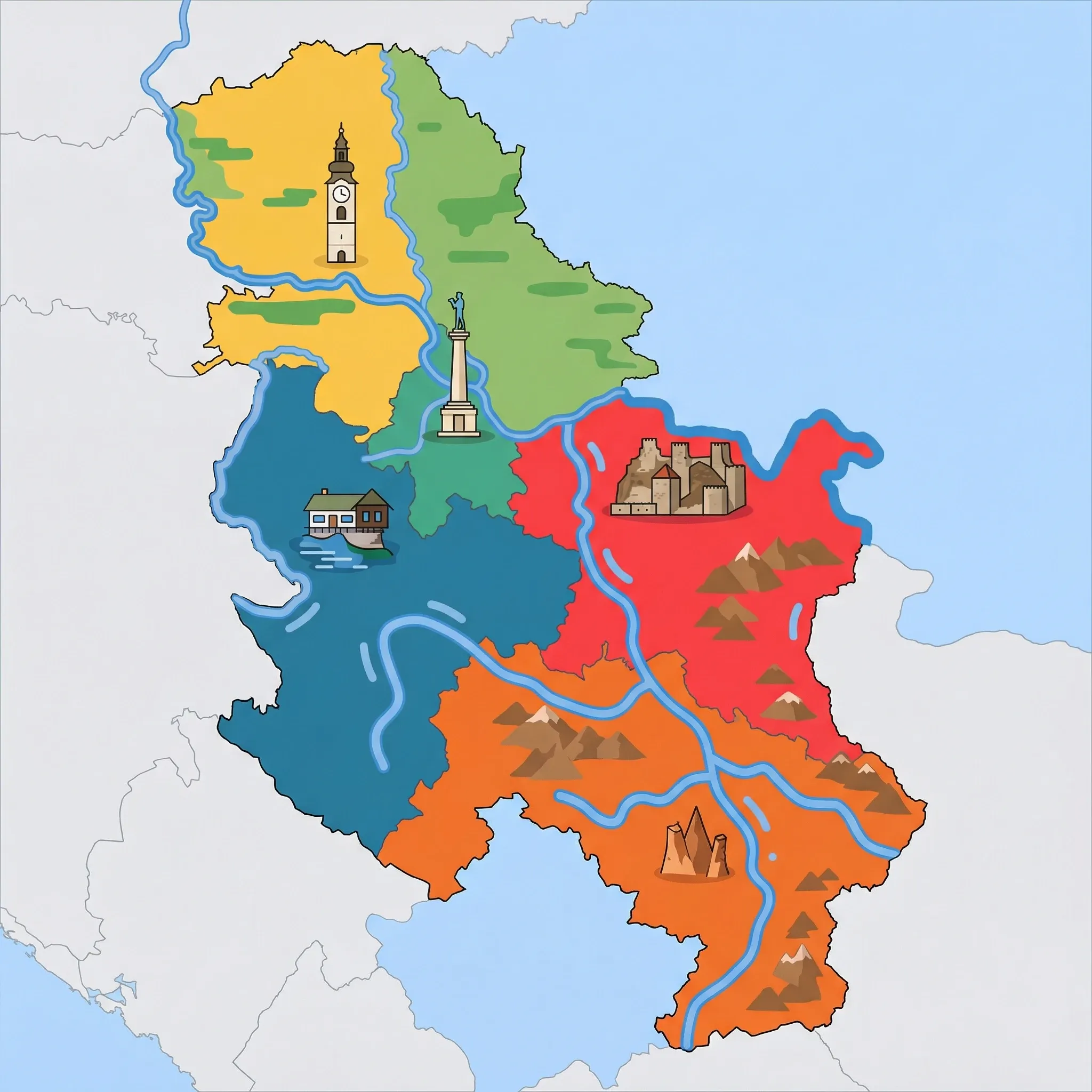
5 Regions
Belgrade
Where two rivers meet, history comes alive 🏰🌊
Eastern Serbia (Đerdap Gorge, spa towns)
Where the Danube is deepest and legends are born 🐉🛶
Novi Sad & Vojvodina
Slow living, vast plains, and fairy-tale architecture 🌻🏰
Southern Serbia (Niš)
The heart of history and the capital of grill 🔥🏰
Western Serbia (Zlatibor, Tara, Mokra Gora)
Steam trains, pine forests, and mountain adventures 🚂🌲
Click on a region marker to explore details. Use the dropdown to color regions by activity suitability.

Getting There & Around
Getting There
- By Air – Belgrade Nikola Tesla Airport (BEG) is the main hub, well-connected to major European cities. Niš Constantine the Great Airport (INI) serves Southern Serbia with low-cost carriers.
- By Land – Serbia is easily accessible by car or bus from Hungary, Croatia, and Bulgaria. The border crossings can be busy during summer holidays, so check wait times.
- By Train – International rail links are currently limited due to construction, but the line to Bar (Montenegro) offers one of the most scenic railway journeys in Europe.
- Entry Requirements – US, UK, and EU citizens can enter visa-free for up to 90 days. Police registration is required within 24 hours of arrival (hotels do this automatically). Check your government website for the latest visa requirements, or use the IATA Travel Centre entry-requirements checker.
Getting Around
- Car Hire – The best way to explore regions like Western Serbia. Roads are generally good, but mountain routes can be winding. International agencies are available at airports.
- Trains – The modern "Soko" high-speed train connects Belgrade and Novi Sad in just 35 minutes, making for an easy day trip. Other rail lines are currently being modernized and can be slower.
- Buses – An extensive and reliable bus network connects almost every town. Buses are the primary mode of public transport for intercity travel where trains aren't available.
- Taxis – Affordable in cities, but always use official apps (like Yandex Go or Pink Taxi) or ask your hotel to call one to avoid scams.

Packing List
River beaches at Ada Ciganlija and Silver Lake often have pebbles or stony bottoms.
Indoor smoking is common in restaurants; this keeps smoky clothes separate in your luggage.
Public restrooms (especially at bus stations) occasionally run out of toilet paper.
Essential for children on the winding scenic roads of Western Serbia.
If visiting local homes, it is strict custom to remove shoes at the door.
The rich, meat-heavy local cuisine can sometimes be heavy for unaccustomed stomachs.

Activities & Best Times

Adventure & Nature
Very GoodHiking, wildlife, outdoor exploration, ecotourism
The region features dramatic geological sites like Đavolja Varoš and the Stara Planina wilderness, offering authentic off-the-beaten-path exploration. Peak months avoid the intense mid-summer heat while ensuring trails through the Sićevo and Jelašnica Gorges remain accessible and vibrant.
Đerdap National Park offers world-class canyon scenery and significant biodiversity along the Danube's Iron Gates. The peak season provides optimal conditions for hiking the limestone cliffs and exploring the wilderness areas.
Features Fruška Gora National Park and authentic 'Salaš' farmsteads that offer unique rural immersion and horseback riding at major farms like Kelebija. Peak months avoid the winter mud and peak summer heat of the Pannonian Plain.

City & Cultural
Very GoodUrban tourism, museums, historical sites, architecture
Niš is a historic crossroads featuring Roman heritage and the unique Ottoman-era Skull Tower, complemented by an exceptionally authentic Balkan culinary scene. Spring and autumn offer the most comfortable temperatures for exploring the fortress and urban center on foot.
The region features exceptional heritage sites including the Golubac Fortress and the UNESCO-listed Felix Romuliana. May through September offers the best weather for exploring these expansive outdoor archaeological and historical complexes.
Home to Novi Sad's Petrovaradin Fortress and Subotica's world-class Art Nouveau architecture, offering a sophisticated Central European vibe. The peak season coincides with vibrant outdoor cafe culture and major museum exhibitions.

Sports & Active
Very GoodSport tourism, fitness activities, active recreation
Features a major section of the EuroVelo 6 cycling path and high-quality hiking trails like Veliki Štrbac. The activity season is centered around the dry, warm months to ensure safety and comfort for active family exploration.
The region features the EuroVelo 6 Danube cycle route and high-quality adventure parks in Fruška Gora for active families. Optimal conditions occur in late spring and early autumn when temperatures are ideal for long-distance cycling and outdoor climbing.
The region is an emerging hub for rock climbing in Jelašnica Gorge and high-altitude trekking on Midžor, featuring rugged and uncrowded terrain. Activity is most productive during the shoulder seasons when the weather is cool enough for strenuous physical activity but free of snow.

Relaxation & Wellness
GoodSpa retreats, wellness centers, peaceful getaways
Soko Banja and Sijarinska Banja are long-established thermal centers with unique features like natural geysers and historic Turkish baths. While indoor treatments are possible year-round, the experience is best in summer when outdoor thermal pools and surrounding parks are fully accessible.
Established spa towns like Soko Banja offer authentic thermal bath experiences and historic hammams in scenic settings. While charming and restorative, they represent traditional Balkan spa culture rather than modern luxury wellness resorts.
Boasts unique thermal experiences like the pink-colored Pačir Lake and historic Banja Rusanda, which offer authentic restorative properties. Summer is peak for enjoying the unique outdoor thermal pools and mineral mud treatments.

Road Trips & Scenic
GoodScenic drives, countryside tours, route-based travel
Scenic drives through the Sićevo Gorge and the mountain ascent to Babin Zub offer spectacular Balkan landscapes and access to remote villages. Driving is most enjoyable in the stable weather of late spring and autumn, avoiding winter ice and summer peak holiday traffic.
The Iron Gates scenic drive is a premier Balkan touring route, winding through dramatic river gorges and karst landscapes. Late spring to early autumn ensures safe road conditions and the best visibility of the Danube's spectacular vistas.
Scenic drives through the Fruška Gora hills and the Subotica wine route offer sophisticated culinary and landscape exploration. Spring blooms and autumn harvest months provide the most picturesque conditions for driving between vineyards and monasteries.

Ski & Snow
GoodWinter sports, ski resorts, snow activities
Stara Planina (Babin Zub) provides a modernizing ski experience that serves as a high-value alternative to the Alps for adventurous families. Reliable snow coverage is typically concentrated in January and February, with facilities scaling back significantly outside this core window.
The region hosts established resorts like Tornik and Iver which offer reliable infrastructure for intermediate skiing. The season is concentrated in mid-winter when snow cover is most consistent for alpine activities.
Basic regional ski centers like Crni Vrh offer limited terrain and facilities that serve local needs rather than international standards. The season is highly variable and restricted to the core winter months.
Theme Park & Entertainment
GoodAmusement parks, family entertainment venues
Petroland is the largest water park in the Balkans, providing high-quality family entertainment that rivals regional international standards. Activities are highly seasonal, with water parks and Dino Park operating primarily during the warm summer months.
Regional aqua parks like Nais and Podina offer summer entertainment for families but lack the scale or thematic depth required for international destination status. These outdoor facilities are purely seasonal and only operate during the peak heat of the summer.
Regional aqua parks and the Viminacium adventure grounds provide basic family entertainment but lack the scale of global theme park destinations. These facilities are primarily summer-focused due to the continental climate.

Educational & Exploratory
GoodLearning experiences, scientific sites, historical education
The Mesolithic site of Lepenski Vir is an internationally significant archaeological discovery with high educational value for families. Facilities are best experienced during the main tourist season when interpretive services are fully operational.
Home to the internationally significant Nikola Tesla Museum, which houses a unique scientific archive that serves as a major draw for sophisticated travelers. While the museums are indoor facilities, the peak travel periods align with pleasant weather suitable for moving between the city's various scientific and technology collections.
Niche scientific and historical appeal through sites like the pioneer hydroelectric plant and the narrow-gauge museum. Best experienced during the primary tourism season when guided tours and site accessibility are maximized.

Festivals & Seasonal
MarginalEvents, celebrations, seasonal attractions
The Nišville Jazz Festival and Leskovac Roštiljijada are significant cultural anchors that provide an authentic look into Serbian arts and gastronomy. These events are highly date-specific, making late summer the primary window for festival-focused international travel.
Anchored by the world-famous EXIT Festival in July, which transforms Novi Sad into a global cultural hub. Shoulder months offer smaller but authentic regional harvest and wine festivals.
Home to the world-renowned Guāa Trumpet Festival in August and the niche Kustendorf Film Festival in January. These specific months are the only times to experience these high-impact cultural events.

Public Holidays & Calendar Next 12 months
Public holidays, festivals, cultural celebrations, and seasonal natural phenomena coming up in Serbia over the next 12 months.
Loading holidays and events...
Climate & Weather
Belgrade
Show Details
| Month | Temp °C | Rain | Humidity |
|---|
Eastern Serbia (Đerdap Gorge, spa towns)
Show Details
| Month | Temp °C | Rain | Humidity |
|---|
Novi Sad & Vojvodina
Show Details
| Month | Temp °C | Rain | Humidity |
|---|
Southern Serbia (Niš)
Show Details
| Month | Temp °C | Rain | Humidity |
|---|
Western Serbia (Zlatibor, Tara, Mokra Gora)
Show Details
| Month | Temp °C | Rain | Humidity |
|---|

Travel Advisory
Five of the six major agencies assess the country as requiring only standard safety awareness. While specific regional risks exist near the Kosovo border and urban crime is noted, the general safety environment remains stable for most visitors.
Safety Topics
Traveller Advice (4 groups)

Accessibility infrastructure is inconsistent; many older buildings and public transport systems may not be fully equipped for those with limited mobility.

While same-sex relationships are legal, social acceptance remains limited in many areas. Public displays of affection may attract negative attention or harassment.

Solo female travellers should follow standard security protocols, particularly when navigating nightlife districts or using public transportation late at night.

Foreigners must register their presence with the local police within 24 hours of arrival, a service typically provided by hotels. It is also recommended to carry a photocopy of your passport at all times and use ATMs located within secure buildings.
Agency Summaries
No major travel restrictions are in place. Visitors are advised to monitor local news for protests and remain vigilant against the general threat of terrorism common across Europe.
Most visits are trouble-free. Major concerns include frequent public protests in Belgrade, the risk of unexploded landmines in southern border regions, and potential medical evacuation needs due to variable healthcare standards.
General safety awareness is sufficient for most travellers. Visitors should ensure their passports are valid for at least 90 days beyond their stay and keep photocopies of identification.
Standard precautions apply. Key risks noted include petty theft in tourist hubs and potential disruptions from civil demonstrations. Avoid off-road travel near the Kosovo border due to legacy munitions.
Increased vigilance is recommended due to the prevalence of organized crime and violence often associated with major sporting events. Travellers should remain aware of their surroundings in urban areas.
Travellers should maintain standard safety awareness similar to what they would practice at home. A higher degree of caution is advised specifically within 10km of the Kosovo border due to political tensions and potential for unrest.
Information is provided for general guidance only and does not constitute travel, safety, medical, or legal advice. Conditions may change. Users are responsible for independently verifying information before travel.