
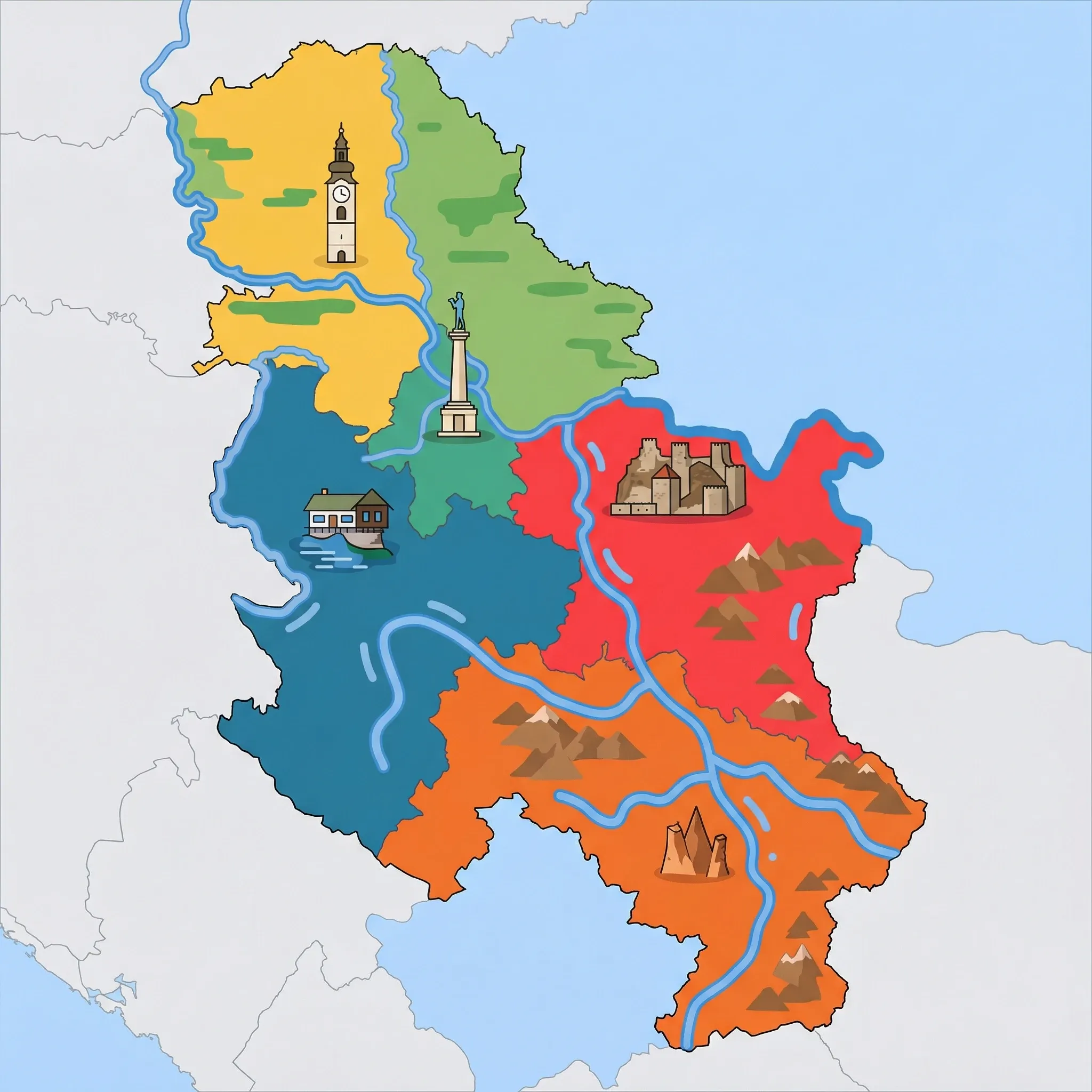
Click a region to explore
Southern Serbia, anchored by the city of Niš, offers a vibrant, energetic, and sensory experience. This is the crossroads of East and West, birthplace of the Roman Emperor Constantine the Great, and a region where history is etched into every stone. For families, Niš is a compact, walkable city with a fortress that doubles as a massive central park. The vibe here is noticeably different from the north—it is louder, more passionate, and significantly cheaper. The famous "southern hospitality" (južnjačka gostoprimljivost) means you will likely be fed until you can't move. The locals love children, and you will find a relaxed attitude toward noise and play in public spaces.
While the city offers history, the surrounding region offers wilderness. Stara Planina (Old Mountain) is one of the most beautiful and least commercialized mountain ranges in Serbia. It is a fantastic year-round destination: snow-sure skiing in winter and waterfall hunting in summer. The region is also famous for its thermal spas, like Niška Banja, which have been healing visitors since Roman times. While some historical sites in Niš (like the concentration camp or Skull Tower) are somber, they provide powerful educational opportunities for older children about the resilience of the local people. This region is for families who want to eat well, learn history, and experience authentic Balkan culture without the tourist polish.
Key Attractions
Start at the Niš Fortress. It is an 18th-century Turkish fortress built on Roman foundations. Inside, there is a mini-train for kids, cafes, ancient ruins, and plenty of grass for running around. It is the city's living room. A short drive away is the Skull Tower (Ćele Kula). Built by the Ottomans using the skulls of Serbian rebels, it is a macabre but important monument. Note for parents: While historically significant, it can be frightening for very young or sensitive children; gauge your child's sensitivity before entering.
For Roman history, visit the Mediana Archaeological Site, the luxury residence of Emperor Constantine. Seeing the mosaics helps kids visualize Roman life. Nature lovers should head to Stara Planina Mountain Center (Jabučko Ravnište). In winter, it is a family-friendly ski resort with gentle slopes; in summer, the Babin Zub - Midžor Hiking Trail offers breathtaking views that are accessible for active families. Further south, Vlasina Lake features unique floating peat islands and is a serene spot for picnics.
Practical Advice
Niš has its own international airport (Constantine the Great), making it accessible. Summers can be very hot (40°C is not uncommon), so plan sightseeing for mornings. Winters in the city are grey, but on Stara Planina, they are snowy and bright. English is widely spoken by younger people, but less so by the older generation than in Belgrade.
Food & Drink
Typical meal times: Lunch is late, often starting at 2:00 pm or 3:00 pm. Dinners in kafanas (taverns) are social events with live music, often starting at 9:00 pm, but kids are welcome to stay up.
Typical meal costs: Incredible value. Niš is significantly cheaper than Belgrade. A massive feast for four costs 3,000–5,000 RSD (approx. $28–46 USD / €25–42 EUR). Street food (burek) is around 180 RSD (approx. $1.65 USD / €1.50 EUR).
Dietary requirements: This is the BBQ capital. Vegetarians will struggle more here than in Belgrade. Grilled peppers and salads are the main options. Specify "bez mesa" (no meat) clearly.
Signature dishes:
- Niš Burek – Niš claims to be the birthplace of burek. Here it is often round, cut into quarters, and eaten with yogurt. It is greasier and richer than elsewhere.
- Gourmet Pljeskavica – A burger patty mixed with kačkavalj cheese and bacon bits, grilled to perfection.
- Urnebes Salad – A spicy spread made of white cheese and chili flakes. Proceed with caution with kids—it packs a punch!
Why this score?
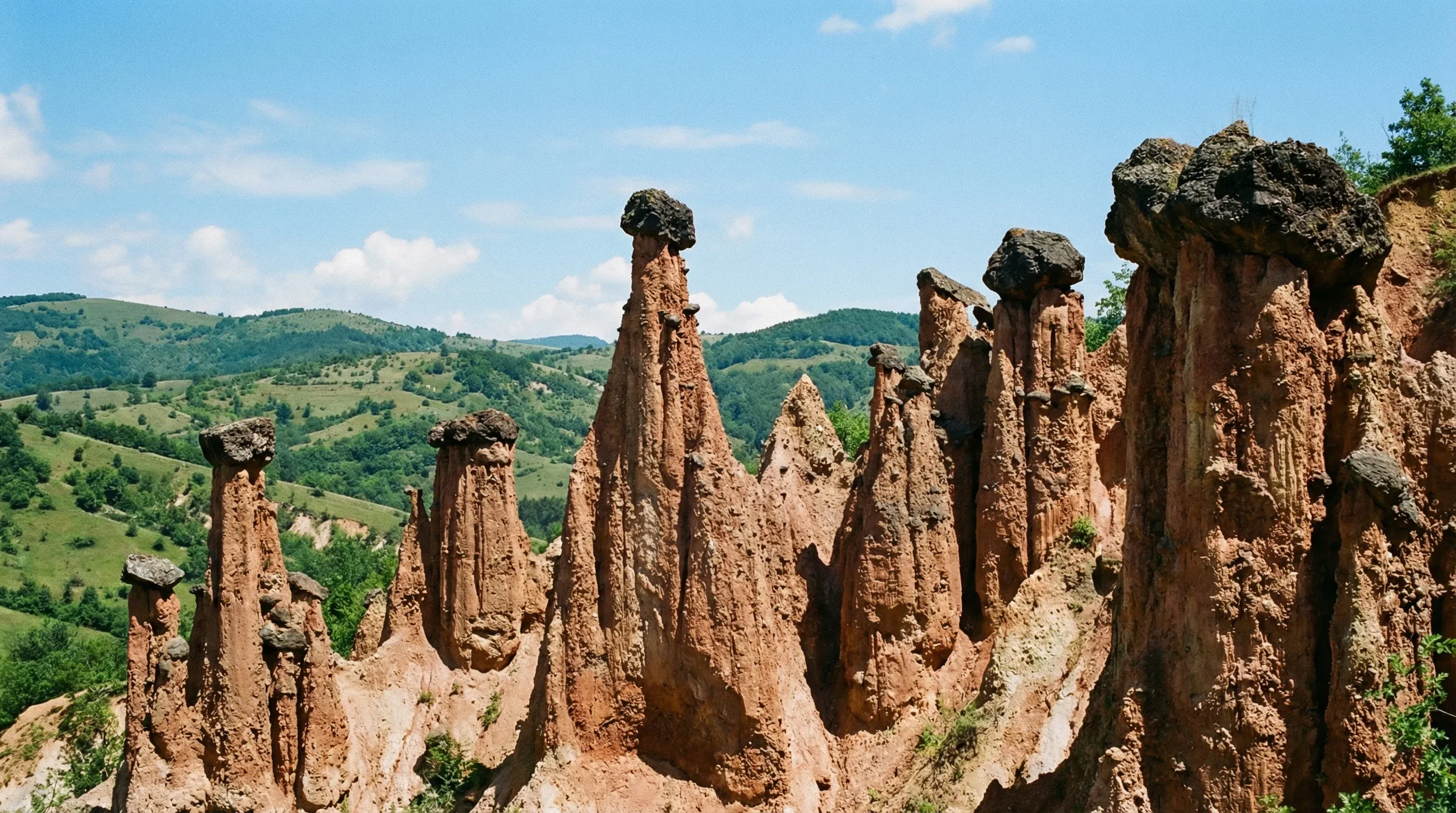
The region features the Stara Planina mountain range, which offers some of the most authentic and less-commercialized outdoor experiences in Serbia. Rugged rock formations like Đavolja Varoš and deep gorges like Sićevo provide excellent opportunities for moderately challenging exploration. It feels more remote and wild than the northern plains, requiring more self-reliance from visitors.
Why this score?
Niš is the third-largest city in Serbia and serves as a major regional medical center with a large Clinical Center and several specialized hospitals. While rural areas in the south have limited facilities, the city of Niš provides reliable care for most emergencies and routine issues. Language barriers may exist in public hospitals, but the quality of clinical care is generally high for the region.
Why this score?
Southern Serbia remains an off-the-beaten-path destination for most international travelers, with tourism centered on the historic city of Niš and unique sites like Devil's Town. It is often a transit point for travelers moving between Central Europe and Greece or North Macedonia. While rich in history, it lacks the concentrated tourist infrastructure found in the north or west of the country.

Southern Serbia is one of the cheapest regions in Europe. A family can stay in a nice apartment for 3,500–6,000 RSD (approx. $32–55 USD / €30–51 EUR). Eating out is the main activity, and portions are huge; one portion of grill meat is often enough for two people.

Getting Here & Around
Getting Here
- Airports – Niš Constantine the Great Airport (INI) has low-cost flights from various European cities. It is small and very quick to navigate.
- Bus – Frequent buses connect Niš with Belgrade (3 hours) and Sofia, Bulgaria (3 hours).
- Car – Located on the main E-75 highway, Niš is the main transit point for travelers driving to Greece or Turkey.
Getting Around
- Taxi – Taxis in Niš are extremely cheap. It is often the most convenient way for families to get from the Niš Fortress to the Skull Tower.
- Walking – The city center is compact. You can walk everywhere within the central zone.
- Bus – To reach Stara Planina Mountain Center, a car or arranged transfer is necessary as public buses are infrequent.
Nearby Airports (2 airports)
Nis
ININis
Moreva Airport
KVOKraljevo
View full flight map for Serbia →
Official Links

Packing List
Essential for Stara Planina terrain; sneakers are insufficient for the rocky paths.
The food is very rich, oily, and heavy on meat; digestion aids are helpful for adjustment.
If your hotel is near a 'Kafana' (tavern), live brass music can go on late into the night.
Many smaller shops and rural restaurants in the south still do not accept cards.
River beaches at Ada Ciganlija and Silver Lake often have pebbles or stony bottoms.
Indoor smoking is common in restaurants; this keeps smoky clothes separate in your luggage.
Public restrooms (especially at bus stations) occasionally run out of toilet paper.
Essential for children on the winding scenic roads of Western Serbia.
If visiting local homes, it is strict custom to remove shoes at the door.
The rich, meat-heavy local cuisine can sometimes be heavy for unaccustomed stomachs.

Activities & Best Times

Hiking, wildlife, outdoor exploration, ecotourism
The region features dramatic geological sites like Đavolja Varoš and the Stara Planina wilderness, offering authentic off-the-beaten-path exploration. Peak months avoid the intense mid-summer heat while ensuring trails through the Sićevo and Jelašnica Gorges remain accessible and vibrant.

Urban tourism, museums, historical sites, architecture
Niš is a historic crossroads featuring Roman heritage and the unique Ottoman-era Skull Tower, complemented by an exceptionally authentic Balkan culinary scene. Spring and autumn offer the most comfortable temperatures for exploring the fortress and urban center on foot.

Spa retreats, wellness centers, peaceful getaways
Soko Banja and Sijarinska Banja are long-established thermal centers with unique features like natural geysers and historic Turkish baths. While indoor treatments are possible year-round, the experience is best in summer when outdoor thermal pools and surrounding parks are fully accessible.

Scenic drives, countryside tours, route-based travel
Scenic drives through the Sićevo Gorge and the mountain ascent to Babin Zub offer spectacular Balkan landscapes and access to remote villages. Driving is most enjoyable in the stable weather of late spring and autumn, avoiding winter ice and summer peak holiday traffic.

Winter sports, ski resorts, snow activities
Stara Planina (Babin Zub) provides a modernizing ski experience that serves as a high-value alternative to the Alps for adventurous families. Reliable snow coverage is typically concentrated in January and February, with facilities scaling back significantly outside this core window.

Sport tourism, fitness activities, active recreation
The region is an emerging hub for rock climbing in Jelašnica Gorge and high-altitude trekking on Midžor, featuring rugged and uncrowded terrain. Activity is most productive during the shoulder seasons when the weather is cool enough for strenuous physical activity but free of snow.

Events, celebrations, seasonal attractions
The Nišville Jazz Festival and Leskovac Roštiljijada are significant cultural anchors that provide an authentic look into Serbian arts and gastronomy. These events are highly date-specific, making late summer the primary window for festival-focused international travel.
Amusement parks, family entertainment venues
Regional aqua parks like Nais and Podina offer summer entertainment for families but lack the scale or thematic depth required for international destination status. These outdoor facilities are purely seasonal and only operate during the peak heat of the summer.

Attractions (16 total)



Public Holidays & Calendar Next 12 months
Public holidays, festivals, cultural celebrations, and seasonal natural phenomena coming up in Southern Serbia (Niš) over the next 12 months.
Loading holidays and events...

Travel Advisory
Five of the six major agencies assess the country as requiring only standard safety awareness. While specific regional risks exist near the Kosovo border and urban crime is noted, the general safety environment remains stable for most visitors.
Safety Topics
Traveller Advice (4 groups)
Accessibility infrastructure is inconsistent; many older buildings and public transport systems may not be fully equipped for those with limited mobility.

While same-sex relationships are legal, social acceptance remains limited in many areas. Public displays of affection may attract negative attention or harassment.

Solo female travellers should follow standard security protocols, particularly when navigating nightlife districts or using public transportation late at night.

Foreigners must register their presence with the local police within 24 hours of arrival, a service typically provided by hotels. It is also recommended to carry a photocopy of your passport at all times and use ATMs located within secure buildings.
Agency Summaries
No major travel restrictions are in place. Visitors are advised to monitor local news for protests and remain vigilant against the general threat of terrorism common across Europe.
Most visits are trouble-free. Major concerns include frequent public protests in Belgrade, the risk of unexploded landmines in southern border regions, and potential medical evacuation needs due to variable healthcare standards.
General safety awareness is sufficient for most travellers. Visitors should ensure their passports are valid for at least 90 days beyond their stay and keep photocopies of identification.
Standard precautions apply. Key risks noted include petty theft in tourist hubs and potential disruptions from civil demonstrations. Avoid off-road travel near the Kosovo border due to legacy munitions.
Increased vigilance is recommended due to the prevalence of organized crime and violence often associated with major sporting events. Travellers should remain aware of their surroundings in urban areas.
Travellers should maintain standard safety awareness similar to what they would practice at home. A higher degree of caution is advised specifically within 10km of the Kosovo border due to political tensions and potential for unrest.
Information is provided for general guidance only and does not constitute travel, safety, medical, or legal advice. Conditions may change. Users are responsible for independently verifying information before travel.