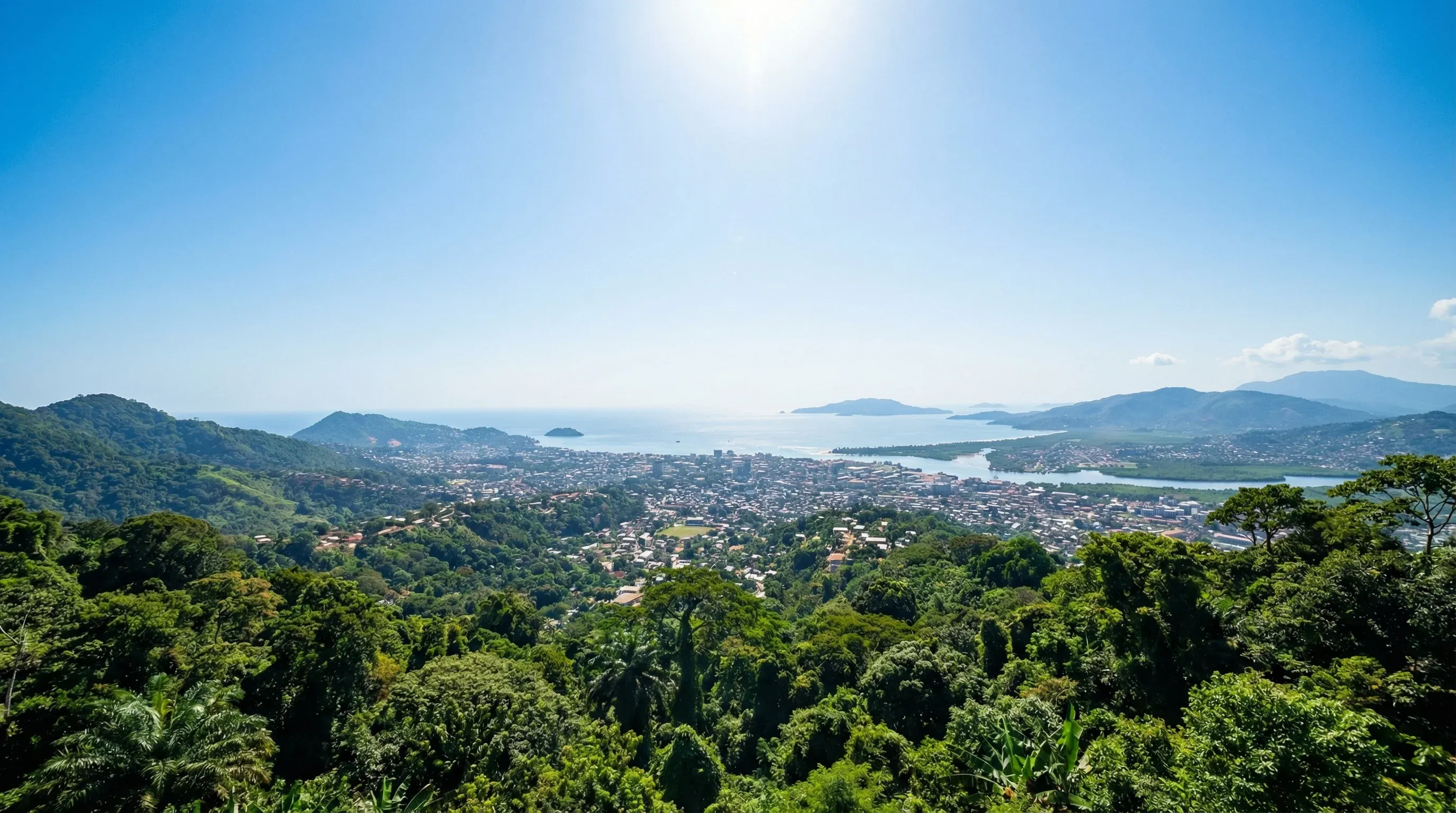

Freetown & Western Area
A vibrant city of history, hills, and hope 🇸🇱🏙️
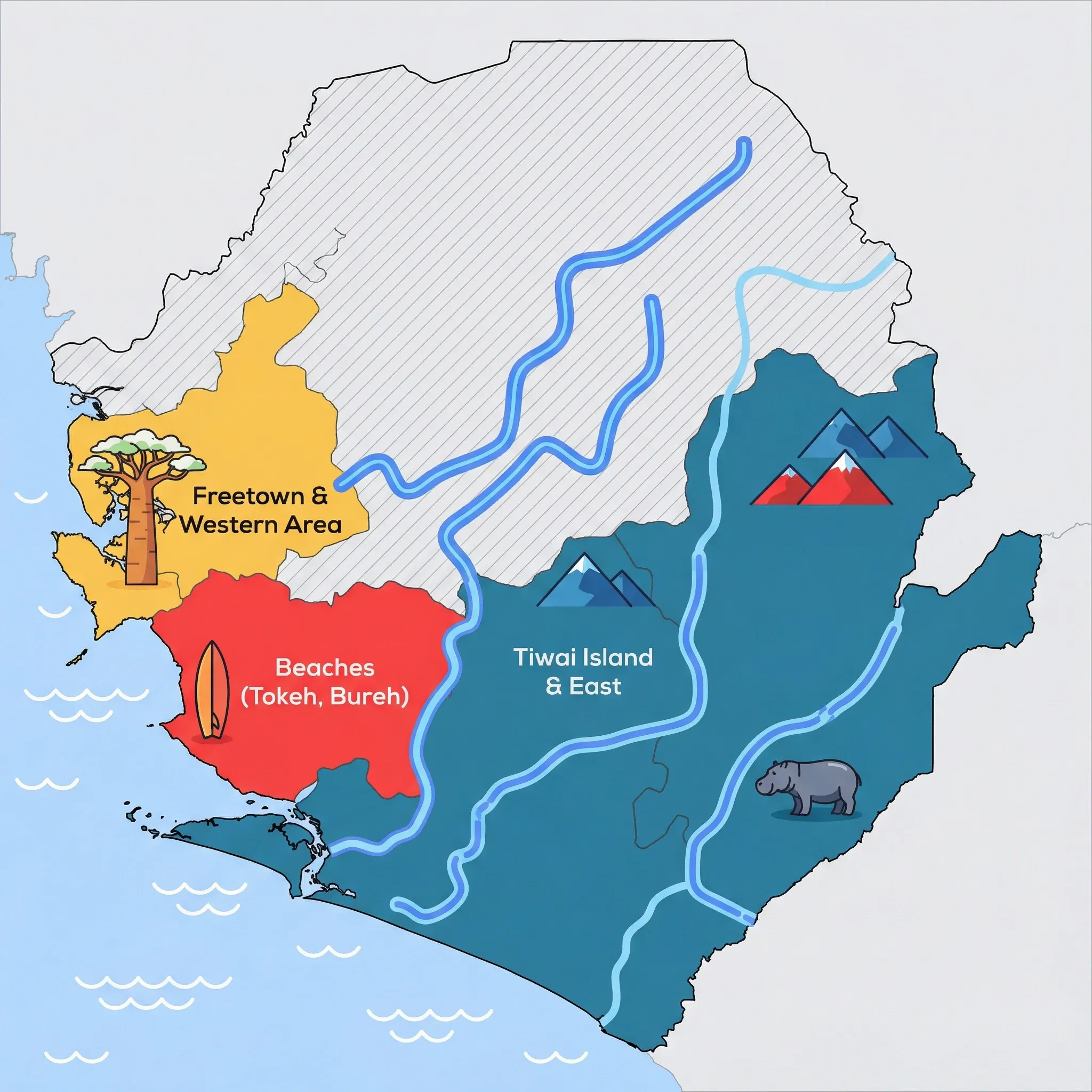
Click a region to explore
Freetown is a city that assaults the senses in the best possible way—it is colorful, loud, hilly, and deeply friendly. For families, it serves as the gateway to the country and a place of profound historical significance. The city is built on a series of steep hills descending to the ocean, reminiscent of a tropical San Francisco. The streets are filled with the yellow glow of 'kekes' (tuk-tuks) and the bustle of markets. While the traffic can be intense, the energy is infectious. It is a place where you can learn about the unique Krio culture, formed by freed slaves who returned to Africa, visible in the distinctive 'bod os' (board house) architecture found in older neighborhoods.
Beyond the urban hustle, the Western Area offers immediate access to nature. You can be in the center of a chaotic market one minute and standing in a cool, misty rainforest watching chimpanzees the next. The city faces the Atlantic, meaning sunset dinners on the beach are a daily ritual. However, visitors should be aware that Freetown requires vigilance; sidewalks are uneven or non-existent (strollers are difficult to use), and the heat and humidity can be draining for children. It is a city best explored in short bursts, with plenty of breaks for cold drinks and air-conditioning.
Key Attractions
At the heart of the city stands The Cotton Tree. This massive, ancient tree is the spiritual symbol of Freetown; legend says the first group of freed slaves gathered around it to pray upon landing in 1792. It is an easy, central landmark to visit and offers a great opportunity to teach children about the city's origins. Just a short drive into the hills lies the Tacugama Chimpanzee Sanctuary (highly recommended, though requires booking). It is a rescue center for orphaned chimps and offers a magical experience for kids to see these animals in a protected forest environment.
For families with older children (suggested 10+), a boat tour to Bunce Island is a must. This former slave fortress is a haunting, preserved ruin that tells the story of the rice coast slavery connection to North America. It is a somber but essential history lesson. Back on the mainland, the Sierra Leone National Museum provides a small but interesting collection of masquerade costumes and artifacts that can captivate younger imaginations without being overwhelming.
Practical Advice
Freetown is hot and humid. The best time to explore is early morning. Plan logistics carefully; traffic jams ('go-slows') can turn a 20-minute drive into an hour. Carry small change for tips and purchases. Malaria prophylaxis is non-negotiable.
Food & Drink
Typical meal times: Lunch is huge and eaten between 12:00 pm and 2:00 pm. Dinner is served from 7:00 pm onwards, with many restaurants on Lumley Beach staying open late.
Typical meal costs: Street snacks cost pennies. A sit-down dinner in a decent restaurant costs SLE 200–450 (approx. $9–20 USD / €8–18 EUR) per person. High-end hotel buffets can reach SLE 700–1,000 (approx. $30–44 USD / €28–40 EUR).
Dietary requirements: Vegetarian food is available (jollof rice, plantains, bean stews), but veganism is not a widely understood concept, so check for butter/shrimp paste usage. Peanut allergies are a major concern as groundnuts are a staple ingredient.
Signature dishes:
- Cassava Leaf – The national dish. A rich, green stew made from ground cassava leaves, palm oil, and meat or fish, usually served over rice.
- Groundnut Soup – A creamy, savory peanut butter soup often cooked with chicken and vegetables.
- Fry Fry – A collective term for street food fried snacks like akara (bean cakes) and fried plantains, often sold with spicy gravy.
Why this score?
Navigating the vibrant, hilly, and often congested capital provides a mild urban adventure, while the nearby Western Area Forest Reserve offers accessible hiking. It is less rugged than the interior but requires more resilience than a typical developed city due to inconsistent utilities and chaotic transport systems.
Why this score?
Freetown contains the country's best healthcare options, including private clinics like Choithram Hospital which are familiar with treating foreigners. However, the system still faces significant challenges regarding equipment availability and specialized care, matching the 'healthcare exists but quality concerns' criteria of a 4/10 score.
Why this score?
As the primary gateway and economic hub of the country, Freetown receives the majority of Sierra Leone's 40,000 annual visitors. It hosts the country's most famous attractions like Tacugama and Bunce Island, yet it remains an emerging destination with limited tourism-specific infrastructure compared to regional neighbors.

Freetown is the most expensive part of the country. A comfortable hotel room for a family costs SLE 2,300–4,500 (approx. $100–200 USD / €90–180 EUR). Transport is cheap; a town trip in a keke is SLE 20–50 (approx. $0.90–2.20 USD / €0.80–2.00 EUR). Supermarket imports are pricey, often exceeding European prices.

Getting Here & Around
Getting Here
- Airports – Freetown International Airport (FNA) is located across the bay at Lungi.
- Ferry/Water Taxi – To get from the airport to the city, you must cross the estuary. The Sea Coach Express or Sea Bird water taxis take about 30 minutes and are an adventure in themselves.
- Helicopter – A faster, more expensive transfer option is available from Lungi to the Aberdeen helipad.
Getting Around
- Keke (Tuk-tuk) – The most fun way for families to travel short distances. They are open-air, cheap, and weave through traffic. Negotiate the price first.
- Taxi – Shared taxis are color-coded (often yellow). For families, 'chartering' (hiring the whole taxi) is safer and more comfortable than sharing.
- Walking – Only recommended in specific areas like Lumley Beach promenade or the immediate center near The Cotton Tree due to broken pavements and traffic.
Nearby Airports (1 airport)
Freetown Lungi
FNAFreetown
View full flight map for Sierra Leone →
Official Links

Packing List
Crucial for the choppy water taxi ride from the airport to the city.
Power cuts are common in the city; helpful for navigating hotel rooms or streets at night.
Dusty streets and eating with hands make hygiene supplies essential for kids.
The city is very loud (horns, music, generators); helpful for sensitive children.
Banks and exchanges often refuse bills with even tiny tears, ink marks, or dates older than 2009.
Power cuts are frequent even in hotels; street lighting is rare outside main roads.
High-risk zone; medication is essential, not just bug spray.
Digital copies are not always accepted or easy to show if phone battery dies or internet fails.
Essential for the airport water taxi transfer to keep luggage dry from sea spray.

Activities & Best Times

Hiking, wildlife, outdoor exploration, ecotourism
Home to the world-renowned Tacugama Chimpanzee Sanctuary and the lush Western Area Peninsula National Park. The dry season is essential for navigating jungle trails and observing wildlife without the logistical challenges of Sierra Leone's extreme rainfall.
Beach resorts, marine activities: diving, snorkelling, kite surfing, wind surfing, sailing
Features stunning, undeveloped white-sand beaches like River No. 2 and Tokeh Beach which offer authentic tropical beauty. Peak season aligns with the dry months when the Atlantic is calm and crystal clear, whereas the monsoon rains make coastal activities impractical.

Urban tourism, museums, historical sites, architecture
Freetown offers a deep historical narrative through sites like Bunce Island and the Cotton Tree, reflecting the city's unique Krio heritage. Tourism is concentrated in the drier, slightly cooler months when boat transfers to historic islands are safest and urban walking tours are comfortable.

Scenic drives, countryside tours, route-based travel
The Western Area Peninsula Circular Route is a celebrated scenic drive connecting rainforest-backed beaches. Travel is highly seasonal, as the rainy season can significantly degrade road conditions and obscure the dramatic mountain-and-sea views.

Sport tourism, fitness activities, active recreation
Bureh Beach is a growing hub for international surfing, while Sugar Loaf Mountain offers challenging hiking trails. Peak conditions occur in the dry season when waves are consistent for beginners and trails remain firm and accessible.

Learning experiences, scientific sites, historical education
The National Railway Museum provides a unique window into West African colonial history, though it is a niche attraction. It serves as a meaningful stop for families during the dry season when integrated into broader cultural itineraries.
Amusement parks, family entertainment venues
Family Kingdom provides localized amusement options for children, though it lacks the scale of international destination parks. Visitation is best during school holiday periods in the dry season when outdoor rides are fully operational.




Public Holidays & Calendar Next 12 months
Public holidays, festivals, cultural celebrations, and seasonal natural phenomena coming up in Freetown & Western Area over the next 12 months.
Loading holidays and events...

Travel Advisory
Consensus among major agencies indicates that while travel is possible, visitors must exercise a high degree of vigilance due to prevalent violent crime, political volatility, and inadequate infrastructure.
Safety Topics
Traveller Advice (3 groups)

Follow conservative dress and behavior standards to align with local social traditions and minimize the risk of harassment.

Do not travel outside of the Freetown peninsula after dark due to extreme safety risks. Always carry identification and keep vehicle doors locked and windows closed while in transit.

Be aware that same-sex relationships are illegal in Sierra Leone. Public displays of affection could lead to legal repercussions or social hostility.
Agency Summaries
The risk of violent crime such as armed robbery is elevated, especially after dark. Political tensions may lead to protests, and medical services are extremely limited.
Visitors are advised to check local security and health guidelines. Key focus areas include safety protocols, mandatory entry fees, and differing local legal standards.
Increased vigilance is suggested because of the risk of demonstrations and violent crime. Travellers must adhere to strict entry requirements, including a security fee and vaccination proofs.
Heightened awareness is required because of frequent violent crime, including assault and robbery, alongside potential civil unrest. Healthcare facilities are considerably below Western standards.
Travellers should remain highly vigilant due to significant crime rates and safety concerns on the roads. Movement outside the capital after sunset is discouraged because of hazardous driving conditions and limited emergency support.
Caution is recommended due to the threat of violent crime and civil disturbances. New health screening measures for Mpox have been implemented at entry points.
Information is provided for general guidance only and does not constitute travel, safety, medical, or legal advice. Conditions may change. Users are responsible for independently verifying information before travel.