

⚠️ SAFETY WARNING: Exercise normal safety precautions. While Slovakia is generally very safe, the country shares a border with Ukraine. Avoid travelling immediately near the eastern border with Ukraine due to the ongoing conflict. Additionally, tick-borne encephalitis is present in forests; use repellent and check for ticks after hiking.
Overview
Slovakia is a hidden gem in Central Europe that feels custom-made for family adventures. Roughly the size of Switzerland but far more affordable, it shifts dramatically from the flat, fertile Danube plains in the southwest to the jagged granite peaks of the High Tatras in the north. For families, this compact geography means you can hike in an alpine national park in the morning and explore a medieval castle town in the afternoon, with rarely more than a few hours of driving in between. The atmosphere is laid-back and safe, with a strong cultural emphasis on outdoor living and folklore.
Culturally, Slovakia is deeply connected to its mountains and rural traditions. Children will be enchanted by the local legends of dragons and knights that surround the country's 6,000+ caves and hilltop ruins. The people are generally reserved but warm, especially towards children. While English is widely spoken in Bratislava and by the younger generation, a few words of Slovak will go a long way in rural villages. The country offers a perfect balance of education and excitement-one day you might be panning for gold or learning traditional pottery, and the next you are riding a funicular railway or spotting chamois (mountain goats) on a rocky ledge.
Key Attractions
No family trip to Slovakia is complete without visiting its iconic fortifications. Bratislava Castle, the "upside-down table" overlooking the capital, offers interactive history museums and great views of the Danube. For a more rugged experience, head east to Spiš Castle, one of the largest castle complexes in Central Europe. Its sprawling ruins are a UNESCO World Heritage site where kids can run freely across the ramparts and imagine defending the fortress against Tatar invasions. Nearby, the Slovak Paradise National Park (Podlesok) offers thrilling but accessible ladder-and-bridge hikes through gorges that adventurous older children will never forget.
Nature lovers should head north to the High Tatras. The resort town of Štrbské Pleso is centered around a stunning glacial lake and serves as a perfect base for easy family walks or boat rides. If the weather turns, magnificent underground worlds await; the Demänovská Cave of Liberty in the Low Tatras is a wonderland of stalactites and underground rivers, while the Dobšinská Ice Cave offers a frozen fairy kingdom even in the height of summer. For a day of pure fun, Aquapark Senec near Bratislava provides thermal pools and slides that run year-round.
Practical Advice
The best time to visit is from May to September for hiking and castle exploring, though the Tatras are also popular for winter sports from December to March. Slovakia is part of the Schengen Area and uses the Euro (€), making travel logistics simple. Medical care is good, but in rural areas, pharmacies (lekáreň) may close early. If you plan to hike, be aware that mountain weather changes rapidly; always carry waterproofs. Ticks are common in forests from spring to autumn, so checking your children after a walk is essential.
Food & Drink
Typical meal times: Lunch (obed) is the main meal of the day, typically eaten between 11:30 am and 1:30 pm. Dinner (večera) is lighter and served from 6:00 pm to 8:00 pm.
Typical meal costs: €8–12 (approx. $9–13 USD / £7–10 GBP) for a daily lunch menu; €15–25 (approx. $16–27 USD / £13–21 GBP) for a main dinner dish.
Dietary requirements: Vegetarian options are becoming standard, with fried cheese (vyprážaný syr) being a ubiquitous meat-free classic. Vegan options are plentiful in Bratislava and Eastern Slovakia (Košice) but can be limited to salads or side dishes in traditional rural "Koliba" restaurants. Gluten-free awareness is growing but not guaranteed in small towns.
Family-friendly dining: Slovak restaurants are generally very welcoming to children. Most offer a "detské menu" (kids' menu) with smaller portions of chicken or pasta. Highchairs are common. Kofola, a local herbal cola draft soda, is a family favourite alternative to global brands.
Signature dishes:
- Bryndzové halušky – Small potato dumplings smothered in sheep cheese and topped with crispy bacon bits; the national dish, creamy and filling.
- Vyprážaný syr – A thick slab of Edam cheese, breaded and fried, typically served with chips and tartare sauce; an absolute winner with children.
- Kapustnica – A rich sauerkraut soup with sausage, dried mushrooms, and sometimes plums; often mild enough for adventurous kids.
- Parené buchty – Steamed buns filled with jam or chocolate and topped with cocoa powder and melted butter; a sweet main course or heavy dessert.
- Lokše – Dry potato pancakes often spread with goose fat (savoury) or poppy seeds and sugar (sweet).
Family Travel Notice
Minors traveling alone or with only one parent should carry notarized written consent from the non-traveling parent(s) to avoid being blocked from exiting the country.

Slovakia is very affordable compared to Western Europe. A family of four can expect to spend around €120–160 (approx. $130–175 USD / £100–135 GBP) per day, covering mid-range accommodation, meals, and activities. A filling 'daily menu' lunch often costs just €7–10 (approx. $8–11 USD / £6–9 GBP) per person.
Age Suitability

Explore Regions
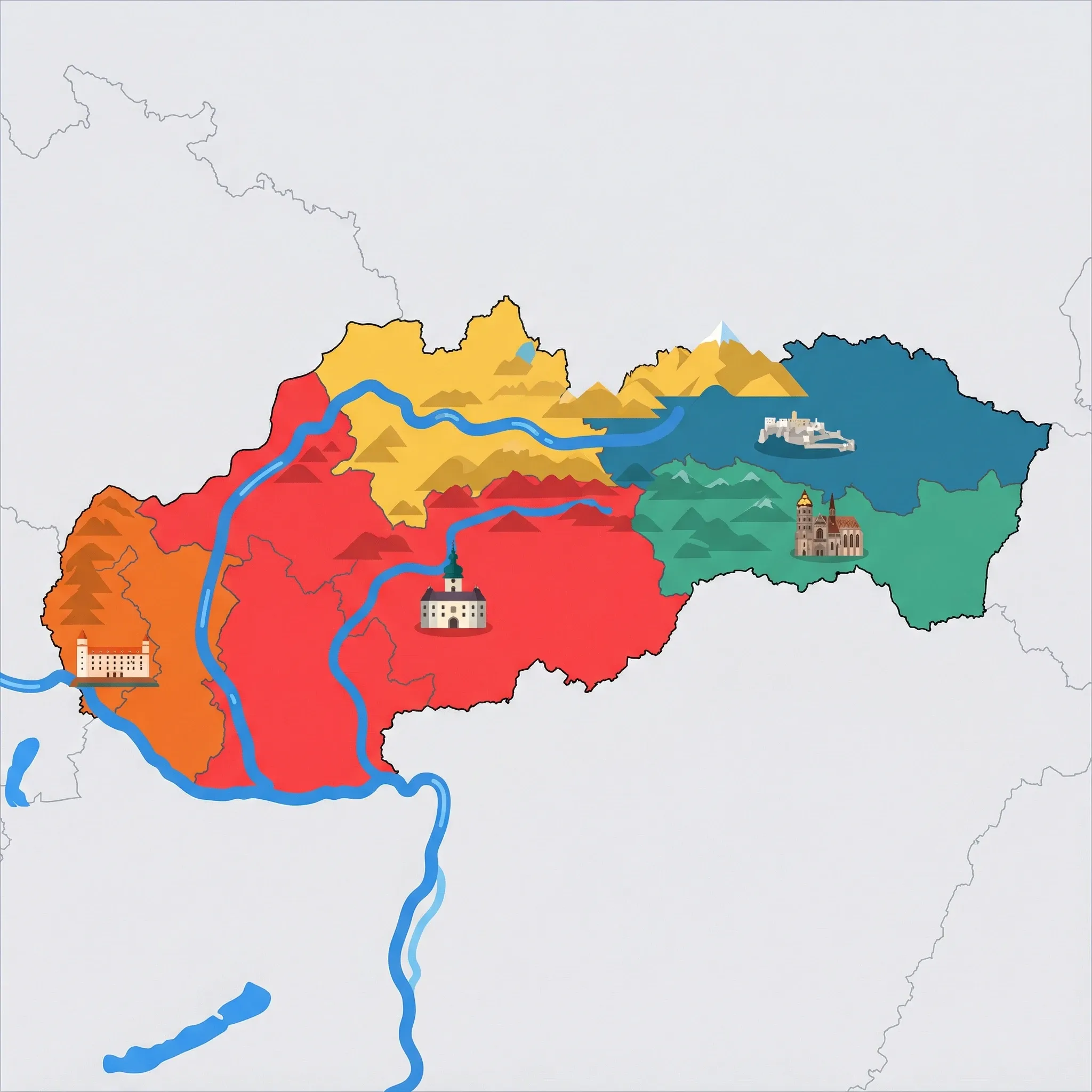
5 Regions
Bratislava
A little big city on the Danube 🏰🦁
Central Slovakia (Banská Štiavnica, Low Tatras)
Where ancient volcanoes meet deep forests 🌲⚒️
Eastern Slovakia (Košice)
Untamed nature and vibrant city life 🏙️🐻
High Tatras
Small mountains, big adventures 🏔️🚠
Spiš Region (Levoča, Spiš Castle)
Medieval giants and wild gorges 🏰🌿
Click on a region marker to explore details. Use the dropdown to color regions by activity suitability.

Getting There & Around
Getting There
- By Air – Bratislava Airport (BTS) serves the capital, but many families fly into Vienna (VIE) in Austria, which is only 45 minutes away by bus. Eastern Slovakia (Košice) has its own international airport (KSC) for exploring the east.
- By Train – Bratislava is a major rail hub connected to Vienna (1 hour), Prague (4 hours), and Budapest (2.5 hours). International trains are comfortable and family-friendly.
- By Car – Slovakia has open borders with Schengen neighbours (Austria, Czechia, Poland, Hungary). Motorway entry requires an electronic vignette.
- Entry Requirements – Slovakia is in the Schengen Area. US, UK, Canadian, and Australian citizens do not need a visa for short stays (up to 90 days). Check your government website for the latest visa requirements, or use the IATA Travel Centre entry-requirements checker.
Getting Around
- Trains – The state operator ZSSK runs a scenic and efficient network. Children under 6 travel free, and those aged 6–15 get a 50% discount. The line through the Váh valley to the High Tatras is particularly beautiful.
- Car Hire – The best way to explore rural castles and caves. Roads are generally good, but mountain passes can be winding. You must buy an electronic vignette (via eznamka.sk) to use motorways.
- Buses – A dense network of regional buses connects villages that trains don't reach. They are reliable and cheap, though drivers may not speak English.

Packing List
Forest ticks are very common and can carry TBE; essential for any nature walks.
It is polite and expected to remove outdoor shoes when entering Slovak homes or small guesthouses.
Cave tours are a constant 7°C year-round, and mountain weather drops quickly even in July.
Some older thermal pools and swimming baths still strictly require caps for hygiene.
Roads in the Tatras and Fatra mountains are scenic but very winding.

Activities & Best Times

Adventure & Nature
Very GoodHiking, wildlife, outdoor exploration, ecotourism
While the High Tatras offer exceptional alpine hiking and climbing for Central Europe, they are explicitly the 'smallest high-mountain range in the world' (26km). They cannot compete internationally with the Alps, Dolomites, Himalayas, Rockies, or Patagonia for 'excellent' adventure status. Strong regional significance warrants 'very_good' but not global elite status.
Home to the UNESCO-listed Slovak Karst National Park and one of Europe's largest zoos, the region offers high-quality immersion in diverse ecosystems. Optimal hiking and wildlife viewing occur from late spring through early autumn, while winter conditions can limit accessibility to remote trails.
Home to the Low Tatras National Park and the legendary Path of the Heroes of the SNP, offering rugged wilderness and extensive trail networks. Peak summer months provide the best accessibility for high-altitude trekking, while spring and late autumn can be hampered by mud or early snow.

City & Cultural
Very GoodUrban tourism, museums, historical sites, architecture
Kežmarok and Poprad offer a blend of Gothic architecture and UNESCO heritage sites like the wooden articulated church. Summer provides the most vibrant atmosphere for exploring the historic squares and manor houses.
Košice features a remarkably well-preserved medieval center and the unique Andy Warhol Museum of Modern Art, appealing to sophisticated cultural travelers. The city is most vibrant during the warmer months when street life and outdoor cafes are active, while winter can feel quiet and grey.
Banská Štiavnica is a preserved UNESCO site offering an authentic glimpse into medieval mining wealth with its distinctive architecture and 'tajchs'. Late spring through early autumn is ideal for exploring the steep, atmospheric streets and castle complexes.

Sports & Active
Very GoodSport tourism, fitness activities, active recreation
High-quality infrastructure for climbing, technical hiking, and bobsledding attracts active families. Most outdoor rope parks and the Rysy hiking routes are only safe and operational during the summer peak.
With major international cycling routes like EuroVelo 11 and the legendary Cesta hrdinov SNP hiking trail, the region offers elite infrastructure for active families. The primary season runs from late spring through early autumn when daylight is long and trails are dry.
The region features the 'Bajkom k tajchom' cycling network and major outdoor activity centers in Donovaly catering to active families. Summer offers optimal conditions for the purpose-built bike trails and alpine coasters that define the region's active tourism.

Educational & Exploratory
GoodLearning experiences, scientific sites, historical education
The Museum of the Tatra National Park (TANAP) is a destination-level natural history center crucial for understanding Carpathian ecology. Visitation is highest during the warmer months when the museum's botanical exhibits are in bloom.
The Open-Air Mining Museum and Museum of Coins and Medals provide world-class insights into Central Europe's industrial heritage. Most educational sites are best visited when historical outdoor mining sites are accessible and guided tours are at full frequency.
The Slovak Technical Museum and Museum of Aviation offer deep, specialized collections of European industrial heritage. These facilities are high-quality but function primarily as secondary attractions rather than standalone global motivators.

Relaxation & Wellness
GoodSpa retreats, wellness centers, peaceful getaways
A well-established tradition of thermal baths, particularly at Vrbov and Šírava, offers authentic restorative experiences for families. These facilities are operational year-round, with peak demand occurring during summer holidays and the mid-winter festive season.
Unique thermal experiences like the Parenica Cave Bath offer natural mineral-rich waters in a historic setting. While available year-round, these wellness facilities are most appealing during the colder winter months as a restorative escape from the alpine climate.
Offers regional thermal bath facilities and spa hotels, though it lacks the concentration of world-class facilities found in established European spa towns. It serves primarily as a secondary activity for hikers and skiers.

Road Trips & Scenic
GoodScenic drives, countryside tours, route-based travel
The 'Road of Freedom' (Cesta Slobody) is a celebrated scenic route connecting all major Tatra settlements with dramatic mountain views. Best driven from late spring to early autumn to avoid icy conditions and seasonal pass closures.
The Gothic Route and the UNESCO Tokaj Wine Route offer exceptional scenic and cultural driving through historic landscapes and world-class vineyards. Roads are best navigated from spring to autumn, as mountain passes can be challenging during the snowy winter months.
Scenic mountain passes like Donovaly and Čertovica offer spectacular alpine views and well-maintained winding roads. Spring and autumn provide the best visibility and most dramatic colors for touring the Horehronie section of the Slovak Route 66.

Ski & Snow
GoodWinter sports, ski resorts, snow activities
Home to Slovakia's premier ski resorts, offering modern lift infrastructure and the country's highest vertical drops. While smaller than Alpine resorts, it provides reliable snow and authentic mountain culture during the core winter months.
Resorts like Jahodná and Plejsy offer solid regional infrastructure and night skiing suitable for families, though they lack the high-altitude scale of the neighboring High Tatras. The season is reliably concentrated in mid-winter, with shoulder months subject to variable snow quality.
Jasná and Donovaly are solid regional ski resorts but calling them 'premier European ski destinations' overstates their international standing. They lack the vertical drop, guaranteed snow, and global reputation of Austrian, Swiss, French, or Italian premier resorts. Appropriate for national/regional significance but not European elite.
Theme Park & Entertainment
GoodAmusement parks, family entertainment venues
Dominated by AquaCity Poprad, a world-class geothermal water park that is a major draw for families. Peak usage occurs in summer for outdoor slides, though the thermal facilities remain popular as a post-ski activity in winter.
AquaCity Poprad provides a world-class, ecologically sustainable aquatic experience that anchors the region's family entertainment. Summer offers full outdoor access, though indoor facilities remain a strong draw during the winter holiday periods.
Features unique fairytale-themed villages like Habakuky and Donovalkovo that offer high-quality, culturally-themed family entertainment. These outdoor venues are primarily seasonal, peaking during the warm summer school holidays.

Festivals & Seasonal
MarginalEvents, celebrations, seasonal attractions

Public Holidays & Calendar Next 12 months
Public holidays, festivals, cultural celebrations, and seasonal natural phenomena coming up in Slovakia over the next 12 months.
Loading holidays and events...
Climate & Weather
Bratislava
Show Details
| Month | Temp °C | Rain | Humidity |
|---|
Central Slovakia (Banská Štiavnica, Low Tatras)
Show Details
| Month | Temp °C | Rain | Humidity |
|---|
Eastern Slovakia (Košice)
Show Details
| Month | Temp °C | Rain | Humidity |
|---|
High Tatras
Show Details
| Month | Temp °C | Rain | Humidity |
|---|
Spiš Region (Levoča, Spiš Castle)
Show Details
| Month | Temp °C | Rain | Humidity |
|---|

Travel Advisory
All major agencies agree that Slovakia is a safe destination requiring only standard safety awareness. There are no significant nationwide threats to travelers.
Safety Topics
Traveller Advice (4 groups)

Exercise caution when walking alone at night and use reputable, licensed taxi services rather than hailing cars on the street.
Minors traveling alone or with only one parent should carry notarized written consent from the non-traveling parent(s) to avoid being blocked from exiting the country.

Carry identification at all times as police may request it. Ensure you register with local authorities if staying in private accommodation for more than a few days.

While legal, same-sex relationships are not recognized via marriage or civil unions. Public displays of affection may attract negative attention, and travelers should be aware of a 2022 attack on an LGBTQ+ venue in Bratislava.
Agency Summaries
Most visits are trouble-free. Travelers should be mindful of potential overcharging by taxis and remain vigilant in crowded areas following a previous terrorist incident in 2022.
Slovakia is considered a safe destination for visitors. Travelers are advised to follow standard safety routines, enroll in the Smart Traveler Enrollment Program (STEP), and stay away from political gatherings or demonstrations.
Travelers should maintain a standard level of safety awareness as they would in Canada. Be particularly alert for petty crime and pickpocketing in Bratislava's tourist centers and on public transportation.
Maintain a common-sense approach to safety. Note that the European Entry/Exit System (EES) is being implemented, which may cause border delays. Avoid travel from Slovakia into neighboring Ukraine due to the ongoing conflict.
No specific warning is in place. Visitors are advised to respect local registration laws if staying long-term and to be aware of occasional livestock disease outbreaks near the borders that may increase vehicle inspections.
Slovakia is generally safe. Key concerns for visitors include petty crime like drink spiking and car theft. Protests occur occasionally and should be avoided to prevent disruption or safety risks.
Information is provided for general guidance only and does not constitute travel, safety, medical, or legal advice. Conditions may change. Users are responsible for independently verifying information before travel.