
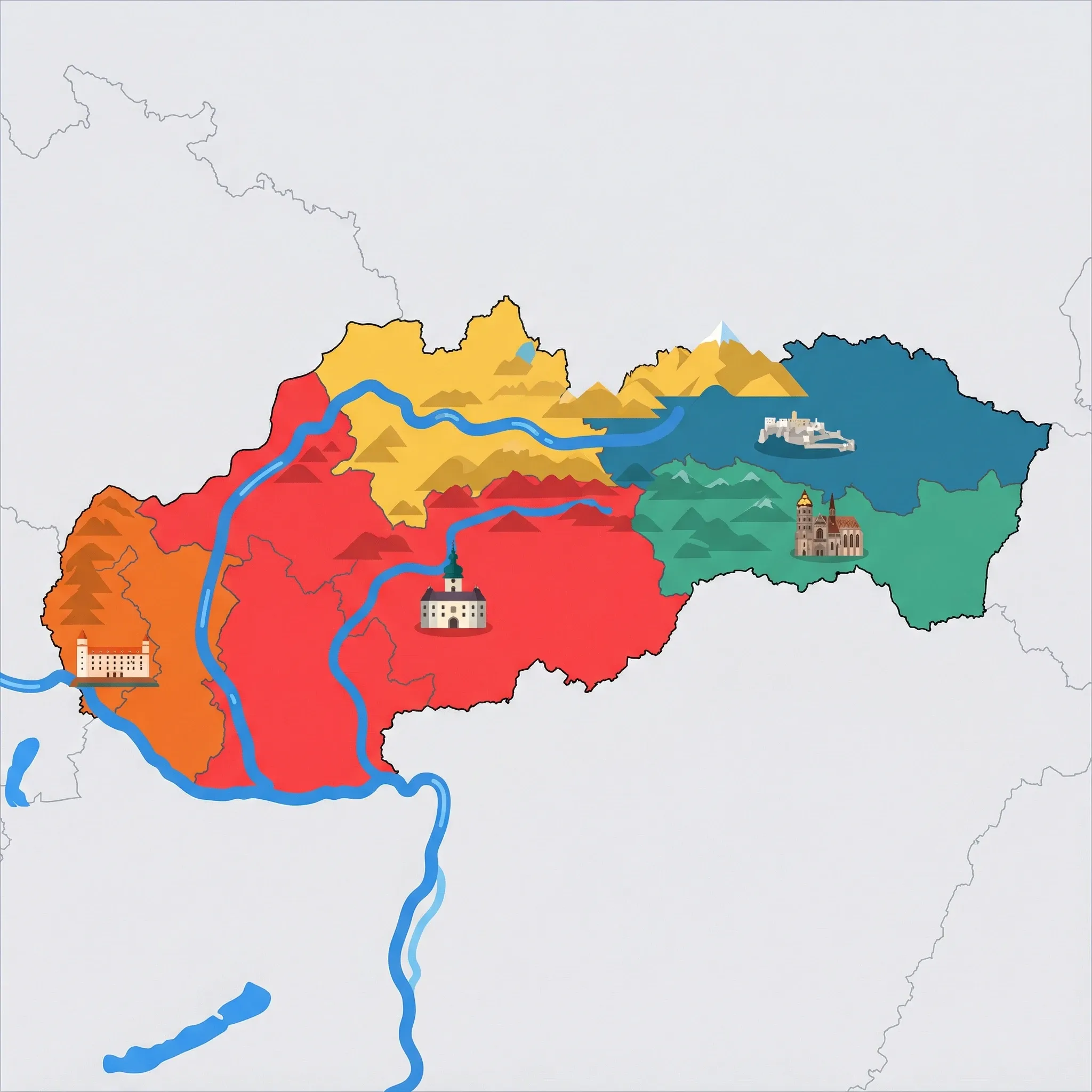
Click a region to explore
Bratislava is often affectionately called the "Little Big City," a moniker that perfectly suits its appeal to families. Situated at the crossroads of Slovakia, Austria, and Hungary, it offers the cultural richness of a European capital without the overwhelming crowds or distances of its larger neighbours like Vienna or Budapest. The city is defined by the mighty Danube River, which slices through the urban landscape, and the gentle foothills of the Little Carpathians, which provide a green backdrop and ample hiking opportunities just minutes from the centre. For parents, the compact Old Town is a joy to navigate with strollers; the pedestrianised streets are lined with pastel-coloured 18th-century buildings and whimsical bronze statues that children love to hunt for. The climate here is the warmest in Slovakia, with hot, sunny summers perfect for ice cream stops and river cruises, and crisp winters that bring festive Christmas markets to the main squares.
What makes Bratislava truly special for families is its accessibility and relaxed pace. You can explore medieval history in the morning, take a speedboat ride on the Danube at lunch, and be hiking in a forest reserve by the afternoon. The city lacks the frantic rush of major tourist hubs, allowing families to explore at a rhythm that suits toddlers and teenagers alike. The juxtaposition of the historic coronation city with quirky, communist-era architecture—like the UFO-topped SNP bridge—sparks curiosity in older children, while the abundance of parks and green spaces ensures younger ones have plenty of room to run free.
Key Attractions
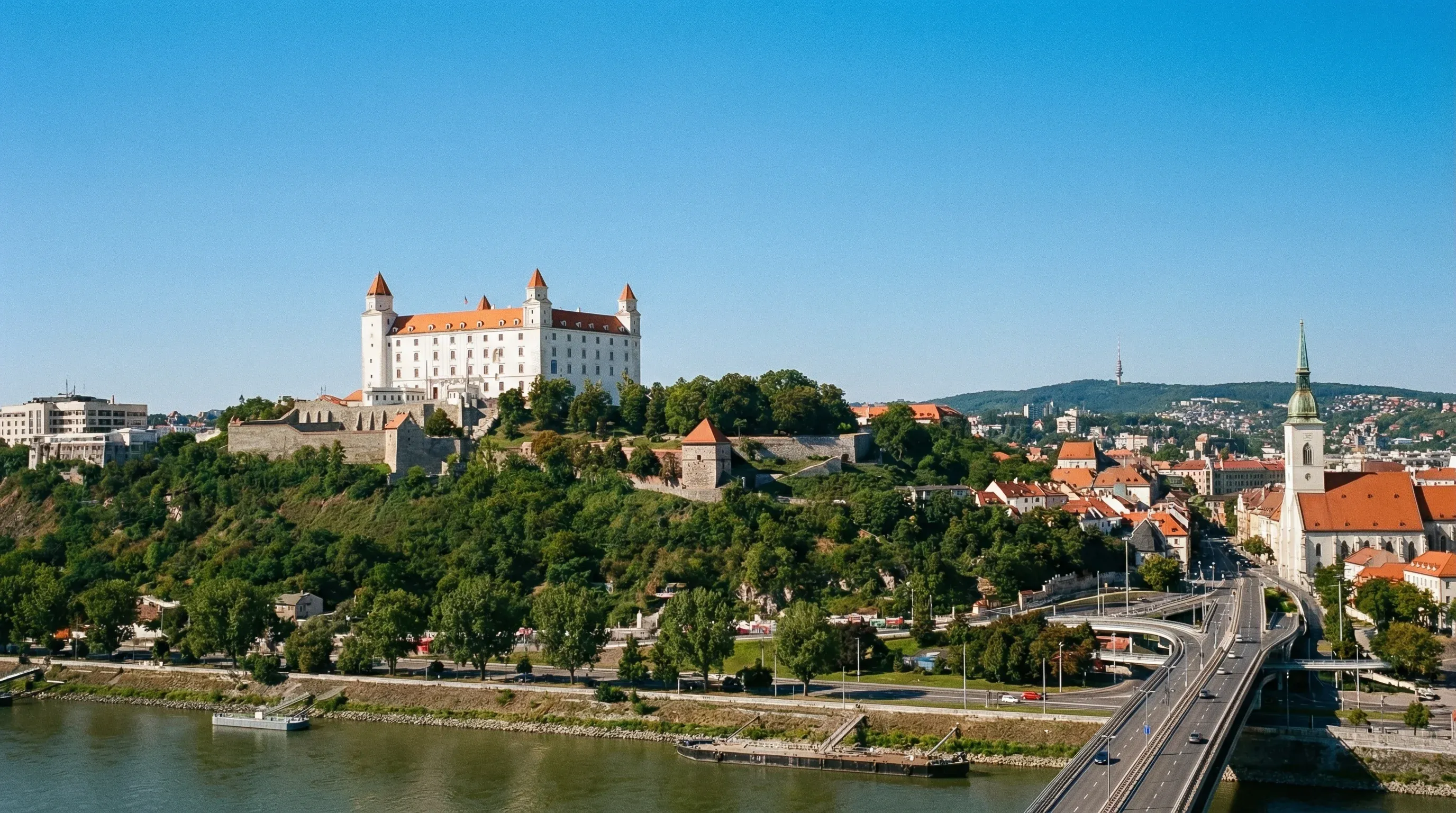
The skyline is dominated by Bratislava Castle, the city's most iconic landmark. Known as the "upside-down table" due to its four corner towers, the castle grounds are free to enter and offer panoramic views over three countries. The history museum inside is engaging, but kids often prefer the Baroque gardens and the playground located just outside the walls. A short drive or bus ride from the centre leads to Bratislava Zoo, located in the Mlynská dolina valley. It features a popular Dinopark with life-size moving models that is a guaranteed hit with younger children, alongside enclosures for rhinos, apes, and big cats.
For a mix of history and nature, a trip to Devin Castle is essential. Perched on a dramatic cliff at the confluence of the Danube and Morava rivers, these vast ruins offer a labyrinth of walls and towers for children to explore. The site has a mystical atmosphere and offers expansive grassy areas for picnics. Art-loving families should not miss the Danubiana Meulensteen Art Museum, located on a peninsula in the Danube. Even if kids aren't into galleries, the sculpture park surrounding the building allows them to interact with art in a unique outdoor setting surrounded by water.
Practical Advice
The best time to visit is late spring (May-June) or early autumn (September), when temperatures are pleasant for walking. Summers can get quite hot (over 30°C/86°F). Bratislava Card offers free public transport and discounts on museums, which can be good value for active families. The Old Town is cobblestoned, so a sturdy stroller with good wheels is recommended over a lightweight umbrella buggy.
Food & Drink
Typical meal times: Lunch is the main meal of the day, typically served from 11:30 am to 2:00 pm. Dinner is usually eaten between 6:00 pm and 9:00 pm.
Typical meal costs: A mid-range family dinner will cost approximately €40–70 (approx. $43–76 USD / £34–60 GBP). Lunch menus (denné menu) are excellent value at €6–10 (approx. $6.50–11 USD / £5–8.50 GBP) per person.
Dietary requirements: Vegetarian options are widely available in the capital, with many modern bistros offering vegan dishes. Gluten-free awareness is high in the city centre restaurants.
Signature dishes:
- Bryndzové halušky – Potato dumplings (gnocchi-style) smothered in sheep cheese and topped with crispy bacon; the national dish.
- Bratislavské rožky – Crescent-shaped pastries filled with poppy seeds or walnuts, protected by EU traditional speciality status.
- Kapustnica – A rich sauerkraut soup with sausage, dried mushrooms, and spices, often served with bread.
- Vyprážaný syr – Deep-fried cheese (usually Edam) served with chips and tartar sauce; a universal favourite with Slovak children.
Why this score?
The region is primarily urban and highly developed, with the most 'adventurous' activities limited to gentle hiking in the Little Carpathians or cycling the flat Danube Path. It is a very safe and accessible area for families, offering minimal ruggedness compared to the country's mountainous interior.
Why this score?
Bratislava serves as the country's primary medical hub, featuring the highest concentration of specialized hospitals and private clinics with English-speaking staff. Facilities like the University Hospital Bratislava and various modern private centers are well-equipped to handle international patients and insurance.
Why this score?
As the capital city located on the Danube, Bratislava benefits from a high volume of international day-trippers from nearby Vienna and Budapest, as well as Danube river cruise stops. While it lacks the global 'mega-destination' status of Prague, its compact Old Town and castle attract a steady stream of European and overseas visitors throughout the year.

Bratislava is the most expensive region in Slovakia but remains affordable compared to Western Europe. A family hotel room typically costs €90–150 (approx. $97–162 USD / £77–128 GBP) per night. Dining out is reasonable, with main courses in the Old Town costing €12–20 (approx. $13–22 USD / £10–17 GBP). Coffee and cake stops are very affordable.
Family Travel Notice
Minors traveling alone or with only one parent should carry notarized written consent from the non-traveling parent(s) to avoid being blocked from exiting the country.

Getting Here & Around
Getting Here
- Airports – M. R. Štefánik Airport (BTS) is the main hub, located just 20 minutes from the centre. Alternatively, Vienna International Airport (VIE) in Austria is only 45 minutes away by bus, offering more international connections.
- Train – Bratislava is well-connected by rail. The journey from Vienna takes just 1 hour to the main station, making it an easy twin-centre trip. Direct trains also run from Prague and Budapest.
- Boat – A high-speed Twin City Liner catamaran connects Vienna and Bratislava along the Danube, docking near the Bratislava Old Town.
Getting Around
- Public Transport – The city has an efficient network of trams, trolleybuses, and buses. Children under 6 travel free. The tram system is the most convenient way to move between the station and the centre.
- Walking – The historic centre is compact and pedestrianised, making walking the best option for exploring the Bratislava Old Town sights.
- Car – Driving in the Old Town is restricted and parking is expensive. A car is only useful if visiting outlying attractions like Devin Castle or the Danubiana Meulensteen Art Museum, though buses serve these routes too.
Nearby Airports (1 airport)
M R Stefanik
BTSBratislava
View full flight map for Slovakia →
Official Links

Packing List
Riverside locations like Devin and Danubiana can be buggy in summer evenings
Old Town cobblestones are uneven and difficult for lightweight buggies
For the city's popular summer lidos or lakes like Zlaté Piesky
Forest ticks are very common and can carry TBE; essential for any nature walks.
It is polite and expected to remove outdoor shoes when entering Slovak homes or small guesthouses.
Cave tours are a constant 7°C year-round, and mountain weather drops quickly even in July.
Some older thermal pools and swimming baths still strictly require caps for hygiene.
Roads in the Tatras and Fatra mountains are scenic but very winding.

Activities & Best Times

Hiking, wildlife, outdoor exploration, ecotourism
Strong wilderness immersion in the Little Carpathians and river adventures at the Divoká Voda complex. Best experienced in late spring and autumn when temperatures are ideal for hiking and the Danube riverside is most accessible.

Urban tourism, museums, historical sites, architecture
Bratislava offers an authentic, compact Old Town with major art galleries and the iconic castle. Peak periods coincide with mild walking weather and the significant international draw of the December Christmas markets.

Scenic drives, countryside tours, route-based travel
The Small Carpathian Wine Route provides a well-celebrated scenic touring experience through historic vineyards and villages. Peak visitation aligns with the autumn harvest and spring bloom periods for optimal landscape quality.

Sport tourism, fitness activities, active recreation
While Čunovo whitewater slalom center is genuinely world-class, a single facility plus regional cycling routes does not warrant 'very_good' on an international scale. Many European capitals offer similar or superior sports infrastructure. Should be 'good' to reflect solid regional offerings without overstating international competitiveness.
Amusement parks, family entertainment venues
Regional family draws like Aquapark Senec and DinoPark provide solid entertainment for families in the area. These outdoor-focused facilities are primarily active and appealing during the school summer holiday window.

Learning experiences, scientific sites, historical education
Offers quality national museums and science centers, though they lack the standalone global significance of top-tier international educational institutions. Spring and autumn offer the most comfortable timing for museum-focused city visits.

Winter sports, ski resorts, snow activities
Small local hills like Pezinská Baba offer basic winter sports but lack the altitude and world-class infrastructure sought by international families. The season is short and highly dependent on peak winter temperatures.

Attractions (15 total)



Public Holidays & Calendar Next 12 months
Public holidays, festivals, cultural celebrations, and seasonal natural phenomena coming up in Bratislava over the next 12 months.
Loading holidays and events...

Travel Advisory
All major agencies agree that Slovakia is a safe destination requiring only standard safety awareness. There are no significant nationwide threats to travelers.
Safety Topics
Traveller Advice (4 groups)

Exercise caution when walking alone at night and use reputable, licensed taxi services rather than hailing cars on the street.
Minors traveling alone or with only one parent should carry notarized written consent from the non-traveling parent(s) to avoid being blocked from exiting the country.

Carry identification at all times as police may request it. Ensure you register with local authorities if staying in private accommodation for more than a few days.

While legal, same-sex relationships are not recognized via marriage or civil unions. Public displays of affection may attract negative attention, and travelers should be aware of a 2022 attack on an LGBTQ+ venue in Bratislava.
Agency Summaries
Most visits are trouble-free. Travelers should be mindful of potential overcharging by taxis and remain vigilant in crowded areas following a previous terrorist incident in 2022.
Slovakia is considered a safe destination for visitors. Travelers are advised to follow standard safety routines, enroll in the Smart Traveler Enrollment Program (STEP), and stay away from political gatherings or demonstrations.
Travelers should maintain a standard level of safety awareness as they would in Canada. Be particularly alert for petty crime and pickpocketing in Bratislava's tourist centers and on public transportation.
Maintain a common-sense approach to safety. Note that the European Entry/Exit System (EES) is being implemented, which may cause border delays. Avoid travel from Slovakia into neighboring Ukraine due to the ongoing conflict.
No specific warning is in place. Visitors are advised to respect local registration laws if staying long-term and to be aware of occasional livestock disease outbreaks near the borders that may increase vehicle inspections.
Slovakia is generally safe. Key concerns for visitors include petty crime like drink spiking and car theft. Protests occur occasionally and should be avoided to prevent disruption or safety risks.
Information is provided for general guidance only and does not constitute travel, safety, medical, or legal advice. Conditions may change. Users are responsible for independently verifying information before travel.