
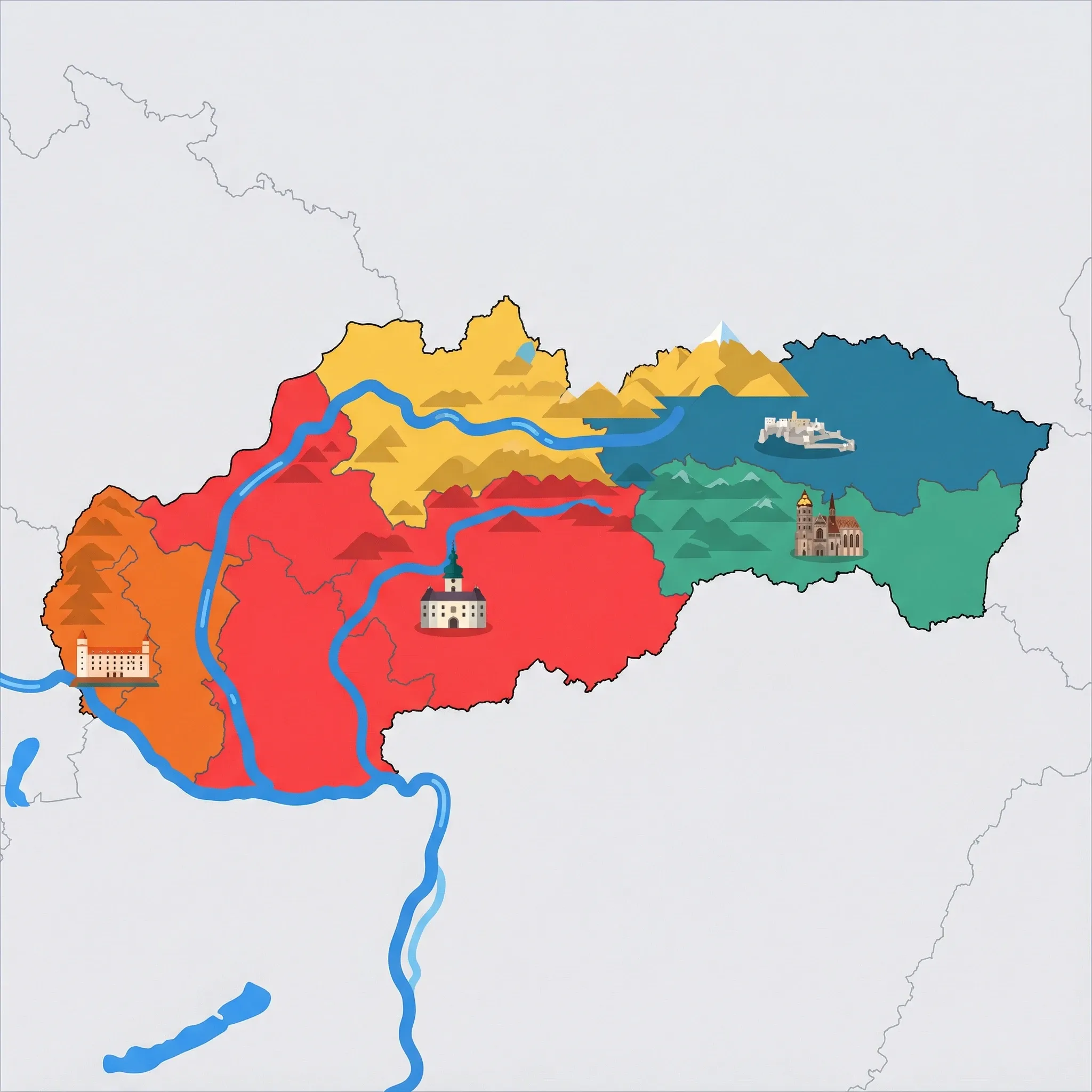
Click a region to explore
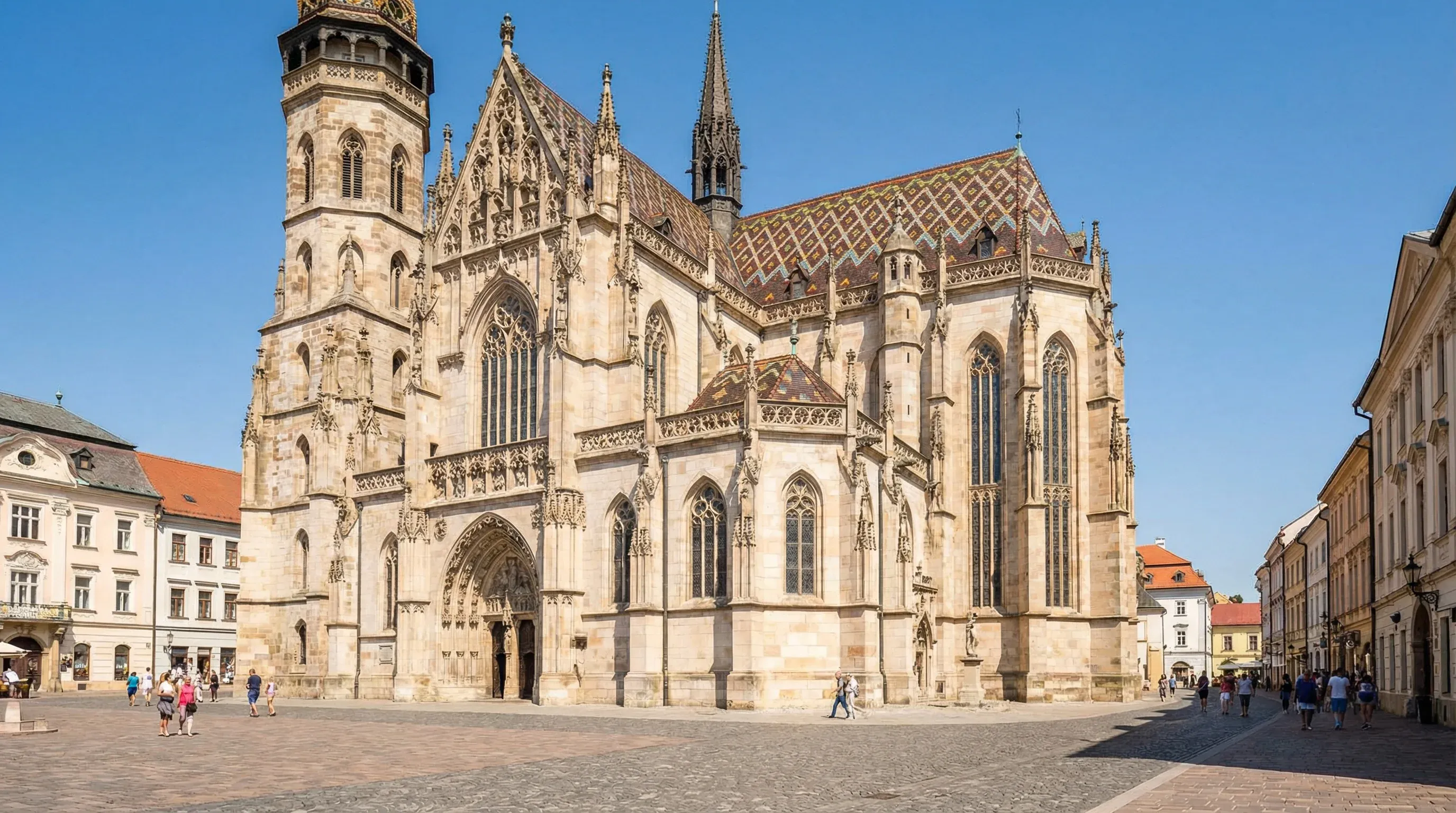
Eastern Slovakia feels like a different country compared to the west; it is wilder, more diverse, and incredibly welcoming. The region is anchored by Košice, Slovakia's second-largest city and a former European Capital of Culture. The city centre is an architectural gem, dominated by Slovakia's largest church, but the vibe is laid-back and Mediterranean, with fountains, cafes, and ice cream parlours spilling onto the main street. Beyond the city limits, the landscape transforms into the mysterious Slovak Karst National Park, a UNESCO World Heritage site honeycombed with over a thousand caves and abysses. To the south lies the Tokaj wine region, while the north holds preserved medieval towns like Bardejov. This diversity makes it a fantastic destination for families who want to mix urban exploration with genuine nature trips.
The region is particularly good for families seeking "off the beaten path" experiences. You won't find the density of tourists here that you might in the Tatras. Instead, you'll find unique attractions like geysers, opal mines, and Andy Warhol's family heritage museum. The pace of life is slower, and the hospitality is legendary. For children, the appeal lies in the variety: one day can be spent feeding animals at the largest zoo in Central Europe, and the next can be spent boating on an underground river in a cave. The cultural mix—influenced by Hungarian, Rusyn, and German history—adds a rich layer to the architecture and food that is distinct from the rest of the country.
Key Attractions
In the heart of Košice stands the St. Elisabeth Cathedral. It is a masterpiece of Gothic architecture, but for kids, the highlight is climbing the Sigismund Tower for a bird's-eye view of the city or finding the gargoyles on the exterior (legend has it one looks like a drunk woman). Just outside the city, the Košice Zoo is a massive sprawling park located in the natural forest. It connects to a DinoPark and offers a bobsled track, making it a full-day destination.
Further afield, the Dobšinská Ice Cave offers a magical winter-wonderland experience even in the heat of summer, with massive ice pillars and frozen floors. In the Slovak Karst, the Domica Cave is famous for its boat rides on the underground river Styx (water level permitting), a thrilling adventure for younger explorers. For a cultural curveball, the Andy Warhol Museum of Modern Art in Medzilaborce is a colourful, pop-art filled homage to the artist's roots that fascinates teenagers with its vibrant prints and quirky history.
Practical Advice
Eastern Slovakia is vast, so plan travel times carefully. Košice makes a great base, but visiting caves requires driving. Cave temperatures are constantly around 0°C to 7°C (32-45°F), so pack warm fleece jackets and long trousers for these visits, regardless of the weather outside. English is spoken in Košice, but less so in rural villages—learning a few Slovak phrases helps.
Food & Drink
Typical meal times: Lunch is 11:30 am to 2:00 pm. Dinner runs from 6:00 pm to 9:00 pm. In Košice's majestic Main Street (Hlavná ulica), restaurants stay open later.
Typical meal costs: Very affordable. A family meal in a nice restaurant costs €35–60 (approx. $38–65 USD / £30–52 GBP). Street food like lángos costs under €3 (approx. $3.25 USD / £2.50 GBP).
Dietary requirements: Košice has a burgeoning hipster food scene with plenty of vegan, gluten-free, and raw food bistros. Rural areas remain traditional (meat and dairy heavy).
Signature dishes:
- Pirohy – Dumplings similar to Polish pierogi, filled with potato, cheese, or jam.
- Mačanka – A thick mushroom and sour cream dip/soup, traditional to the Rusyn minority in the east.
- Holubky – Cabbage rolls stuffed with minced meat and rice in tomato sauce.
- Tokaj Wine – Sweet, golden dessert wine from the southern border (strictly for the parents!).
Why this score?
Adventure here is found in the extensive cave systems of the Slovak Karst and the more remote hiking trails near the Ukrainian border. It offers a genuine 'off-the-beaten-path' feel for families, though it lacks the extreme verticality of the northern mountain ranges.
Why this score?
Košice is the second-largest medical center in Slovakia, home to the Louis Pasteur University Hospital and several specialized institutes. Foreigners can expect high-quality care and a reasonable level of English-speaking staff within the city's main medical institutions.
Why this score?
Košice is a vibrant cultural city with a stunning cathedral, but its distance from Western European borders makes it a niche destination for most international travelers. Tourism here is growing but remains primarily focused on domestic visitors and specialized interests like the Andy Warhol museum or the Tokaj wine region.

Eastern Slovakia is the most budget-friendly region. Accommodation is significantly cheaper than in Bratislava or the Tatras; a 4-star family suite can cost €70–100 (approx. $75–108 USD / £60–85 GBP). Entry fees to museums and caves are modest, typically €8–12 (approx. $8.50–13 USD / £7–10 GBP) for adults and half for kids.
Family Travel Notice
Minors traveling alone or with only one parent should carry notarized written consent from the non-traveling parent(s) to avoid being blocked from exiting the country.

Getting Here & Around
Getting Here
- Airports – Košice International Airport (KSC) has connections to Vienna, Warsaw, and London. It is a small, stress-free airport only 15 minutes from the centre.
- Train – InterCity (IC) trains from Bratislava take roughly 4.5 to 5 hours. They are comfortable, often featuring family compartments and dining cars.
- Driving – Access via the northern highway from Poprad or the southern route from Hungary. The roads are generally less congested than in the west.
Getting Around
- Walking – The centre of Košice is best explored on foot. The Main Street is a long pedestrian promenade connecting the St. Elisabeth Cathedral with museums and parks.
- Car – Essential for visiting the caves like Domica Cave or the Andy Warhol Museum of Modern Art which are in remote areas.
- Children's Railway – A historic narrow-gauge steam train (Detská železnica) located in the Čermeľ valley near Košice is a delightful way for families to ride into the forest.
Nearby Airports (1 airport)
Kosice
KSCKosice
View full flight map for Slovakia →
Official Links

Packing List
Essential for ice caves where temperature is below freezing year-round
English is less spoken in rural eastern villages than in the west
Many attractions like castle ruins have great grassy areas but no seating
Forest ticks are very common and can carry TBE; essential for any nature walks.
It is polite and expected to remove outdoor shoes when entering Slovak homes or small guesthouses.
Cave tours are a constant 7°C year-round, and mountain weather drops quickly even in July.
Some older thermal pools and swimming baths still strictly require caps for hygiene.
Roads in the Tatras and Fatra mountains are scenic but very winding.

Activities & Best Times

Hiking, wildlife, outdoor exploration, ecotourism
Home to the UNESCO-listed Slovak Karst National Park and one of Europe's largest zoos, the region offers high-quality immersion in diverse ecosystems. Optimal hiking and wildlife viewing occur from late spring through early autumn, while winter conditions can limit accessibility to remote trails.

Urban tourism, museums, historical sites, architecture
Košice features a remarkably well-preserved medieval center and the unique Andy Warhol Museum of Modern Art, appealing to sophisticated cultural travelers. The city is most vibrant during the warmer months when street life and outdoor cafes are active, while winter can feel quiet and grey.

Sport tourism, fitness activities, active recreation
With major international cycling routes like EuroVelo 11 and the legendary Cesta hrdinov SNP hiking trail, the region offers elite infrastructure for active families. The primary season runs from late spring through early autumn when daylight is long and trails are dry.

Spa retreats, wellness centers, peaceful getaways
A well-established tradition of thermal baths, particularly at Vrbov and Šírava, offers authentic restorative experiences for families. These facilities are operational year-round, with peak demand occurring during summer holidays and the mid-winter festive season.

Scenic drives, countryside tours, route-based travel
The Gothic Route and the UNESCO Tokaj Wine Route offer exceptional scenic and cultural driving through historic landscapes and world-class vineyards. Roads are best navigated from spring to autumn, as mountain passes can be challenging during the snowy winter months.

Winter sports, ski resorts, snow activities
Resorts like Jahodná and Plejsy offer solid regional infrastructure and night skiing suitable for families, though they lack the high-altitude scale of the neighboring High Tatras. The season is reliably concentrated in mid-winter, with shoulder months subject to variable snow quality.
Amusement parks, family entertainment venues
AquaCity Poprad provides a world-class, ecologically sustainable aquatic experience that anchors the region's family entertainment. Summer offers full outdoor access, though indoor facilities remain a strong draw during the winter holiday periods.

Learning experiences, scientific sites, historical education
The Slovak Technical Museum and Museum of Aviation offer deep, specialized collections of European industrial heritage. These facilities are high-quality but function primarily as secondary attractions rather than standalone global motivators.

Events, celebrations, seasonal attractions
The Košice Peace Marathon, Europe's oldest marathon, is a prestigious international event that transforms the city every October. Outside of this specific event window, the region's international festival calendar is more limited.

Attractions (26 total)



Public Holidays & Calendar Next 12 months
Public holidays, festivals, cultural celebrations, and seasonal natural phenomena coming up in Eastern Slovakia (Košice) over the next 12 months.
Loading holidays and events...

Travel Advisory
All major agencies agree that Slovakia is a safe destination requiring only standard safety awareness. There are no significant nationwide threats to travelers.
Safety Topics
Traveller Advice (4 groups)

Exercise caution when walking alone at night and use reputable, licensed taxi services rather than hailing cars on the street.

Minors traveling alone or with only one parent should carry notarized written consent from the non-traveling parent(s) to avoid being blocked from exiting the country.

Carry identification at all times as police may request it. Ensure you register with local authorities if staying in private accommodation for more than a few days.

While legal, same-sex relationships are not recognized via marriage or civil unions. Public displays of affection may attract negative attention, and travelers should be aware of a 2022 attack on an LGBTQ+ venue in Bratislava.
Agency Summaries
Most visits are trouble-free. Travelers should be mindful of potential overcharging by taxis and remain vigilant in crowded areas following a previous terrorist incident in 2022.
Slovakia is considered a safe destination for visitors. Travelers are advised to follow standard safety routines, enroll in the Smart Traveler Enrollment Program (STEP), and stay away from political gatherings or demonstrations.
Travelers should maintain a standard level of safety awareness as they would in Canada. Be particularly alert for petty crime and pickpocketing in Bratislava's tourist centers and on public transportation.
Maintain a common-sense approach to safety. Note that the European Entry/Exit System (EES) is being implemented, which may cause border delays. Avoid travel from Slovakia into neighboring Ukraine due to the ongoing conflict.
No specific warning is in place. Visitors are advised to respect local registration laws if staying long-term and to be aware of occasional livestock disease outbreaks near the borders that may increase vehicle inspections.
Slovakia is generally safe. Key concerns for visitors include petty crime like drink spiking and car theft. Protests occur occasionally and should be avoided to prevent disruption or safety risks.
Information is provided for general guidance only and does not constitute travel, safety, medical, or legal advice. Conditions may change. Users are responsible for independently verifying information before travel.