
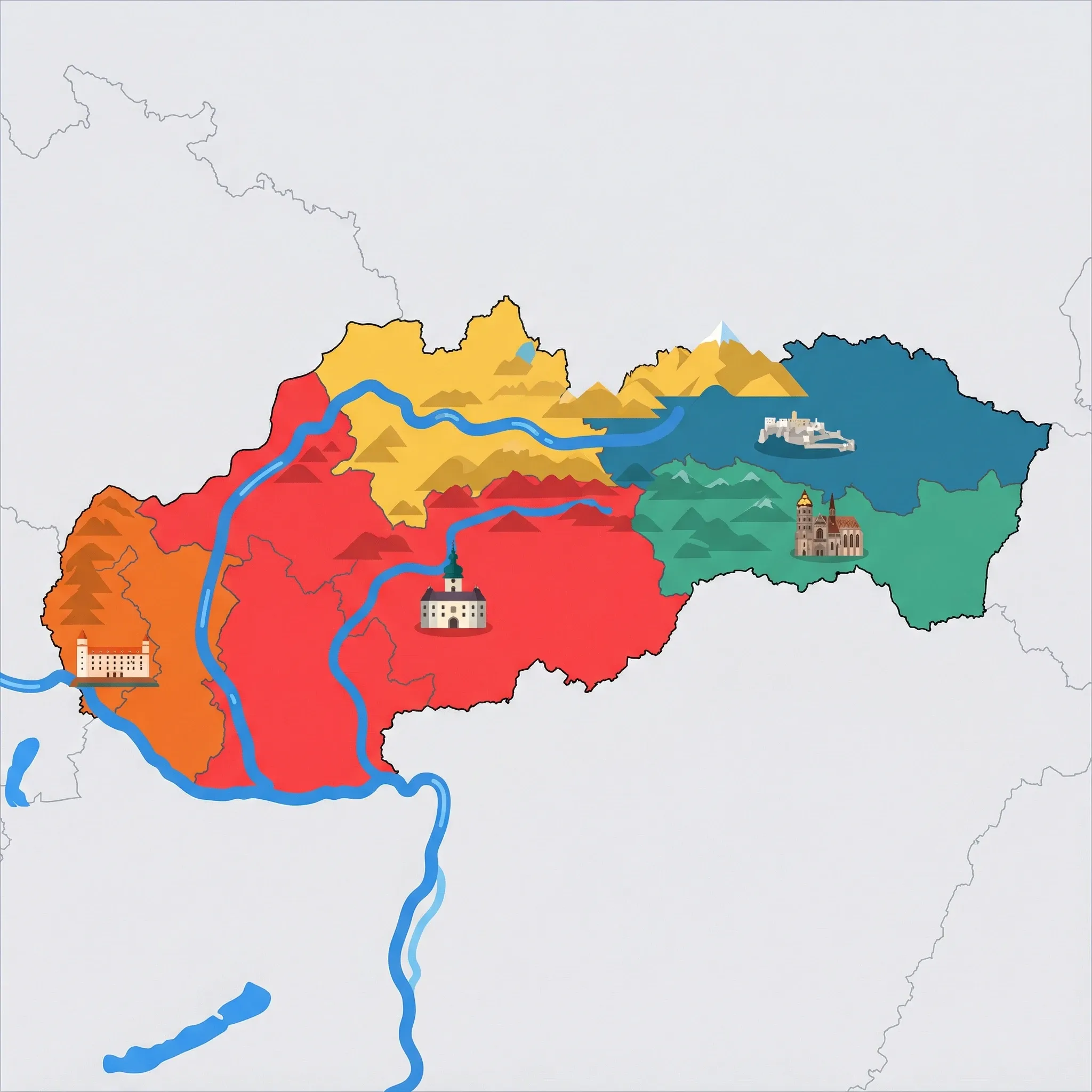
Click a region to explore
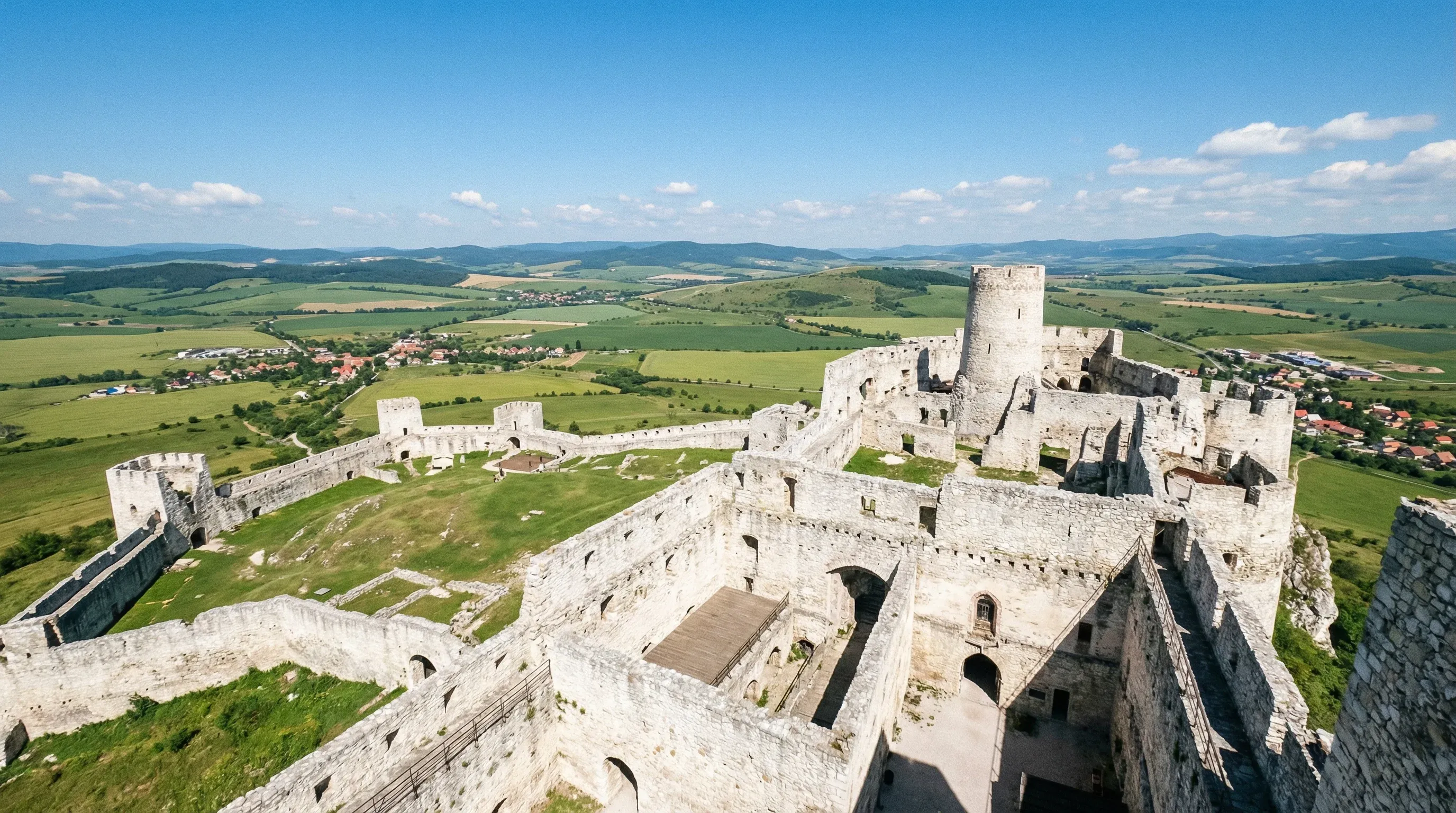
The Spiš region is where cultural grandeur meets rugged natural beauty. Historically one of the wealthiest parts of the Kingdom of Hungary, it is dotted with Saxon towns, hilltop citadels, and Gothic churches that seem too grand for their rural surroundings. Dominating the landscape is the iconic Spiš Castle, a sprawling white ruin visible from miles away, which captures the imagination of every child who sees it. But Spiš is not just about ruins; it borders the Slovak Paradise National Park (Slovenský raj), a unique wilderness of plateaus and deep gorges. Here, hiking is an obstacle course of ladders, chains, and catwalks built over rushing water—an absolute thrill for adventurous older children and teenagers.
The region has a mystical, timeless quality. You will drive past shepherds tending flocks in the shadow of Gothic cathedrals and through villages that have retained their medieval layout. It is less commercialised than the High Tatras, offering a quieter, more atmospheric experience. For families, the combination is perfect: spend one day playing knights and princesses in a castle, and the next day splashing in thermal pools or climbing ladders up a waterfall. The towns like Levoča are small and safe, perfect for letting kids run around squares that have barely changed in 500 years.
Key Attractions
The headline act is undoubtedly Spiš Castle. As one of the largest castle complexes in Central Europe, it is immense. Kids can explore the dungeons, climb the towers, and watch historical reenactments with falconry and swordsmen often held in the courtyards during summer. Nearby, the Slovak Paradise National Park (Podlesok) is the starting point for the famous gorge hikes. The 'Suchá Belá' gorge is the most popular, featuring vertical ladders next to waterfalls—note that this is best for kids aged 8+ who are confident walkers.
For a more relaxing day, Thermal Park Vrbov offers geothermal pools rich in minerals, open year-round and perfect for soothing muscles after a hike. Nature lovers should also visit the Dobšinská Ice Cave (located on the edge of the region), where you descend into a freezing underworld of glacial ice. In the town of Levoča, visiting Master Paul's House gives context to the world's tallest wooden altar found in the nearby church, a marvel of woodcarving that impresses even the most screen-addicted teens.
Practical Advice
Safety Warning: The hikes in Slovak Paradise involving ladders (stupacky) are one-way only. Once you start ascending a gorge, you cannot turn back. Ensure your children are physically capable and not afraid of heights before entering. Sturdy shoes are non-negotiable.
Food & Drink
Typical meal times: Standard Central European hours. Lunch 12:00 pm – 2:00 pm, Dinner 6:00 pm – 8:30 pm.
Typical meal costs: Very reasonable. A hearty dinner costs €10–18 (approx. $11–19 USD / £8.50–15 GBP). A beer costs around €2 (approx. $2.15 USD / £1.70 GBP).
Dietary requirements: Standard Slovak fare prevails. In tourist hubs like Levoča or Spišské Podhradie, you will find pizza and salads, but rural pubs stick to meat and potatoes.
Signature dishes:
- Spišské párky – The region's famous frankfurter-style sausages, known for their paprika kick and snap.
- Gemer balls (Gemerské guľky) – Potato dumplings filled with smoked meat, a speciality of the southern part of the region.
- Gruľovník – A simple potato pancake baked on a dry hotplate, often served with goose fat.
Why this score?
The Slovak Paradise National Park is famous for its 'adventure hiking' involving vertical iron ladders, chains, and narrow wooden catwalks over waterfalls. This provides a high level of physical excitement and ruggedness that is unique in Europe for a non-alpine environment.
Why this score?
Medical services within the immediate Spiš towns are basic, with tourists generally needing to travel to Poprad or Prešov for significant emergencies or English-speaking specialists. Emergency response in the national park is excellent, but hospital infrastructure is less concentrated here than in the capital.
Why this score?
Spiš Castle is one of the most photographed and iconic sites in Central Europe, drawing significant numbers of cultural tourists and school groups. The region's appeal is bolstered by its proximity to the High Tatras, though it often serves as a secondary destination for visitors based elsewhere.

Spiš offers great value. Entry to the massive Spiš Castle is around €8 (approx. $8.60 USD / £6.80 GBP) for adults. Accommodation in local pensions is cheap, typically €40–70 (approx. $43–75 USD / £34–60 GBP) per night. It is significantly cheaper than the High Tatras next door.
Family Travel Notice
Minors traveling alone or with only one parent should carry notarized written consent from the non-traveling parent(s) to avoid being blocked from exiting the country.

Getting Here & Around
Getting Here
- Driving – The D1 highway connects Poprad to Levoča and Spišské Podhradie, making the region easily accessible by car. It is a 20-30 minute drive east from Poprad.
- Train – Main line trains stop at Poprad or Spišská Nová Ves. From there, local buses or regional trains connect to Levoča and the castle area.
- Bus – Buses frequently run to the foot of Spiš Castle from Spišská Nová Ves and Levoča.
Getting Around
- Car – Highly recommended. Attractions are spread out—the castle, the national park, and the towns are 20-40 minutes apart. Exploring the Gothic Route (Spiš-Gemer Loop) requires a vehicle.
- Walking – Necessary for the attractions themselves. The walk up to Spiš Castle from the car park is steep. Hiking in Slovak Paradise National Park (Podlesok) is strictly on foot.
Nearby Airports (1 airport)
Tatry
TATPoprad
View full flight map for Slovakia →
Official Links

Packing List
Metal ladders and chains in Slovak Paradise are cold and wet to hold
Essential for the slippery wooden catwalks in the gorges
The walk up to Spiš Castle is completely exposed with zero shade
Forest ticks are very common and can carry TBE; essential for any nature walks.
It is polite and expected to remove outdoor shoes when entering Slovak homes or small guesthouses.
Cave tours are a constant 7°C year-round, and mountain weather drops quickly even in July.
Some older thermal pools and swimming baths still strictly require caps for hygiene.
Roads in the Tatras and Fatra mountains are scenic but very winding.

Activities & Best Times

Hiking, wildlife, outdoor exploration, ecotourism
Home to the Slovak Paradise National Park, featuring unique ladder-and-bridge gorge trails and the Hornád Canyon. Peak visitation occurs during warmer, drier months to ensure safe navigation of the technical hiking infrastructure.

Urban tourism, museums, historical sites, architecture
Features the immense Spiš Castle UNESCO site and Levoča's medieval center with Master Paul's world-renowned woodcarvings. Summer offers peak access to historical sites and vibrant local festivals, while winter sees reduced facility hours.

Sport tourism, fitness activities, active recreation
Offers specialized outdoor infrastructure including adventure rope parks like Tarzania and the challenging Suchá Belá technical trails. Conditions are optimal when trails are free of ice and parks are fully operational during the summer season.

Scenic drives, countryside tours, route-based travel
The Gothic Route provides a structured scenic drive through medieval towns and fortified churches across the Spiš landscape. Best experienced in summer or autumn for maximum visibility and safe driving through high-altitude passes like Vernár.

Winter sports, ski resorts, snow activities
Regional ski centers like Plejsy provide reliable, family-friendly winter sports infrastructure with significant vertical drops for the region. The season is relatively short, peaking in mid-winter with the most consistent snow cover.
Amusement parks, family entertainment venues
High-quality thermal water parks like AquaCity Poprad offer year-round entertainment with advanced ecological facilities. Peak interest aligns with summer family holidays and the winter contrast of outdoor thermal pools in the snow.

Learning experiences, scientific sites, historical education
Niche museums such as the J.M. Petzval Museum offer specialized historical insights into optics and photography. These facilities are most accessible during the primary tourist season when guided tours are more frequently available.

Spa retreats, wellness centers, peaceful getaways
Features unique natural thermal craters and spa facilities that serve as a restorative secondary activity for travelers. Peak periods coincide with broader tourism surges during school holidays and the height of winter.

Attractions (14 total)



Public Holidays & Calendar Next 12 months
Public holidays, festivals, cultural celebrations, and seasonal natural phenomena coming up in Spiš Region (Levoča, Spiš Castle) over the next 12 months.
Loading holidays and events...

Travel Advisory
All major agencies agree that Slovakia is a safe destination requiring only standard safety awareness. There are no significant nationwide threats to travelers.
Safety Topics
Traveller Advice (4 groups)

Exercise caution when walking alone at night and use reputable, licensed taxi services rather than hailing cars on the street.
Minors traveling alone or with only one parent should carry notarized written consent from the non-traveling parent(s) to avoid being blocked from exiting the country.

Carry identification at all times as police may request it. Ensure you register with local authorities if staying in private accommodation for more than a few days.

While legal, same-sex relationships are not recognized via marriage or civil unions. Public displays of affection may attract negative attention, and travelers should be aware of a 2022 attack on an LGBTQ+ venue in Bratislava.
Agency Summaries
Most visits are trouble-free. Travelers should be mindful of potential overcharging by taxis and remain vigilant in crowded areas following a previous terrorist incident in 2022.
Slovakia is considered a safe destination for visitors. Travelers are advised to follow standard safety routines, enroll in the Smart Traveler Enrollment Program (STEP), and stay away from political gatherings or demonstrations.
Travelers should maintain a standard level of safety awareness as they would in Canada. Be particularly alert for petty crime and pickpocketing in Bratislava's tourist centers and on public transportation.
Maintain a common-sense approach to safety. Note that the European Entry/Exit System (EES) is being implemented, which may cause border delays. Avoid travel from Slovakia into neighboring Ukraine due to the ongoing conflict.
No specific warning is in place. Visitors are advised to respect local registration laws if staying long-term and to be aware of occasional livestock disease outbreaks near the borders that may increase vehicle inspections.
Slovakia is generally safe. Key concerns for visitors include petty crime like drink spiking and car theft. Protests occur occasionally and should be avoided to prevent disruption or safety risks.
Information is provided for general guidance only and does not constitute travel, safety, medical, or legal advice. Conditions may change. Users are responsible for independently verifying information before travel.