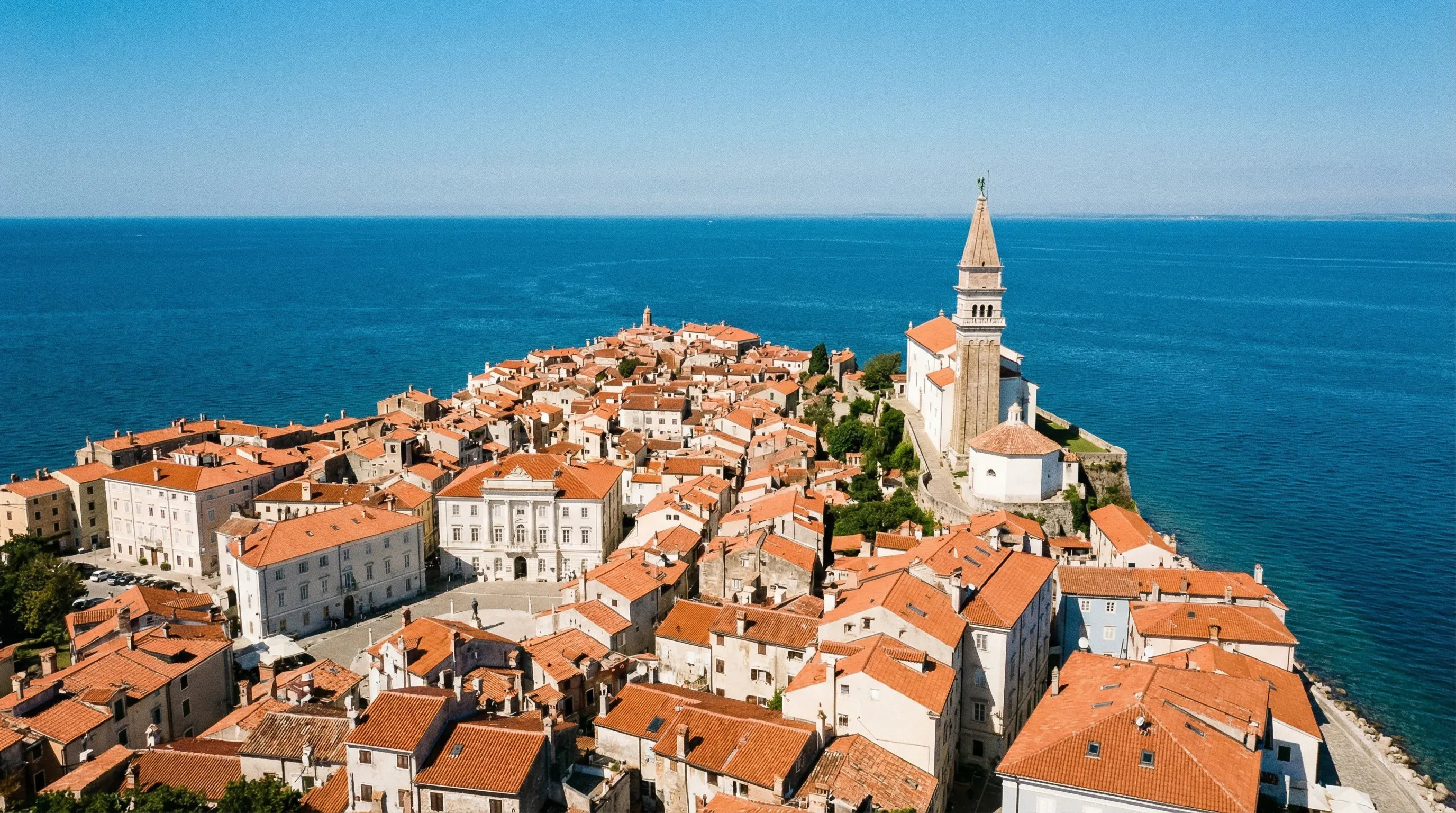

Coastal Slovenia (Piran, Portorož)
Venetian charm meets family beach fun 🌊🍦
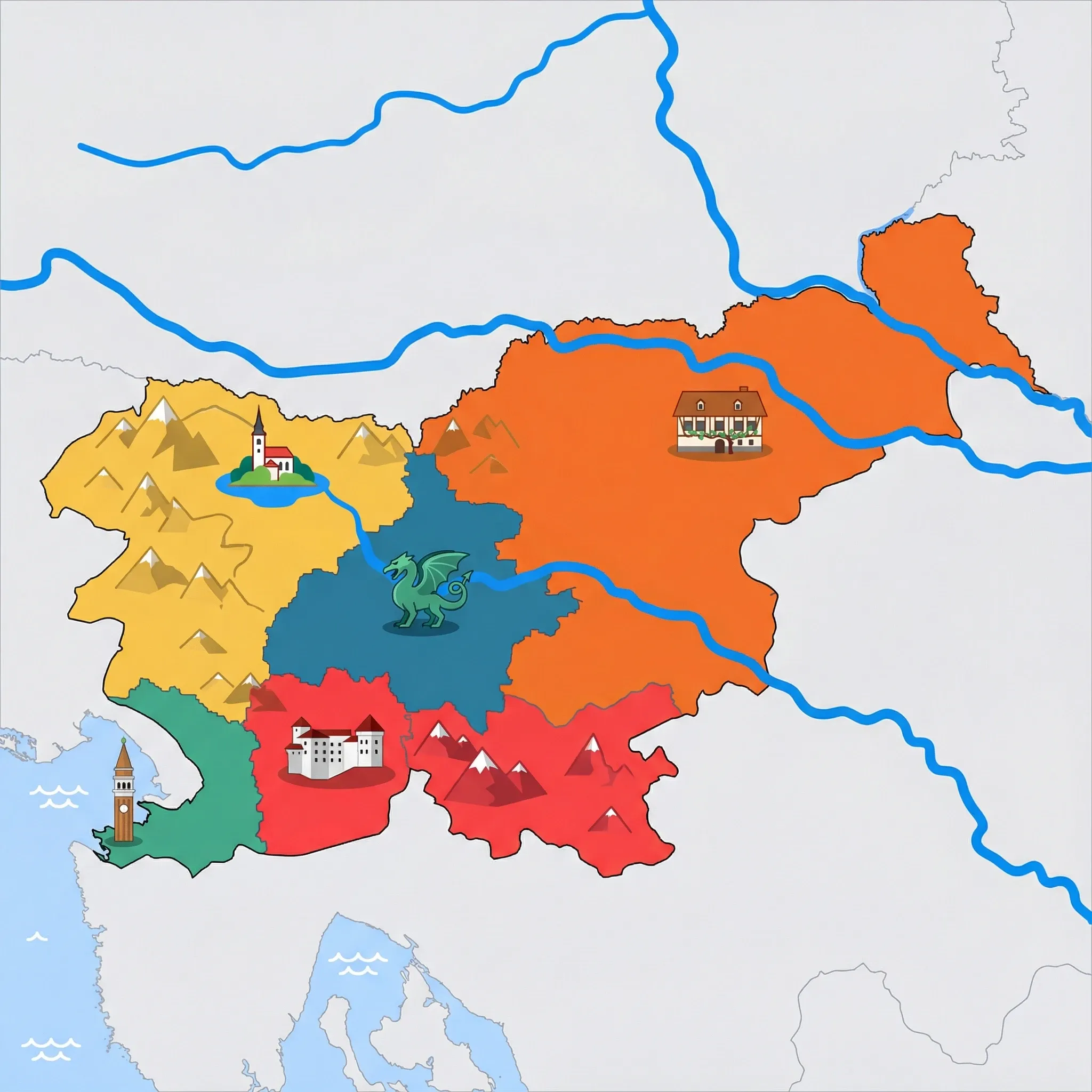
Click a region to explore
Slovenia’s coastline may only be 47 kilometers long, but it packs an incredible amount of character into that short stretch, making it a perfect, manageable destination for families. Unlike the sprawling resorts found elsewhere in the Mediterranean, the Slovenian Istria region feels intimate, safe, and deeply historical. The cultural influence here is distinctly Venetian; you will see it in the architecture, hear it in the local dialect, and taste it in the food. For parents, this means enjoying the aesthetic beauty of terracotta-roofed towns and world-class olive oils. For children, the region is a playground of narrow, car-free alleyways that beg to be explored, warm shallow waters perfect for swimming, and accessible nature reserves that feel like adventures rather than hikes.
The climate here is typically Mediterranean, with hot, dry summers and mild winters. July and August are the peak months for swimming, but they can get crowded. June and September offer the perfect balance of warm sea temperatures and breathable air, making them ideal for families with pre-schoolers or those bound by school holidays who can squeeze in a trip at the shoulder of the season. The vibe is relaxed and slow-paced; unlike the party atmosphere of some Adriatic destinations, towns like Izola and Piran shut down relatively early, ensuring a good night's sleep for little ones. Whether you are cycling along old railway tracks or watching the sunset from an ancient city wall, the coast offers a laid-back seaside escape with a dash of Italian flair.
Key Attractions
The crown jewel of the coast is undoubtedly Piran Old Town. Families can spend hours getting happily lost in its pedestrianized streets. A must-do activity is climbing the Town Walls of Piran; the climb is manageable for active children and offers defensive battlements that ignite the imagination, along with sweeping views over the Gulf of Trieste. Down in the center, Tartini Square acts as the community living room—a vast, oval-shaped marble plaza where kids can run freely while parents enjoy a coffee at the perimeter cafes.
For active families, the coastline offers unique outdoor experiences. The Strunjan Nature Reserve features dramatic flysch cliffs and sheltered bays. A hike down to Moon Bay is rewarding, offering some of the cleanest water in the northern Adriatic, though the path requires sturdy shoes. Cyclists should not miss the Parenzana (D-8) Trail, a paved path built on the route of a defunct narrow-gauge railway. It is flat, safe, and traffic-free, making it perfect for family bike rides between towns, passing through illuminated tunnels that kids find thrilling.
Practical Advice
Summer temperatures can soar above 30°C (86°F). The sun is strong, so plan outdoor activities for the morning and late afternoon. Most beaches in Slovenia are concrete or pebble, not sand, so bring padded mats and water shoes. Piran is largely car-free; you must park in the garage outside the town and take a free shuttle bus to the center, which runs frequently and accommodates strollers.
Food & Drink
Typical meal times: Lunch is usually served from 12:00 pm to 3:00 pm. Dinner service starts around 6:00 pm or 7:00 pm and goes late in summer, with families often eating at 8:00 pm.
Typical meal costs: A family of four can expect to pay €60–100 (approx. $66–110 USD / £50–85 GBP) for a quality seafood dinner with drinks. Pizza or pasta meals will be cheaper, around €40–60 (approx. $44–66 USD / £35–50 GBP).
Dietary requirements: Vegetarian options are standard (pasta, risotto, salads). Gluten-free pizza is increasingly available in Portorož and Piran. Restaurants are very child-friendly and will readily split portions.
Signature dishes:
- Istrian Fuži with Truffles – Hand-rolled pasta quills served in a creamy sauce with locally hunted black or white truffles.
- Branzin (Sea Bass) in Salt – Fresh whole fish baked under a crust of local Sečovlje sea salt, often cracked open tableside.
- Fritule – Small, deep-fried doughnuts often flavored with raisins and lemon zest, popular at street stalls.
Why this score?
The region is highly developed and primarily serves as a destination for seaside relaxation and gambling tourism in Portorož. Adventure is mostly limited to cycling the flat, paved Parenzana trail or light watersports, lacking the rugged wilderness found in Slovenia's interior.
Why this score?
Medical facilities in the coastal hub of Koper and the Izola General Hospital provide high-quality care that meets EU standards. English is widely spoken by medical staff, and the region is well-equipped to handle the influx of international tourists during the summer peak.
Why this score?
While Piran is an iconic Venetian-style town, Slovenia's coastline is limited to just 46 kilometers, making it a smaller-scale destination compared to regional giants like the Dalmatian Coast. It attracts roughly 1.8 million overnight stays annually, primarily drawing from neighboring Italy, Austria, and Germany, alongside a strong domestic base.

The coast is the most expensive part of Slovenia during summer. Accommodation prices peak in July and August. A family apartment costs €120–200 (approx. $130–220 USD / £100–170 GBP) per night. Parking in garages is pricey, around €15–25 (approx. $16–27 USD / £12–21 GBP) per day. Coffee is roughly €2.00 (approx. $2.20 USD / £1.70 GBP).

Getting Here & Around
Getting Here
- Airports – Trieste Airport (TRS) in Italy is the closest, just 40 minutes away. Ljubljana Airport (LJU) is about 1.5 hours by car. Venice Marco Polo (VCE) is a 2-hour drive.
- Driving – The region is connected to Ljubljana via the A1 highway. It is roughly a 1-hour drive from the Postojna Cave area.
- Bus – Regular bus services run from Ljubljana bus station to Koper, Izola, Portorož, and Piran.
Getting Around
- Walking & Cycling – Piran is best explored on foot. The Parenzana (D-8) Trail is excellent for cycling between towns.
- Bus – Local buses connect Koper, Izola, Piran, and Portorož frequently and are inexpensive.
- Ferry – During summer, a passenger catamaran connects Piran with Venice, Italy, perfect for a day trip.
No airports in this region. See the country flight map for nearby connections.
Official Links

Packing List
Beaches are rocky or concrete; sea urchins are common in wilder spots.
Lying on concrete slabs or pebbles requires extra padding compared to sand.
Coastal wetlands and warm evenings mean mosquitoes can be active in summer.
Slovenia has a high density of ticks in forests; removing them quickly is crucial to prevent Lyme disease or TBE.
Beaches on the Adriatic coast and Alpine lake shores are often pebbly or rocky, which can hurt sensitive feet.
Caves like Postojna are a constant 10°C (50°F) year-round, so you will need warm layers even in mid-summer.
If you plan to drive the stunning Vršič Pass or other Alpine routes, the hairpin turns can cause car sickness in kids.
Tap water is safe and delicious everywhere, and public drinking fountains are common in Ljubljana and coastal towns.

Activities & Best Times

Hiking, wildlife, outdoor exploration, ecotourism
Features unique ecosystems like the Strunjan Nature Reserve and the Škocjanski Zatok wetlands, ideal for birdwatching and coastal hiking. High summer heat makes shoulder months more comfortable for active exploration.

Urban tourism, museums, historical sites, architecture
Piran is one of the best-preserved Venetian Gothic towns on the Adriatic, offering sophisticated historic charm and authentic coastal heritage. Peak visitation occurs during mild spring and autumn months when the narrow streets are most pleasant for walking.

Sport tourism, fitness activities, active recreation
Home to the Parenzana, a world-class cross-border cycling trail on a former railway line, along with significant adventure parks. Best conditions for cycling and climbing are found in the transitional seasons to avoid the peak Adriatic heat.
Beach resorts, marine activities: diving, snorkelling, kite surfing, wind surfing, sailing
Offers a mix of manicured resort beaches in Portorož and the dramatic, natural pebble beach of Moon Bay beneath Strunjan cliffs. Swimming is restricted to late spring through early autumn due to Adriatic water temperatures.

Learning experiences, scientific sites, historical education
The Sečovlje Salina Nature Park offers an internationally significant look at 700-year-old traditional salt-making techniques. Educational engagement is highest during the active harvesting months in summer.

Spa retreats, wellness centers, peaceful getaways
The region is 'renowned for its historic thalassotherapy and outdoor salt-pan spas' per the classification notes, which contradicts the 'marginal' rating. Slovenia's Istrian coast has legitimate spa heritage with international recognition. 'Good' better reflects the actual quality and heritage of facilities like Lepa Vida and historic thalassotherapy centers.

Scenic drives, countryside tours, route-based travel
The Istrian Wine Road and the Karst Edge offer scenic drives through authentic rural landscapes and vineyards. Autumn is particularly beautiful for the harvest season, while high summer traffic can impact the driving experience.
Amusement parks, family entertainment venues
Features regional aquatic centers and small amusement parks catering primarily to local families rather than international destination-seekers. Operating seasons for outdoor facilities are strictly limited to the warm summer months.

Attractions (15 total)



Public Holidays & Calendar Next 12 months
Public holidays, festivals, cultural celebrations, and seasonal natural phenomena coming up in Coastal Slovenia (Piran, Portorož) over the next 12 months.
Loading holidays and events...

Travel Advisory
All major agencies agree that Slovenia is a safe destination requiring only standard safety awareness. There are no significant security threats or travel restrictions currently in effect.
Safety Topics
Traveller Advice (3 groups)

When visiting alpine regions, stay on marked trails and monitor local weather reports for risks of avalanches, flash floods, or landslides.

Maintain standard safety practices, secure your belongings in crowded areas, and ensure your passport is valid for at least three to six months beyond your stay in the Schengen area.

While generally safe, be aware that large public events like Pride festivals can sometimes be highlighted as potential targets for general extremist activity in Europe.
Agency Summaries
No specific travel restrictions are in place. Guidance focuses on passport validity for Schengen travel, health precautions regarding tick-borne diseases, and adherence to local identification laws.
Visitors should maintain standard safety awareness similar to what they would use in Canada. Specific attention should be paid to mandatory vehicle equipment requirements and Schengen area stay limits.
General safety levels are high. Advice emphasizes the importance of comprehensive travel insurance and awareness of Schengen border rules.
The overall security environment is stable. Travellers should stay alert to petty crime in tourist spots and be aware of the new European Entry/Exit System requirements.
Slovenia is considered very safe with standard precautions being sufficient. Travellers are encouraged to enroll in safety notification programs and review health information regarding local conditions.
Standard vigilance is recommended. Recent advice highlights the risk of natural hazards like flooding in remote areas and the low but present global risk of terrorism.
Information is provided for general guidance only and does not constitute travel, safety, medical, or legal advice. Conditions may change. Users are responsible for independently verifying information before travel.