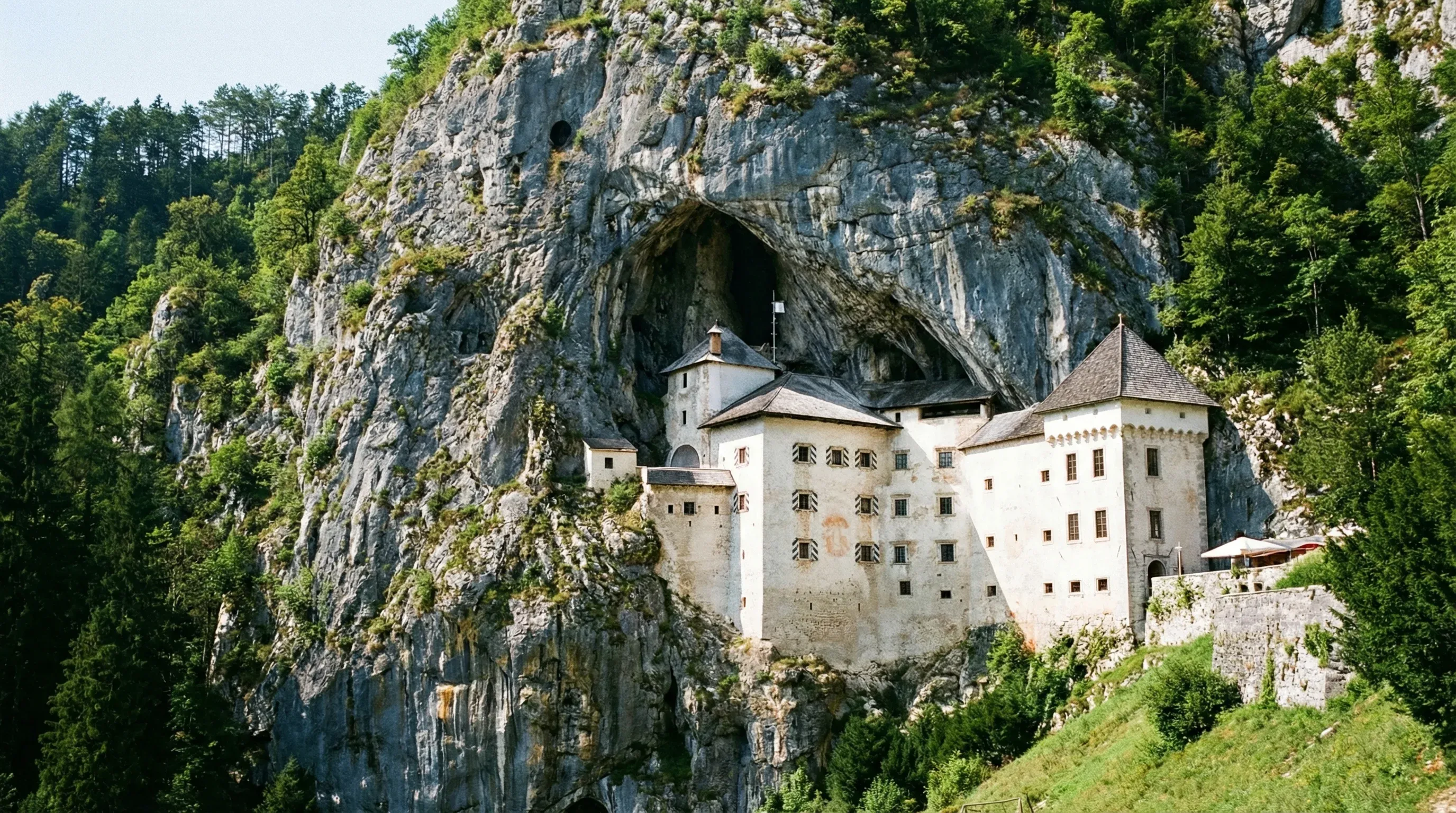

Karst Region (Postojna, Škocjan caves)
Home to dragons, knights, and underground magic 🐉🏰
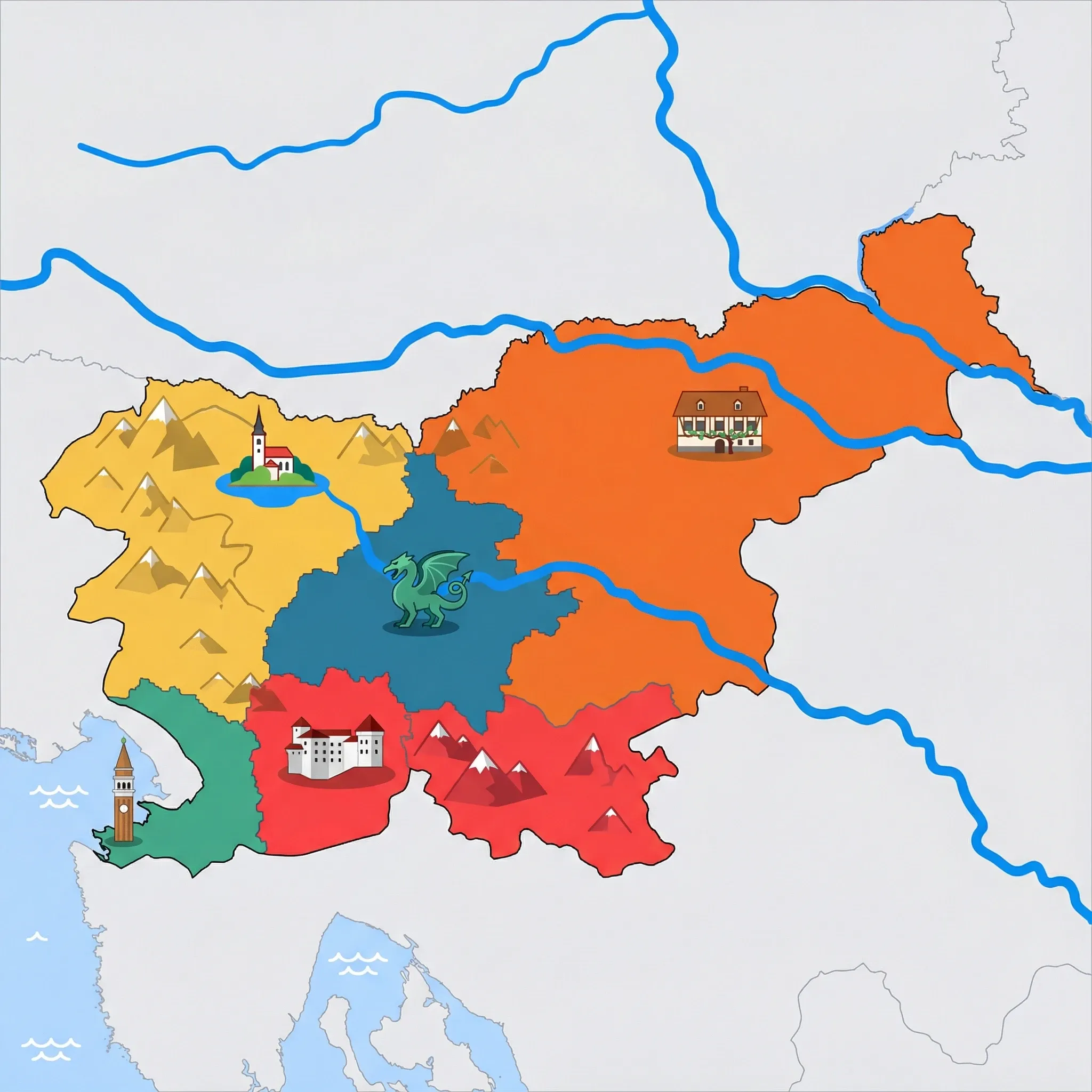
Click a region to explore
The Karst region (Kras in Slovenian) is the place that gave its name to karst topography worldwide. It is a land of mystery where rivers disappear underground and reappear kilometers away, and where wind-swept plateaus hide massive subterranean cathedrals. For families, this is arguably the most exciting part of Slovenia because the attractions are tangible, adventurous, and unlike anything kids see in daily life. It is not just about looking at pretty views; it is about going inside the earth, watching white horses run across green fields, and exploring castles that look like movie sets.
Culturally, the Karst is rugged and proud, known for its stone architecture, dry-cured ham (pršut), and strong winds known as the Burja. The climate here can be slightly cooler and windier than the coast, but warmer than the Alps. While many tourists just do a day trip here on their way to the beach, staying a few nights allows you to explore the quieter side of the region. You can visit smaller caves, take easy hikes through the woods to find sinkholes, and enjoy farm-stay tourism where children can see where their food comes from. It is a region that rewards curiosity, turning geology and history into a thrilling narrative for younger travelers.
Key Attractions
The absolute headline act for families is Postojna Cave. It is the most visited cave in Europe for a reason: you enter via an open-air electric train that zips through 2 kilometers of illuminated stalactites and stalagmites—a Harry Potter-esque experience that delights children of all ages. Deep inside, you can see the Proteus anguinus, or 'human fish', which local legends describe as baby dragons. Just a few kilometers away stands Predjama Castle, the largest cave castle in the world. Audio guides are available for kids, telling the story of the robber baron Erazem who withstood a siege here. It is filled with secret passages and weaponry displays.
For a more wild and natural experience, the UNESCO-listed Škocjan Caves offer a glimpse into a massive underground canyon. It is more walking than Postojna and feels grander and more prehistoric, evoking memories of 'The Lord of the Rings' mines. Animal lovers must visit the Lipica Stud Farm, the original home of the white Lipizzaner horses. Families can watch training sessions, take carriage rides, and walk through the historic stables in a beautiful parkland setting.
Practical Advice
The caves are a constant 10–12°C (50–54°F) year-round. Even if it is 30°C outside, you must bring warm jumpers and long trousers for the cave visits, or the kids will be miserable. Postojna is very stroller-friendly (with the train), while Škocjan involves hundreds of stairs and is not suitable for buggies (backpack carriers are essential for toddlers).
Food & Drink
Typical meal times: Lunch 12:00 pm to 3:00 pm. Dinner 6:00 pm to 9:00 pm. Farm stays (Turistična kmetija) often serve food all afternoon on weekends.
Typical meal costs: Hearty country meals are good value. €45–75 (approx. $50–82 USD / £38–64 GBP) for a family of four. A plate of local cold cuts is around €12 (approx. $13 USD / £10 GBP).
Dietary requirements: This is meat-heavy country. Vegetarians can rely on štruklji (rolled dumplings) and mushroom soups. Vegan options may require advance notice at smaller inns (gostilna).
Signature dishes:
- Kraški Pršut – Dry-cured ham salted with sea salt and dried in the fierce Burja wind.
- Jota – A thick, warming stew made from sauerkraut (or sour turnip), beans, potatoes, and smoked pork ribs.
- Teran Liqueur – While the wine is for adults, the sweet reduction is often used on desserts or ice cream.
Why this score?
The region offers unique subterranean exploration, though Postojna's famous electric train makes the experience highly accessible and less 'rugged.' Families can find more significant adventure in the UNESCO-listed Škocjan Caves or hiking the limestone plateau, which offers a moderate off-the-beaten-path feel.
Why this score?
The region is served by local clinics and the Postojna hospital, with very quick emergency transport links to the world-class facilities in nearby Ljubljana. As a major transit corridor, the infrastructure for handling foreign tourists and emergencies is well-established.
Why this score?
Postojna Cave is one of the most visited show caves in Europe, attracting over a million visitors annually, but the region often functions as a day-trip transit point between Ljubljana and the coast. While internationally recognized for its karst phenomena, it lacks the high-density hotel infrastructure required for a higher popularity score.

Attraction tickets here are the main expense. A family ticket for <a data-attraction-id="56646">Postojna Cave</a> and <a data-attraction-id="56639">Predjama Castle</a> combined can cost around €90–120 (approx. $100–132 USD / £75–100 GBP). Food and accommodation are generally cheaper than the coast or Bled. A double room in a B&B costs €80–110 (approx. $88–120 USD / £68–94 GBP).

Getting Here & Around
Getting Here
- Driving – The region is bisected by the A1 highway connecting Ljubljana and the coast. Postojna is just 40 minutes from Ljubljana.
- Train – Regular trains run from Ljubljana to Postojna and Divača (for Škocjan Caves). The station in Postojna is a 20-minute walk from the cave entrance.
- Bus – Frequent buses connect Ljubljana with the Postojna Cave terminal directly.
Getting Around
- Car – Highly recommended. Public transport between Predjama Castle and Lipica Stud Farm is sparse. A car gives you the freedom to link these sites easily.
- Shuttle – In summer (July/August), a free shuttle bus often runs between Postojna Cave and Predjama Castle for ticket holders. Check the schedule locally.
No airports in this region. See the country flight map for nearby connections.
Official Links

Packing List
Caves are 10°C (50°F) year-round; the train ride in Postojna makes it feel colder due to wind chill.
Cave floors are constantly wet and slippery; flip-flops are dangerous here.
Strollers are not allowed or practical in Škocjan Caves due to hundreds of stairs.
Slovenia has a high density of ticks in forests; removing them quickly is crucial to prevent Lyme disease or TBE.
Beaches on the Adriatic coast and Alpine lake shores are often pebbly or rocky, which can hurt sensitive feet.
Caves like Postojna are a constant 10°C (50°F) year-round, so you will need warm layers even in mid-summer.
If you plan to drive the stunning Vršič Pass or other Alpine routes, the hairpin turns can cause car sickness in kids.
Tap water is safe and delicious everywhere, and public drinking fountains are common in Ljubljana and coastal towns.

Activities & Best Times

Hiking, wildlife, outdoor exploration, ecotourism
Home to the world's most famous karst caves and UNESCO sites, offering unparalleled subterranean exploration and unique biodiversity like the Proteus. Peak summer months provide ideal conditions for combining cave tours with surface hiking in the Notranjska Regional Park.

Urban tourism, museums, historical sites, architecture
Features the iconic Predjama Castle and the historic Lipica Stud Farm, blending medieval history with unique equestrian traditions. While summer offers peak event calendars and outdoor displays, the primary cave attractions maintain a stable temperature for year-round visits.

Learning experiences, scientific sites, historical education
Houses internationally significant scientific facilities like EXPO Postojna Cave Karst and the Notranjska Museum, focused on karstology. These purpose-built museums offer world-class discovery experiences for families that are largely weather-independent.

Scenic drives, countryside tours, route-based travel
The Karst Wine Road and Emerald Trail provide scenic, well-maintained driving routes through a unique limestone landscape and viticultural areas. Best visited when the vineyards are in leaf and roadside local produce stands are fully operational.

Sport tourism, fitness activities, active recreation
Well-served by major international routes like the Alpe-Adria-Trail and Via Alpina, offering high-quality hiking and cycling infrastructure. Late spring and early autumn are optimal to avoid the high summer heat and the significant winter rainfall.

Winter sports, ski resorts, snow activities
Small-scale Nordic and winter centers like Bloke and Sviščaki offer traditional, family-oriented snow activities but lack the extensive infrastructure of major international ski resorts. The season is limited to the coldest mid-winter months.
Amusement parks, family entertainment venues
The Adventure Park Postojna provides localized forest-based entertainment for families visiting the caves. It is a secondary attraction that primarily operates during the warmer school holiday periods.




Public Holidays & Calendar Next 12 months
Public holidays, festivals, cultural celebrations, and seasonal natural phenomena coming up in Karst Region (Postojna, Škocjan caves) over the next 12 months.
Loading holidays and events...

Travel Advisory
All major agencies agree that Slovenia is a safe destination requiring only standard safety awareness. There are no significant security threats or travel restrictions currently in effect.
Safety Topics
Traveller Advice (3 groups)
When visiting alpine regions, stay on marked trails and monitor local weather reports for risks of avalanches, flash floods, or landslides.

Maintain standard safety practices, secure your belongings in crowded areas, and ensure your passport is valid for at least three to six months beyond your stay in the Schengen area.

While generally safe, be aware that large public events like Pride festivals can sometimes be highlighted as potential targets for general extremist activity in Europe.
Agency Summaries
No specific travel restrictions are in place. Guidance focuses on passport validity for Schengen travel, health precautions regarding tick-borne diseases, and adherence to local identification laws.
Visitors should maintain standard safety awareness similar to what they would use in Canada. Specific attention should be paid to mandatory vehicle equipment requirements and Schengen area stay limits.
General safety levels are high. Advice emphasizes the importance of comprehensive travel insurance and awareness of Schengen border rules.
The overall security environment is stable. Travellers should stay alert to petty crime in tourist spots and be aware of the new European Entry/Exit System requirements.
Slovenia is considered very safe with standard precautions being sufficient. Travellers are encouraged to enroll in safety notification programs and review health information regarding local conditions.
Standard vigilance is recommended. Recent advice highlights the risk of natural hazards like flooding in remote areas and the low but present global risk of terrorism.
Information is provided for general guidance only and does not constitute travel, safety, medical, or legal advice. Conditions may change. Users are responsible for independently verifying information before travel.