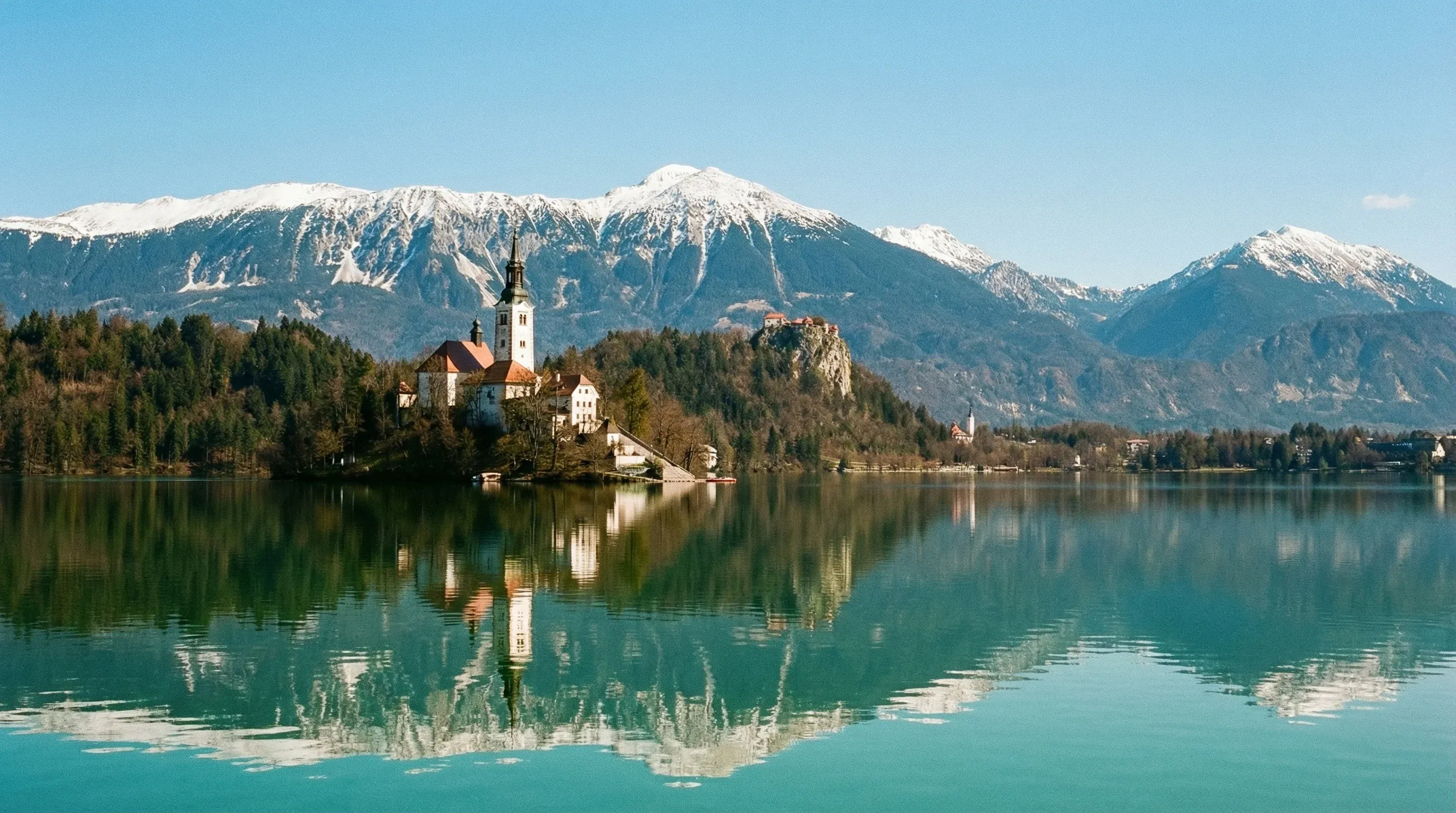

Lake Bled & Julian Alps
Alpine fairy tales and emerald river adventures 🏔️🚣
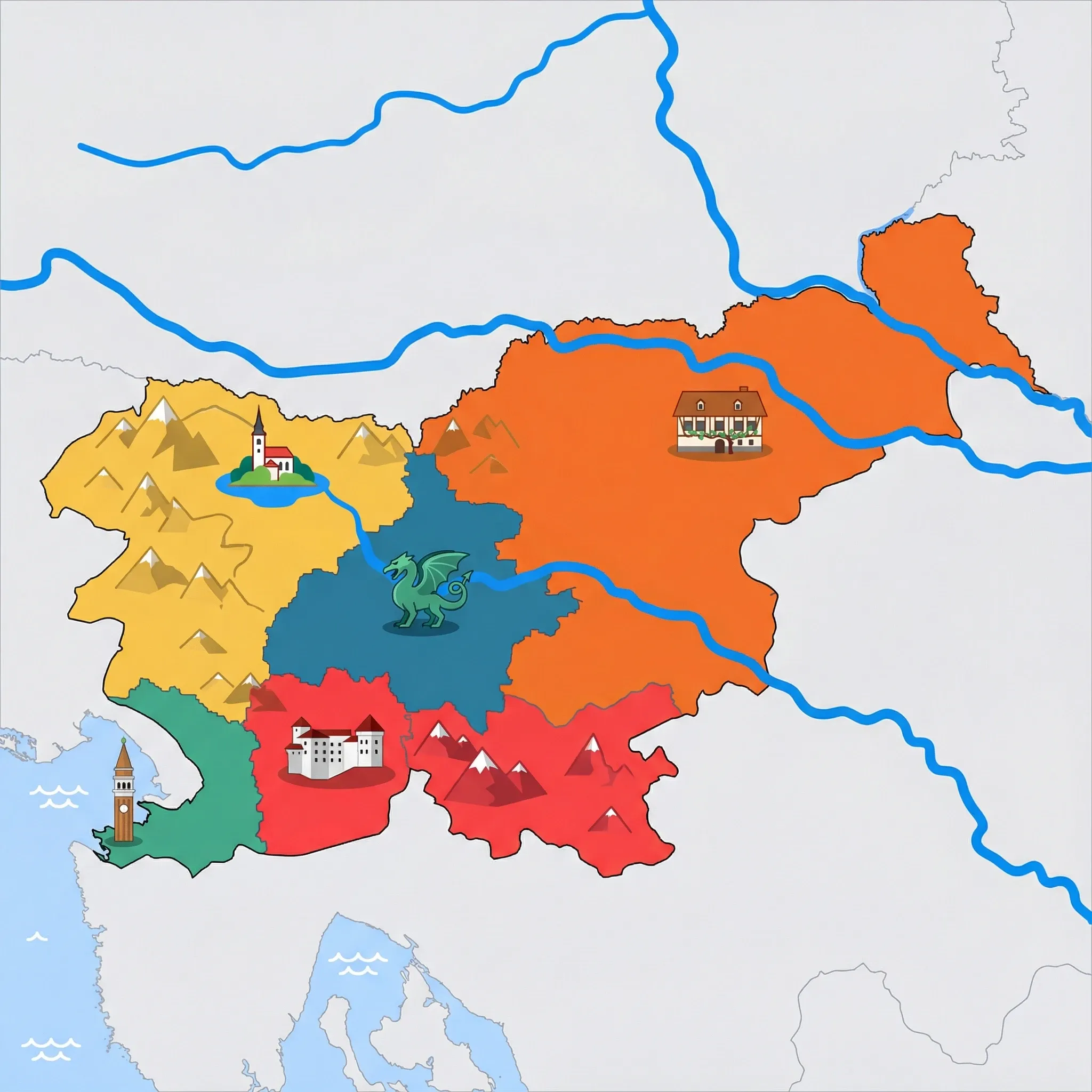
Click a region to explore
The Julian Alps region looks like it was designed by a storybook illustrator. Jagged grey peaks rise sharply above lush green valleys, and the water in the rivers and lakes is a startling, surreal shade of turquoise. For families, this region offers the perfect introduction to the Alps. It is accessible, safe, and packed with infrastructure designed to get people outdoors without requiring them to be mountaineers. Whether you are visiting in summer for swimming and hiking, or winter for ski schools and sledding, the landscape demands interaction.
The vibe here is distinctly Alpine—think wooden chalets, flower boxes, and cows with bells grazing in meadows. Lake Bled is the busy, polished hub, offering resort-style amenities and iconic views. However, venturing just 20 minutes further to Lake Bohinj reveals a wilder, more serene experience inside the Triglav National Park, where families can swim in crystal-clear glacial water. The region is also the adrenaline capital of Slovenia, but it caters well to 'soft adventure'—rafting trips gentle enough for 6-year-olds, ziplines, and summer toboggan runs that provide thrills with high safety standards.
Key Attractions
Start with the classic: Lake Bled. Families should hire a traditional 'pletna' boat (or rent a private rowboat) to reach the island church, where legend says ringing the bell grants a wish—a novelty kids adore. Overlooking the lake is Bled Castle, perched on a sheer cliff. The museum is modest, but the medieval printing press demonstrations and the view from the terrace are fantastic. Just 4km from Bled is the Vintgar Gorge, a 1.6km boardwalk attached to the canyon walls over the rushing Radovna River. It is flat, safe, and visually spectacular for children.
For a full day out, head to Kranjska Gora Ski Resort (a hub for hiking and biking in summer) and visit Lake Jasna, known for its white sand banks and the statue of the Zlatorog (Goldenhorn) ibex. If you have a car, the drive over the Vršič Pass involves 50 hairpin turns and offers easy access to high-altitude viewpoints where you can see rock faces up close. In winter, this area transforms into Slovenia’s best family ski destination.
Practical Advice
Bled can suffer from severe traffic jams in July and August. Stay in Bohinj or nearby villages like Radovljica for a quieter experience. If visiting Vintgar Gorge, go at 8:00 am sharp to avoid the tour bus crowds. In summer, the lakes are warm enough for swimming (22–24°C / 72–75°F), but the Soča River is freezing cold year-round—admire it, don't swim without a wetsuit!
Food & Drink
Typical meal times: Lunch 12:00 pm to 2:00 pm. Dinner 6:00 pm to 9:00 pm. Mountain huts (Koča) serve food all day until early evening.
Typical meal costs: Prices in Bled are higher. A family dinner costs €70–110 (approx. $77–120 USD / £60–95 GBP). A slice of cream cake is around €5–7 (approx. $5.50–7.70 USD / £4.25–6 GBP).
Dietary requirements: Alpine food is dairy and meat-heavy. However, tourist hubs are very accommodating with vegetarian pastas and grilled vegetables. Nut allergies should be communicated clearly due to the prevalence of walnut desserts.
Signature dishes:
- Bled Cream Cake (Kremšnita) – A cube of vanilla custard and chantilly cream sandwiched between layers of puff pastry. A mandatory treat.
- Kranjska Klobasa – The protected Carniolan sausage, usually served with mustard and a roll. Kids usually love its mild, smoky flavor.
- Ajdovi Žganci – Buckwheat spoonbread topped with cracklings. A traditional, hearty mountain breakfast or side dish.
Why this score?
As the heart of Triglav National Park and the Soča Valley, this is Slovenia's premier adventure hub for activities like white-water rafting, canyoning, and alpine trekking. It provides a genuine mountain experience with rugged terrain while remaining accessible enough for active families via established trails and summer toboggan runs.
Why this score?
Tourism-heavy towns like Bled and Kranjska Gora have excellent primary medical services, and the General Hospital Jesenice is strategically located to serve the entire Alpine region. Facilities are accustomed to treating international visitors for sports-related injuries and general medical needs.
Why this score?
Lake Bled is Slovenia's most recognizable global icon, comparable to destinations like the Bavarian Alps in terms of international draw and aesthetic fame. The region generates a high percentage of the country's foreign arrivals, with well-developed infrastructure catering to a diverse global audience.

Bled is the most expensive tourist destination in Slovenia. Hotel prices spike significantly in summer and winter holidays. Expect to pay €150–250 (approx. $165–275 USD / £125–210 GBP) for a family room. Parking is expensive (€3–5 per hour near the lake). However, hiking and swimming in <a data-attraction-id="56411">Lake Bohinj</a> are free, helping to balance the budget.

Getting Here & Around
Getting Here
- Train – Lesce-Bled station is on the main line from Ljubljana. From there, it is a short bus ride to the lake. Lake Bohinj has its own station (Bohinjska Bistrica).
- Bus – Hourly buses run from Ljubljana to Bled (approx. 1h 15m) and continue to Bohinj.
- Driving – Easy access via the A2 highway from Ljubljana. The drive to Bled takes about 40 minutes.
Getting Around
- Car – The best way to explore the wider Triglav National Park and access the Vršič Pass.
- Tourist Train – A motorized tourist train loops around Lake Bled, which is great for tired little legs.
- Bike – Excellent cycle paths connect Kranjska Gora to Italy and Bled to surrounding villages.
Nearby Airports (1 airport)
Ljubljana
LJULjubljana
View full flight map for Slovenia →
Official Links

Packing List
Ticks are common in tall grass and forests in Slovenia; checking daily is essential.
Roads in the Alps, especially the Vršič Pass, are extremely winding.
Lakes shores are rocky/pebbly; makes entering the water much more comfortable for kids.
Tap water is excellent, and mountain springs offer some of the best water in the world.
Caves like Postojna are a constant 10°C (50°F) year-round, so you will need warm layers even in mid-summer.
If you plan to drive the stunning Vršič Pass or other Alpine routes, the hairpin turns can cause car sickness in kids.
Tap water is safe and delicious everywhere, and public drinking fountains are common in Ljubljana and coastal towns.

Activities & Best Times

Hiking, wildlife, outdoor exploration, ecotourism
Home to Triglav National Park and the turquoise Soča River, the region offers world-class hiking, emerald-water gorges, and authentic alpine wilderness immersion. Peak visitation coincides with optimal trail accessibility and wildlife activity from June to September, while shoulder months offer stunning seasonal foliage.

Urban tourism, museums, historical sites, architecture
The iconic Bled Castle and the Church of the Assumption provide a unique, fairy-tale cultural experience backed by strong local heritage and museums. While summer is the busiest tourism period, April, October, and December offer atmospheric cultural experiences with fewer crowds or festive Christmas markets.

Sport tourism, fitness activities, active recreation
Features internationally recognized infrastructure including the Juliana Trail and world-class ziplines in the Učja Canyon and Dolinka. The region is a premier destination for active families during the summer months when all mountain biking, hiking, and aerial parks are fully operational.

Learning experiences, scientific sites, historical education
The Slovenian Alpine Museum and Planica Nordic Centre offer significant destination-level educational insights into mountaineering history and sports science. While indoor-focused, these facilities are best integrated into itineraries during the primary tourism season when surrounding heritage sites are also accessible.

Scenic drives, countryside tours, route-based travel
The Vršič Pass and Mangart Road offer some of Europe's most spectacular mountain driving, featuring dramatic hairpins and alpine vistas. These high-altitude routes are only reliably open and safe for touring between late spring and early autumn, with peak clarity in mid-summer.
Winter sports, ski resorts, snow activities
Kranjska Gora and Vogel offer high-quality alpine skiing and winter sports infrastructure with an authentic Slovenian atmosphere. The season is reliably productive from December through February, with March providing excellent spring skiing conditions before resort closures.

Amusement parks, family entertainment venues
High-quality family entertainment including the Straža Bled summer luge and Bohinj Water Park provides world-class amusement in a natural setting. These facilities are primarily seasonal, with peak operations and family crowds concentrated during the warm summer school holidays.

Beach resorts, marine activities: diving, snorkelling, kite surfing, wind surfing, sailing
When calibrated against international beach holiday standards (Mediterranean, Caribbean, Southeast Asia), alpine lake swimming is a niche activity. While Bled offers sophisticated lakeside bathing facilities, calling this 'good' for beach_sea holidays overstates the offering. 'Marginal' is more appropriate - the activity exists and has quality infrastructure, but this is not a beach destination.

Attractions (25 total)



Public Holidays & Calendar Next 12 months
Public holidays, festivals, cultural celebrations, and seasonal natural phenomena coming up in Lake Bled & Julian Alps over the next 12 months.
Loading holidays and events...

Travel Advisory
All major agencies agree that Slovenia is a safe destination requiring only standard safety awareness. There are no significant security threats or travel restrictions currently in effect.
Safety Topics
Traveller Advice (3 groups)
When visiting alpine regions, stay on marked trails and monitor local weather reports for risks of avalanches, flash floods, or landslides.

Maintain standard safety practices, secure your belongings in crowded areas, and ensure your passport is valid for at least three to six months beyond your stay in the Schengen area.

While generally safe, be aware that large public events like Pride festivals can sometimes be highlighted as potential targets for general extremist activity in Europe.
Agency Summaries
No specific travel restrictions are in place. Guidance focuses on passport validity for Schengen travel, health precautions regarding tick-borne diseases, and adherence to local identification laws.
Visitors should maintain standard safety awareness similar to what they would use in Canada. Specific attention should be paid to mandatory vehicle equipment requirements and Schengen area stay limits.
General safety levels are high. Advice emphasizes the importance of comprehensive travel insurance and awareness of Schengen border rules.
The overall security environment is stable. Travellers should stay alert to petty crime in tourist spots and be aware of the new European Entry/Exit System requirements.
Slovenia is considered very safe with standard precautions being sufficient. Travellers are encouraged to enroll in safety notification programs and review health information regarding local conditions.
Standard vigilance is recommended. Recent advice highlights the risk of natural hazards like flooding in remote areas and the low but present global risk of terrorism.
Information is provided for general guidance only and does not constitute travel, safety, medical, or legal advice. Conditions may change. Users are responsible for independently verifying information before travel.