
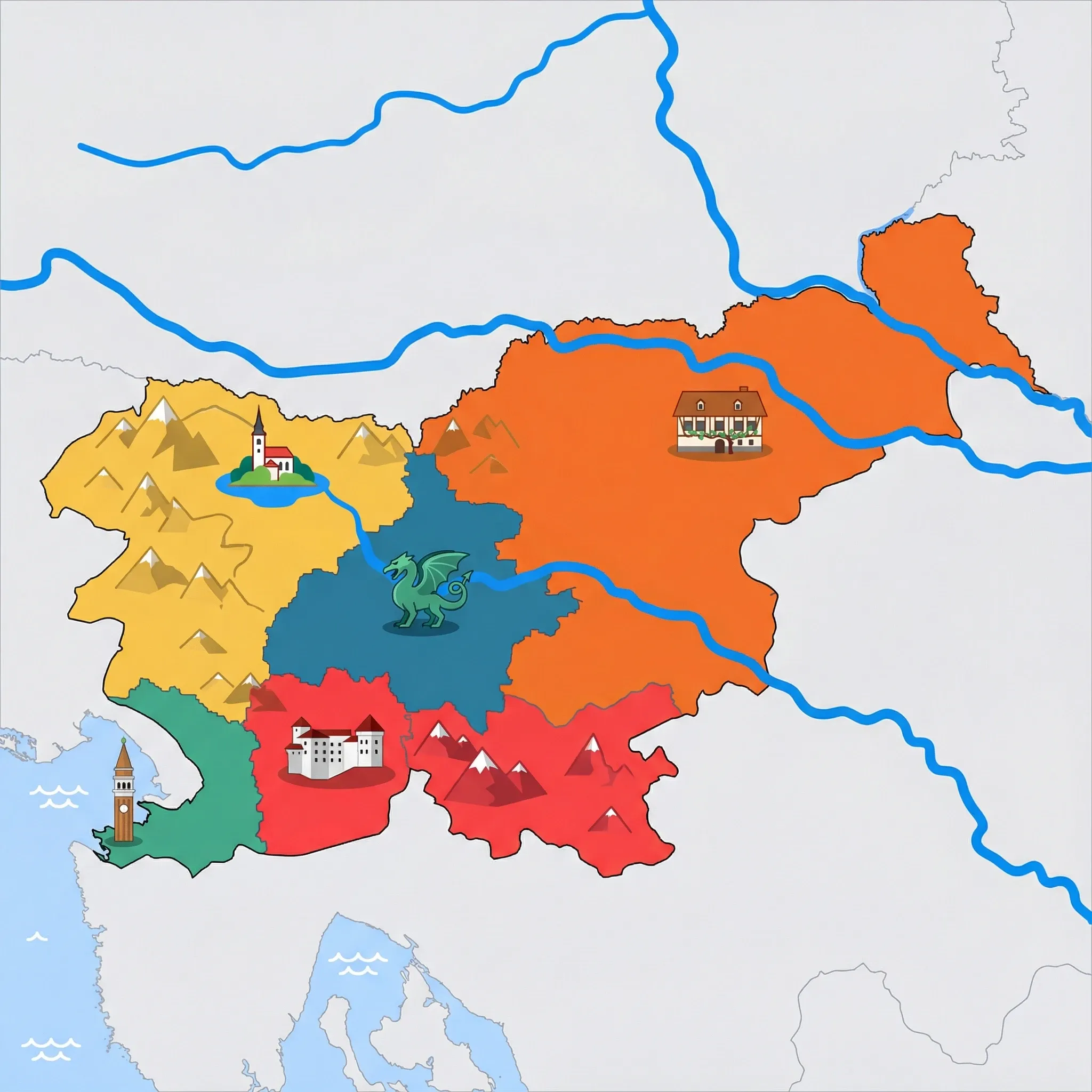
Click a region to explore
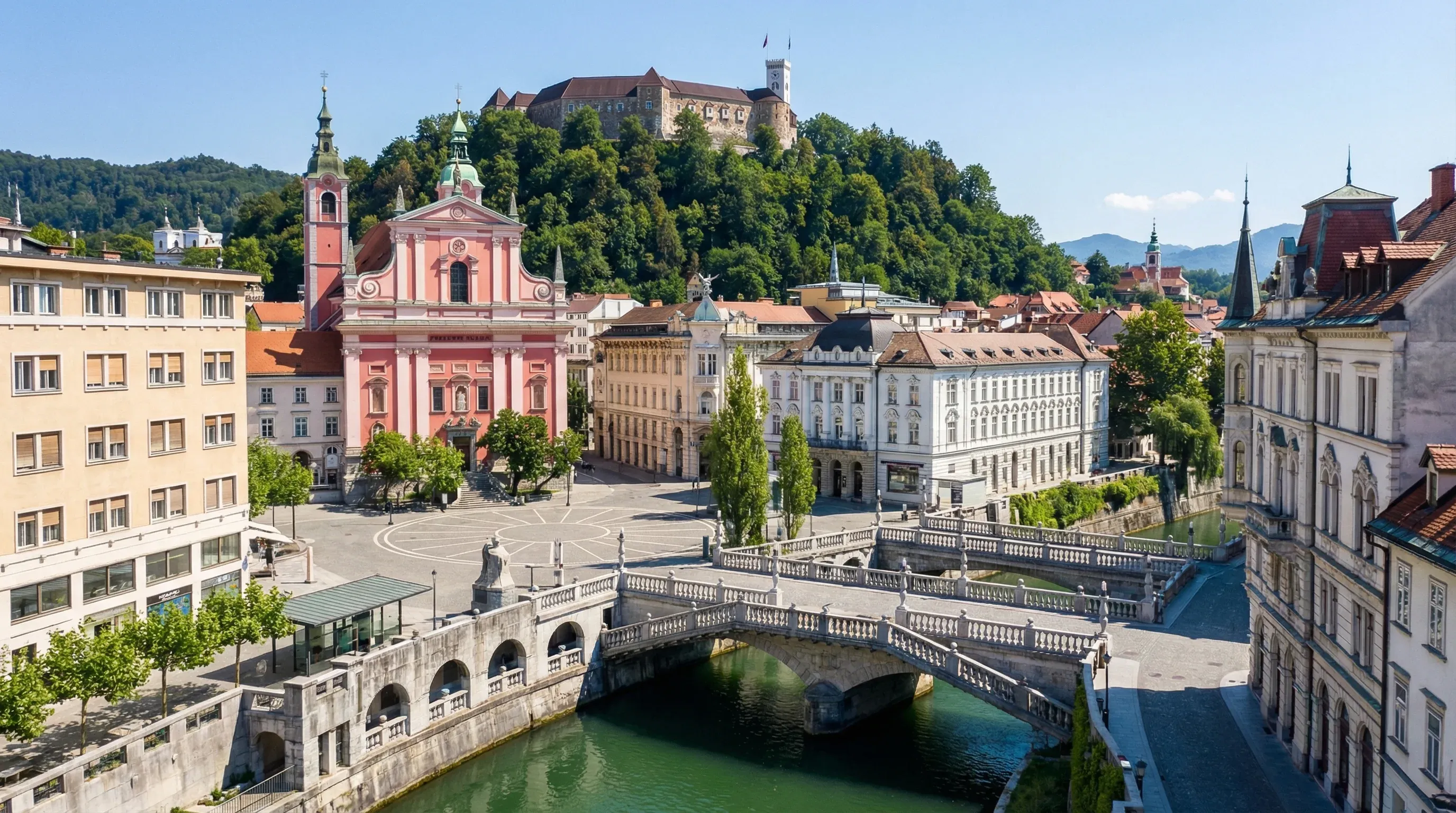
Ljubljana is often cited as one of the most livable cities in the world, and for visiting families, it feels incredibly welcoming. The city center is a car-free zone, meaning children can run across Prešeren Square or along the riverbanks without parents constantly worrying about traffic. The atmosphere is youthful and artistic, yet steeped in history. The legend of Jason and the Argonauts claims the Greek hero slew a dragon in the marshes here, and today, the Dragon is the city's mascot. You will find dragons everywhere—on bridges, on manhole covers, and in souvenir shops—turning a city walk into a fun scavenger hunt for kids.
Because the city is compact, you don't need to rely on the Metro or complex transit systems. Everything is within walking distance. The Ljubljanica River winds through the old town, lined with weeping willows and cafes that are happy to serve hot chocolate to kids while parents enjoy a glass of local wine. In summer, the city is vibrant with street theater and open-air libraries in the parks. It serves as the perfect base for exploring Slovenia, as almost every other region is within a 90-minute drive.
Key Attractions
The skyline is dominated by Ljubljana Castle. While you can walk up, the glass funicular railway is a highlight for children. Inside, the Museum of Puppetry is surprisingly engaging, offering interactive displays that let kids try their hand at being puppeteers. Back down in the valley, the Dragon Bridge is an essential photo stop. Crossing the Triple Bridge leads you into the old town market area.
For green space, Tivoli Park is huge and wonderful. It has a large adventure playground, a pond, and plenty of space to run. Within the wider park area is the Ljubljana Zoo. It is smaller than major European zoos but very intimate; the enclosures are designed to let you get quite close to the animals, and the petting zoo section is excellent. If you have curious older kids, the Slovenian Museum of Natural History holds a complete mammoth skeleton found nearby.
Practical Advice
Ljubljana is a year-round destination, but December is magical with its festive lights. The 'Urbana' card is used for buses, parking, and library access. However, for a 2-3 day stay, you might rarely use the bus. Drinking fountains are scattered throughout the city center offering free, clean alpine water.
Food & Drink
Typical meal times: Lunch 11:00 am to 2:00 pm. Dinner 6:00 pm to 10:00 pm. On Fridays (weather permitting), the 'Open Kitchen' (Odprta kuhna) food market runs all day/evening at the central market.
Typical meal costs: A mid-range family lunch is €50–80 (approx. $55–88 USD / £42–68 GBP). Street food (burgers/sausages) is around €8–12 (approx. $9–13 USD / £7–10 GBP) per person.
Dietary requirements: Ljubljana is very progressive with food. Vegan, vegetarian, and gluten-free bistros are common in the center.
Signature dishes:
- Potica – Rolled yeast dough cake with various fillings, most commonly walnut and tarragon.
- Ljubljana Cottage Cheese Pancakes – Baked pancakes filled with cottage cheese and tarragon.
- Flying Žganci – Actually fried chicken wings and drumsticks, a humorous local name for a popular stew accompaniment that became a main dish.
Why this score?
Ljubljana is a compact, highly developed urban center where the 'wildest' activities are limited to walking the castle hill or canoeing on the slow-moving Ljubljanica River. While surrounded by green space, it lacks the rugged or remote qualities of an adventure destination.
Why this score?
The University Medical Centre Ljubljana (UKC) is the leading hospital in the country, providing world-class healthcare with specialized staff who are almost universally fluent in English. It serves as the primary referral center for complex cases across the region and offers excellent accessibility for foreign travelers.
Why this score?
As the central transport hub and political capital, Ljubljana is the most-visited municipality in Slovenia, but it remains a boutique capital compared to mega-destinations like Prague or Amsterdam. Its pedestrianized center and 'Green Capital' status attract a steady flow of international visitors year-round for cultural and urban tourism.

Accommodation is the main cost, with family rooms in the center running €130–220 (approx. $145–240 USD / £110–185 GBP). Food prices are reasonable compared to Western European capitals. Many activities, like exploring the <a data-attraction-id="56478">Tivoli Park</a> or walking up <a data-attraction-id="56479">Castle Hill</a>, are free.

Getting Here & Around
Getting Here
- Airports – Ljubljana Jože Pučnik Airport (LJU) is 25 minutes north of the city.
- Train – The central railway station is a 10-minute walk from the center. Direct trains run to/from Vienna, Zagreb, and Venice (with connections).
- Driving – Ljubljana is the hub of the Slovenian highway cross. Park in one of the P+R (Park and Ride) lots or central garages like Kongresni trg.
Getting Around
- Walking – The absolute best way. The center is compact and flat.
- Kavalir – Free electric golf carts called 'Kavalir' roam the pedestrian zone. You can flag them down for a free ride—kids love this!
- Urban Bus – Reliable and clean. Requires an Urbana card (prepaid smart card).
No airports in this region. See the country flight map for nearby connections.
Official Links

Packing List
Ljubljana has numerous public drinking fountains with excellent tap water.
The large pedestrian zones and Tivoli Park are perfect for kids on scooters.
Ljubljana can be rainy; weather changes quickly near the Alps.
Slovenia has a high density of ticks in forests; removing them quickly is crucial to prevent Lyme disease or TBE.
Beaches on the Adriatic coast and Alpine lake shores are often pebbly or rocky, which can hurt sensitive feet.
Caves like Postojna are a constant 10°C (50°F) year-round, so you will need warm layers even in mid-summer.
If you plan to drive the stunning Vršič Pass or other Alpine routes, the hairpin turns can cause car sickness in kids.
Tap water is safe and delicious everywhere, and public drinking fountains are common in Ljubljana and coastal towns.

Activities & Best Times

Urban tourism, museums, historical sites, architecture
A sophisticated European capital with a compact, car-free center, world-class galleries, and a vibrant river-side cafe culture that appeals to discerning families. Summer and the festive December period provide the most authentic atmosphere, while mid-winter can feel grey and quiet.

Hiking, wildlife, outdoor exploration, ecotourism
Ljubljana offers excellent urban green spaces and easy access to nature, but 'excellent' should be reserved for regions that are themselves wilderness destinations. The Path of Remembrance is an urban recreational trail, not a wilderness experience. Downgrading to 'very_good' better reflects Ljubljana's role as an excellent gateway to nature rather than a primary adventure destination.

Sport tourism, fitness activities, active recreation
Boasts specialized infrastructure including the Tacen whitewater course and extensive cycling routes that cater to active families. Activities are weather-dependent, peaking in the dry, warm summer months and closing down during the snowy or rainy winter period.
Amusement parks, family entertainment venues
High-quality aquatic centers like Atlantis Water Park and unique attractions like the House of Illusions provide strong family entertainment options. Outdoor water parks peak during the hot summer months, whereas indoor components remain accessible but lack the full seasonal appeal.

Learning experiences, scientific sites, historical education
Features significant institutions like the Slovenian Museum of Natural History and the House of Experiments which offer high-quality engagement for children. These sites are ideal for educational visits during the school year months when interactive exhibits are most active.

Scenic drives, countryside tours, route-based travel
Ljubljana is the ideal hub for iconic drives such as the Vršič Pass, offering spectacular Julian Alp scenery on well-maintained roads. These high mountain routes are typically only safe and snow-free for touring from late spring through early autumn.
Winter sports, ski resorts, snow activities
Ljubljana serves as a convenient gateway to major resorts like Krvavec, offering authentic alpine infrastructure within a short drive of the capital. The season is strictly defined by snow reliability from December to February, with March offering variable spring skiing conditions.

Attractions (19 total)



Public Holidays & Calendar Next 12 months
Public holidays, festivals, cultural celebrations, and seasonal natural phenomena coming up in Ljubljana over the next 12 months.
Loading holidays and events...

Travel Advisory
All major agencies agree that Slovenia is a safe destination requiring only standard safety awareness. There are no significant security threats or travel restrictions currently in effect.
Safety Topics
Traveller Advice (3 groups)
When visiting alpine regions, stay on marked trails and monitor local weather reports for risks of avalanches, flash floods, or landslides.

Maintain standard safety practices, secure your belongings in crowded areas, and ensure your passport is valid for at least three to six months beyond your stay in the Schengen area.

While generally safe, be aware that large public events like Pride festivals can sometimes be highlighted as potential targets for general extremist activity in Europe.
Agency Summaries
No specific travel restrictions are in place. Guidance focuses on passport validity for Schengen travel, health precautions regarding tick-borne diseases, and adherence to local identification laws.
Visitors should maintain standard safety awareness similar to what they would use in Canada. Specific attention should be paid to mandatory vehicle equipment requirements and Schengen area stay limits.
General safety levels are high. Advice emphasizes the importance of comprehensive travel insurance and awareness of Schengen border rules.
The overall security environment is stable. Travellers should stay alert to petty crime in tourist spots and be aware of the new European Entry/Exit System requirements.
Slovenia is considered very safe with standard precautions being sufficient. Travellers are encouraged to enroll in safety notification programs and review health information regarding local conditions.
Standard vigilance is recommended. Recent advice highlights the risk of natural hazards like flooding in remote areas and the low but present global risk of terrorism.
Information is provided for general guidance only and does not constitute travel, safety, medical, or legal advice. Conditions may change. Users are responsible for independently verifying information before travel.