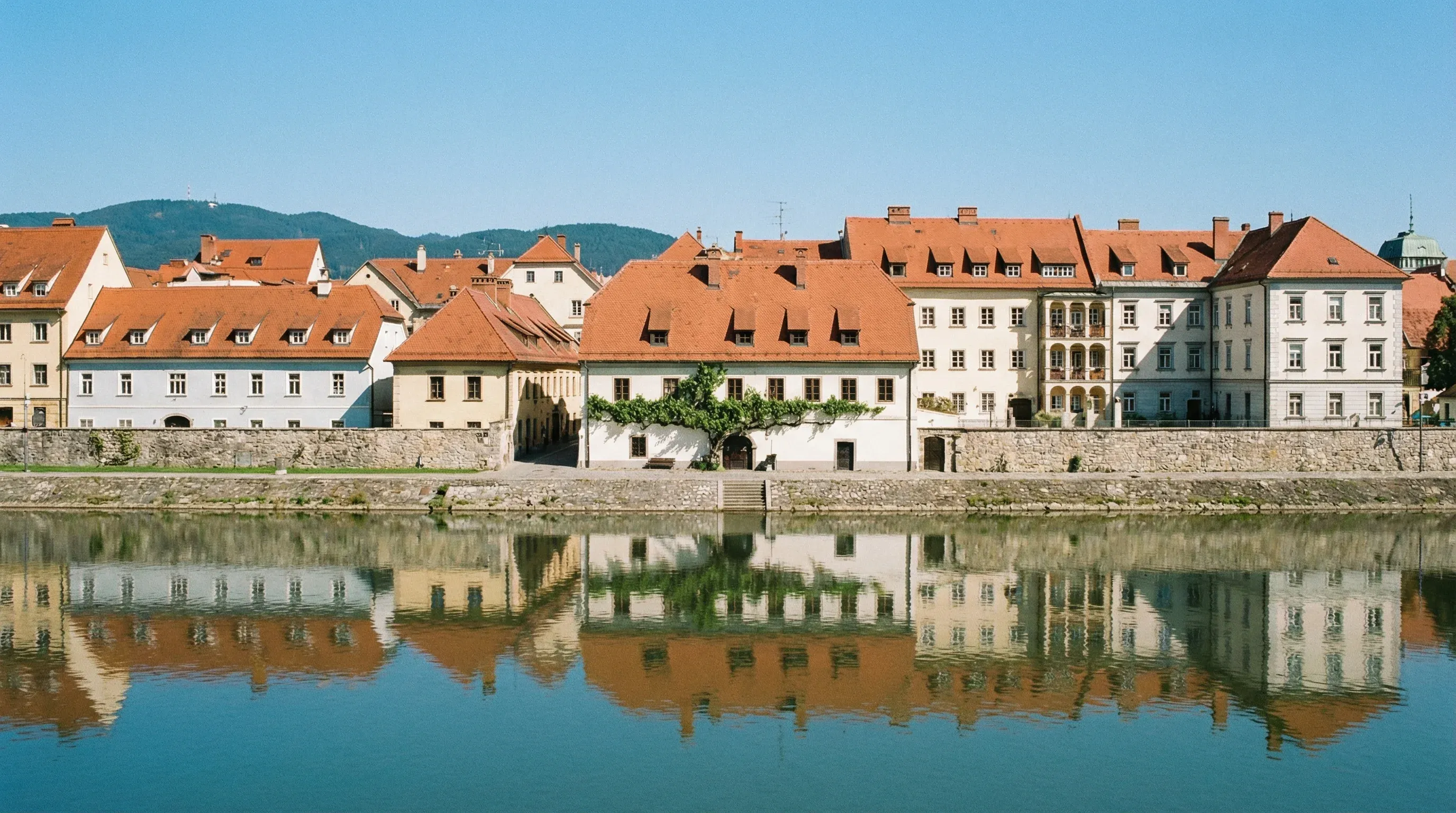

Maribor & Eastern Slovenia
Ancient towns, thermal waters, and green hills 🏰🧖♀️
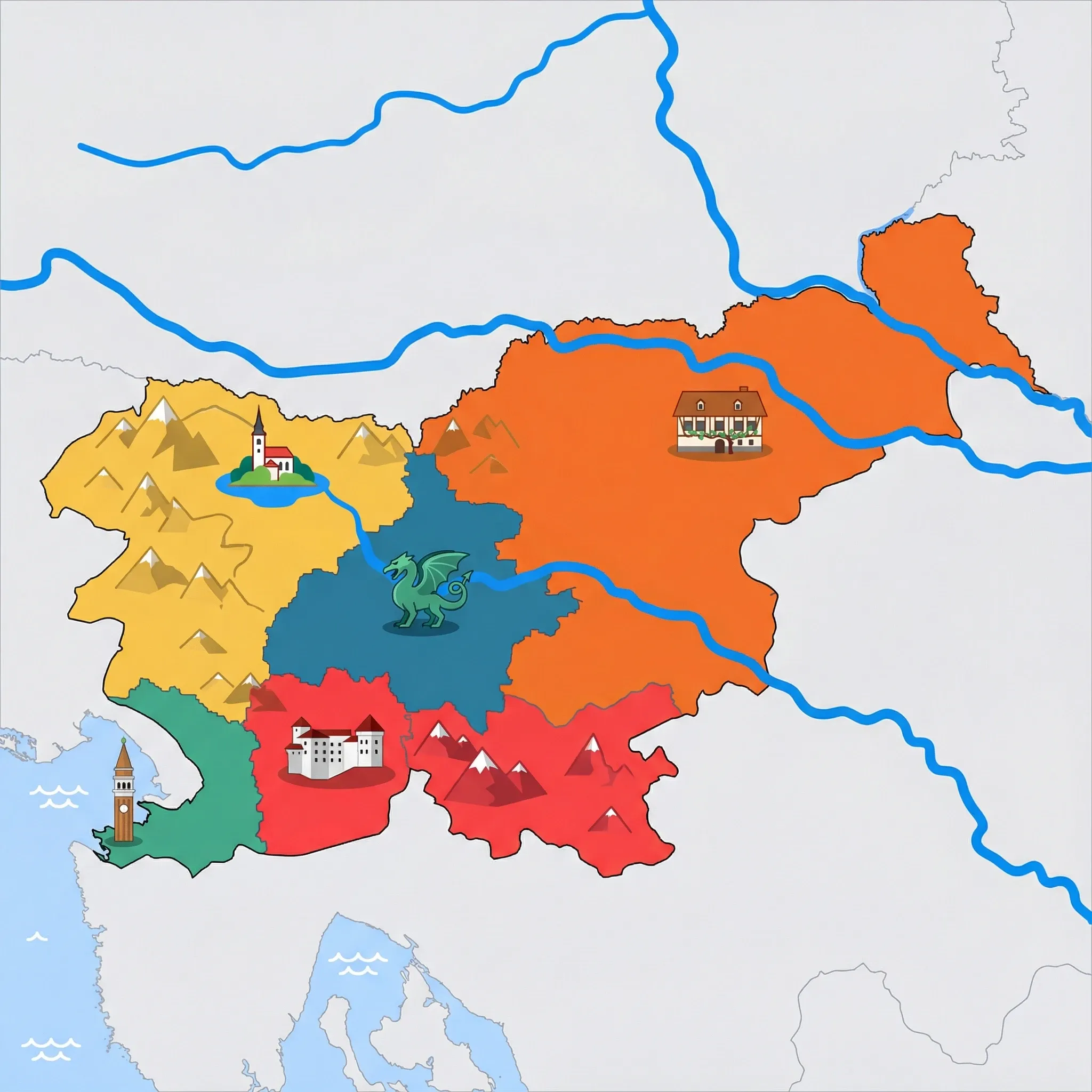
Click a region to explore
While western Slovenia is Alpine and dramatic, the East is rolling, green, and incredibly hospitable. This is the land of vineyards, thermal waters, and folklore. For families, this region offers a much more relaxed pace and significantly lower prices than the tourist hotspots of Bled or Piran. It is the perfect destination for families who want to combine a bit of culture with serious relaxation. The region is famous for its 'terme' (thermal spas), many of which have massive water parks with slides and wave pools that will keep kids entertained for days.
Maribor, the second-largest city, feels like a large, friendly village. It sits on the banks of the Drava River and at the foot of the Pohorje massif, meaning you can be in a city café one minute and hiking in a primeval forest 20 minutes later. Just down the road is Ptuj, the oldest town in Slovenia. It looks like a movie set and is home to the 'Kurenti'—shaggy, sheepskin-wearing monsters from local folklore that scare away winter. Kids are usually fascinated by the masks and the noise of the bells. The landscape flattens out towards the Hungarian border, becoming the Pannonian plain, a unique world of storks nesting on chimneys and floating mills on the river Mura.
Key Attractions
In Maribor, a walk along the river 'Lent' district is lovely, passing the Old Vine (the world's oldest grape-bearing vine). Families should head up the Rogla Ski Resort on the Pohorje plateau. In winter, it is a family-friendly ski center; in summer, it features the 'Treetop Walk'—a massive wooden walkway high in the canopy with educational stops and a slide for the way down. Historic buffs must visit Ptuj Castle. It houses an excellent collection of arms and armor, plus the museum of traditional carnival masks which is a highlight for children.
Further south, Old Castle Celje is Slovenia's largest fortress. It feels like a proper ruin, offering great views and often hosting medieval reenactment weekends that are brilliant for kids. For active families, the Drava Cycling Route offers flat, safe sections along the river that are suitable for children.
Practical Advice
This region is ideal for visiting year-round. The thermal spas are indoor/outdoor and work in any weather. Winters are cold and snowy on Pohorje; summers are warm but greener and less scorching than the coast. English is widely spoken, though German is also very common here due to the proximity to Austria.
Food & Drink
Typical meal times: Lunch 11:00 am to 2:00 pm. Dinner 6:00 pm to 9:00 pm.
Typical meal costs: This is the best value region in Slovenia. A family feast can cost €40–60 (approx. $44–66 USD / £35–50 GBP). Portions are notoriously huge.
Dietary requirements: Pumpkin seed oil is used on everything here (salads, even vanilla ice cream). It's delicious but distinctive. Meat is a staple, but salads are huge and varied.
Signature dishes:
- Prekmurska Gibanica – A rich layer cake with poppy seeds, walnuts, apples, and cottage cheese. A heavy, sweet masterpiece.
- Bograč – A traditional meat stew similar to goulash, cooked in a cauldron, featuring three types of meat and potatoes.
- Pumpkin Seed Oil – The 'green gold' of the region. Try it on vanilla ice cream—it tastes nutty and fantastic.
Why this score?
The Pohorje hills offer accessible skiing and a network of forest trails for mountain biking and hiking, but the terrain is much gentler and more developed than the Julian Alps. The focus here is more on wellness and thermal water parks rather than high-adrenaline or remote wilderness activities.
Why this score?
Maribor is home to the country's second University Medical Centre, ensuring that visitors to the eastern part of Slovenia have access to top-tier specialized medical care. The concentration of thermal spas in the region also means local clinics are well-versed in catering to tourists and older visitors.
Why this score?
Slovenia's second-largest city and the surrounding Styria region are primarily popular for domestic spa tourism and wine-related travel. While Maribor has some international recognition for its winter sports and the world's oldest vine, it receives significantly fewer global tourists than the western alpine and coastal regions.

Significantly cheaper than Ljubljana or the Alps. You can find excellent family apartments or farm stays for €70–100 (approx. $77–110 USD / £60–85 GBP) per night. Ski passes at <a data-attraction-id="32046">Rogla Ski Resort</a> are cheaper than in the Julian Alps. Eating out is very affordable, with large pizzas often costing under €10 (approx. $11 USD / £8.50 GBP).

Getting Here & Around
Getting Here
- Driving – Maribor is approx. 1 hour 20 minutes from Ljubljana on the A1 highway. It is also easily accessible from Graz, Austria (45 mins).
- Train – Regular InterCity trains connect Ljubljana to Celje, Maribor, and Ptuj. The ride to Maribor takes under 2 hours.
Getting Around
- Car – Essential for exploring the countryside, vineyards, and reaching Rogla Ski Resort.
- Bike – The flat terrain of the Prekmurje plains and the Drava Cycling Route make this the best region for family cycling.
- Cable Car – The Pohorje cable car (Pohorska vzpenjača) takes you from the edge of Maribor up to the mountain recreation area.
No airports in this region. See the country flight map for nearby connections.
Official Links

Packing List
The region is famous for thermal spas and water parks which are open all year.
Mosquitoes can be prevalent near the Mura and Drava rivers and wetlands.
You will likely want to buy pumpkin seed oil, local juices, or wine to bring back.
Slovenia has a high density of ticks in forests; removing them quickly is crucial to prevent Lyme disease or TBE.
Beaches on the Adriatic coast and Alpine lake shores are often pebbly or rocky, which can hurt sensitive feet.
Caves like Postojna are a constant 10°C (50°F) year-round, so you will need warm layers even in mid-summer.
If you plan to drive the stunning Vršič Pass or other Alpine routes, the hairpin turns can cause car sickness in kids.
Tap water is safe and delicious everywhere, and public drinking fountains are common in Ljubljana and coastal towns.

Activities & Best Times

Hiking, wildlife, outdoor exploration, ecotourism
The Pohorje Massif and Drava River valley provide authentic immersion in mid-mountain forests and river ecosystems, with well-developed trails for families. Peak conditions occur in late spring and early autumn when temperatures are mild and the landscape is most vibrant.

Urban tourism, museums, historical sites, architecture
The historic centers of Ptuj and Maribor offer world-class heritage including the oldest vine on earth and well-preserved medieval castles. May, June, and September provide the most comfortable climate for exploring urban architecture and the region's sophisticated food and wine scene.

Sport tourism, fitness activities, active recreation
The region boasts world-class cycling infrastructure, including the international Drava Route and the dedicated bike parks of Pohorje. The best conditions for active exploration are found during the dryer, mild months of late spring and early autumn.

Spa retreats, wellness centers, peaceful getaways
Eastern Slovenia is the country's premier spa region with award-winning facilities like Wellness Orhidelia utilizing natural thermal waters. While available year-round, the restorative experience is most appealing to international travelers during the cooler months.

Scenic drives, countryside tours, route-based travel
The Jeruzalem and Svečina wine roads offer exceptionally scenic driving through terraced vineyards and rolling hills. The autumn months are peak for these routes as the grape harvest and vibrant foliage create a world-class landscape experience.
Winter sports, ski resorts, snow activities
Maribor Pohorje and Rogla offer accessible, family-oriented ski infrastructure and are regular hosts of international competitions. The season is relatively short due to lower elevations, making the coldest mid-winter months the only reliable peak period.

Amusement parks, family entertainment venues
The region features highly-regarded thermal water parks like Aqualuna and Terme 3000 that offer extensive family entertainment facilities. Visitation peaks during the summer months when outdoor adventure pools and splash parks are fully operational.

Learning experiences, scientific sites, historical education
Innovative centers such as Noordung and Expano provide high-quality scientific engagement, though they serve better as educational supplements rather than primary travel motivators. Peak months align with the broader family travel season when these facilities are most active.

Events, celebrations, seasonal attractions
Home to the unique UNESCO-listed Kurentovanje carnival in February and the vibrant Lent Festival in June. These events offer authentic cultural immersion but are highly time-specific, providing narrow windows for festival-focused travel.

Attractions (21 total)



Public Holidays & Calendar Next 12 months
Public holidays, festivals, cultural celebrations, and seasonal natural phenomena coming up in Maribor & Eastern Slovenia over the next 12 months.
Loading holidays and events...

Travel Advisory
All major agencies agree that Slovenia is a safe destination requiring only standard safety awareness. There are no significant security threats or travel restrictions currently in effect.
Safety Topics
Traveller Advice (3 groups)
When visiting alpine regions, stay on marked trails and monitor local weather reports for risks of avalanches, flash floods, or landslides.

Maintain standard safety practices, secure your belongings in crowded areas, and ensure your passport is valid for at least three to six months beyond your stay in the Schengen area.

While generally safe, be aware that large public events like Pride festivals can sometimes be highlighted as potential targets for general extremist activity in Europe.
Agency Summaries
No specific travel restrictions are in place. Guidance focuses on passport validity for Schengen travel, health precautions regarding tick-borne diseases, and adherence to local identification laws.
Visitors should maintain standard safety awareness similar to what they would use in Canada. Specific attention should be paid to mandatory vehicle equipment requirements and Schengen area stay limits.
General safety levels are high. Advice emphasizes the importance of comprehensive travel insurance and awareness of Schengen border rules.
The overall security environment is stable. Travellers should stay alert to petty crime in tourist spots and be aware of the new European Entry/Exit System requirements.
Slovenia is considered very safe with standard precautions being sufficient. Travellers are encouraged to enroll in safety notification programs and review health information regarding local conditions.
Standard vigilance is recommended. Recent advice highlights the risk of natural hazards like flooding in remote areas and the low but present global risk of terrorism.
Information is provided for general guidance only and does not constitute travel, safety, medical, or legal advice. Conditions may change. Users are responsible for independently verifying information before travel.