

⚠️ SAFETY WARNING: Exercise increased caution due to the potential for civil unrest and crime, particularly in Honiara. Demonstrations can occur with little warning. Medical services are limited, especially outside the capital. Ensure you have comprehensive travel insurance that includes medical evacuation.
Overview
The Solomon Islands is a destination for families who have outgrown the typical resort holiday. Situated east of Papua New Guinea, this double chain of volcanic islands and coral atolls remains one of the least visited and most authentic corners of the Pacific. It is a place where "resorts" are often eco-lodges run by local families, and entertainment means spotting dugongs in the lagoon or listening to panpipe music in a village square. The climate is tropical and humid year-round, with a wet season from November to April that brings lush greenery but heavier rains.
For families, the magic here lies in the water and the war history. The underwater world is accessible even to young snorkellers, with WWII wrecks often sitting shallow enough to be seen from the surface. On land, the jungle holds rusted tanks and memorials that serve as powerful, tangible history lessons for older children. Culturally, it is deeply Melanesian; the "wantok" (one talk) system of kinship defines daily life, and visitors are often welcomed with genuine, uncommercialised hospitality. Travel here requires patience-ferries run on "island time" and amenities are basic-but the reward is a family experience of raw nature and living culture that is disappearing elsewhere.
Key Attractions
The capital, Honiara, is the gateway to the country's dramatic wartime past. Families should start at the Guadalcanal American Memorial, which offers panoramic views over the city and a sombre, educational tribute to the soldiers who fought here. Nearby, the Solomon Islands National Museum provides essential context on traditional customs, displaying shark-shaped caskets and intricate shell money that will fascinate curious young minds.
Beyond the capital, the real adventure begins in the Western Province. A highlight for eco-conscious families is Tetepare Island, the largest uninhabited island in the South Pacific. Here, families can stay in simple leaf-thatched lodges, join rangers on turtle-tagging patrols, and snorkel in pristine waters teeming with life. It is a unique opportunity for children to see conservation work firsthand in a 'Jurassic Park' style setting.
For the truly adventurous, East Rennell in the Outer Provinces offers a glimpse of a UNESCO World Heritage site. Home to Lake Tegano, the largest raised coral atoll in the world, it is a remote natural wonder where families can take boat tours across the vast, brackish waters surrounded by ancient rainforests, far removed from the modern world.
Practical Advice
The best time to visit is during the dry season (June to September), when humidity is lower and seas are calmer for boat travel. Visas are generally issued on arrival for major nationalities, but check specific requirements. Malaria is a serious risk here; families must consult a travel doctor for antimalarial medication and pack strong insect repellent. Medical facilities are basic, so a well-stocked first-aid kit is essential. Be prepared for a cash economy-ATMs are rare outside Honiara.
Safety
While locals are generally welcoming, Honiara has experienced civil unrest in recent years. Avoid large gatherings and political demonstrations. Petty crime can occur, so keep valuables secure. The biggest risks for families are often environmental: currents can be strong, and saltwater crocodiles are present in some areas-always seek local advice before swimming in rivers or estuaries. Inter-island boat travel can be hazardous; avoid overloaded banana boats and always ensure life jackets are available.
Food & Drink
Typical meal times: Breakfast is usually 7:00 am to 9:00 am, lunch 12:00 pm to 2:00 pm, and dinner 6:30 pm to 8:30 pm. Outside of Honiara, meal times are often dictated by the guesthouse host.
Typical meal costs: 60–150 SBD (approx. $7–18 USD / €6.50–16.50 EUR) for a basic local meal; 400–700 SBD (approx. $47–83 USD / €44–77 EUR) for a mid-range dinner for two.
Dietary requirements: Vegetarian options are limited to root vegetables and tropical fruits in remote areas. Gluten-free is naturally easier due to the reliance on root crops (taro, cassava) rather than wheat, but cross-contamination is possible. Nut allergies are rare but awareness is low.
Family-friendly dining: Highchairs and children's menus are virtually non-existent outside of a few expat-focused hotels in Honiara. However, the culture is very child-centric, and staff will often happily improvise a smaller portion of fish and rice for kids.
Signature dishes:
- Poi – A fermented taro paste, sometimes served sour or sweet. It is a staple comfort food, though the sour version is an acquired taste for some children.
- Cassava Pudding – Grated cassava and sweet potato baked with coconut milk in a banana leaf, resulting in a dense, cake-like texture that kids often enjoy.
- Coconut Crab – A local delicacy, though families should check sustainable sourcing as the species is vulnerable. It has a rich, nutty flavour.
- Green Papaya Curry – Unripe papaya cooked in coconut milk, often with chilli (ask for mild) and fresh reef fish.
Family Travel Notice
Ensure children are vaccinated against rotavirus before travel, as fatal outbreaks have occurred locally.

While local market food is cheap, travel logistics make it a mid-to-high cost destination. A family of four can expect to spend 2,500–4,000 SBD (approx. $300–480 USD / €275–440 EUR) per day for accommodation, meals, and boat transfers. Imported goods in Honiara are pricey.
Age Suitability





Did you know? Solomon Islands welcomes approximately 700 international visitors per year. Most visitors come from East Asia and the Pacific.

Explore Regions
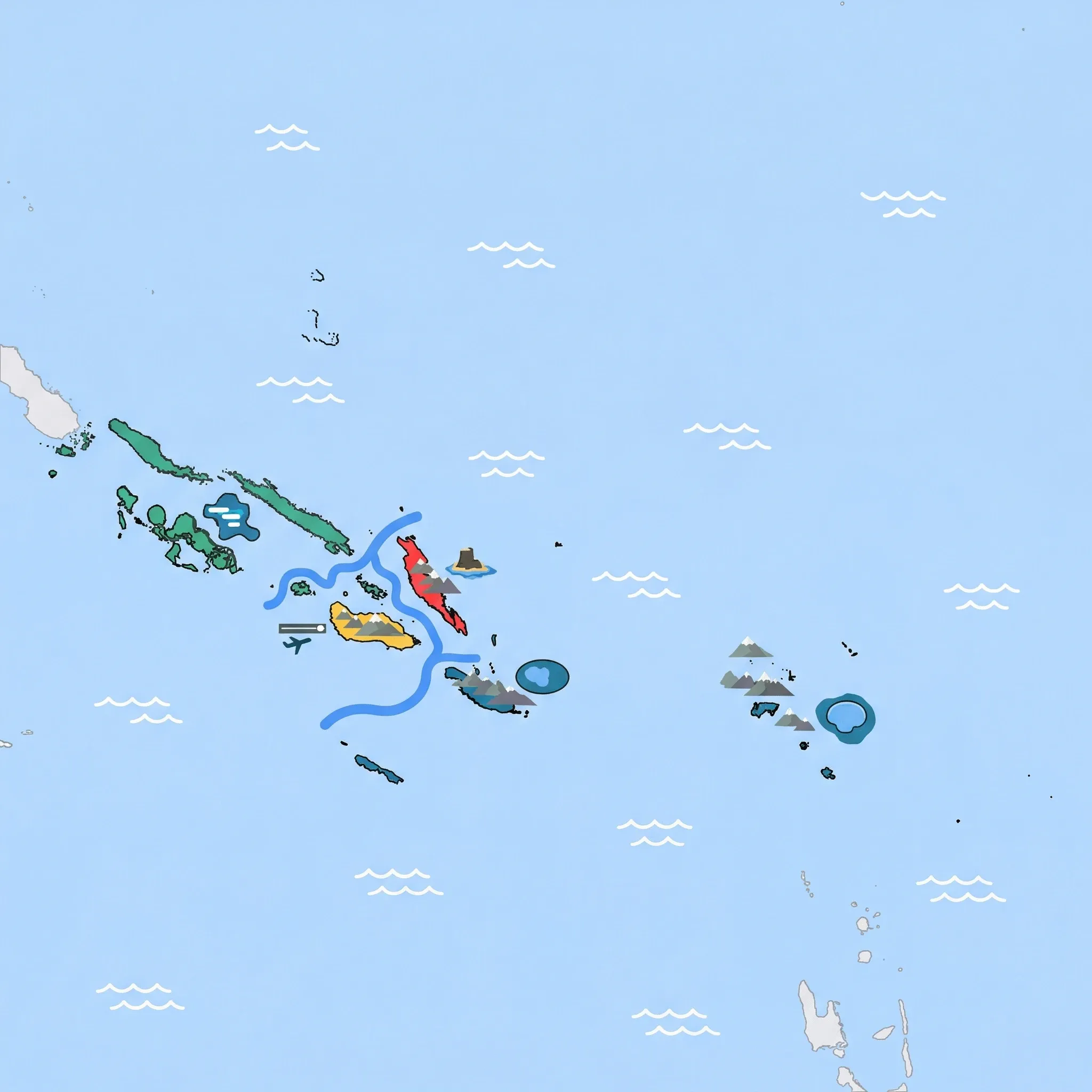
4 Regions
Honiara & Guadalcanal
Where WWII history meets tropical jungle adventures 🌴🌺
Malaita
The authentic cultural soul of the Solomons 🐚🛶
Outer Provinces
Remote wilderness and UNESCO natural wonders 🦅🌊
Western Province (Gizo, Munda)
Turquoise lagoons and world-class underwater adventures 🐠🏝️
Click on a region marker to explore details. Use the dropdown to color regions by activity suitability.

Getting There & Around
Getting There
- By Air – Flights land at Honiara International Airport (HIR) on Honiara & Guadalcanal. Direct connections are available from Brisbane (approx. 3 hours), Nadi, Port Vila, and Port Moresby via Solomon Airlines and Qantas.
- Entry Requirements – Visitors from the US, UK, EU, Australia, and New Zealand are generally granted a visitor permit on arrival for up to 90 days. Check your government website for the latest visa requirements, or use the IATA Travel Centre entry-requirements checker.
Getting Around
- Domestic Flights – Solomon Airlines connects Honiara to major hubs like Gizo and Munda. This is the safest and fastest way to reach the Western Province.
- Banana Boats – Small fibreglass boats with outboard motors are the primary taxi service between islands. Essential for reaching places like Tetepare Island. ⚠️ Safety warning: Ensure the boat carries life jackets and avoid travelling in rough weather.
- Taxis – Available in Honiara. They are unmetered, so agree on a price before getting in (typically 10–20 SBD for short trips).

Packing List
Essential for 'wet landings' from banana boats and protecting feet from sharp coral on beaches.
Open boat travel is wet; keeps electronics and clothes dry during inter-island transfers.
Rental equipment is often unavailable or poor quality in remote areas; bring masks for the kids.
Power outages are common in Honiara and electricity is limited or non-existent in village stays.
ATMs are virtually non-existent outside Honiara; villages often cannot change large notes.
Remote clinics may lack supplies; treat coral cuts immediately to prevent serious infection.

Activities & Best Times

Adventure & Nature
Very GoodHiking, wildlife, outdoor exploration, ecotourism
Offers raw and authentic Pacific wilderness experiences including the massive Tenaru Falls and treks to Mount Popomanaseu. Peak visitation aligns with the drier months to ensure jungle trails are navigable and river crossings are safe.
The region is home to Marovo Lagoon, the world's largest saltwater lagoon, and the primary conservation area of Tetepare Island, providing exceptional biodiversity and authentic wilderness. The drier months from July to October are ideal for navigating the lagoons and trekking through rainforests without the intense rainfall of the monsoon season.
Features authentic jungle trekking, Riba Cave exploration, and scenic waterfalls for families seeking raw wilderness. Heavy tropical rainfall from December to April makes interior trails difficult and cave exploration potentially hazardous.

City & Cultural
Very GoodUrban tourism, museums, historical sites, architecture
A globally significant location for WWII history with the Vilu War Museum and major memorials providing profound educational value. The city experience is best in the drier months, particularly August, which coincides with major battle anniversaries.
Boasts a compelling blend of WWII history, including Kennedy Island, and unique Roviana cultural sites like the ancestral skull shrines on Skull Island. Tourism peak aligns with the drier season, which facilitates essential boat travel between dispersed island cultural sites and historic villages.
A globally unique cultural destination centered on the artificial islands and shell money traditions of the Langa Langa and Lau peoples. Best visited during the mid-year window when outdoor cultural demonstrations and village visits are less likely to be disrupted by monsoonal rain.

Beach & Sea
GoodBeach resorts, marine activities: diving, snorkelling, kite surfing, wind surfing, sailing
Home to the iconic Langa Langa and Lau Lagoons, offering unique stays on artificial islands with clear waters for snorkeling. Peak season aligns with the drier months when sea conditions are calmest and visibility is highest.
Home to the famous Bonegi Beach and Iron Bottom Sound, the region offers world-class shore diving among WWII wrecks. Conditions are best from June to September when underwater visibility is highest and the heavy monsoon rains are less frequent.
While the Arnavon Islands provide world-class marine biodiversity and turtle conservation, the region lacks the high-end resort facilities expected by sophisticated travelers. Peak season offers the best underwater visibility and calmest seas for accessing these remote coastal areas.

Sports & Active
GoodSport tourism, fitness activities, active recreation
The Bauro Highlands and Mount Kubonitu offer significant, rugged trekking routes that appeal to experienced families seeking physical challenges. Peak months are essential for safety on steep, remote trails that become dangerously slick during the heavy monsoon rains of the off-season.
Features specialized infrastructure for diving and high-adrenaline activities like the Skyline Zipline and rugged mountain trekking. Active pursuits are most enjoyable when humidity is slightly lower and sea conditions are calmest.
Features challenging volcanic trekking routes such as the Mount Veve Summit and Mount Vina Roni, appealing to active families seeking rugged physical engagement. These trails are most accessible and safe during the mid-year drier period when tropical mud and humidity are more manageable.

Road Trips & Scenic
MarginalScenic drives, countryside tours, route-based travel
The Malaita North and East roads provide a rugged, scenic driving experience through rural coastal villages. However, infrastructure is basic and roads are often impassable during the heavy rain season (December to April).
The West Coast Road offers evocative views and access to historic sites, though infrastructure is rugged and requires a 4WD. Travel is discouraged during the peak wet season (Dec-Apr) when roads are frequently impacted by heavy rain and washouts.

Public Holidays & Calendar Next 12 months
Public holidays, festivals, cultural celebrations, and seasonal natural phenomena coming up in Solomon Islands over the next 12 months.
Loading holidays and events...
Climate & Weather
Honiara & Guadalcanal
Show Details
| Month | Temp °C | Rain | Humidity |
|---|
Malaita
Show Details
| Month | Temp °C | Rain | Humidity |
|---|
Outer Provinces
Show Details
| Month | Temp °C | Rain | Humidity |
|---|
Western Province (Gizo, Munda)
Show Details
| Month | Temp °C | Rain | Humidity |
|---|

Travel Advisory
A majority of international agencies consider the Solomon Islands safe for travel with standard security awareness, though many highlight specific regional risks in Honiara and Malaita.
Safety Topics
Traveller Advice (4 groups)

Female visitors have reported incidents of sexual harassment and assault. It is advised to avoid walking alone after dark and to dress conservatively to respect local customs.

Ensure children are vaccinated against rotavirus before travel, as fatal outbreaks have occurred locally.

Same-sex sexual activity remains illegal and is a criminal offense punishable by imprisonment. Local society is generally conservative and does not recognize same-sex relationships.

Scuba divers should be aware that local hyperbaric facilities have limited life-support capabilities. Hikers and divers must be extremely cautious of unexploded World War II ordnance still present in forests and coastal waters.
Agency Summaries
Travel is generally permitted with standard precautions; however, visitors should avoid political demonstrations and be mindful of safety risks in Honiara.
While general safety precautions are sufficient for the country overall, visitors should exercise a high degree of caution in Honiara due to potential security issues.
Irish citizens are advised to follow standard safety measures and keep informed of local news while visiting, as there is no local embassy presence.
Increased caution is recommended due to significant security concerns, including the risk of civil unrest, crime targeting foreigners, and natural disaster hazards.
Travellers should maintain standard security awareness throughout the islands, though higher vigilance is required during cyclone season and in areas with unexploded ordnance.
Heightened vigilance is advised due to health concerns, the presence of unexploded World War II munitions, petty crime, and potential for sudden civil unrest.
Information is provided for general guidance only and does not constitute travel, safety, medical, or legal advice. Conditions may change. Users are responsible for independently verifying information before travel.