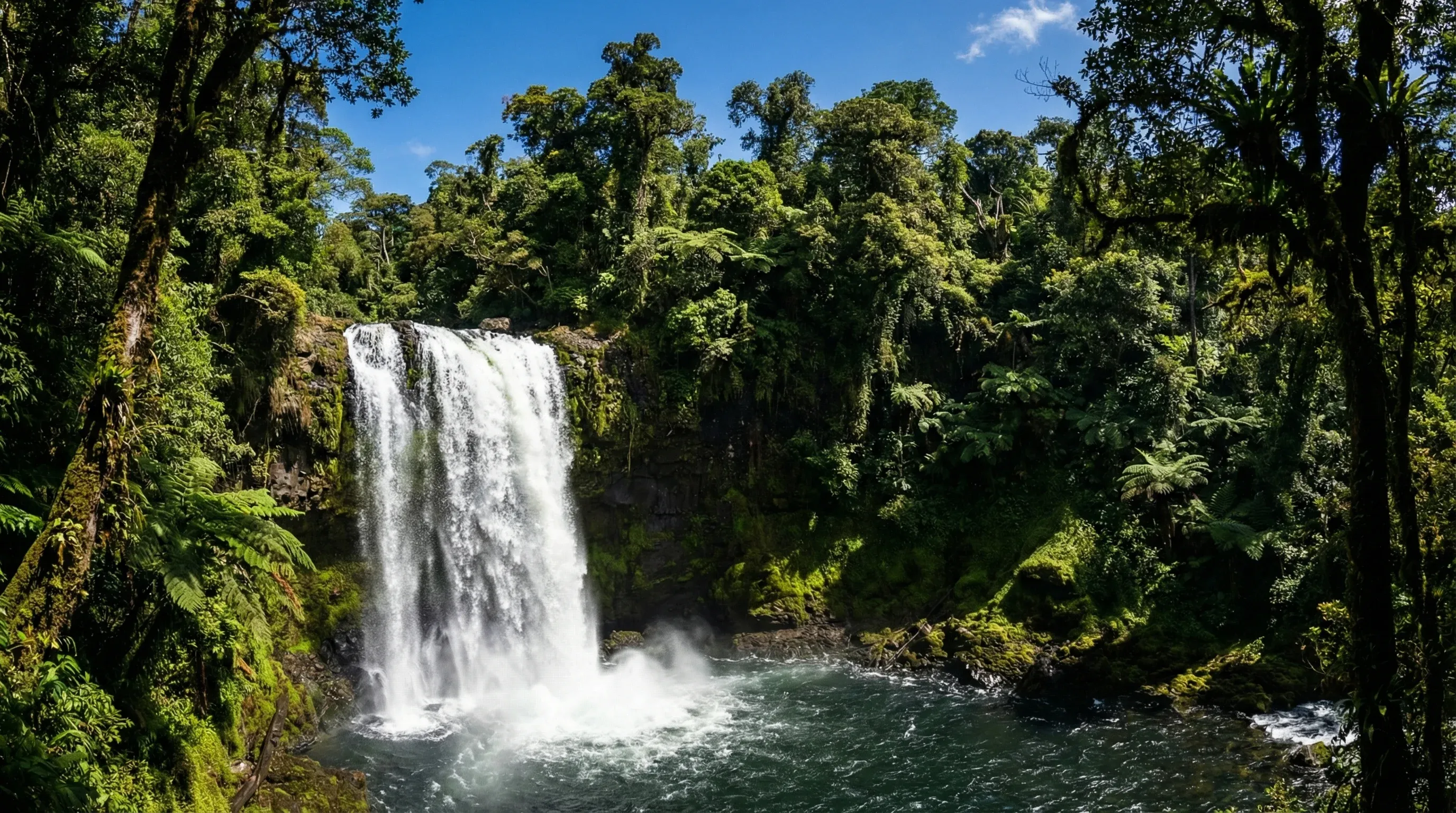

Honiara & Guadalcanal
Where WWII history meets tropical jungle adventures 🌴🌺
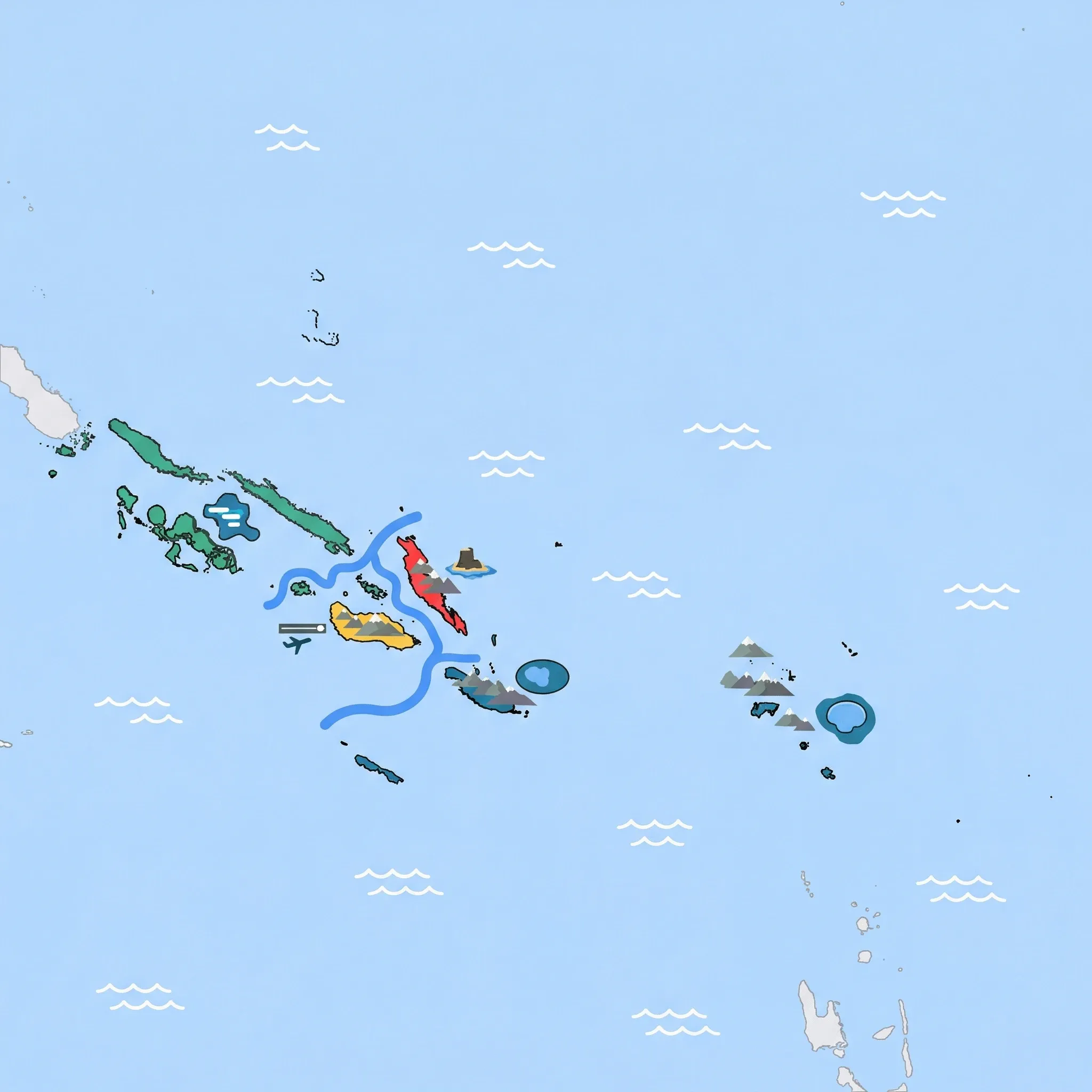
Click a region to explore
Travel Advisory
While generally safe for tourists, Honiara can experience occasional civil unrest or demonstrations. Families should stay informed via local news and avoid large gatherings. Medical facilities are limited; comprehensive travel insurance with medical evacuation cover is essential.
Overview
Guadalcanal is the heartbeat of the Solomon Islands, home to the capital city, Honiara. For families, this region offers a stark but fascinating contrast between the bustle of the central market and the serene, dense jungles that rise just behind the coastline. It is a place of deep historical significance; the echoes of World War II are louder here than almost anywhere else in the Pacific. Parents can use the landscape as a living classroom, teaching children about history while standing on the very ridges where pivotal battles took place. The climate is tropical and humid, so pacing your day is key—mornings are for exploring, while afternoons are best spent cooling off in hotel pools or nearby waterfalls.
Culturally, Honiara is a melting pot of the diverse provinces. A walk through the Central Market reveals a kaleidoscope of fresh produce, fresh tuna, and vibrant local crafts. While the city itself is gritty and busy, the surrounding island offers lush rainforests and accessible beaches. It serves as the necessary logistics hub for any family trip to the Solomons, but it is also a destination in its own right for those interested in military history and Melanesian urban life.
Key Attractions
The region's primary draw for international visitors is its accessible war history. The Guadalcanal American Memorial is a must-visit; located on Skyline Drive, the manicured grounds offer a peaceful place for reflection and panoramic views over the coast, allowing children to visualize the scale of the naval battles of Iron Bottom Sound. It is well-maintained and provides a solemn, educational experience.
In the town center, the Solomon Islands National Museum offers a bite-sized introduction to the archipelago's culture. While small, it houses traditional currencies, weapons, and ornaments that fascinate children and provide context before you travel to the outer islands. The grounds are often used for cultural festivals, making it a vibrant stop during celebrations.
Practical Advice
The best time to visit is the drier season from June to September, though humidity is high year-round. For families, hiring a private taxi or driver for the day is the most comfortable way to see the sights, as walking in the heat can be exhausting for younger children. Malaria prophylaxis is highly recommended for all family members.
Food & Drink
Typical meal times: Lunch is usually served from 11:30 am to 1:30 pm, and dinner from 6:30 pm to 8:30 pm. Hotels often serve food throughout the day.
Typical meal costs: A mid-range meal in a hotel or decent restaurant costs SBD 120–200 (approx. $14–24 USD / €13–22 EUR). Market snacks are much cheaper.
Dietary requirements: Major hotels can cater to vegetarian and basic gluten-free needs, but options are limited in local eateries. Dairy is not a staple in local cooking, making dairy-free eating relatively easy.
Signature dishes:
- Fish and Chips – Freshly caught tuna or wahoo, battered or crumbed, served with cassava or kumara chips rather than potato.
- Cassava Pudding – A heavy, sweet, gelatinous cake made from grated cassava and coconut milk, often sold in blocks at the market.
- Slippery Cabbage – A ubiquitous local green vegetable (ibika) cooked in coconut milk, known for its mucilaginous texture.
Why this score?
The region offers significant adventure through rugged jungle trekking to sites like Mataniko and Tenaru Falls, as well as world-class wreck diving in Iron Bottom Sound. While the capital provides a base of operations, the interior of Guadalcanal is mountainous and lacks developed trails, requiring local guides and physical stamina. It is less remote than the outer islands but still far more rugged than typical tropical resort destinations.
Why this score?
Honiara is home to the National Referral Hospital, the most advanced medical facility in the country, which can handle basic emergencies and some surgeries. While it is the best option in the Solomon Islands, it still faces frequent shortages of supplies and specialized staff compared to international standards. For any serious medical condition, medically-equipped evacuation to Australia or New Zealand is the standard protocol for tourists.
Why this score?
As the site of the country's only international airport and the capital city, Honiara receives the majority of the Solomon Islands' very limited visitor arrivals. However, with total country arrivals at only a few thousand annually, the region remains a niche destination primarily for WWII history buffs and business travelers. Infrastructure is basic, with tourism centered around a handful of hotels and war memorials like Bloody Ridge.

Honiara is the most expensive part of the country for accommodation and dining due to the reliance on imported goods and the presence of business travelers. A comfortable family room in a secure hotel costs SBD 1,500–2,500 (approx. $175–295 USD / €160–270 EUR) per night. Local market produce is cheap, but supermarket items are pricey.
Family Travel Notice
Ensure children are vaccinated against rotavirus before travel, as fatal outbreaks have occurred locally.

Getting Here & Around
Getting Here
- Airports – Honiara International Airport (HIR) is the main entry point, with flights from Brisbane (Australia), Nadi (Fiji), and Port Moresby.
- Ferry – Inter-island ferries dock at the main wharf in Honiara, connecting to Malaita and Western Province, though they are often crowded and basic.
- Driving – The main road, Mendana Avenue, runs parallel to the coast. Traffic can be heavy during peak hours.
Getting Around
- Taxi – The easiest way for families to get around Honiara. Agree on a price before starting the journey as meters are rarely used.
- Minibus – Local minibuses are very cheap (approx. SBD 3–5) but are often crowded, loud, and driven erratically—fun for a short hop but stressful with luggage.
- Walking – Pavements are uneven or non-existent in places. Great caution is needed when crossing roads as pedestrian crossings are frequently ignored.
Nearby Airports (1 airport)
Honiara International
HIRHoniara
View full flight map for Solomon Islands →
Official Links

Packing List
Sudden, intense tropical downpours are common even in the dry season.
Roads outside the immediate city center are riddled with potholes.
Modest dress (covering knees/shoulders) is respectful and expected in towns.
Dengue and Malaria are real risks in Honiara; dusk protection is vital.
Essential for 'wet landings' from banana boats and protecting feet from sharp coral on beaches.
Open boat travel is wet; keeps electronics and clothes dry during inter-island transfers.
Rental equipment is often unavailable or poor quality in remote areas; bring masks for the kids.
Power outages are common in Honiara and electricity is limited or non-existent in village stays.
ATMs are virtually non-existent outside Honiara; villages often cannot change large notes.
Remote clinics may lack supplies; treat coral cuts immediately to prevent serious infection.

Activities & Best Times

Hiking, wildlife, outdoor exploration, ecotourism
Offers raw and authentic Pacific wilderness experiences including the massive Tenaru Falls and treks to Mount Popomanaseu. Peak visitation aligns with the drier months to ensure jungle trails are navigable and river crossings are safe.

Urban tourism, museums, historical sites, architecture
A globally significant location for WWII history with the Vilu War Museum and major memorials providing profound educational value. The city experience is best in the drier months, particularly August, which coincides with major battle anniversaries.

Beach resorts, marine activities: diving, snorkelling, kite surfing, wind surfing, sailing
Home to the famous Bonegi Beach and Iron Bottom Sound, the region offers world-class shore diving among WWII wrecks. Conditions are best from June to September when underwater visibility is highest and the heavy monsoon rains are less frequent.

Sport tourism, fitness activities, active recreation
Features specialized infrastructure for diving and high-adrenaline activities like the Skyline Zipline and rugged mountain trekking. Active pursuits are most enjoyable when humidity is slightly lower and sea conditions are calmest.

Scenic drives, countryside tours, route-based travel
The West Coast Road offers evocative views and access to historic sites, though infrastructure is rugged and requires a 4WD. Travel is discouraged during the peak wet season (Dec-Apr) when roads are frequently impacted by heavy rain and washouts.




Public Holidays & Calendar Next 12 months
Public holidays, festivals, cultural celebrations, and seasonal natural phenomena coming up in Honiara & Guadalcanal over the next 12 months.
Loading holidays and events...

Travel Advisory
A majority of international agencies consider the Solomon Islands safe for travel with standard security awareness, though many highlight specific regional risks in Honiara and Malaita.
Safety Topics
Traveller Advice (4 groups)

Female visitors have reported incidents of sexual harassment and assault. It is advised to avoid walking alone after dark and to dress conservatively to respect local customs.

Ensure children are vaccinated against rotavirus before travel, as fatal outbreaks have occurred locally.

Same-sex sexual activity remains illegal and is a criminal offense punishable by imprisonment. Local society is generally conservative and does not recognize same-sex relationships.

Scuba divers should be aware that local hyperbaric facilities have limited life-support capabilities. Hikers and divers must be extremely cautious of unexploded World War II ordnance still present in forests and coastal waters.
Agency Summaries
Travel is generally permitted with standard precautions; however, visitors should avoid political demonstrations and be mindful of safety risks in Honiara.
While general safety precautions are sufficient for the country overall, visitors should exercise a high degree of caution in Honiara due to potential security issues.
Irish citizens are advised to follow standard safety measures and keep informed of local news while visiting, as there is no local embassy presence.
Increased caution is recommended due to significant security concerns, including the risk of civil unrest, crime targeting foreigners, and natural disaster hazards.
Travellers should maintain standard security awareness throughout the islands, though higher vigilance is required during cyclone season and in areas with unexploded ordnance.
Heightened vigilance is advised due to health concerns, the presence of unexploded World War II munitions, petty crime, and potential for sudden civil unrest.
Information is provided for general guidance only and does not constitute travel, safety, medical, or legal advice. Conditions may change. Users are responsible for independently verifying information before travel.