
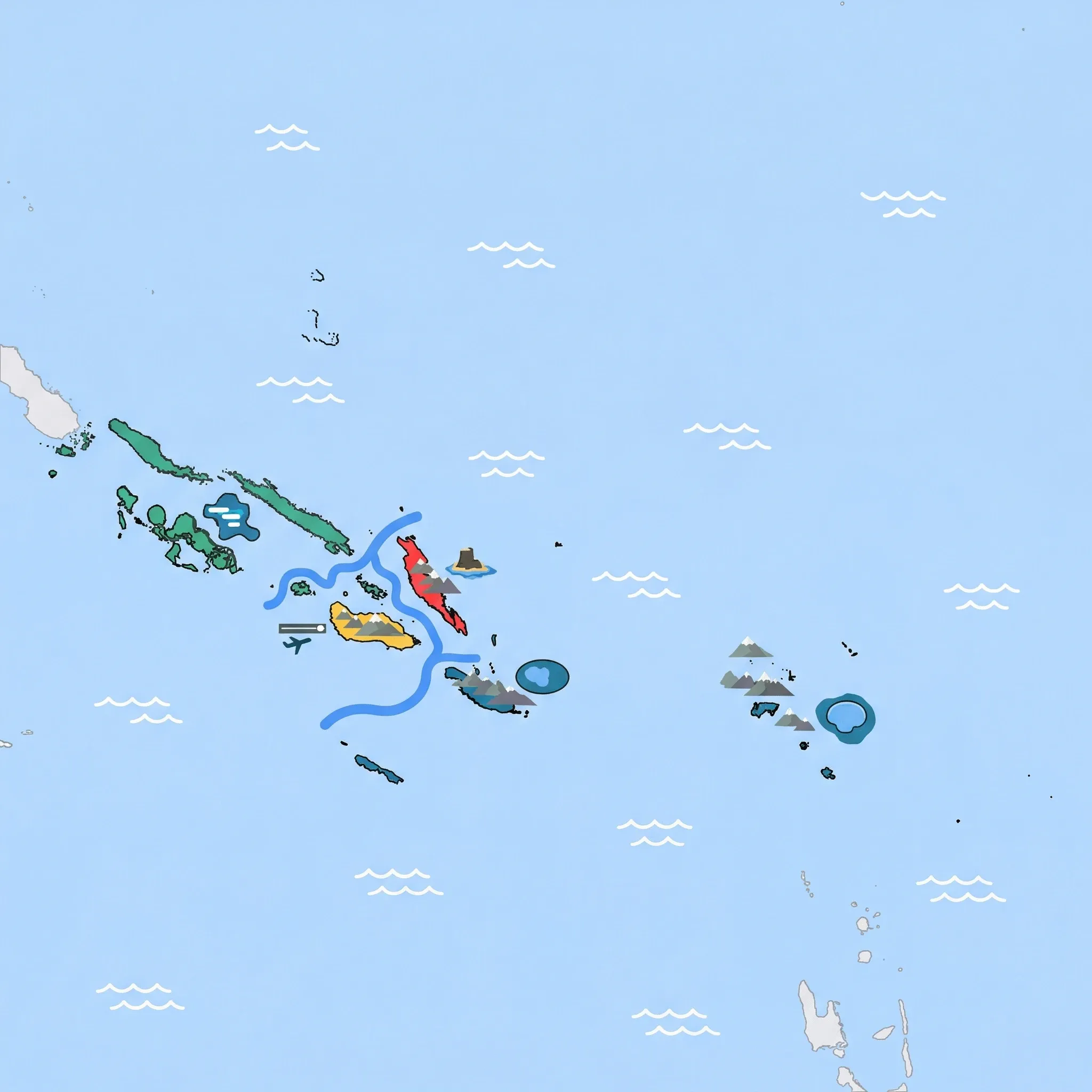
Click a region to explore
Travel Advisory
This is the most remote region of the Solomons. Infrastructure is virtually non-existent in many areas. Malaria is prevalent, and access to medical help can take days. Only experienced traveling families or those on organized eco-tours should venture here. Satellite communication devices are recommended.
Overview
The Outer Provinces—specifically Rennell, Bellona, Isabel, and Makira—represent the Solomon Islands in their most raw and natural state. For families who have "seen it all," this region offers true isolation and untouched beauty. The pace of life is dictated entirely by nature: the rising sun, the tides, and the wind. It is a place of silence and vast spaces, where digital detox is mandatory because there is simply no signal.
Rennell Island is a highlight, a massive slab of raised coral covered in dense jungle. It feels prehistoric and mysterious. The people here are Polynesian (unlike the Melanesian majority of the Solomons), offering a different cultural experience. Isabel Province, to the north, is famous for the Arnavon Islands, a critical nesting ground for the endangered Hawksbill turtle. Visiting these areas teaches children about conservation in a very direct, visceral way.
Key Attractions
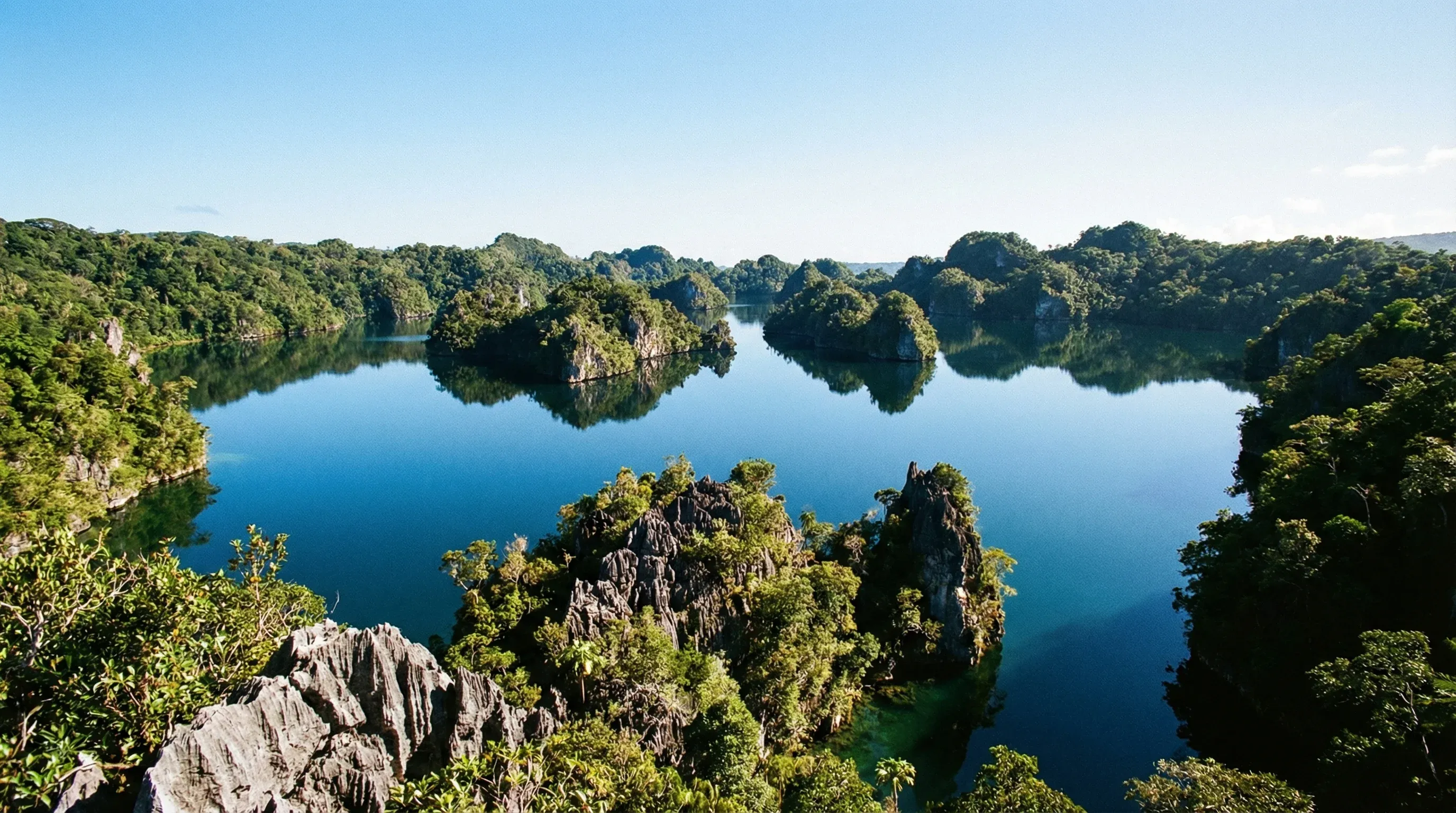
The jewel of the outer provinces is East Rennell (Lake Tegano). It is a UNESCO World Heritage site and a natural wonder—a brackish lake stretching for miles, surrounded by steep cliffs and ancient rainforest. Families can take boat tours across the eerie, glass-like water to see sunken WWII flying boats visible beneath the surface. The birdlife here is exceptional, with many species found nowhere else on earth.
While specific infrastructure is thin, the attraction of this region is the environment itself. Whether it's watching turtles lay eggs in Isabel or hiking the stark cliffs of Bellona, the "attractions" are natural events rather than built locations. It requires patience and a sense of adventure.
Practical Advice
Travel here requires serious planning. Flights are infrequent (once or twice a week) and often cancelled due to weather or maintenance. Carry enough cash (SBD) for your entire stay plus emergencies, as there are no banks or ATMs. Pack all necessary food snacks and medications.
Food & Drink
Typical meal times: Highly variable. In homestays, dinner is served when the catch is brought in and cooked, usually around 7:00 pm to 8:00 pm.
Typical meal costs: Usually included in accommodation packages. If purchasing fresh seafood from villagers, a large fish might cost SBD 50–80 (approx. $6–9 USD / €5.50–8.50 EUR).
Dietary requirements: Extremely difficult for special diets. You will eat what is available: mostly fish, lobster, taro, coconut, and fruit. Bring your own supplementary food if you have picky eaters.
Signature dishes:
- Crayfish/Lobster – Plentiful and cheap in these waters, often grilled over open fires.
- Coconut Crab – A delicacy (though conservation concerns exist), the meat has a distinct coconut flavor.
- Pana – A type of prickly yam that is sweeter than taro, a staple in Renbel province.
Why this score?
This region represents the pinnacle of adventure travel, categorized by extreme isolation and a total lack of Western-style infrastructure. Reaching these islands involves irregular, weather-dependent flights on tiny aircraft or multi-day journeys on cargo ships. The terrain is a mix of dense primary rainforest and coral atolls, offering a true 'final frontier' experience where travelers must be entirely self-sufficient.
Why this score?
Medical facilities in the Outer Provinces are nearly non-existent for tourists, consisting of tiny aid posts with minimal supplies and no doctors. Emergency communication is difficult, and the time required to organize an evacuation to Honiara or Brisbane can be several days. For travelers with any pre-existing health conditions or families with small children, the medical risk in these provinces is exceptionally high.
Why this score?
The Outer Provinces, including remote Rennell, Temotu, and Santa Isabel, see almost no foreign tourists outside of occasional expedition cruise ships or specialized birdwatchers. Lake Tegano on Rennell is a UNESCO World Heritage site, yet its extreme isolation keeps visitor numbers in the low hundreds per year. These areas lack any traditional tourism industry, relying instead on subsistence living and community-based conservation projects.

While local costs are low, the logistics make it expensive. Flights are pricey due to the monopoly and distance. Accommodation is basic but not always cheap due to the difficulty of getting supplies there. Expect to pay SBD 600–1,000 (approx. $70–118 USD / €65–109 EUR) per night for a simple lodge with meals included.
Family Travel Notice
Ensure children are vaccinated against rotavirus before travel, as fatal outbreaks have occurred locally.

Getting Here & Around
Getting Here
- Airports – Rennell/Tingoa (RNL) and Fera (Isabel) are served by Twin Otter planes from Honiara. Strict weight limits apply.
- Cargo Ship – Irregular supply ships service these islands. They are slow, crowded, and generally not recommended for families unless you are extremely hardy.
Getting Around
- Boat – In East Rennell and Isabel, small open boats are the only way to move between villages.
- Truck – On Rennell, a single rough road connects the airstrip to the lake. Transport is by arranging a ride on the back of a shared truck (1-2 hours).
- Walking – Essential for exploring villages and accessing lookouts.
Nearby Airports (4 airports)
Fera Island
FREFera Island
Lomlom Airport
LLMLomlom
Santa Cruz Island Airport
SCZSanta Cruz Island
Suavanao Airport
VAOSuavanao
View full flight map for Solomon Islands →
Official Links

Packing List
Mobile coverage is non-existent in places like Lake Tegano.
Bottled water is heavy to fly in; treating rainwater is often necessary.
Essential for turtle viewing (white light scares them) and navigating unlit paths.
Shops are rare; bring muesli bars or nuts for hungry kids between meals.
Essential for 'wet landings' from banana boats and protecting feet from sharp coral on beaches.
Open boat travel is wet; keeps electronics and clothes dry during inter-island transfers.
Rental equipment is often unavailable or poor quality in remote areas; bring masks for the kids.
Power outages are common in Honiara and electricity is limited or non-existent in village stays.
ATMs are virtually non-existent outside Honiara; villages often cannot change large notes.
Remote clinics may lack supplies; treat coral cuts immediately to prevent serious infection.

Activities & Best Times

Hiking, wildlife, outdoor exploration, ecotourism
Home to the UNESCO-listed Lake Tegano and the Arnavon Marine Park, the region offers world-class raw wilderness and authentic ecotourism for families. Peak visitation occurs during the drier southern winter when trails are manageable and marine conditions are optimal for nature observation.

Urban tourism, museums, historical sites, architecture
The historic villages of East Rennell and Kia provide profound, uncommercialized insights into Melanesian heritage and traditional island life. Travel is best during the cooler months to avoid extreme humidity and the logistical disruptions common during the cyclone season.

Sport tourism, fitness activities, active recreation
The Bauro Highlands and Mount Kubonitu offer significant, rugged trekking routes that appeal to experienced families seeking physical challenges. Peak months are essential for safety on steep, remote trails that become dangerously slick during the heavy monsoon rains of the off-season.

Beach resorts, marine activities: diving, snorkelling, kite surfing, wind surfing, sailing
While the Arnavon Islands provide world-class marine biodiversity and turtle conservation, the region lacks the high-end resort facilities expected by sophisticated travelers. Peak season offers the best underwater visibility and calmest seas for accessing these remote coastal areas.



Public Holidays & Calendar Next 12 months
Public holidays, festivals, cultural celebrations, and seasonal natural phenomena coming up in Outer Provinces over the next 12 months.
Loading holidays and events...

Travel Advisory
A majority of international agencies consider the Solomon Islands safe for travel with standard security awareness, though many highlight specific regional risks in Honiara and Malaita.
Safety Topics
Traveller Advice (4 groups)

Female visitors have reported incidents of sexual harassment and assault. It is advised to avoid walking alone after dark and to dress conservatively to respect local customs.

Ensure children are vaccinated against rotavirus before travel, as fatal outbreaks have occurred locally.

Same-sex sexual activity remains illegal and is a criminal offense punishable by imprisonment. Local society is generally conservative and does not recognize same-sex relationships.

Scuba divers should be aware that local hyperbaric facilities have limited life-support capabilities. Hikers and divers must be extremely cautious of unexploded World War II ordnance still present in forests and coastal waters.
Agency Summaries
Travel is generally permitted with standard precautions; however, visitors should avoid political demonstrations and be mindful of safety risks in Honiara.
While general safety precautions are sufficient for the country overall, visitors should exercise a high degree of caution in Honiara due to potential security issues.
Irish citizens are advised to follow standard safety measures and keep informed of local news while visiting, as there is no local embassy presence.
Increased caution is recommended due to significant security concerns, including the risk of civil unrest, crime targeting foreigners, and natural disaster hazards.
Travellers should maintain standard security awareness throughout the islands, though higher vigilance is required during cyclone season and in areas with unexploded ordnance.
Heightened vigilance is advised due to health concerns, the presence of unexploded World War II munitions, petty crime, and potential for sudden civil unrest.
Information is provided for general guidance only and does not constitute travel, safety, medical, or legal advice. Conditions may change. Users are responsible for independently verifying information before travel.