
Western Province (Gizo, Munda)
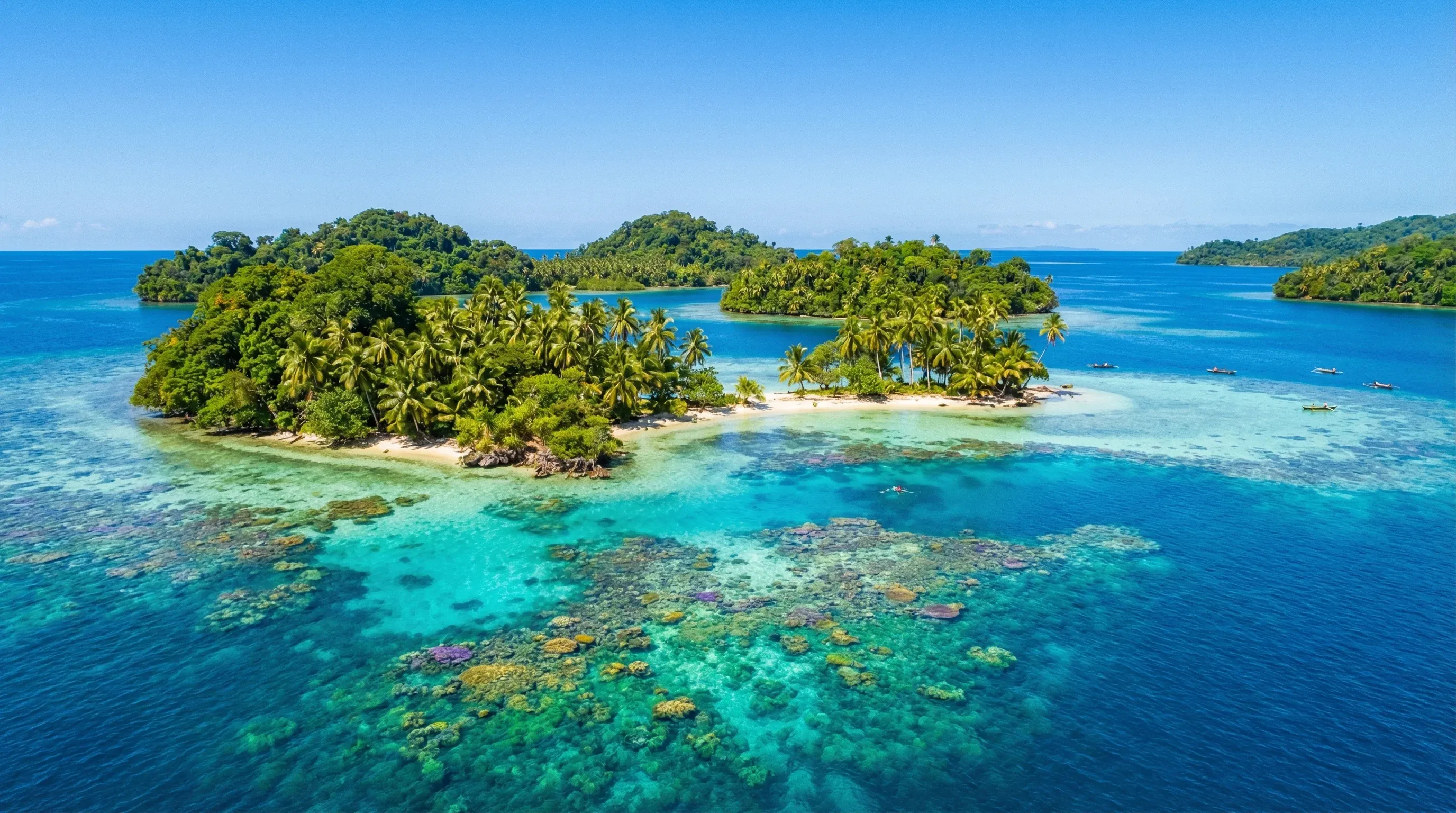
Turquoise lagoons and world-class underwater adventures 🐠🏝️
Click a region to explore
Travel Advisory
While this is the most tourist-friendly region, water safety is paramount. Currents can be strong in channels. Ensure boats have life jackets and radios before boarding. Malaria prophylaxis is recommended.
Overview
The Western Province is what people imagine when they think of the South Pacific: endless stretches of turquoise water, small islands topped with coconut palms, and coral reefs teeming with life. For families, this is the most accessible and rewarding part of the Solomons outside of the capital. The infrastructure here is better developed, with a range of resorts and family-friendly guesthouses that cater to international visitors.
The region is dominated by two massive lagoons: Marovo (the world's largest saltwater lagoon) and Roviana. These calm, protected waters are perfect for children to learn snorkeling. The water is so clear that you can often see fish and coral without even getting wet. Above the water, the history is just as rich. Kennedy Island (where JFK swam after his PT boat sank) is a popular picnic spot. The vibe here is relaxed and water-centric; days are spent on boats, and evenings are spent watching sunsets over the dormant volcanoes of Kolombangara.
Key Attractions
A standout experience for nature-loving families is Tetepare Island. It is the largest uninhabited island in the South Pacific and a shining example of community conservation. Families can stay in simple eco-lodges, walk through pristine rainforests to see coconut crabs, and snorkel in the marine protected area which supports dugongs and turtles. It is a true "Robinson Crusoe" experience but with the safety of guides.
Around Gizo and Munda, the attractions are underwater. There are sunken WWII fighter planes in shallow water (some only a few meters deep) that children can snorkel over, bridging the gap between history and nature. Exploring the local woodcarving villages in Marovo Lagoon is also a cultural highlight, where artisans create intricate designs from ebony and kerosene wood.
Practical Advice
The Western Province is a year-round destination, though the wet season (Nov-April) can bring squalls. Book boat transfers in advance through your accommodation. This region has the best range of food and accommodation, making it the safest bet for families with younger children.
Food & Drink
Typical meal times: Resort dining follows standard hours: Lunch 12:00 pm to 2:00 pm, Dinner 6:30 pm to 8:30 pm.
Typical meal costs: Resort meals are priced for tourists: SBD 150–250 (approx. $18–30 USD / €16–27 EUR) for a main course. Local markets sell cheap fruit and coconuts.
Dietary requirements: Resorts in Gizo and Munda are accustomed to tourists and can handle vegetarian, gluten-free, and common allergies if given notice.
Signature dishes:
- Crayfish – Often cheaper here than in Honiara, served grilled with garlic butter.
- Poi – A fermented taro paste, an acquired taste but a staple local carbohydrate.
- Bonito – A type of tuna, often served as sashimi with lime and chili or seared as a steak.
Why this score?
Adventure in the Western Province is centered on the water, featuring world-class diving on WWII shipwrecks and pristine coral reefs in the Marovo Lagoon. Inland adventures include trekking the volcanic peaks of Kolombangara, which involves navigating dense jungle and sleeping in basic forest camps. While more 'comfortable' than Malaita or the Outer Provinces, it still requires significant physical effort and a willingness to deal with unpredictable local logistics.
Why this score?
Small hospitals in Gizo and Munda provide basic medical services and can stabilize patients, but they are not equipped for complex procedures or intensive care. These facilities are often staffed by dedicated personnel but suffer from a lack of modern medical equipment and reliable electricity. Most tourists with significant injuries are stabilized locally before being flown to Honiara for further transit to Australia.
Why this score?
Widely considered the premier leisure destination in the Solomon Islands, the Western Province attracts divers and honeymooners to its world-class lagoons and eco-resorts. Despite its local reputation as a 'hub,' it still only sees a tiny fraction of the tourists that a place like Fiji or Bali would receive. Most activity is concentrated around the small towns of Gizo and Munda, which offer the country's most established tourism services.

This is the premier tourist region, and prices reflect that. Boat fuel is expensive, driving up the cost of all excursions. A family bungalow in a nice resort costs SBD 1,800–3,500 (approx. $210–415 USD / €195–380 EUR) per night. Budget eco-lodges exist but offer very basic amenities.
Family Travel Notice
Ensure children are vaccinated against rotavirus before travel, as fatal outbreaks have occurred locally.

Getting Here & Around
Getting Here
- Airports – Daily flights connect Honiara to Munda (MUA) and Gizo (GZO). The flight to Gizo lands on a small island (Nusatupe), requiring a boat transfer to the town.
- Boat – A weekly passenger ferry runs from Honiara, but it takes 24 hours and is not recommended for most families due to comfort and safety levels.
Getting Around
- OBM (Outboard Motor Boat) – The taxi of the Western Province. Essential for getting between islands, resorts, and dive sites.
- Walking – Gizo town and Munda are small enough to explore on foot.
- Truck – In Munda, a few flatbed trucks act as taxis along the main dirt road.
Nearby Airports (5 airports)
Sege Airport
EGMSege
Nusatupe Airport
GZOGizo
Kaghau Island Airport
KGEKaghau Island
Munda
MUAMunda
Ramato
RBVRamata
View full flight map for Solomon Islands →
Official Links

Packing List
Supplies in Gizo are expensive and limited; essential for lagoon days.
Protection from intense sun and occasional jellyfish while snorkeling.
Absolutely essential as all travel is by small, open boats that get wet.
Child-sized masks are hard to hire; bring your own for the best fit.
Essential for 'wet landings' from banana boats and protecting feet from sharp coral on beaches.
Open boat travel is wet; keeps electronics and clothes dry during inter-island transfers.
Rental equipment is often unavailable or poor quality in remote areas; bring masks for the kids.
Power outages are common in Honiara and electricity is limited or non-existent in village stays.
ATMs are virtually non-existent outside Honiara; villages often cannot change large notes.
Remote clinics may lack supplies; treat coral cuts immediately to prevent serious infection.

Activities & Best Times

Hiking, wildlife, outdoor exploration, ecotourism
The region is home to Marovo Lagoon, the world's largest saltwater lagoon, and the primary conservation area of Tetepare Island, providing exceptional biodiversity and authentic wilderness. The drier months from July to October are ideal for navigating the lagoons and trekking through rainforests without the intense rainfall of the monsoon season.

Urban tourism, museums, historical sites, architecture
Boasts a compelling blend of WWII history, including Kennedy Island, and unique Roviana cultural sites like the ancestral skull shrines on Skull Island. Tourism peak aligns with the drier season, which facilitates essential boat travel between dispersed island cultural sites and historic villages.

Sport tourism, fitness activities, active recreation
Features challenging volcanic trekking routes such as the Mount Veve Summit and Mount Vina Roni, appealing to active families seeking rugged physical engagement. These trails are most accessible and safe during the mid-year drier period when tropical mud and humidity are more manageable.

Beach resorts, marine activities: diving, snorkelling, kite surfing, wind surfing, sailing
While offering pristine coral reefs and WWII wrecks like those near Gizo and Tetepare, the region lacks the high-end resort infrastructure typical of global beach destinations. Peak months provide the best underwater visibility and calmer seas for snorkeling and coastal exploration, whereas the early-year monsoon brings heavy rains and reduced clarity.

Attractions (4 total)



Public Holidays & Calendar Next 12 months
Public holidays, festivals, cultural celebrations, and seasonal natural phenomena coming up in Western Province (Gizo, Munda) over the next 12 months.
Loading holidays and events...

Travel Advisory
A majority of international agencies consider the Solomon Islands safe for travel with standard security awareness, though many highlight specific regional risks in Honiara and Malaita.
Safety Topics
Traveller Advice (4 groups)

Female visitors have reported incidents of sexual harassment and assault. It is advised to avoid walking alone after dark and to dress conservatively to respect local customs.

Ensure children are vaccinated against rotavirus before travel, as fatal outbreaks have occurred locally.

Same-sex sexual activity remains illegal and is a criminal offense punishable by imprisonment. Local society is generally conservative and does not recognize same-sex relationships.

Scuba divers should be aware that local hyperbaric facilities have limited life-support capabilities. Hikers and divers must be extremely cautious of unexploded World War II ordnance still present in forests and coastal waters.
Agency Summaries
Travel is generally permitted with standard precautions; however, visitors should avoid political demonstrations and be mindful of safety risks in Honiara.
While general safety precautions are sufficient for the country overall, visitors should exercise a high degree of caution in Honiara due to potential security issues.
Irish citizens are advised to follow standard safety measures and keep informed of local news while visiting, as there is no local embassy presence.
Increased caution is recommended due to significant security concerns, including the risk of civil unrest, crime targeting foreigners, and natural disaster hazards.
Travellers should maintain standard security awareness throughout the islands, though higher vigilance is required during cyclone season and in areas with unexploded ordnance.
Heightened vigilance is advised due to health concerns, the presence of unexploded World War II munitions, petty crime, and potential for sudden civil unrest.
Information is provided for general guidance only and does not constitute travel, safety, medical, or legal advice. Conditions may change. Users are responsible for independently verifying information before travel.