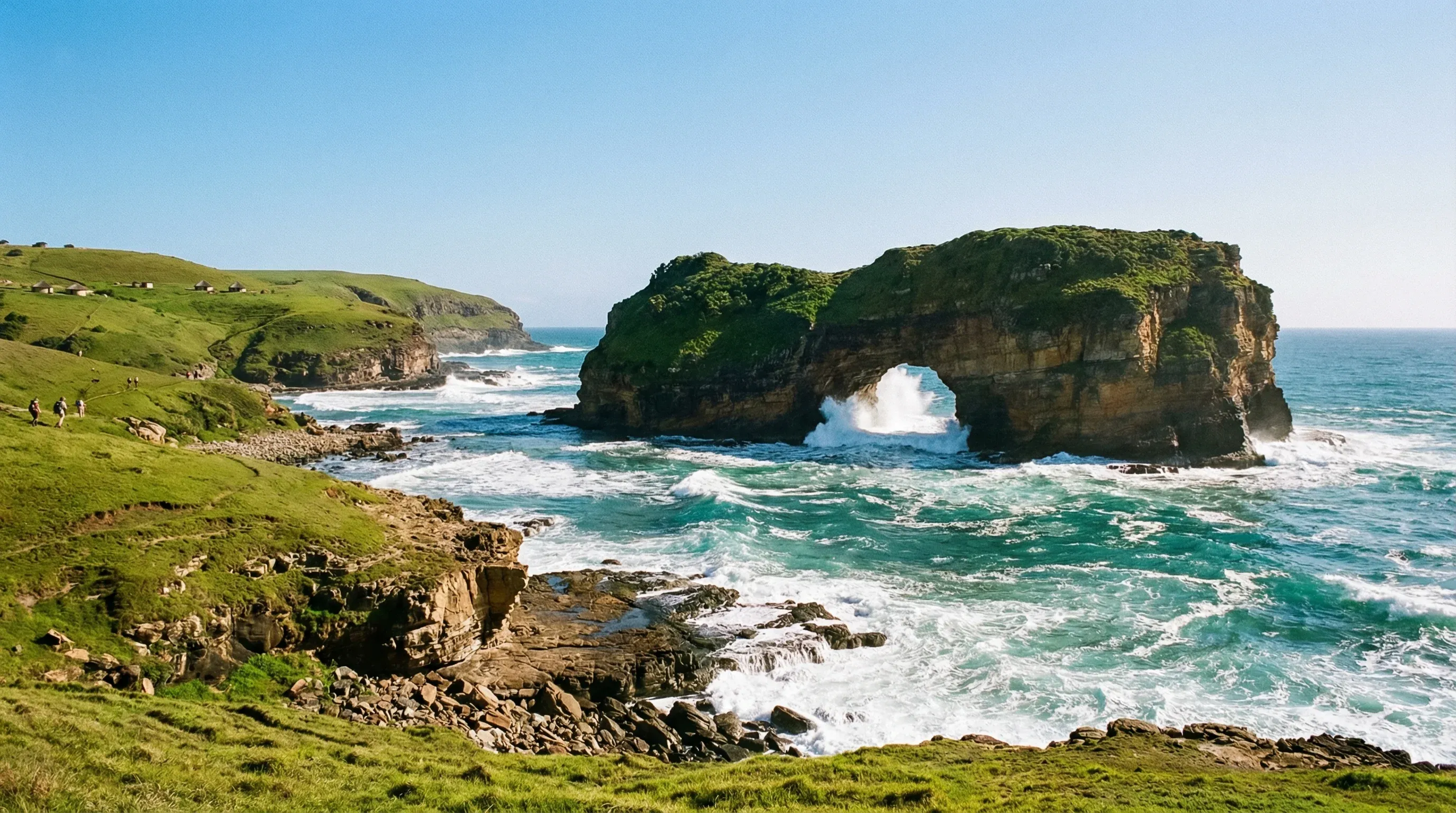

Eastern Cape
Wild coastlines and malaria-free big game adventures 🐘🌊
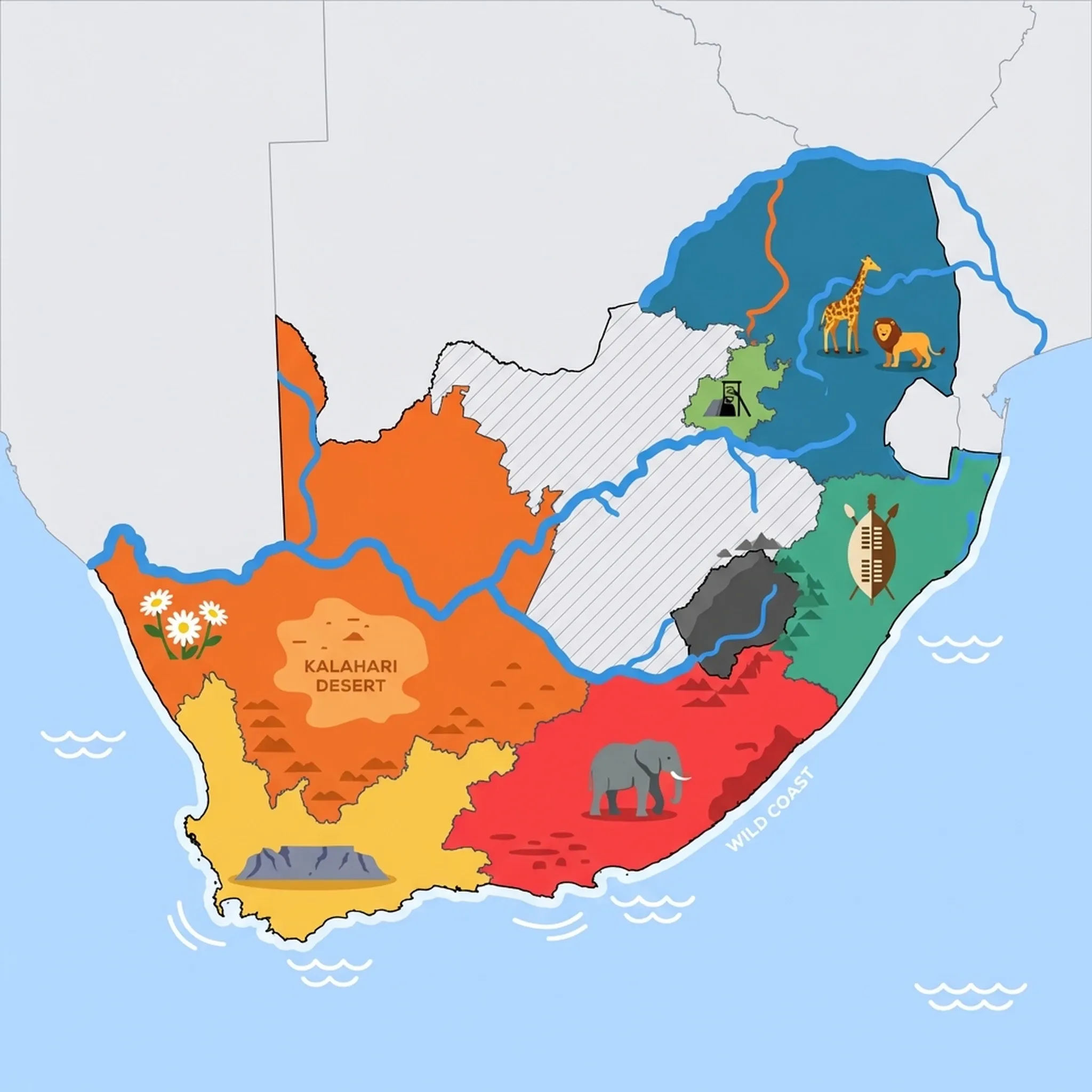
Click a region to explore
The Eastern Cape offers a wilder, more rugged alternative to the manicured beauty of the Western Cape. It is a region of dramatic contrasts, transitioning from the lush, temperate rainforests of the Tsitsikamma in the west to the semi-arid Karoo interior and the subtropical, untamed beaches of the Wild Coast. For families, the Eastern Cape's biggest drawcard is its status as a malaria-free safari destination. This allows parents to take babies and toddlers on game drives without the stress of medication or health risks, a rarity in African big-game territory. The region is the ancestral home of Nelson Mandela and is steeped in Xhosa culture, offering meaningful opportunities for children to learn about South Africa's history and heritage.
This is adventure country. The coastline is legendary among surfers and hikers, yet it offers plenty of gentle lagoons and tidal pools where children can swim safely. The pace of life here is slower (often referred to as 'Eastern Cape time'), and the vibe is unpretentious and friendly. From the friendly city of Gqeberha (formerly Port Elizabeth) with its wide, safe swimming beaches, to the dizzying heights of the Bloukrans Bridge, the region caters to both relaxation and adrenaline. The roads are generally less congested than Cape Town, making it a stress-free destination for self-drive family holidays, particularly along the N2 highway which forms the backbone of the coastal route.
Key Attractions
The undisputed highlight for animal lovers is Addo Elephant National Park. Originally established to save the last 11 elephants in the region, it is now home to over 600, guaranteeing spectacular sightings. The park is incredibly accessible for self-driving families; the elephants are often right next to the car, and the lack of malaria makes it worry-free. Further along the coast lies the Garden Route National Park - Tsitsikamma Section. This is a magical world of giant yellowwood trees and crashing waves. Families can walk the suspension bridges over the Storms River Mouth—a thrilling but safe experience for kids—or take a boat trip up the gorge. For active families with teenagers, the Face Adrenalin Bloukrans Bungy is the world's highest commercial bridge bungy; even if you don't jump, the walkway view is spectacular.
Practical Advice
Best Time to Visit: The Eastern Cape is a year-round destination. Summers (December–February) are hot and humid, ideal for beaches. Winters (June–August) are mild and sunny on the coast, though nights can get cold. The wildlife viewing in Addo is excellent in winter as animals congregate around waterholes.
Food & Drink
Typical meal times: Breakfast is early (7:00 am to 9:00 am). Lunch runs from 12:00 pm to 2:00 pm. Dinner is typically 6:30 pm to 9:00 pm.
Typical meal costs: Very good value. Pub meals cost R90–150 (approx. $5–8 USD / €4.50–7.50 EUR). A seafood platter for two is roughly R350–500 (approx. $19–27 USD / €17.50–25 EUR).
Dietary requirements: Major towns like Gqeberha and East London have good options. In rural areas and smaller Wild Coast towns, options may be limited to basic meat-and-veg, though vegetarianism is understood.
Signature dishes:
- Venison Potjie – A slow-cooked stew made with game meat (like Kudu or Springbok) and vegetables, cooked over an open fire in a three-legged cast-iron pot.
- Roosterkoek – Bread dough grilled over coals until slightly charred on the outside and fluffy inside, served with butter and apricot jam or savory fillings.
- Umnqusho – A traditional Xhosa dish made from samp (dried corn kernels) and beans, famously Nelson Mandela's favorite meal.
Why this score?
The Wild Coast offers some of the most rugged and untouched coastline in the country, requiring 4x4 vehicles and significant planning for families. Activities like the Bloukrans bungy jump and trekking the Tsitsikamma forest add a layer of physical challenge to the region.
Why this score?
Major cities like Gqeberha and East London provide reliable private hospital services, but medical access drops off significantly in the rural Transkei region. Foreigners may face long travel times for emergency care when visiting the more remote coastal reaches or inland reserves.
Why this score?
The region sees a strong mix of domestic holidaymakers and international tourists seeking malaria-free safaris at Addo Elephant National Park. While the Wild Coast is a growing niche for adventurous travelers, it lacks the massive international volume found in the Western Cape or Kruger.

The Eastern Cape is generally cheaper than the Western Cape. Family guesthouses often charge R800–1,500 (approx. $43–80 USD / €40–75 EUR) per night. Entry to <a data-attraction-id="34358">Addo Elephant National Park</a> is R376 (approx. $20 USD / €19 EUR) per adult per day, which is excellent value for a Big 5 safari experience.
Family Travel Notice
Strict documentation requirements are in place for minors entering or leaving the country. Parents should carry unabridged birth certificates and, if one parent is not present, notarized consent forms to avoid entry or exit delays.

Getting Here & Around
Getting Here
- Airports – Chief Dawid Stuurman International Airport (PLZ) in Gqeberha is the main hub. King Phalo Airport (ELS) serves East London.
- Driving – The Garden Route (N2) connects Cape Town to the Eastern Cape naturally. It is a roughly 8-hour drive from Cape Town to the start of the Eastern Cape.
Getting Around
- Car – Essential. Public transport is virtually non-existent for tourists. Renting a car gives you the freedom to explore Addo Elephant National Park at your own pace.
- Road Quality – Major roads like the N2 are excellent. However, roads into the Wild Coast can be potholed and often involve gravel; a high-clearance vehicle is recommended for rural exploration.
Nearby Airports (3 airports)
East London
ELSEast London
Port Elizabeth
PLZPort Elizabeth
Umtata
UTTUmtata
View full flight map for South Africa →
Official Links

Packing List
Essential for spotting wildlife in Addo; one pair per child prevents arguments.
Roads in rural areas and passes can be winding; boat trips can be choppy.
Load shedding (power cuts) occurs; rural areas often have poor street lighting.
Trails in Tsitsikamma are rocky and often slippery with sea spray.
SA uses unique large 3-pin plugs (Type M). Standard universal adapters rarely fit these sockets.
Essential for kids on safari to see animals up close and stay engaged during game drives.
Frequent rolling power cuts ('load shedding') mean you may be without lights for 2-4 hours a day.
Morning and evening game drives are surprisingly freezing, even in summer, due to open vehicles.
Immigration occasionally still requests Unabridged Birth Certificates for minors; best to carry a copy.
The air in the interior (Gauteng/Kruger) is incredibly dry and dusty, often causing nosebleeds in kids.

Activities & Best Times

Hiking, wildlife, outdoor exploration, ecotourism
Home to the world-class, malaria-free Addo Elephant National Park and the pristine Tsitsikamma wilderness, offering unique wildlife and forest immersion. Winter months (June-September) are optimal for game viewing, while summer attracts families for combined coastal nature experiences.

Sport tourism, fitness activities, active recreation
Features internationally recognized infrastructure like the Otter Trail and the world's highest commercial bridge bungy at Bloukrans. Autumn and spring provide the mildest conditions for multi-day trekking and high-adrenaline outdoor pursuits.
Beach resorts, marine activities: diving, snorkelling, kite surfing, wind surfing, sailing
Features iconic coastal landmarks like Hole in the Wall and Dolphin Beach, though the water is notably cooler than northern regions. Peak summer offers the only reliable window for a classic beach resort experience for international families.

Urban tourism, museums, historical sites, architecture
Offers a mix of colonial heritage and contemporary South African art in Gqeberha and East London, including the significant Nelson Mandela Metropolitan Art Museum. Best visited in transitional months when walking weather is pleasant and the cities' atmosphere is vibrant.

Learning experiences, scientific sites, historical education
Houses the world-famous Coelacanth at the East London Museum and significant marine research facilities at Bayworld. These scientific draws are best experienced during cooler months or school-term periods when facilities are less crowded and focus remains on discovery.

Scenic drives, countryside tours, route-based travel
Contains the dramatic terminus of the Garden Route and the ruggedly authentic Wild Coast Route. Optimal driving occurs in spring and autumn to avoid peak holiday traffic while ensuring clear skies and comfortable temperatures for scenic stops.

Events, celebrations, seasonal attractions
Defined by two major events: the National Arts Festival in Makhanda and the natural phenomenon of the Sardine Run. Visitation is strictly tied to June and July when these world-renowned cultural and natural spectacles occur.

Spa retreats, wellness centers, peaceful getaways
Offers historic thermal springs in Aliwal North and Cradock, providing a niche restorative experience. These facilities are most appealing during the cold winter months when the natural heat of the sulphur springs is most therapeutic.

Amusement parks, family entertainment venues
Home to several regional water parks that serve domestic holidaymakers during the hot summer months. These lack the global scale of international theme parks but provide convenient entertainment for families traveling during the peak of summer.

Attractions (24 total)



Public Holidays & Calendar Next 12 months
Public holidays, festivals, cultural celebrations, and seasonal natural phenomena coming up in Eastern Cape over the next 12 months.
Loading holidays and events...

Travel Advisory
The majority of international agencies advise exercising a high degree of caution in South Africa. While travel is generally permissible, widespread violent crime, including robbery and kidnapping, requires travellers to maintain high levels of vigilance. Additional risks include frequent civil unrest, terrorism threats, and infrastructure issues such as power outages.
Safety Topics
Traveller Advice (3 groups)

Female travellers face a high risk of gender-based violence, including sexual assault. It is strongly advised to avoid walking alone, particularly at night or in isolated areas, and to use reliable transportation services.

While same-sex relationships are legally protected, social discrimination and violence persist, especially in township areas. There have been reports of individuals being lured through dating apps into dangerous situations or kidnappings.

Strict documentation requirements are in place for minors entering or leaving the country. Parents should carry unabridged birth certificates and, if one parent is not present, notarized consent forms to avoid entry or exit delays.
Agency Summaries
Travellers should take significant personal security precautions. High levels of serious crime are reported, and civil unrest remains a potential threat to safety.
Travellers should remain extremely vigilant due to pervasive violent crime across the country. Specific concerns include armed robberies, carjackings, and kidnappings, which frequently target foreign nationals.
Increased safety and security risks are present, primarily due to high rates of violent crime in cities and townships. Terrorism and civil unrest also pose ongoing threats.
Serious crime and violence are major concerns throughout the nation. Visitors should avoid large gatherings and protests, which are frequent and unpredictable.
While there are no general travel restrictions, visitors must be aware of serious safety and security challenges, particularly violent street crime and the potential for public demonstrations to turn violent.
Heightened vigilance is necessary because of high crime rates, potential for civil unrest, kidnapping risks, and a persistent threat of terrorism. Protests and power outages can occur suddenly and disrupt services.
Information is provided for general guidance only and does not constitute travel, safety, medical, or legal advice. Conditions may change. Users are responsible for independently verifying information before travel.