
Busan & Southeast
City lights, sandy toes, and seaside adventures 🌊🏙️
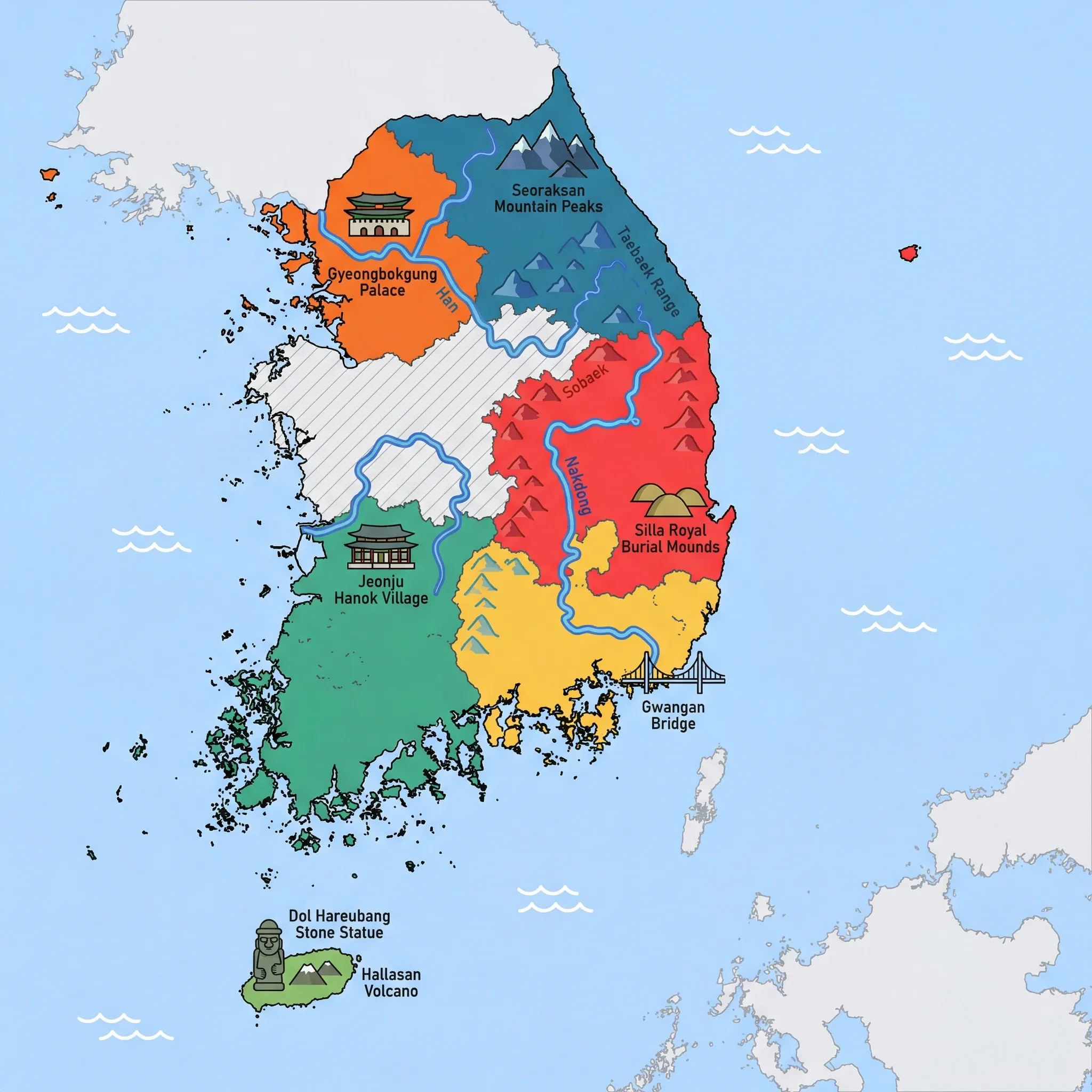
Click a region to explore
Overview
Busan and the Southeast offer a vibrant, salty-aired counterpoint to Seoul's polish. This is a region where mountains crash directly into the sea, creating a dramatic backdrop for a culture that is louder, heartier, and distinctively proud. For families, the appeal lies in the variety: you can go from hiking a coastal cliff path to watching sharks in a world-class aquarium within an hour. The climate is milder than the capital, with warmer winters and breezy summers, though the humidity in August can be intense.
The energy here is infectious. The local dialect (Satoori) is famous for its friendly toughness, and the food culture is obsessed with freshness. Children will love the sensory overload of the markets, the accessibility of the beaches, and the sheer number of kid-friendly attractions. Whether you are riding a cable car over the ocean or exploring ancient temples built into the rocks, the region feels adventurous yet safe and easy to navigate.
Key Attractions
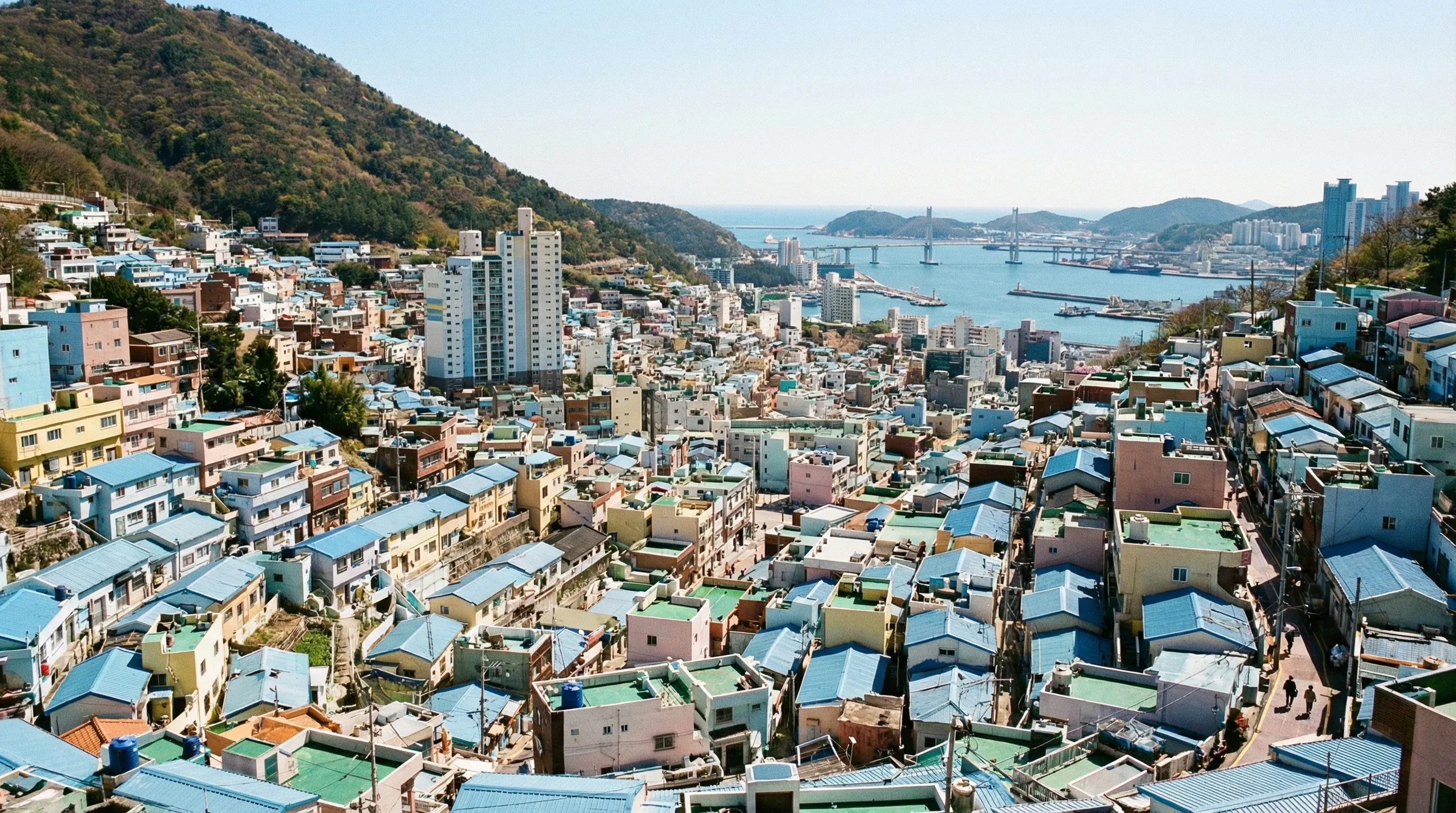
The coastline defines the best family days out here. Haeundae Beach is the most famous stretch of sand, perfect for swimming and people-watching, while Gwangalli Beach offers stunning night views of the illuminated Gwangan Bridge. For a touch of culture that won't bore the kids, Gamcheon Culture Village is a must; this former hillside slum has been transformed into a maze of colourful murals, cafes, and scavenger hunts that turn exploration into a game.
Uniquely, the Haedong Yonggungsa Temple sits right on the rocky shoreline, allowing for a cultural visit that includes ocean sprays and rock pooling. If the weather turns, the Sea Life Busan Aquarium on Haeundae beach is world-class. For a day trip, the historic Jinjuseong Fortress offers wide open spaces and history lessons in a park-like setting.
Practical Advice
Spring (April–May) and Autumn (September–October) are ideal for visiting. Summer is the peak beach season but can be crowded and typhoons occasionally pass through in late summer. The subway system in Busan is excellent, though strollers can be a challenge in older stations and on the hilly terrain of cultural villages.
Food & Drink
Typical meal times: Lunch is typically 12:00 pm to 1:30 pm. Dinner runs from 6:00 pm to 8:00 pm, though bustling market areas stay open much later.
Typical meal costs: A casual family meal costs around ₩30,000–50,000 (approx. $22–37 USD / €20–34 EUR). Street food snacks cost ₩2,000–5,000 (approx. $1.50–3.75 USD / €1.35–3.40 EUR).
Dietary requirements: Seafood is ubiquitous. Vegetarians may find it harder here than in Seoul as fish sauce and shrimp paste are heavy bases in soups and side dishes (banchan). Stick to bibimbap or temple food restaurants for safety.
Signature dishes:
- Dwaeji-gukbap – A rich, milky pork bone soup served with rice and sliced pork. Mild enough for children and deeply comforting.
- Eomuk – Fish cakes served on skewers in broth. A classic street food snack found everywhere, especially in winter.
- Ssiat Hotteok – A Busan speciality: sweet pancakes stuffed with brown sugar, cinnamon, and a crunchy mixture of seeds and nuts.
Why this score?
The region is highly developed with extensive public transit, including the unique Haeundae Blue Line Park coastal trains. While the terrain is hilly and offers urban hiking, the infrastructure is polished and provides a very safe, low-risk environment for families. Most 'adventures' here consist of well-marked coastal walks and organized water park visits.
Why this score?
Busan is a major medical hub with numerous university hospitals and specialized clinics that increasingly cater to international patients. Facilities like Pusan National University Hospital offer high-tech care and English-speaking coordination services. The density of pharmacies and 24-hour emergency services ensures excellent medical security for travelers.
Why this score?
As South Korea's second-largest city and a major cruise port, Busan attracts millions of regional visitors annually, particularly for its beaches and the Busan International Film Festival. While very popular within East Asia, it has a slightly lower global profile than Seoul, functioning as a strong secondary destination. The area benefits from excellent rail connectivity and a well-established hospitality sector catering to international families.

Busan is slightly cheaper than Seoul for accommodation and food. A decent 3-star family hotel near the beach costs ₩100,000–180,000 (approx. $75–135 USD / €68–122 EUR) per night. Public transport is very affordable, with rides costing under ₩1,500 (approx. $1.10 USD / €1.00 EUR).

Getting Here & Around
Getting Here
- Train – The KTX high-speed train connects Seoul to Busan Station in just under 3 hours. It is a comfortable, scenic ride.
- Airports – Gimhae International Airport (PUS) serves the region with flights from major Asian cities and domestic hops from Jeju.
- Bus – Express buses run to Ulsan and other southeastern cities from Seoul’s Express Bus Terminal (approx. 4–5 hours).
Getting Around
- Public Transport – The Busan Metro is the best way to move between major districts like Haeundae and Nampo-dong. Buses cover the steeper residential areas.
- Car – Useful if you plan to explore the coast north towards Ulsan or west towards Geoje, but unnecessary and stressful within central Busan due to heavy traffic.
- Walking – Areas like the Gamcheon Culture Village must be explored on foot; be prepared for steep steps.
Nearby Airports (4 airports)
Jinju
HINJinju
Gimhae International
PUSBusan
Daegu Ab
TAEDaegu
Ulsan
USNUlsan
View full flight map for South Korea →
Official Links

Packing List
Roads in the older, hilly parts of the city can be winding and jerky on buses.
Many restaurants and some accommodations require removing shoes at the door.
Gamcheon and coastal temples have many stairs where large prams are useless.
Google Maps navigation is limited in Korea; Naver is essential for transit.
Public bins are extremely rare; locals carry their own rubbish home to sort.
Public restrooms often lack paper towels or hand dryers.
Hotels are legally restricted from providing free single-use toiletries and will charge for them.
Difficult to find strong antiperspirants in local stores as many locals do not use them.

Activities & Best Times

Hiking, wildlife, outdoor exploration, ecotourism
A premier region for coastal trekking and mountainous terrain, highlighted by the Haeparang Trail and Nakdong River delta. Spring and autumn offer the most comfortable temperatures and clear visibility for wilderness exploration, while summer humidity and winter cold are less ideal.

Urban tourism, museums, historical sites, architecture
The region features a sophisticated mix of urban dynamism and deep heritage, including the UNESCO-listed Haeinsa Temple. Optimal visiting periods avoid the harsh winter and the oppressive summer heat, allowing for authentic engagement with local markets, art galleries, and historic sites.

Learning experiences, scientific sites, historical education
The National Maritime Museum and National Busan Science Museum are world-class, purpose-built facilities that serve as significant learning destinations. These indoor venues are popular during school vacation periods, providing a high-standard experience regardless of external weather.

Sport tourism, fitness activities, active recreation
Dedicated infrastructure like the Skyline Luge and the extensive Nakdong River Bike Path support high-quality active tourism. Activity is best in the mild shoulder seasons of spring and autumn, as extreme temperatures in winter and summer limit outdoor exertion.

Spa retreats, wellness centers, peaceful getaways
Home to Heosimcheong, one of Asia's largest natural hot spring complexes, offering an authentic Korean spa culture. This is a primary draw during the colder months when the thermal baths provide a restorative escape from the winter chill.

Scenic drives, countryside tours, route-based travel
The scenic East Sea Road and coastal routes like Dalmaji-gil provide stunning maritime vistas on well-maintained infrastructure. Spring blossoms and autumn foliage make these the peak months for driving tours, while summer rain can impede the coastal views.

Amusement parks, family entertainment venues
Lotte World Adventure Busan and significant water parks provide reliable family entertainment with modern standards. Summer and school holiday windows see the highest demand, though outdoor queues become uncomfortable during the mid-winter months.

Beach resorts, marine activities: diving, snorkelling, kite surfing, wind surfing, sailing
While Haeundae and Gwangalli are high-quality urban beaches, the East Sea's cold water temperatures (18-22°C even in summer) and short swimming season (July-August) don't meet international 'good' standards when compared to Southeast Asia or Mediterranean destinations. The beaches are scenic and well-maintained but fundamentally limited by climate.

Events, celebrations, seasonal attractions
The Busan International Film Festival and Jinhae Gunhangje (Cherry Blossom) Festival are internationally significant events. These specific windows in April and October are the primary drivers for festival-focused tourism in the region.

Winter sports, ski resorts, snow activities
Eden Valley offers a accessible but limited winter sports experience compared to northern South Korea or Japan. The season is short and highly dependent on artificial snow, making it a secondary activity for international families rather than a primary motivator.
Attractions (24 total)



Public Holidays & Calendar Next 12 months
Public holidays, festivals, cultural celebrations, and seasonal natural phenomena coming up in Busan & Southeast over the next 12 months.
Loading holidays and events...

Travel Advisory
All major global agencies consistently rate South Korea as a low-risk destination where standard safety awareness is sufficient for travelers. While regional political tensions and occasional protests exist, they do not currently elevate the country-wide risk level.
Safety Topics
Traveller Advice (4 groups)

Exercise caution when visiting crowded nightlife and entertainment districts such as Itaewon and Hongdae. Instances of sexual harassment and assault have been reported in these areas, particularly late at night; traveling in groups is recommended.

While generally safe, travelers may find it useful to review general safety guidance for sexual and gender minorities before arriving.

Monitor regional news for updates on North Korean military activities and peninsula tensions. Be aware that civil defense drills are held periodically throughout the country and require cooperation with local authorities.

The UK provides dedicated guidance for travelers with accessibility needs visiting the region; infrastructure in major cities is generally modern but can vary.
Agency Summaries
Travelers should exercise standard safety measures. Large public gatherings, particularly in Seoul, are frequent and may disrupt transport; staying informed through local media is advised. Australians benefit from a temporary visa waiver exemption for short visits until late 2026.
General safety levels are high. Irish visitors are currently exempt from electronic travel authorization requirements for short-term stays until the end of 2026. Travelers should monitor local news for any significant changes in the regional security situation.
The overall security environment is stable, though the risk of escalation in peninsula tensions persists. Visitors are advised to stay away from political gatherings and protests. British nationals of Korean descent should be aware of potential compulsory military service requirements.
The country maintains a very low crime rate, making it safe for most visitors. Travelers are cautioned to avoid political protests and reminded that foreign nationals are legally prohibited from participating in local political activities.
South Korea is generally safe, but travelers should remain alert to the unpredictable security situation on the Korean Peninsula. While crime against visitors is low, petty theft and instances of sexual harassment occur in popular nightlife districts. Registration with the government is recommended to stay informed about sudden developments.
Standard safety precautions are advised. Travelers should be aware that political demonstrations can occur without warning and that tensions with North Korea remain a factor in the regional security landscape. Participation in local civil emergency drills is encouraged when they occur.
Information is provided for general guidance only and does not constitute travel, safety, medical, or legal advice. Conditions may change. Users are responsible for independently verifying information before travel.