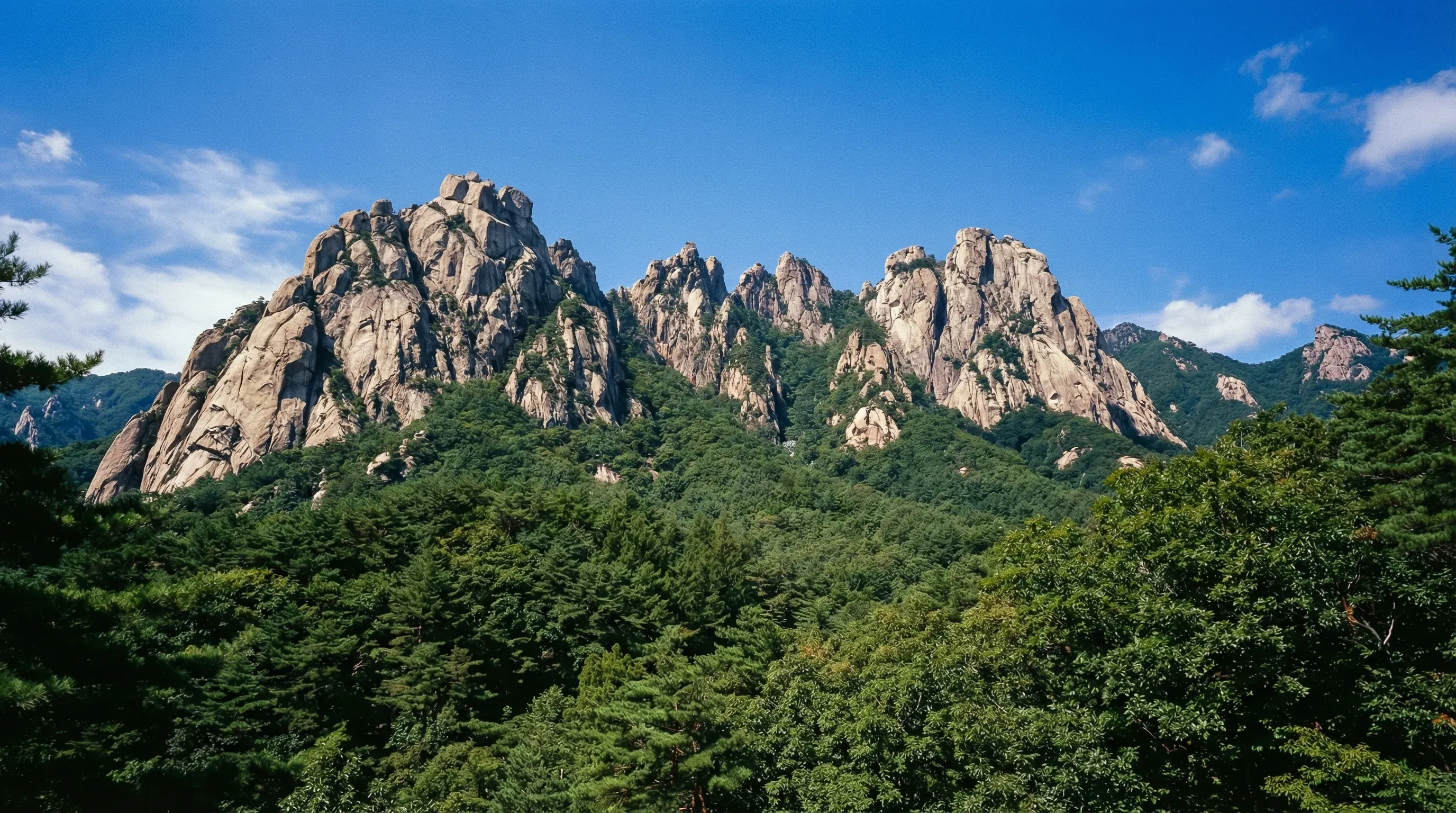

Gangwon (skiing, nature)
Snowy peaks, deep forests, and ocean sunrises ⛷️🌲
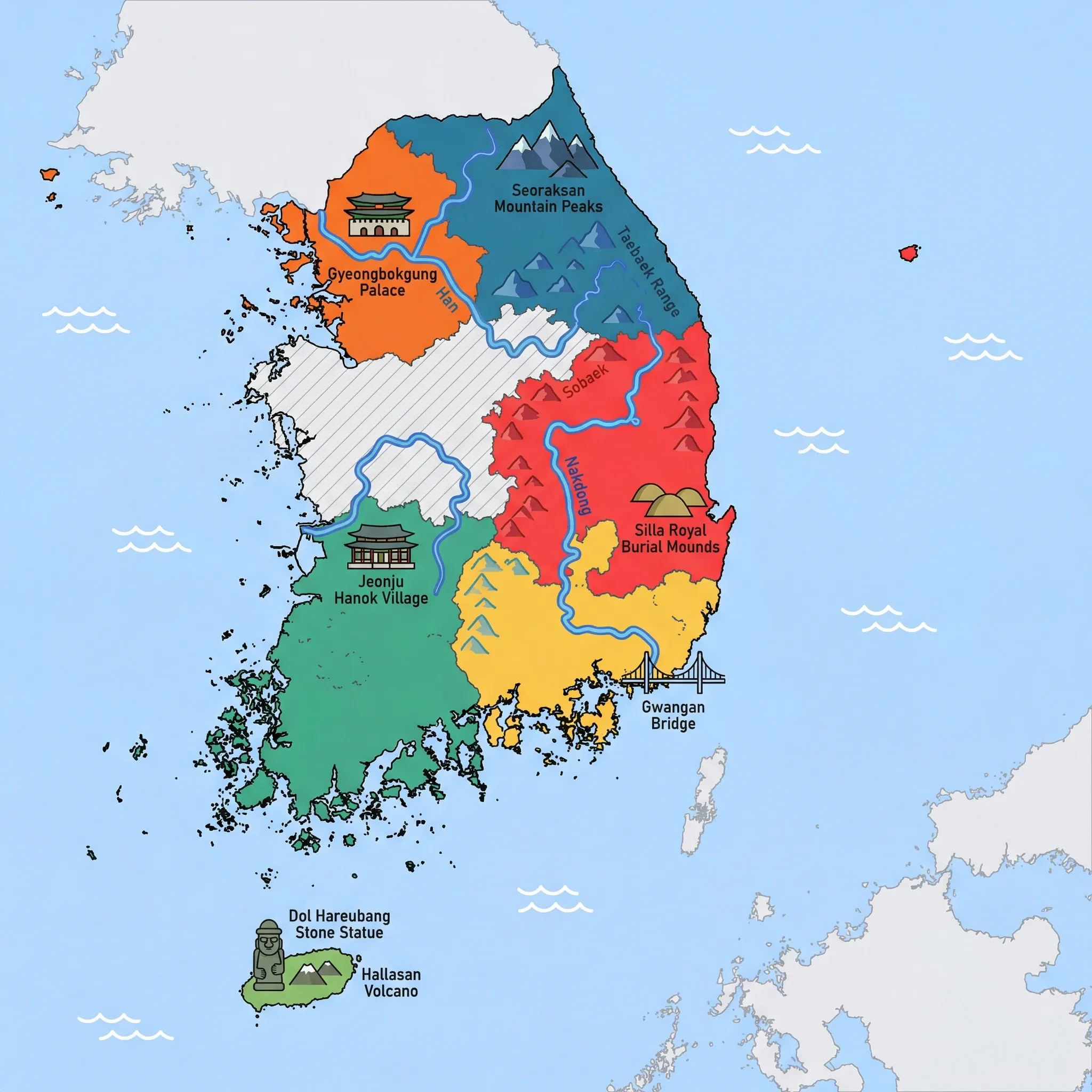
Click a region to explore
Overview
Gangwon-do is the lungs of Korea—a region of dramatic granite peaks, deep valleys, and endless coastline. It is the go-to destination for families who want to escape the concrete jungle. In winter, it transforms into a snow sports paradise, hosting the legacy of the 2018 Winter Olympics with resorts that are exceptionally family-friendly. In warmer months, the focus shifts to hiking, camping, and road-tripping along the azure waters of the East Sea.
Culturally, the pace here is slower. The region feels remote yet is surprisingly accessible. Children can experience authentic rural Korea here, from visiting sheep farms in the highlands to exploring filming locations of famous K-dramas. The air is cleaner, the stars are brighter, and the landscape invites active exploration, whether that's riding a rail bike through old tunnels or taking a cable car up a craggy mountain face.
Key Attractions
For nature without the exhaustion, Seoraksan National Park is unmissable; the cable car makes the stunning peaks accessible even to younger children. Nearby, Naksansa Temple offers a breathtaking cliffside setting with a giant statue looking out to sea. In the interior, Nami Island is a whimsical, car-free oasis famous for its tree-lined paths and family activities—you can even zipline into the island!
Winter sports enthusiasts should head to Pyeongchang county, where Alpensia Resort and Yongpyong Resort offer excellent ski schools and water parks. On the coast, the city of Gangneung offers the beautiful Gyeongpo Beach and the unique Museum SAN, a stunning art museum that blends architecture with nature.
Practical Advice
Winter (December–February) is freezing but essential for skiing. Summer (July–August) is popular for beaches but can be rainy. Autumn (October) is spectacular for foliage. A rental car is highly recommended here to reach trailheads and coastal spots efficiently.
Food & Drink
Typical meal times: Lunch 12:00 pm to 2:00 pm. Restaurants in remote mountain areas may close early, around 7:00 pm or 8:00 pm.
Typical meal costs: Hearty local meals are good value at ₩10,000–20,000 (approx. $7.50–15 USD / €6.80–13.50 EUR) per person. Resort dining will be significantly higher.
Dietary requirements: Tofu dishes are a regional speciality and safe for vegetarians. However, confirm broths are meat-free. Spicy food is common, so ask for "non-spicy" (an-maep-ge) for kids.
Signature dishes:
- Dakgalbi – Spicy stir-fried chicken with cabbage, sweet potato, and rice cakes. Chuncheon is the birthplace of this dish, often cooked on a hot plate at your table.
- Chodang Sundubu – Soft, silky tofu made with seawater from the East Sea, famous in Gangneung. It has a delicate, nutty flavour kids usually accept.
- Memil Makguksu – Buckwheat noodles served in a cold broth or with spicy sauce, a refreshing summer staple.
Why this score?
This is South Korea's most mountainous region, offering genuine outdoor recreation including skiing, white-water rafting, and steep mountain trekking. While the main resorts are highly developed, the Taebaek Mountains provide a more rugged experience than the rest of the country. It is the best region for families seeking a balance between accessible nature and physical challenge.
Why this score?
Medical services are robust in urban centers like Gangneung and Chuncheon, with modern facilities capable of handling sports injuries from the ski resorts. However, in the deeper mountain passes and more remote coastal sections, access to specialized English-speaking staff may be more limited than in Seoul. Emergency response is efficient, but transport times to major trauma centers can be longer due to the terrain.
Why this score?
Gangwon gained significant international recognition following the 2018 Pyeongchang Winter Olympics, establishing it as a premier regional ski destination. It sees moderate international flow from Southeast Asia and China, though it remains primarily a domestic weekend getaway for Seoul residents. Its rugged national parks, like Seoraksan, are iconic but attract fewer global tourists than the capital's palaces.

Prices vary by season. Ski resorts in winter are expensive, with lift passes costing ₩60,000–100,000 (approx. $45–75 USD / €40–68 EUR) per day. Summer camping and hiking are very budget-friendly. A typical family pension (guesthouse) room costs ₩80,000–150,000 (approx. $60–110 USD / €55–100 EUR).

Getting Here & Around
Getting Here
- Train – The KTX-Eum connects Seoul to Gangneung in under 2 hours, making the coast very accessible.
- Bus – Intercity buses connect Seoul to Sokcho (approx. 2.5 hours) and scenic mountain towns not served by trains.
- Driving – The drive from Seoul takes 2–3 hours on modern expressways, though weekend traffic returning to the capital can be heavy.
Getting Around
- Car – The best way to explore. The National Route 7 Coastal Drive is one of Korea’s most scenic road trips.
- Taxi – Available in cities like Sokcho and Gangneung but expensive for long inter-city distances.
- Bus – Local buses run to major trailheads like Seoraksan National Park, but schedules can be infrequent.
Nearby Airports (2 airports)
Wonju Airport
WJUWonju
Yangyang Airport
YNYYangyang
View full flight map for South Korea →
Official Links

Packing List
Even 'easy' family trails in Seoraksan often involve rocky, uneven terrain.
Mountain and forest areas have aggressive mosquitoes in summer.
Winters are significantly colder and windier here than in Seoul.
Essential if you plan to rent a car to see the coastal drives.
Public bins are extremely rare; locals carry their own rubbish home to sort.
You will remove shoes frequently at temples, traditional restaurants, and some guesthouses.
Public restrooms often lack paper towels or hand dryers.
Hotels are legally restricted from providing free single-use toiletries and will charge for them.
Difficult to find strong antiperspirants in local stores as many locals do not use them.

Activities & Best Times

Hiking, wildlife, outdoor exploration, ecotourism
Features Seoraksan National Park, one of Asia's most spectacular granite mountain ranges, alongside unique high-altitude pastoral landscapes at Daegwallyeong. Peak months avoid the heavy July-August monsoons and freezing winter, highlighting the world-famous autumn foliage in October.

Urban tourism, museums, historical sites, architecture
Sophisticated cultural sites like Museum SAN and ARTE Museum blend world-class architecture with natural beauty, while Ojukheon offers authentic Confucian heritage. The pleasant spring and autumn weather is essential for enjoying these often indoor-outdoor integrated facilities.

Winter sports, ski resorts, snow activities
Home to 2018 Winter Olympic venues like Yongpyong and Phoenix Pyeongchang, offering world-class infrastructure and consistent snow making. The season is strictly defined by winter temperatures, with February providing the best combination of base depth and daylight.

Sport tourism, fitness activities, active recreation
Offers exceptional infrastructure for active families, including the East Coast National Bike Path and challenging trekking routes on Daecheongbong Peak. Conditions are optimal during the dry, mild transitional seasons, as summer humidity and winter ice pose safety risks on mountain trails.

Spa retreats, wellness centers, peaceful getaways
Authentic thermal spring experiences at Choksan and Pillye offer restorative benefits deeply rooted in local culture. These are best experienced in winter when the contrast between cold mountain air and hot mineral waters is most pronounced.

Scenic drives, countryside tours, route-based travel
Scenic coastal drives along National Route 7 and mountain passes like Hangyeryeong offer breathtaking vistas of the East Sea and Taebaek Mountains. Travel is best in May and October for maximum visibility and safety, avoiding winter snow and summer rain.

Amusement parks, family entertainment venues
Legoland Korea and major water parks like Ocean World provide high-quality international entertainment standards for families. Outdoor operations are highly seasonal, with peak demand during school holidays and the warm summer months.

Beach resorts, marine activities: diving, snorkelling, kite surfing, wind surfing, sailing
East Sea beaches are scenic but suffer from cold water temperatures and a very short swimming season. Not internationally competitive as a beach destination.

Learning experiences, scientific sites, historical education
The Chamsori Gramophone and Edison Science Museum is a unique, world-class collection, though other facilities are more regionally focused. These indoor attractions serve as excellent educational escapes during the peak summer and winter holiday windows.

Events, celebrations, seasonal attractions
The Hwacheon Sancheoneo Ice Festival is a major international draw in January, while the UNESCO-listed Danoje Festival occurs in June. Suitability is highly concentrated around these specific cultural dates.

Attractions (30 total)



Public Holidays & Calendar Next 12 months
Public holidays, festivals, cultural celebrations, and seasonal natural phenomena coming up in Gangwon (skiing, nature) over the next 12 months.
Loading holidays and events...

Travel Advisory
All major global agencies consistently rate South Korea as a low-risk destination where standard safety awareness is sufficient for travelers. While regional political tensions and occasional protests exist, they do not currently elevate the country-wide risk level.
Safety Topics
Traveller Advice (4 groups)

Exercise caution when visiting crowded nightlife and entertainment districts such as Itaewon and Hongdae. Instances of sexual harassment and assault have been reported in these areas, particularly late at night; traveling in groups is recommended.

While generally safe, travelers may find it useful to review general safety guidance for sexual and gender minorities before arriving.

Monitor regional news for updates on North Korean military activities and peninsula tensions. Be aware that civil defense drills are held periodically throughout the country and require cooperation with local authorities.

The UK provides dedicated guidance for travelers with accessibility needs visiting the region; infrastructure in major cities is generally modern but can vary.
Agency Summaries
Travelers should exercise standard safety measures. Large public gatherings, particularly in Seoul, are frequent and may disrupt transport; staying informed through local media is advised. Australians benefit from a temporary visa waiver exemption for short visits until late 2026.
General safety levels are high. Irish visitors are currently exempt from electronic travel authorization requirements for short-term stays until the end of 2026. Travelers should monitor local news for any significant changes in the regional security situation.
The overall security environment is stable, though the risk of escalation in peninsula tensions persists. Visitors are advised to stay away from political gatherings and protests. British nationals of Korean descent should be aware of potential compulsory military service requirements.
The country maintains a very low crime rate, making it safe for most visitors. Travelers are cautioned to avoid political protests and reminded that foreign nationals are legally prohibited from participating in local political activities.
South Korea is generally safe, but travelers should remain alert to the unpredictable security situation on the Korean Peninsula. While crime against visitors is low, petty theft and instances of sexual harassment occur in popular nightlife districts. Registration with the government is recommended to stay informed about sudden developments.
Standard safety precautions are advised. Travelers should be aware that political demonstrations can occur without warning and that tensions with North Korea remain a factor in the regional security landscape. Participation in local civil emergency drills is encouraged when they occur.
Information is provided for general guidance only and does not constitute travel, safety, medical, or legal advice. Conditions may change. Users are responsible for independently verifying information before travel.