
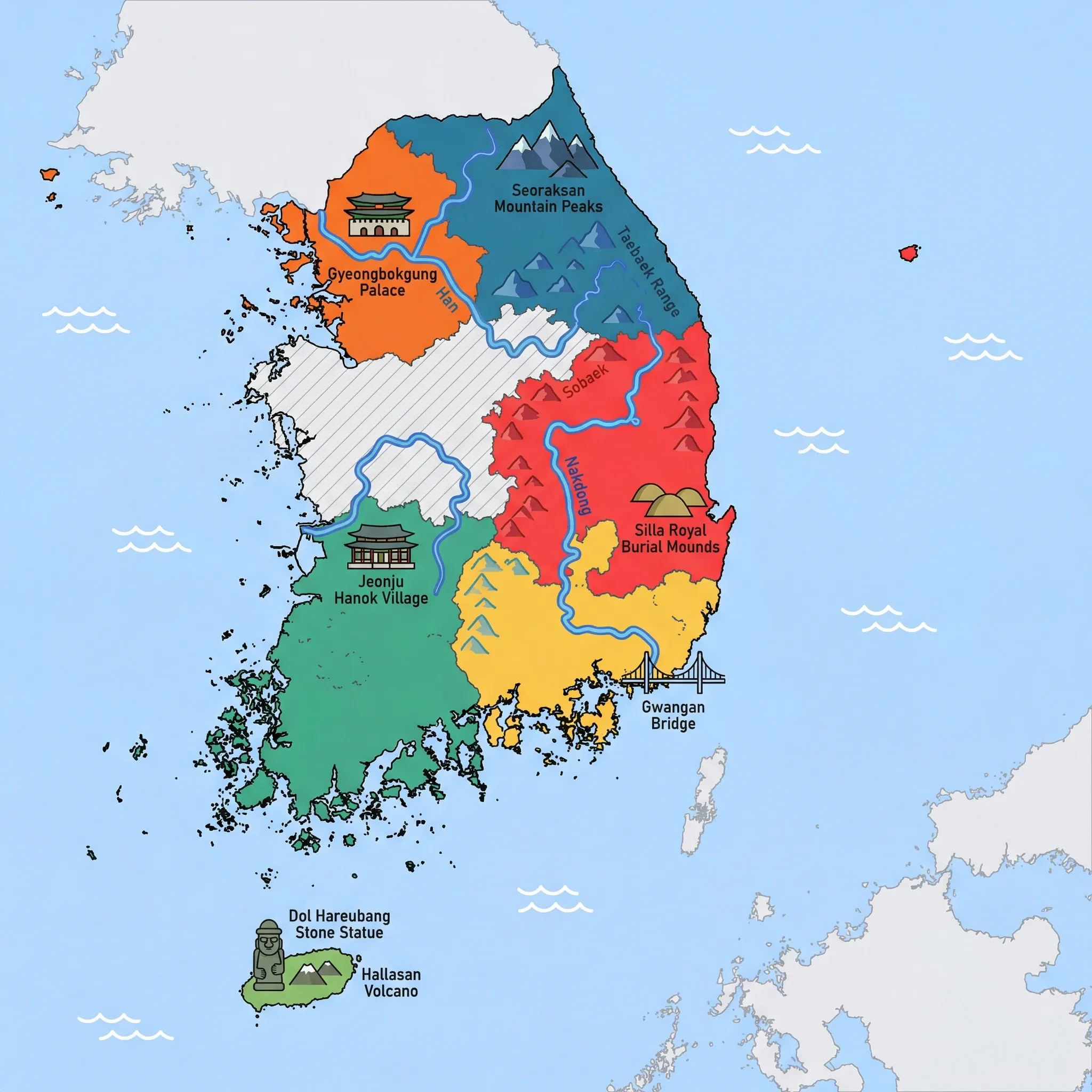
Click a region to explore
Overview
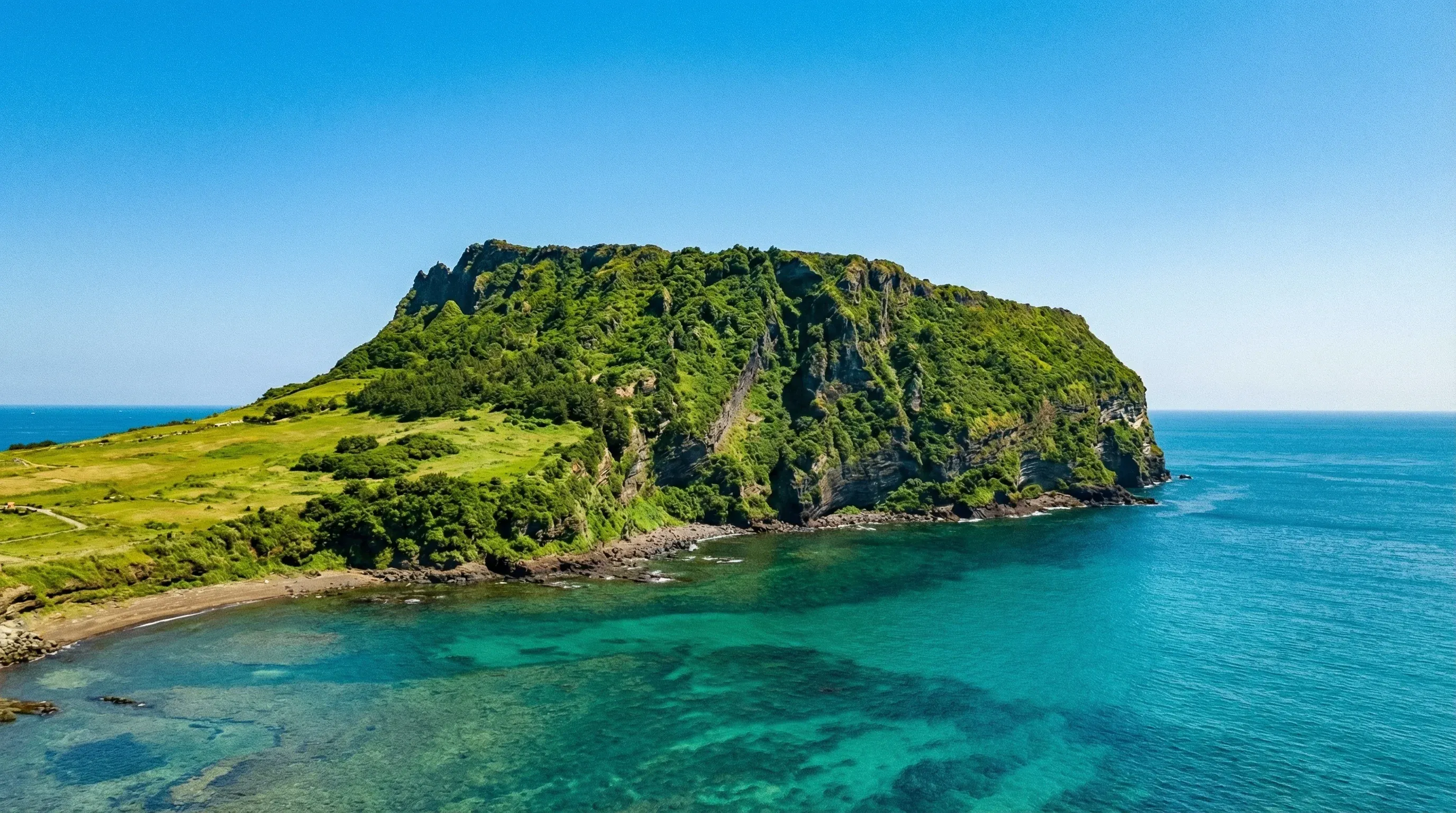
Jeju Island is often called the "Hawaii of Korea," but it has a moody, volcanic beauty that is entirely its own. It is a UNESCO World Natural Heritage site where black basalt rocks contrast with bright green fields and blue ocean. For families, Jeju is the ultimate road-trip destination. The driving is easy, the air is fresh, and the island is packed with distinct attractions—from natural wonders to quirky museums tailored specifically for children.
The island is divided into two main cities: Jeju City in the north and Seogwipo in the south, separated by the majestic Hallasan Mountain. The south is generally warmer and more resort-focused, while the east and west coasts offer stunning beaches and coastal drives. The culture here is distinct from the mainland; you will see "Dol Hareubang" (grandfather statues) everywhere and stone walls protecting orange groves from the wind.
Key Attractions
Nature is the star here. Seongsan Ilchulbong (Sunrise Peak) is a spectacular tuff cone crater rising from the sea; the hike to the top is steep but short and doable for active kids. For a beach day, Hamdeok Beach is famous for its shallow, calm turquoise waters that are safe for toddlers. In the south, the Cheonjiyeon Waterfall is easily accessible via a flat path through a subtropical forest.
Jeju is also famous for its unique forests. The Bijarim-ro (Route 1112) offers a drive through cedar forests that feels magical. For a look at traditional island life, the Seongeup Folk Village allows families to see authentic thatched-roof houses and learn about the island's history.
Practical Advice
Jeju is very windy. Even in summer, bring a windbreaker. Public transport exists but is slow; renting a car is almost essential for a family trip. The International Driving Permit (IDP) is strictly required for car rental—do not forget it.
Food & Drink
Typical meal times: Lunch 12:00 pm to 2:00 pm. Dinner 6:00 pm to 8:30 pm. Popular BBQ spots may have long waits.
Typical meal costs: Slightly higher than the mainland due to tourism. A Black Pork BBQ meal costs ₩25,000–40,000 (approx. $19–30 USD / €17–27 EUR) per person.
Dietary requirements: Jeju is seafood and pork heavy. Vegetarians should look for Omegi-tteok (rice cakes) or bibimbap options, but check for shrimp paste in side dishes.
Signature dishes:
- Heuk-dwaeji (Black Pork) – The island's most famous dish. The meat is smoked and grilled at the table. It has a richer, chewier texture than standard pork.
- Jeonbok-juk (Abalone Porridge) – A creamy, savoury rice porridge that is green from the abalone innards. It is mild, nutritious, and excellent for children.
- Hallabong – Not a meal, but the local tangerine variety. You will find Hallabong juice, chocolates, and ice cream everywhere.
Why this score?
While the island features volcanic craters, lava tubes, and the climbable Mount Hallasan, the tourism infrastructure is incredibly dense and accessible. Families can explore 'wild' landscapes via paved boardwalks and well-maintained trails that rarely feel remote. It offers a 'soft adventure' experience where rugged scenery is always paired with nearby cafes and paved roads.
Why this score?
Jeju maintains excellent medical standards, with large general hospitals in Jeju City and Seogwipo that are accustomed to treating foreign visitors. The island has invested heavily in medical tourism infrastructure, ensuring that staff are familiar with international insurance and basic English. Emergency services, including mountain rescue on Hallasan, are highly professional and well-equipped.
Why this score?
Jeju is a major international draw, often ranking as one of the busiest air routes in the world from Seoul. It attracts a diverse international crowd, particularly from China and Japan, due to its unique volcanic landscapes and status as a UNESCO Natural Heritage site. The island is fully geared toward tourism with a massive inventory of hotel beds and specialized family attractions.

Rental cars are reasonably priced, often ₩40,000–70,000 (approx. $30–52 USD / €27–47 EUR) per day for a mid-size car. Museum and attraction entry fees can add up as most are private. Food is priced for tourists, especially near major resorts.

Getting Here & Around
Getting Here
- Airports – Jeju International Airport (CJU) is the main gateway. Flights from Seoul Gimpo depart every 15 minutes and take just 1 hour. It is the busiest air route in the world.
- Ferry – Ferries run from southern mainland ports like Mokpo and Yeosu, but they take longer (3–5 hours) and can be rough in bad weather.
Getting Around
- Car – Essential for freedom. Roads are wide and signed in English. Speed cameras are frequent. Remember your IDP!
- Bus – An extensive network exists, but buses to remote attractions like Seongsan Ilchulbong can be infrequent and slow.
- Taxi – You can hire a taxi for a full day of touring (Global Taxi service) if you prefer not to drive.
Nearby Airports (1 airport)
Jeju International
CJUJeju
View full flight map for South Korea →
Official Links

Packing List
Mandatory for renting a car. Your home license alone will NOT be accepted.
Jeju is famously windy; coastlines are blustery even on sunny days.
Many beaches have sharp volcanic rocks hidden in the sand.
Useful for beach hopping and keeping electronics safe from sudden island showers.
Public bins are extremely rare; locals carry their own rubbish home to sort.
You will remove shoes frequently at temples, traditional restaurants, and some guesthouses.
Public restrooms often lack paper towels or hand dryers.
Hotels are legally restricted from providing free single-use toiletries and will charge for them.
Difficult to find strong antiperspirants in local stores as many locals do not use them.

Activities & Best Times

Hiking, wildlife, outdoor exploration, ecotourism
Jeju's UNESCO-listed volcanic landscapes, including the extensive Olle Trail network and Hallasan Mountain, provide exceptional hiking and self-guided exploration. Spring and autumn offer the mildest temperatures and clearest skies for mountain trekking and nature observation.

Urban tourism, museums, historical sites, architecture
A sophisticated cultural destination featuring world-class architecture like the Bonte Museum and the traditional heritage of the Haenyeo divers. These cultural assets are best enjoyed in spring and autumn when the weather is ideal for visiting gardens and indoor-outdoor galleries.

Sport tourism, fitness activities, active recreation
Excellent infrastructure for active families includes the Jeju Fantasy Bicycle Path and various adventure-focused centers like 9.81 Park. Peak conditions occur during the drier, temperate months which are ideal for long-distance cycling and outdoor activity.

Learning experiences, scientific sites, historical education
The island hosts destination-level facilities like Aqua Planet Jeju and the Aerospace Museum, which offer substantial scientific engagement for families. These indoor venues are most popular and accessible during standard international and domestic vacation windows.

Scenic drives, countryside tours, route-based travel
Celebrated scenic routes like the Hagwi-Aewol Coastal Road and the 1100 Road provide spectacular volcanic vistas and well-maintained infrastructure. Driving conditions are most enjoyable in spring and autumn, avoiding the high rainfall and humidity of the summer monsoon.

Amusement parks, family entertainment venues
High-quality facilities such as Jeju Shinhwa World and Eco Land offer international-standard entertainment for families. Peak periods align with major school holidays and optimal weather windows when park operations and special events are at their height.

Beach resorts, marine activities: diving, snorkelling, kite surfing, wind surfing, sailing
Despite pristine white sand beaches, Jeju's volcanic coastlines, cooler waters, and strong currents at many beaches limit its appeal as a beach destination compared to international standards. It's more of a nature/volcanic landscape destination with some beach options rather than a beach-primary destination.

Events, celebrations, seasonal attractions
The Jeju Fire Festival and the King Cherry Blossom season are globally significant events that highlight the island's unique traditions and ecology. These occur primarily in the early spring, with autumn offering secondary seasonal appeal through vibrant foliage.

Spa retreats, wellness centers, peaceful getaways
Jeju's volcanic geology supports unique wellness options such as the Sanbangsan Carbonate Hot Springs, offering a genuine local restorative experience. These thermal baths are most appealing during the cold winter months when the heat provides a contrast to the island's coastal winds.
Attractions (30 total)



Public Holidays & Calendar Next 12 months
Public holidays, festivals, cultural celebrations, and seasonal natural phenomena coming up in Jeju Island over the next 12 months.
Loading holidays and events...

Travel Advisory
All major global agencies consistently rate South Korea as a low-risk destination where standard safety awareness is sufficient for travelers. While regional political tensions and occasional protests exist, they do not currently elevate the country-wide risk level.
Safety Topics
Traveller Advice (4 groups)

Exercise caution when visiting crowded nightlife and entertainment districts such as Itaewon and Hongdae. Instances of sexual harassment and assault have been reported in these areas, particularly late at night; traveling in groups is recommended.

While generally safe, travelers may find it useful to review general safety guidance for sexual and gender minorities before arriving.

Monitor regional news for updates on North Korean military activities and peninsula tensions. Be aware that civil defense drills are held periodically throughout the country and require cooperation with local authorities.

The UK provides dedicated guidance for travelers with accessibility needs visiting the region; infrastructure in major cities is generally modern but can vary.
Agency Summaries
Travelers should exercise standard safety measures. Large public gatherings, particularly in Seoul, are frequent and may disrupt transport; staying informed through local media is advised. Australians benefit from a temporary visa waiver exemption for short visits until late 2026.
General safety levels are high. Irish visitors are currently exempt from electronic travel authorization requirements for short-term stays until the end of 2026. Travelers should monitor local news for any significant changes in the regional security situation.
The overall security environment is stable, though the risk of escalation in peninsula tensions persists. Visitors are advised to stay away from political gatherings and protests. British nationals of Korean descent should be aware of potential compulsory military service requirements.
The country maintains a very low crime rate, making it safe for most visitors. Travelers are cautioned to avoid political protests and reminded that foreign nationals are legally prohibited from participating in local political activities.
South Korea is generally safe, but travelers should remain alert to the unpredictable security situation on the Korean Peninsula. While crime against visitors is low, petty theft and instances of sexual harassment occur in popular nightlife districts. Registration with the government is recommended to stay informed about sudden developments.
Standard safety precautions are advised. Travelers should be aware that political demonstrations can occur without warning and that tensions with North Korea remain a factor in the regional security landscape. Participation in local civil emergency drills is encouraged when they occur.
Information is provided for general guidance only and does not constitute travel, safety, medical, or legal advice. Conditions may change. Users are responsible for independently verifying information before travel.