
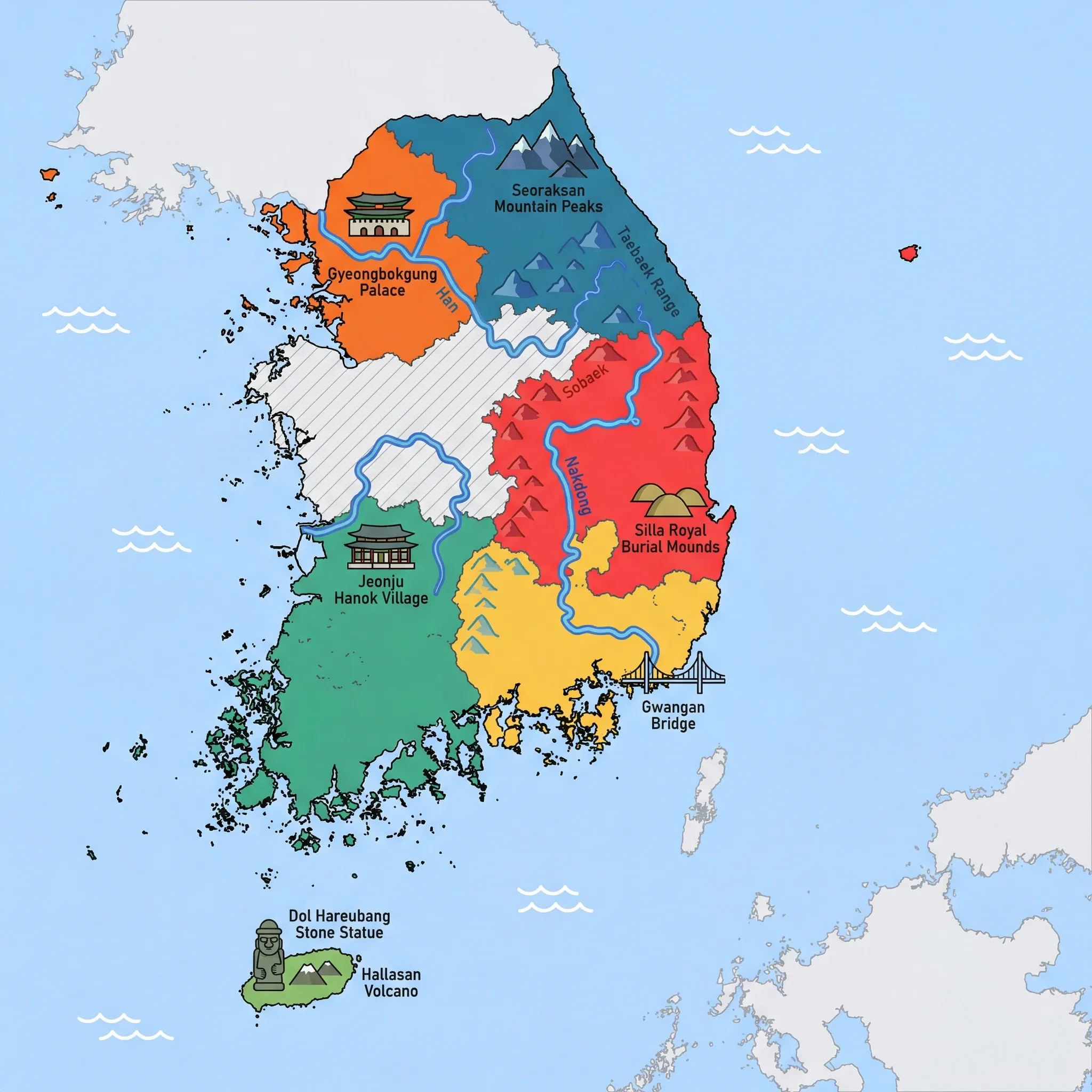
Click a region to explore
Overview
Seoul is a city that never sleeps, yet it is incredibly safe and welcoming for families. It is a place where 600-year-old palaces sit next to chrome skyscrapers, and where you can hike a mountain in the morning and shop in a massive underground mall in the afternoon. For children, the city is a playground of sensory experiences—from interactive museums and character cafes to the simple joy of high-tech convenience stores.
The surrounding Gyeonggi province offers breathing room with massive theme parks and folk villages. The public transport system is one of the best in the world, making it easy to zip between districts. Whether you are renting Hanbok to enter palaces for free or exploring the futuristic Dongdaemun Design Plaza, the energy of Seoul is captivating.
Key Attractions
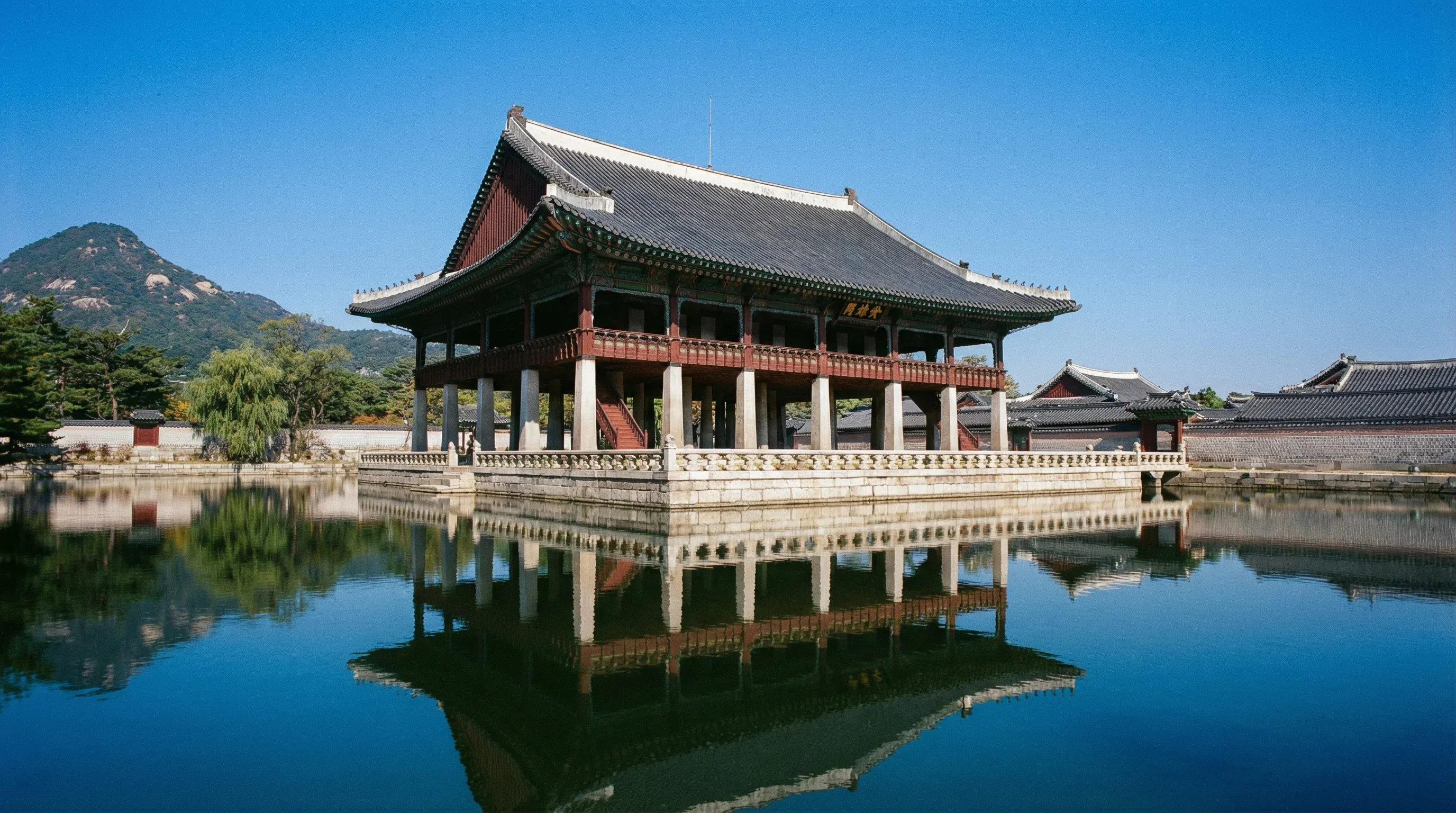
History comes first: Gyeongbokgung Palace is the grandest royal residence; try to catch the colourful changing of the guard ceremony. Nearby, Bukchon Hanok Village offers a glimpse into traditional housing. For panoramic views, a cable car ride to N Seoul Tower is a classic family outing.
For pure fun, Lotte World Adventure is a massive indoor/outdoor theme park right in the city, perfect for rainy days. Further out, Everland is Korea's answer to Disney, complete with safari parks and giant gardens. For an educational twist, the Korean Folk Village brings history to life with actors and performances.
Practical Advice
Spring and Autumn are glorious. Summer (July–August) is hot and humid with monsoon rains. Winter is biting cold. The subway is stroller-accessible (look for elevators), but rush hour (8:00 am–9:00 am, 6:00 pm–7:00 pm) should be avoided with small kids.
Food & Drink
Typical meal times: Lunch 11:30 am to 1:30 pm. Dinner 6:00 pm to 9:00 pm. Cafes and convenience stores are open late or 24/7.
Typical meal costs: Varies wildly. A simple meal costs ₩10,000–15,000 (approx. $7.50–11 USD / €6.80–10 EUR). K-BBQ dinner costs ₩25,000–50,000 (approx. $19–37 USD / €17–34 EUR) per person.
Dietary requirements: Vegan restaurants are growing in number, especially in Itaewon and Hongdae. However, checking for "meat powder" or fish sauce in soups is still necessary.
Signature dishes:
- Samgyeopsal (Pork Belly BBQ) – Grilled at your table. It is interactive and social. Kids love wrapping the meat in lettuce leaves.
- Tteokbokki – Spicy rice cakes. A street food staple. For kids, look for "Gungjung Tteokbokki" (Royal Court style), which is soy-sauce based and non-spicy.
- Patbingsu – Shaved ice dessert topped with sweet red beans, fruit, and condensed milk. The ultimate summer treat.
Why this score?
The region is an ultra-modern megalopolis where the environment is almost entirely controlled and paved. Even the 'wilder' parts, like Bukhansan National Park, feature granite steps and heavy crowds, making it feel more like an urban park than a wilderness area. It is designed for maximum convenience, with one of the world's most efficient and accessible transit systems.
Why this score?
Seoul is a world-class medical hub and a top destination for global medical tourism. Hospitals such as Severance or Asan Medical Center offer dedicated international clinics with fluent English-speaking staff and seamless insurance processing. The density of high-end pharmacies and specialized pediatric clinics is among the best in the world, providing total peace of mind for families.
Why this score?
Seoul is a global mega-destination and the primary entry point for almost all international visitors to South Korea. It combines world-class shopping, historic palaces, and K-culture landmarks that draw millions of tourists from every continent. The Gyeonggi area adds massive theme parks like Everland, making it the most visited region in the country by a significant margin.

Seoul accommodates all budgets. You can eat a convenience store lunch for ₩5,000 ($3.75 USD) or a fine dining meal for ₩200,000 ($150 USD). Family hotels average ₩150,000–250,000 (approx. $110–190 USD / €100–170 EUR). Palace entry is cheap (₩3,000), but theme parks are pricey.

Getting Here & Around
Getting Here
- Airports – Incheon International Airport (ICN) is world-class and connected to the city by the AREX train (45–60 mins). Gimpo Airport (GMP) handles closer Asian routes and domestic flights.
- Train – Seoul Station is the central hub for KTX trains arriving from all over the country.
Getting Around
- Subway – Fast, clean, and has English signage. The T-money card is essential for tapping in and out.
- Taxi – Taxis are relatively cheap and can be hailed on the street or via the Kakao T app. Avoid "Black" taxis if on a budget (they are luxury service).
- Walking – Central districts like Insadong and Myeongdong are best explored on foot.
Nearby Airports (3 airports)
Cheongju International Airport
CJJCheongju
Gimpo
GMPSeoul
Incheon International Airport
ICNSeoul
View full flight map for South Korea →
Official Links

Packing List
You will use these transport cards constantly; a lanyard or holder helps kids not lose them.
Essential for surviving the humid Korean summer while sightseeing.
Air quality can be poor in spring (yellow dust season); local KF94 masks are best.
Constant shoe removal at palaces, temples, and restaurants.
Public bins are extremely rare; locals carry their own rubbish home to sort.
Public restrooms often lack paper towels or hand dryers.
Hotels are legally restricted from providing free single-use toiletries and will charge for them.
Difficult to find strong antiperspirants in local stores as many locals do not use them.

Activities & Best Times

Urban tourism, museums, historical sites, architecture
Seoul is a world-class cultural hub featuring multiple UNESCO World Heritage sites and a vibrant, modern urban atmosphere. Peak visitation occurs during the temperate spring and autumn months when historical palaces and gardens are at their most visually stunning.

Hiking, wildlife, outdoor exploration, ecotourism
Bukhansan National Park and extensive suburban green belts offer exceptional hiking and nature immersion within a metropolitan setting. Conditions are best during the crisp autumn and mild spring, while the summer monsoon and sub-zero winters present significant barriers.

Learning experiences, scientific sites, historical education
The region hosts internationally significant aquariums and science museums that serve as primary motivators for family learning. These indoor facilities are particularly popular during school holiday breaks and periods of extreme outdoor weather.

Sport tourism, fitness activities, active recreation
Meticulously maintained infrastructure like the Seoul Trail and the Han River cycling network provides world-class facilities for active families. The shoulder seasons offer the most comfortable temperatures for sustained outdoor activity before the onset of humid summers or frozen winters.

Spa retreats, wellness centers, peaceful getaways
A robust culture of traditional mineral springs and modern thermal bathhouses provides an authentic restorative experience. This is most rewarding as a sanctuary from the intense cold of the Korean winter.

Scenic drives, countryside tours, route-based travel
Scenic river drives and mountain routes like the Bugak Skyway offer spectacular seasonal aesthetics, particularly during the cherry blossom and autumn foliage peaks. Driving visibility and enjoyment are highest when avoiding the heavy summer rains and winter ice.

Amusement parks, family entertainment venues
Major parks such as Everland and Lotte World offer high-quality, internationally recognized family entertainment. Ideal conditions are found in May and October, avoiding the extreme heat, rainfall, and bitter cold that define the off-seasons.

Beach resorts, marine activities: diving, snorkelling, kite surfing, wind surfing, sailing
Coastal areas like Incheon provide maritime recreation, though they lack the biodiversity and water clarity of top-tier global beach destinations. High visitation is strictly limited to the hot summer months for water-based activities.

Events, celebrations, seasonal attractions
Authentic events like the Lotus Lantern Festival provide unique cultural engagement, though they are highly date-specific. These festivals drive peak demand in very specific spring and autumn windows.

Winter sports, ski resorts, snow activities
The region offers functional ski resorts like Jisan and Konjiam that are convenient for families, though they lack the scale of international alpine destinations. The season is tightly constrained to the core winter months with reliable snow-making temperatures.

Attractions (41 total)



Public Holidays & Calendar Next 12 months
Public holidays, festivals, cultural celebrations, and seasonal natural phenomena coming up in Seoul & Gyeonggi over the next 12 months.
Loading holidays and events...

Travel Advisory
All major global agencies consistently rate South Korea as a low-risk destination where standard safety awareness is sufficient for travelers. While regional political tensions and occasional protests exist, they do not currently elevate the country-wide risk level.
Safety Topics
Traveller Advice (4 groups)

Exercise caution when visiting crowded nightlife and entertainment districts such as Itaewon and Hongdae. Instances of sexual harassment and assault have been reported in these areas, particularly late at night; traveling in groups is recommended.

While generally safe, travelers may find it useful to review general safety guidance for sexual and gender minorities before arriving.

Monitor regional news for updates on North Korean military activities and peninsula tensions. Be aware that civil defense drills are held periodically throughout the country and require cooperation with local authorities.

The UK provides dedicated guidance for travelers with accessibility needs visiting the region; infrastructure in major cities is generally modern but can vary.
Agency Summaries
Travelers should exercise standard safety measures. Large public gatherings, particularly in Seoul, are frequent and may disrupt transport; staying informed through local media is advised. Australians benefit from a temporary visa waiver exemption for short visits until late 2026.
General safety levels are high. Irish visitors are currently exempt from electronic travel authorization requirements for short-term stays until the end of 2026. Travelers should monitor local news for any significant changes in the regional security situation.
The overall security environment is stable, though the risk of escalation in peninsula tensions persists. Visitors are advised to stay away from political gatherings and protests. British nationals of Korean descent should be aware of potential compulsory military service requirements.
The country maintains a very low crime rate, making it safe for most visitors. Travelers are cautioned to avoid political protests and reminded that foreign nationals are legally prohibited from participating in local political activities.
South Korea is generally safe, but travelers should remain alert to the unpredictable security situation on the Korean Peninsula. While crime against visitors is low, petty theft and instances of sexual harassment occur in popular nightlife districts. Registration with the government is recommended to stay informed about sudden developments.
Standard safety precautions are advised. Travelers should be aware that political demonstrations can occur without warning and that tensions with North Korea remain a factor in the regional security landscape. Participation in local civil emergency drills is encouraged when they occur.
Information is provided for general guidance only and does not constitute travel, safety, medical, or legal advice. Conditions may change. Users are responsible for independently verifying information before travel.