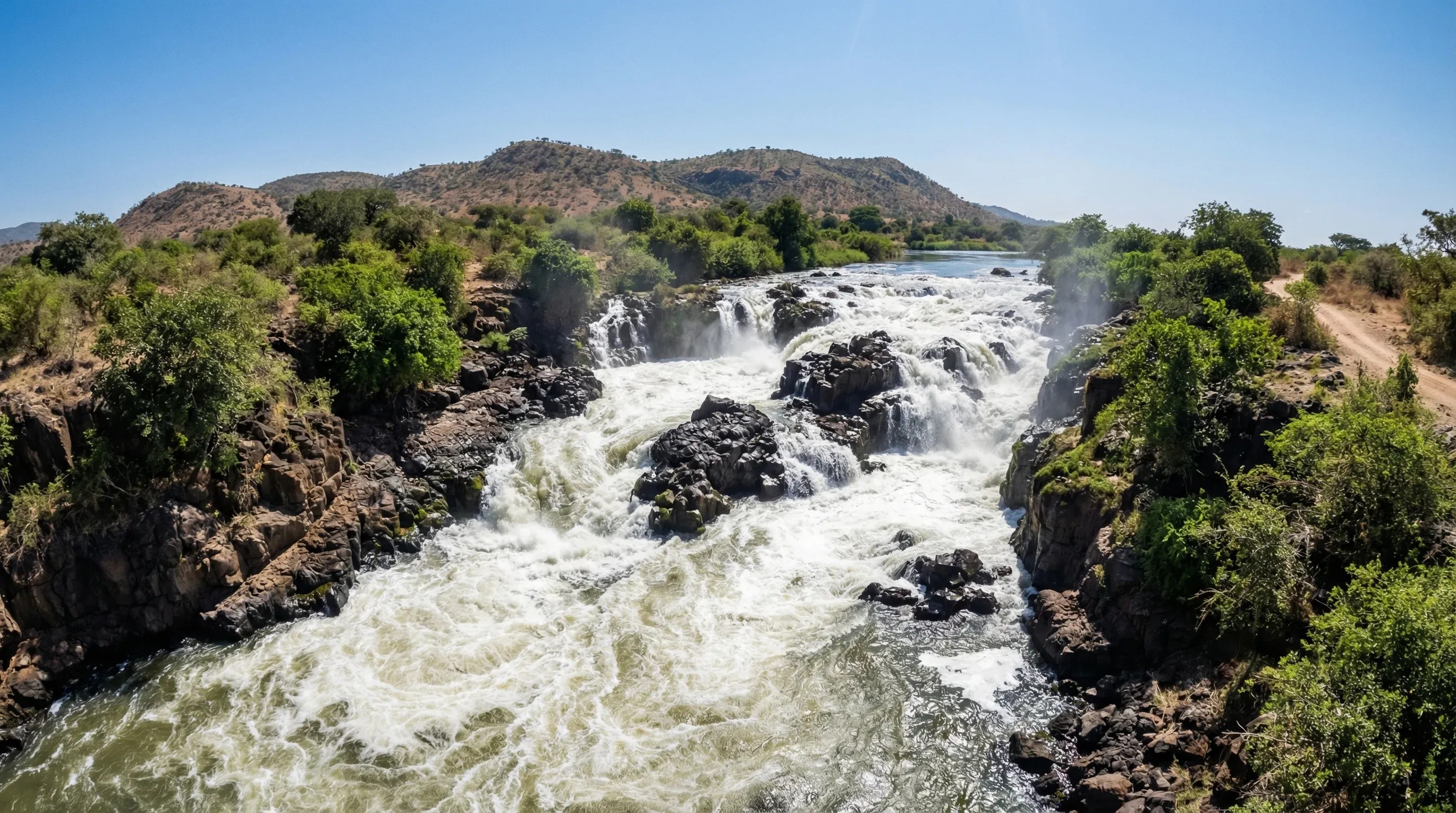

White Nile Corridor (Central Equatoria State)
The bustling heart of the nation along the legendary Nile
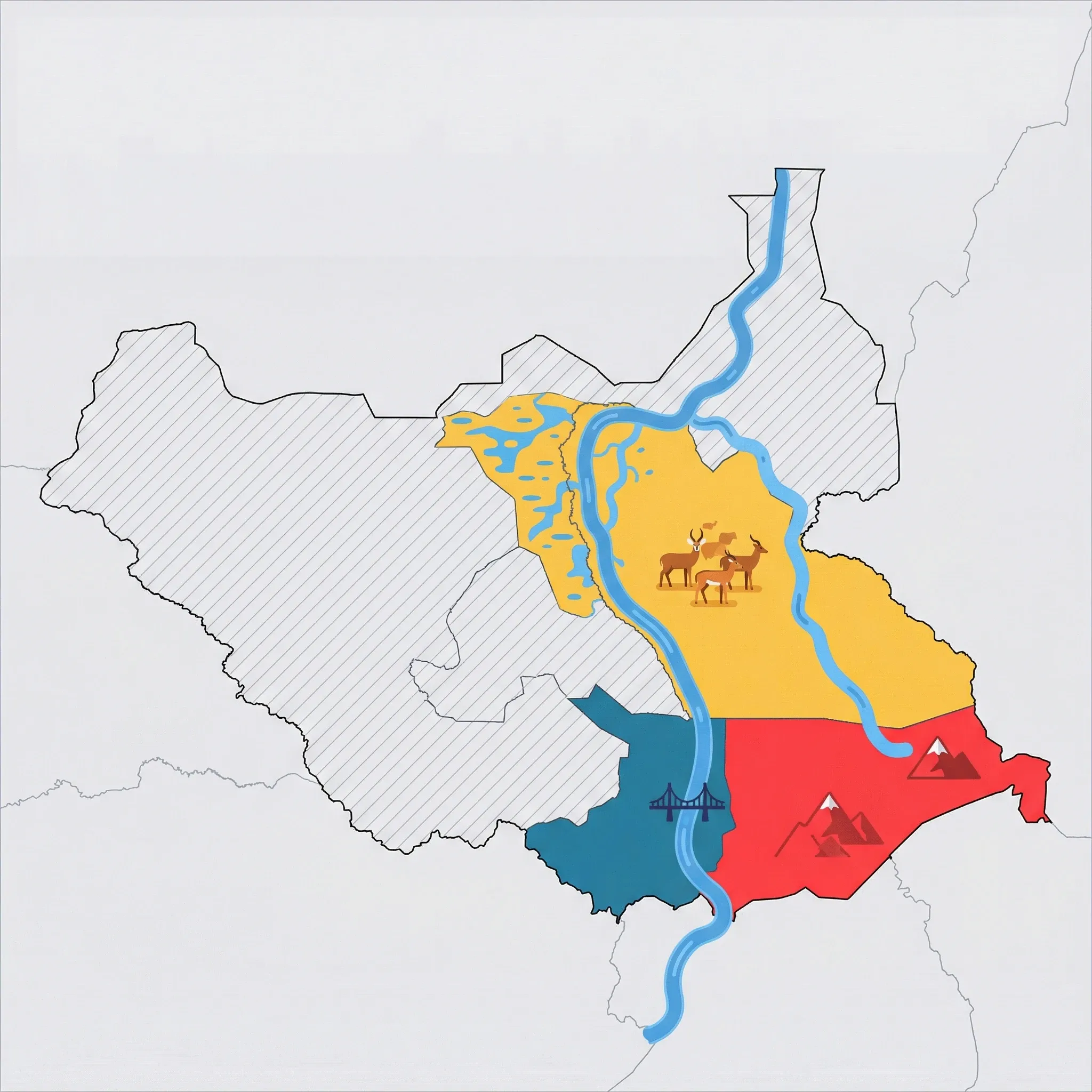
Click a region to explore
⚠️ SAFETY WARNING: Due to high rates of violent crime, kidnapping, and armed conflict, government agencies (including the US, UK, CA, AU, and IE) advise travelers to avoid all travel (L3/L4) to Central Equatoria, including Juba. A curfew is often in effect, and travel after dark is extremely dangerous. Families are strongly urged to consult their own government's official travel advisory before considering a trip, as circumstances and risk assessments vary.
Overview
The White Nile Corridor is the political and economic hub of South Sudan, dominated by the presence of the River Nile. Juba, the capital, is a fast-growing, chaotic city where the dust of construction mixes with the humidity of the river. For a visitor, the primary fascination here is the river itself—the lifeblood of the region. Watching the barges unload and the fishermen cast their nets provides a glimpse into the river-based economy that has sustained this area for millennia.
Just outside the city limits, the landscape turns green and hilly. Jebel Kujur is a prominent landmark, a strange rock formation that rises abruptly from the flat plains. While urban, the region still feels wild; monkeys often run across hotel roofs, and the lush vegetation along the riverbanks supports a variety of birdlife. It is a place of stark contrasts, where expensive SUVs share the road with cattle herds, and modern hotels stand near traditional tukuls.
Key Attractions
Jebel Kujur is the most iconic natural landmark near the capital. It serves as a popular hiking spot for locals and expats on weekends (security permitting). The climb offers a panoramic view of Juba city and the snaking Nile River, providing a geographic context to the capital's location that is hard to appreciate from the ground.
Nimule National Park, located on the border with Uganda, is the most accessible park in the country. It is unique for its elephant population, which can often be seen crossing the river. Travelers can take boat safaris here to see hippos and crocodiles up close, offering a classic safari experience that is logistically easier to reach than the deeper wetland parks.
Practical Advice
Best time to visit: The dry season (December to March) is best. Juba is hot year-round, but humidity peaks during the rains.
Family logistics: Juba has high-end hotels with pools and generators, making it the only "comfortable" base in the country. However, movement is restricted, and families cannot walk around the city freely due to crime risks.
Food & Drink
Typical meal times: Lunch is 12:30 pm to 2:30 pm. Dinner is typically 7:00 pm to 9:30 pm. Restaurants in Juba cater to expats and stay open later than in rural areas.
Typical meal costs: Juba is incredibly expensive. A burger or pizza at a secure hotel costs SSP 26,000–40,000 (approx. $20–30 USD / €18–28 EUR). Local street food is cheap but not recommended for tourists due to hygiene.
Dietary requirements: Juba has international restaurants (Indian, Ethiopian, Chinese) that cater well to vegetarians and various diets. Gluten-free options are available in top-tier hotels.
Signature dishes:
- Ful Medames – A fava bean stew spiced with cumin and oil, eaten with bread for breakfast or dinner; a legacy of northern influence.
- Grilled Nile Perch – Served in riverside restaurants, this is the freshest fish available, often accompanied by spicy piri-piri sauce.
- Tamia – Local falafel made from chickpeas or black-eyed peas, a common street snack that is crispy and flavorful.
Why this score?
While the Juba-Nimule highway provides one of the few paved routes in the country, travel still involves navigating numerous security checkpoints and limited services. Exploring the Fula Rapids or hiking Jebel Kujur remains adventurous compared to global standards due to the lack of formal tourism management.
Why this score?
Juba contains the country's most advanced medical facilities, including private clinics that cater to the expatriate community and international organizations. However, these services are still very basic by global standards and are not equipped for complex surgeries or specialized care.
Why this score?
As the location of Juba and the relatively accessible Nimule National Park, this region receives the majority of the country's few international visitors. Most foreigners here are NGO workers, diplomats, or business travelers, though a tiny number of niche tourists visit the Nile landmarks.

Juba is one of the most expensive cities in the world for expats. A secure hotel room costs SSP 195,000–390,000 (approx. $150–300 USD / €140–275 EUR) per night. Supermarket goods are imported and priced 2-3x higher than in neighboring countries. Cash is king, and credit cards are rarely accepted.

Getting Here & Around
Getting Here
- Airports – Juba International Airport (JUB) is the main entry point, with flights from Addis Ababa, Nairobi, and Dubai.
- Bus – Buses run from Kampala (Uganda) to Juba, but the route is prone to banditry and is not recommended for tourists.
- Driving – The Juba-Nimule road is the only paved highway, connecting to Uganda. It is heavily militarized.
Getting Around
- Car – Taxis exist but are not safe for foreigners. You must hire a private car with a driver, preferably through your hotel or a security company.
- Boda-boda – Motorcycle taxis are everywhere but are extremely dangerous due to reckless driving and accident rates; families should avoid them.
Nearby Airports (1 airport)
Juba
JUBJuba
View full flight map for South Sudan →

Packing List
Mandatory for entry; you will be checked at the airport health desk.
The sun is equatorial and intense; quality brands are hard to find locally.
Hotel sinks and bathtubs often lack plugs, even in expensive places.
Streetlights are rare and power cuts in hotels are frequent.
Credit cards rarely work; cash is king, but bills must be new and unblemished to be accepted.
Mobile networks are unreliable outside Juba; essential for safety and emergency communication.
Power outages are frequent and prolonged; keeps essential devices charged when the grid fails.
Street lighting is non-existent in most areas; critical for navigating safely after sunset.

Activities & Best Times

Hiking, wildlife, outdoor exploration, ecotourism
Features authentic wilderness and wildlife at Nimule National Park and hiking at Jebel Kujur, though infrastructure is basic. The dry season (Dec-Feb) is peak for wildlife visibility and trail access before the heavy rains of May-Oct.

Urban tourism, museums, historical sites, architecture
Juba has historical significance as South Sudan's capital, but a 'good' city_cultural rating internationally requires established museums, galleries, cultural institutions, and heritage sites. The current rating over-estimates Juba's cultural infrastructure when compared to globally recognized 'good' cultural cities. Marginal is more appropriate for a developing capital with emerging cultural offerings.

Scenic drives, countryside tours, route-based travel
The Juba-Nimule Highway offers a paved route through Equatorial landscapes and Nile vistas, rare for the region. Travel is restricted to the peak dry season to ensure safe driving conditions and clear visibility.

Sport tourism, fitness activities, active recreation
Jebel Kujur and Fulla Rapids provide established routes for hiking and walking, representing the region's primary active infrastructure. These trails are optimal during the dry months when surfaces are firm and safe for families.




Public Holidays & Calendar Next 12 months
Public holidays, festivals, cultural celebrations, and seasonal natural phenomena coming up in White Nile Corridor (Central Equatoria State) over the next 12 months.
Loading holidays and events...

Travel Advisory
Unanimous consensus across all major international agencies indicates an extreme risk environment. Travel is strongly discouraged due to active armed conflict, pervasive violent crime, and the inability of foreign governments to provide emergency assistance.
Safety Topics
Traveller Advice (3 groups)

There is a significant threat of sexual assault and gender-based violence, particularly in areas of conflict or rural locations. Independent travel is strongly discouraged.
Humanitarian staff have been frequently targeted in attacks and kidnappings. Organizations must employ professional security details and maintain strict contingency plans for emergency evacuation.
Media professionals face high risks of harassment, arrest, and violence. It is mandatory to obtain official accreditation from the Media Authority; working without proper documentation is illegal and extremely dangerous.
Agency Summaries
The United States warns that the risk of abduction, violent crime, and armed warfare is critical throughout the country. Federal assistance is extremely limited, and government staff are restricted by curfews and must use armored transport for movement.
The FCDO recommends against all travel to the nation due to the severe threat of criminality and armed violence. The political landscape is volatile, and embassy support for British nationals is severely constrained.
Australia warns of a dangerous security situation with a high risk of armed conflict and violence. Consular services are very difficult to access, and the situation can worsen without any notice.
Canada strongly advises against visiting South Sudan due to a highly unstable security environment characterized by persistent civil conflict, ethnic violence, and extreme crime rates. Citizens currently in the country should depart while commercial options remain available.
New Zealand cites ongoing warfare and high levels of violent crime as primary reasons for its do-not-travel advisory. Law and order are not maintained in many regions, posing significant personal risk.
Ireland maintains its highest level of warning, advising citizens to avoid the country entirely and leave immediately if safe to do so. Security is fragile, and the embassy has limited power to assist.
Information is provided for general guidance only and does not constitute travel, safety, medical, or legal advice. Conditions may change. Users are responsible for independently verifying information before travel.