

Overview
Spain is arguably Europe's most family-friendly destination, a land where children (niños) are not just tolerated but adored. The cultural rhythm here is distinct; families stay out late, plazas are filled with playing children well past sunset, and the atmosphere is relaxed and joyful. Geographically, it offers everything from the green, rolling hills of the Northern Coast to the arid, movie-set landscapes of Andalusia. The climate is generally sunny and warm, making it an ideal year-round destination, though summers in the interior can be fierce.
For families, the real magic of Spain lies in its diversity. You can spend the morning exploring a world-class museum in Madrid, the afternoon rowing boats in a royal park, and the evening sharing tapas while your kids play soccer with locals in a town square. The infrastructure is excellent, with high-speed trains connecting major hubs, yet the country retains a deep sense of tradition and slow living that allows you to truly unwind.
Key Attractions
Spain's attractions are incredibly varied. For animal lovers, Bioparc Valencia is a revelation-an "immersion zoo" with no visible barriers where families walk through recreated African habitats, getting astonishingly close to lemurs and giraffes. In the capital, El Retiro Park offers a classic day out with its crystal palace and boating lake, a perfect break from the city bustle. For water fun, Aquopolis Villanueva de la Cañada near Madrid is one of the largest water parks in Europe.
Adventure-seeking families with older children (8+) should not miss the Caminito del Rey in Malaga, a once-dangerous walkway now restored into a spectacular and safe cliffside path. In Granada, the Generalife gardens offer a maze of fountains and flowers where kids can roam freely while parents admire the Moorish architecture. Finally, for a city break that feels like a beach holiday, Barceloneta Beach allows you to build sandcastles just minutes from historic medieval streets.
Practical Advice
The most important adjustment for families is the schedule. Spain runs late. Lunch is rarely served before 1:30 pm, and dinner restaurants often don't open until 8:30 pm or 9:00 pm. Embrace the siesta (afternoon rest) to keep kids energized for the late evenings. Sun protection is vital; the UV index is high, especially in the Canary Islands. Public restrooms are generally decent, but carrying small change is useful.
Safety
Spain is very safe, but petty crime is a serious nuisance in major tourist hubs. Barcelona and Madrid are notorious for skilled pickpockets who target distracted families in metro stations and crowded plazas. Keep belongings zipped and in front of you, and never leave phones on café tables. Violent crime is extremely rare.
Food & Drink
Typical meal times: Lunch is the main meal, served from 1:30 pm to 4:00 pm. Dinner is light and late, typically 9:00 pm to 11:30 pm.
Typical meal costs: Lunch menú del día costs €12–16 (approx. $13–17 USD / £10–14 GBP). Dinner à la carte runs €25–40 (approx. $27–43 USD / £21–34 GBP).
Dietary requirements: Spain is surprisingly good for allergies. By law, menus must indicate allergens. Gluten-free (sin gluten) options are widespread. Vegetarian food is available but verify that "vegetable" dishes don't contain ham (jamón).
Family-friendly dining: Children are welcome everywhere, including bars and late-night bistros. Highchairs are common, but kid's menus are rare because children are expected to eat small portions of adult food or share raciones.
Signature dishes:
- Paella – The iconic rice dish from Valencia, often with rabbit and chicken or seafood (kids usually love the saffron-yellow rice).
- Tortilla Española – A thick, comforting potato and onion omelet served everywhere, perfect for picky eaters.
- Churros con Chocolate – Fried dough sticks served with thick, pudding-like hot chocolate for dipping.
- Croquetas – Creamy, fried bechamel fritters usually filled with ham or cod, universally loved by children.
- Patatas Bravas – Fried potato cubes with a mild spicy sauce and garlic mayonnaise (ask for sauce on the side for kids).

Spain offers great value compared to northern Europe. A family of four can expect to spend around €140–200 (approx. $150–215 USD / £120–170 GBP) per day. The midday <em>menú del día</em> is a budget-saver, offering three courses and wine/water for a fixed low price.
Age Suitability





Did you know? Spain welcomes approximately 93.8 million international visitors per year. Most visitors come from Europe.

Explore Regions
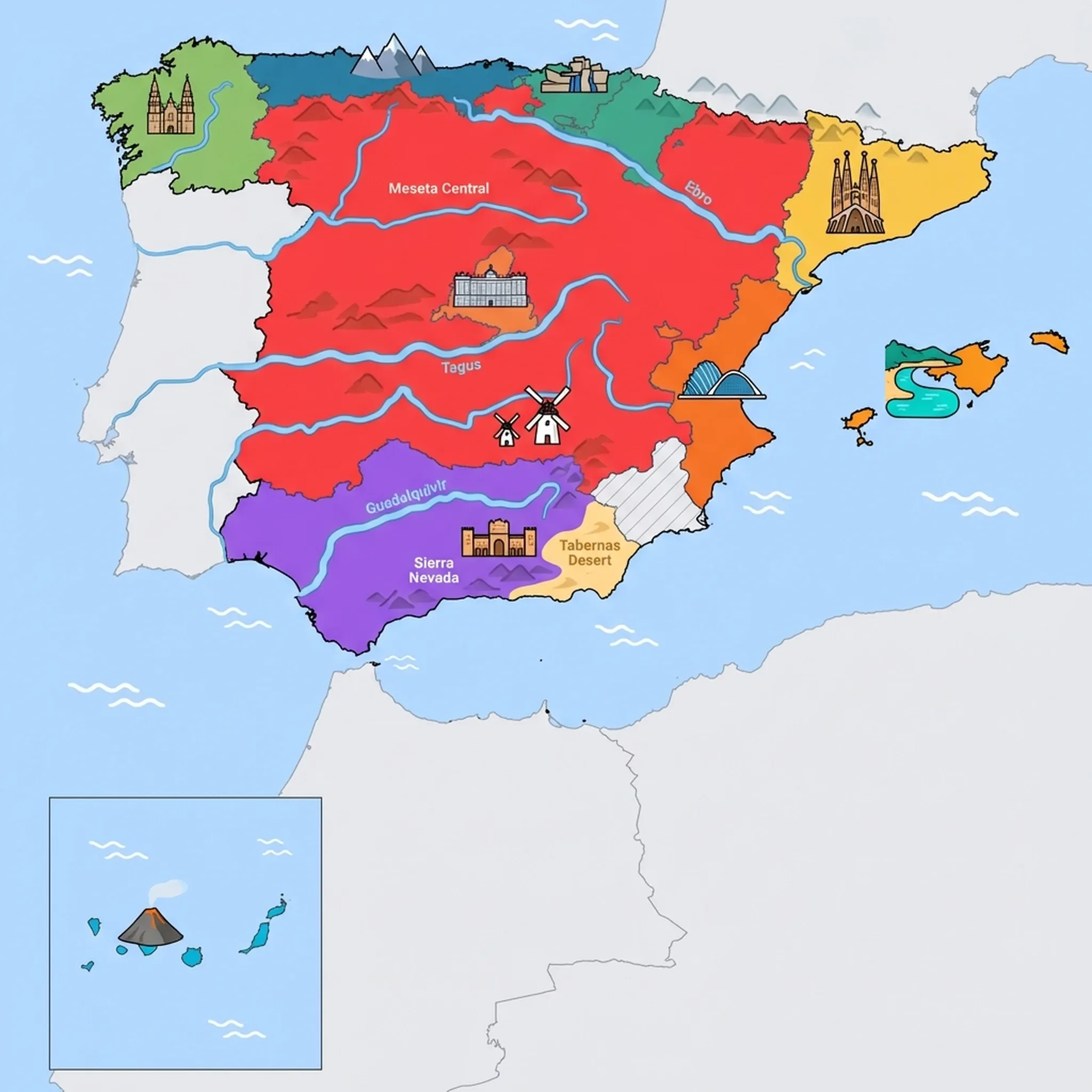
10 Regions
Andalusia
Where Moorish castles meet golden beaches 🏰☀️
Balearic Islands
Turquoise coves and island adventures 🏝️⛵
Barcelona & Catalonia
Gaudi's magic, mountains, and Mediterranean vibes 🦎🎨
Basque Country
Ancient culture and avant-garde art by the sea 🌊🎨
Canary Islands
Volcanoes and eternal spring sunshine 🌋☀️
Castile & Central Spain
Land of castles, knights, and legends 🏰⚔️
Galicia
Mystical forests, wild coasts, and best seafood 🌿🌊
Madrid
Vibrant culture, grand parks, and royal history 👑🎨
Northern Coast
Where green mountains meet the blue sea 🏔️🌊
Valencia & Costa Blanca
Home of paella, sun, and future science 🥘☀️
Click on a region marker to explore details. Use the dropdown to color regions by activity suitability.

Getting There & Around
Getting There
- By Air – Madrid (MAD) and Barcelona (BCN) are major global hubs. The Valencia & Costa Blanca region is served by Alicante (ALC) and Valencia (VLC) airports.
- By Train – High-speed TGV and Eurostar connections make rail travel from France and the UK (via Paris) a viable and scenic option.
- Entry Requirements – US, UK, and EU citizens do not need a visa for stays up to 90 days. Check your government website for the latest visa requirements, or use the IATA Travel Centre entry-requirements checker.
Getting Around
- Trains – The high-speed AVE network is world-class, whizzing families between Madrid and the coast in hours. Book early for the best fares.
- Car Hire – Essential for exploring the Canary Islands or rural Andalusia. Car seats are mandatory for children under 135cm.
- City Transport – Metros in major cities are clean, safe, and stroller-accessible (mostly). Kids under 4 usually travel free.
Official Links

Packing List
Essential for hot summers; many shops and older transport lack strong AC.
To secure drying swimsuits on breezy hotel balconies (lines provided, pegs rarely).
Cash is still king for small purchases like ice cream kiosks and street vendors.
Hard to find in city express stores; useful for wet swimmers and unfinished snacks.
Café breakfasts are sweet (pastries/toast); healthy 'kid food' is hard to find in mornings.
Street noise, late-night dining, and local festivals can be loud well into the night.

Activities & Best Times

Adventure & Nature
ExcellentHiking, wildlife, outdoor exploration, ecotourism
Home to the world-class Picos de Europa National Park and the unique Cabárceno Natural Park, offering rare wildlife encounters and high-altitude trekking. Winter conditions bring heavy rain and snow to the peaks, making late spring through early autumn the optimal window for exploration.
Diverse ecosystems ranging from the rugged Pyrenees mountains to the volcanic Garrotxa region provide world-class hiking and wildlife observation. Peak months offer mild temperatures for trekking, whereas the high summer heat and winter snow limit accessibility in certain sub-regions.
Features diverse landscapes including the UNESCO Flysch cliffs and the Urdaibai Biosphere Reserve. Late spring and early autumn provide ideal trekking conditions, while the winter months are characterized by heavy rainfall that can make trails inaccessible.

City & Cultural
ExcellentUrban tourism, museums, historical sites, architecture
Barcelona is a global cultural powerhouse featuring iconic Modernist architecture, UNESCO sites, and an elite culinary scene. Sophisticated travelers prefer the mild shoulder seasons to avoid the extreme humidity of August and the quieter, cooler winter period.
A global leader in gastronomy and art, anchored by the Guggenheim Bilbao and the vibrant old town of San Sebastián. Summer and the surrounding months offer the best atmosphere for street life, though heavy winter rains impact the urban experience.
Home to world-class UNESCO sites like the Alhambra and Seville's Alcázar, the region offers unparalleled Moorish and Renaissance heritage. Spring and autumn provide the best walking weather, as summer temperatures in cities like Seville and Cordoba frequently exceed 40°C.

Festivals & Seasonal
ExcellentEvents, celebrations, seasonal attractions
Semana Santa (UNESCO) and Feria de Abril are world-class festivals drawing massive international audiences. This is Spain's premier festival region and should be rated accordingly - 'marginal' is a severe under-rating.
Carnival of Santa Cruz de Tenerife is UNESCO-recognized and the 2nd largest carnival globally after Rio. This is not a 'marginal' festival destination - it's internationally significant.
Las Fallas (UNESCO) and La Tomatina are globally iconic festivals that define the region's international identity. Two world-famous festivals justify 'very_good' rating.

Educational & Exploratory
Very GoodLearning experiences, scientific sites, historical education
Boasts significant scientific sites including the Jurassic Museum of Asturias (MUJA) and the Altamira Research Center, which are primary motivators for families. These facilities offer world-class engagement with paleontology and prehistory, best accessed during the main tourism season.
CosmoCaixa and the Museum of Natural Sciences are world-class facilities offering high-standard scientific engagement for families. These indoor venues are excellent nearly year-round, though less frequented in the peak summer when focus shifts to the coast.
Features destination-level facilities like Granada's Science Park and several major aquariums that offer high-quality interactive learning. While indoor facilities are year-round, peak interest aligns with milder weather and primary school holiday windows.

Road Trips & Scenic
Very GoodScenic drives, countryside tours, route-based travel
Iconic routes like the Don Quixote trail offer culturally rich driving experiences through the La Mancha plateau. Spring and autumn provide the best light and comfortable temperatures for scenic stops, while July and August are often too hot for pleasant rural touring.
The Costa da Morte and Ribeira Sacra offer some of Europe's most dramatic coastal and river drives. High rainfall and coastal fog make these routes less safe and scenic during the winter months.
Spectacular routes like the Dinosaur Coast and the Cares Gorge drive provide world-class scenery and well-maintained infrastructure. Mountain passes can be treacherous or closed due to snow and heavy rain during the winter months, making summer the safest and most scenic time for touring.

Sports & Active
Very GoodSport tourism, fitness activities, active recreation
The Camino del Norte and the Ruta del Cares are world-famous hiking corridors requiring specific infrastructure and planning. These routes are most accessible and safe for active families during the drier summer window when mountain transport like the Fuente Dé cable car is fully operational.
Girona is a global hub for professional cycling, and the region offers elite infrastructure for hiking and water sports. Peak months offer the optimal balance of daylight and temperature for active pursuits, avoiding the extreme heat of mid-summer and winter cold.
A premier destination for surfing at Zarautz and Mundaka, as well as internationally recognized cycling and hiking routes. Active tourism thrives in the brighter, drier months from May to September.
Theme Park & Entertainment
Very GoodAmusement parks, family entertainment venues
PortAventura World is a premier European destination with world-class themed lands and aquatic parks that attract international families. Peak months coincide with school holidays and full facility operation, while many parks operate on limited schedules or close during the colder months.
Boasts significant family attractions including Isla Mágica and major water parks like Aqualand, which are a primary draw in summer. Many parks operate on restricted schedules or close during the cooler winter months.
Features Siam Park and Loro Parque, which are globally recognized as top-tier family entertainment venues. Peak months correlate with international school holiday windows and warmer weather suitable for water parks.

Beach & Sea
GoodBeach resorts, marine activities: diving, snorkelling, kite surfing, wind surfing, sailing
Features dramatic urban beaches like El Sardinero and unique natural wonders like Gulpiyuri, though the Atlantic waters remain cool. The season is strictly limited to mid-summer when air temperatures and sea conditions are most favorable for families.
The Costa Brava and Costa Daurada offer picturesque coves and established resort infrastructure with clear Mediterranean waters. Peak visitation aligns with the warmest sea temperatures from June to September, while the region is unsuitable for beach activities during the cool winter months.
Home to iconic beaches like La Concha and Zarautz, offering high-quality amenities and scenic coastal views. The Atlantic waters are coolest and rainiest outside the mid-summer peak, limiting the window for traditional beach tourism.

Relaxation & Wellness
GoodSpa retreats, wellness centers, peaceful getaways
The region boasts a long tradition of thermal spas in towns like Caldes de Montbui and luxury wellness retreats in the Girona countryside. Transitional seasons provide the most comfortable atmosphere for thermal treatments, while the high heat of July and August is less conducive to wellness tourism.
The region is known for authentic Hammam (Arab bath) experiences and natural thermal springs like Santa Fe. These are best enjoyed during moderate temperatures; the extreme heat of summer and damp winter chill are less restorative.
Features authentic natural thermal experiences such as the Fuente de los Baños in Montanejos. These outdoor thermal sites are most enjoyable during the warmer months when the surrounding river swimming is also feasible.

Ski & Snow
GoodWinter sports, ski resorts, snow activities
Alto Campoo and Valgrande-Pajares provide reliable regional skiing with authentic Cantabrian mountain culture. The season is relatively short compared to the Pyrenees, with peak snow coverage typically occurring in January and February.
Baqueira-Beret and La Molina provide high-quality ski infrastructure and authentic alpine charm in the Catalan Pyrenees. The season is strictly limited to the winter window with the most reliable snow cover occurring in January and February.
Sierra Nevada is Europe's southernmost ski resort with high-altitude infrastructure and reliable snow. While not world-class, 'good' better reflects its legitimate ski infrastructure compared to 'marginal'.

Public Holidays & Calendar Next 12 months
Public holidays, festivals, cultural celebrations, and seasonal natural phenomena coming up in Spain over the next 12 months.
Loading holidays and events...
Climate & Weather
Andalusia
Show Details
| Month | Temp °C | Rain | Humidity |
|---|
Balearic Islands
Show Details
| Month | Temp °C | Rain | Humidity |
|---|
Barcelona & Catalonia
Show Details
| Month | Temp °C | Rain | Humidity |
|---|
Basque Country
Show Details
| Month | Temp °C | Rain | Humidity |
|---|
Canary Islands
Show Details
| Month | Temp °C | Rain | Humidity |
|---|
Castile & Central Spain
Show Details
| Month | Temp °C | Rain | Humidity |
|---|

Travel Advisory
While Spain is a safe destination for most, half of the major advisory agencies recommend increased vigilance due to high rates of petty crime and a persistent domestic terrorism threat level.
Safety Topics
Traveller Advice (4 groups)

Spain has very progressive laws regarding sexual orientation and gender identity. Discrimination is rare in major cities, though standard discretion is advised in rural areas.

While generally safe, incidents of sexual assault occur; travellers are encouraged to stick with groups and avoid isolated areas after dark.

Accessibility is generally good in newer infrastructure and major cities, but historic districts may present mobility challenges due to cobblestone streets.

Keep copies of identification separate from originals. Be especially vigilant in high-traffic areas like Las Ramblas in Barcelona and the Madrid Metro where theft is common.
Agency Summaries
New Zealanders are advised to be more alert than usual due to the threat of terrorism and the high prevalence of petty theft targeting foreigners.
While general safety levels are high, tourists should maintain awareness regarding terrorism and the frequent occurrence of bag snatching in cities like Barcelona.
Visitors should take standard safety steps with a focus on protecting personal documents and being wary of pickpockets in crowded public spaces.
Most visits are trouble-free, though travellers should be aware of street crime, the general threat of terrorism, and seasonal environmental hazards like wildfires.
Canadians are advised to remain highly vigilant due to a sustained threat of terrorism. Petty crime remains a pervasive issue, particularly in urban tourist hubs.
Heightened caution is required primarily due to the ongoing risk of terrorist activity and occasional civil unrest in major metropolitan areas.
Information is provided for general guidance only and does not constitute travel, safety, medical, or legal advice. Conditions may change. Users are responsible for independently verifying information before travel.