
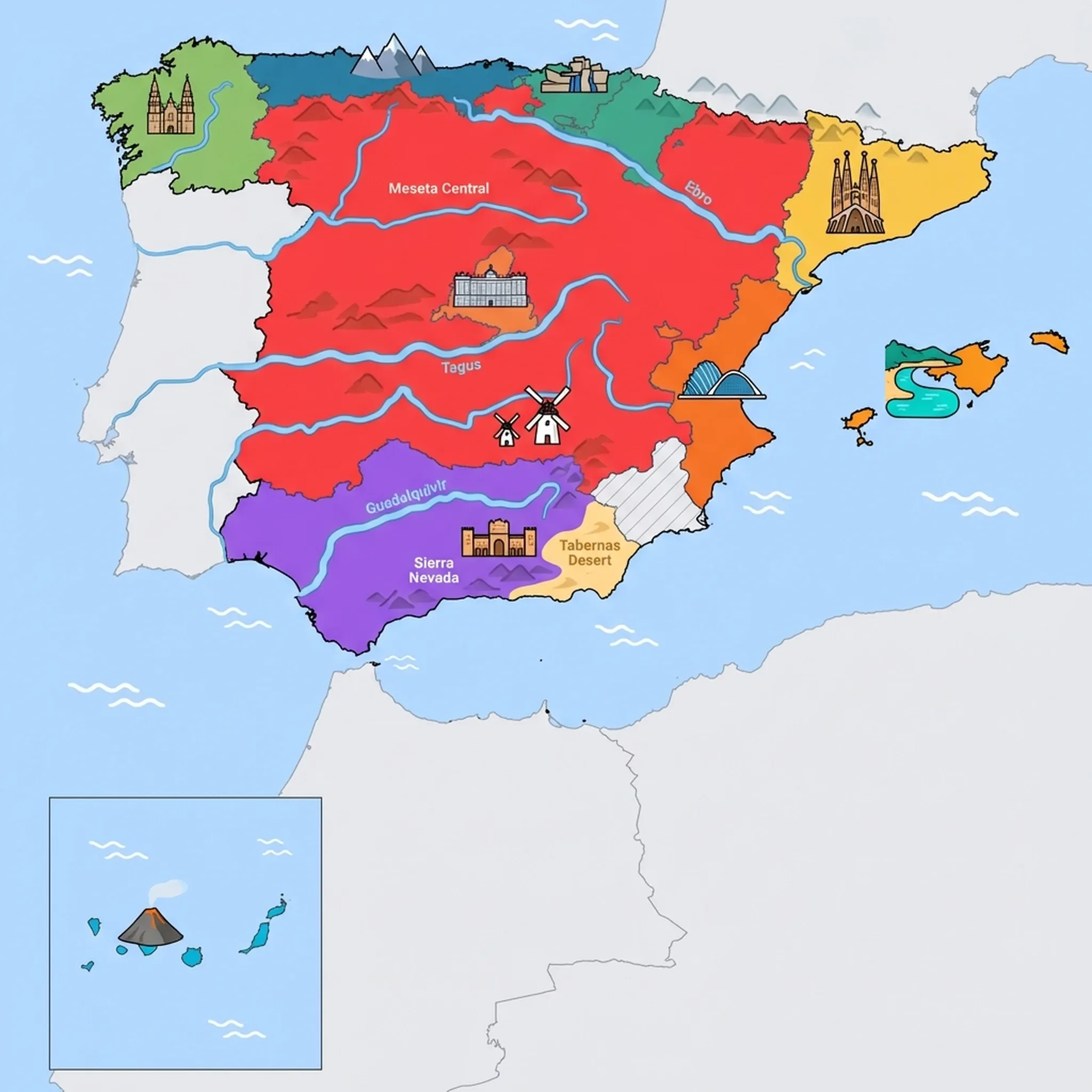
Click a region to explore
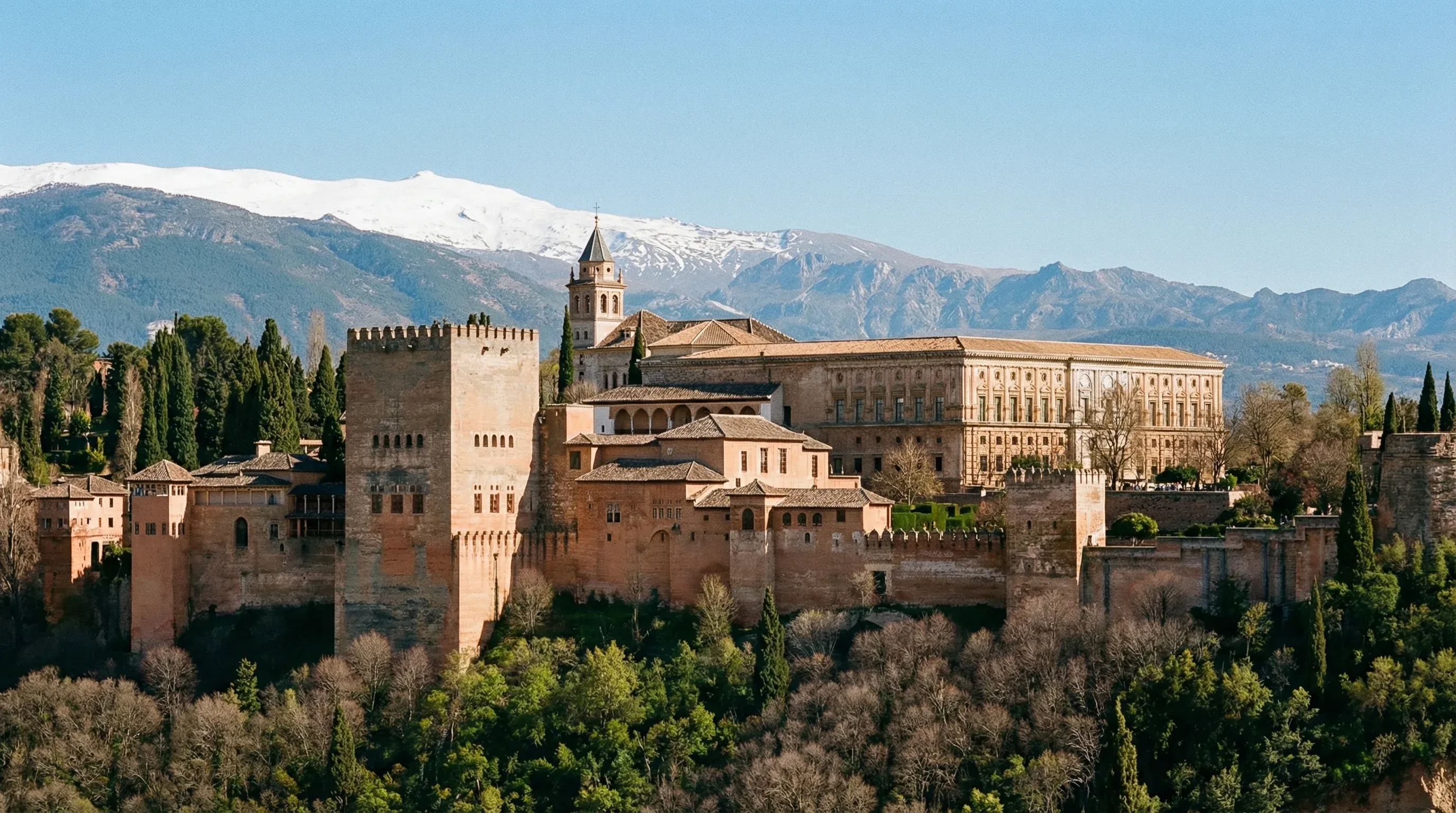
Andalusia is the soulful heart of Southern Spain, a region of dramatic contrasts that offers families a rich tapestry of experiences. From the snow-capped peaks of the Sierra Nevada to the golden sands of the Costa del Sol, the landscape is as varied as it is beautiful. For families, this region is a playground where history comes alive; children can run along the ramparts of ancient fortresses in the morning and build sandcastles on Mediterranean beaches by the afternoon. The culture here is incredibly family-centric, with children welcomed everywhere and squares filled with playing kids late into the evening. The climate is generally warm and sunny, with mild winters making it a year-round destination, though summer (July-August) can be fiercely hot inland.
Beyond the weather, it is the sensory richness of Andalusia that captivates young travelers. The scent of orange blossom in the streets of Seville, the clip-clop of horse-drawn carriages, and the rhythmic clapping of flamenco performances create an immersive atmosphere. Whether you are exploring the white-washed villages (Pueblos Blancos) perched on hilltops or navigating the winding alleys of old Jewish quarters, there is a sense of discovery around every corner. It is a region that rewards slow travel, allowing families to settle into the relaxed local rhythm where the afternoon siesta recharges everyone for lively evenings.
Key Attractions
Andalusia boasts some of Spain's most iconic sights, many of which are surprisingly accessible for children. The Real Alcázar of Seville is an absolute must-visit; this UNESCO World Heritage site is a real-life palace that looks like a movie set (and indeed, was used for Game of Thrones). Kids love getting lost in its sprawling gardens, finding hidden fountains, and chasing peacocks. It is far more engaging for younger ones than a typical museum.
For a mix of history and awe-inspiring architecture, the Mosque-Cathedral of Córdoba offers a visual feast with its endless forest of red-and-white candy-cane arches that captivate children's imaginations. Further south, the Nerja Caves provide a cool underground adventure, boasting the world's largest stalagmite—a geology lesson disguised as exploration. If your family needs a break from history, the Science Park (Parque de las Ciencias) in Granada is world-class, featuring interactive exhibits, a planetarium, and a BioDome that brings the rainforest to the city.
Practical Advice
Spring (April-June) and Autumn (September-October) are the ideal times to visit, avoiding the searing summer heat which can reach 40°C (104°F) in cities like Seville and Córdoba. If visiting in summer, stick to the coast or plan activities for early morning and late evening, utilizing the siesta hours for rest or pool time. Strollers can be challenging on the cobblestones of old towns, so a sturdy carrier is recommended for toddlers.
Food & Drink
Typical meal times: Lunch is late, typically 2:00 pm to 4:00 pm. Dinner is rarely served before 8:30 pm, with families often eating around 9:30 pm or 10:00 pm.
Typical meal costs: A family of four can expect to pay €50–80 (approx. $55–85 USD / £42–68 GBP) for a casual tapas dinner.
Dietary requirements: Vegetarian options like Salmorejo (without ham) and various cheeses are common. Gluten-free awareness is growing in cities, but cross-contamination in tapas bars can be a risk; always ask.
Signature dishes:
- Gazpacho – A cold tomato-based vegetable soup, perfect for hot days and generally liked by children for its smooth texture.
- Pescaíto Frito – Small fresh fish, battered and deep-fried until crispy, eaten with fingers like chips.
- Salmorejo – A thicker, creamier version of gazpacho from Córdoba, often topped with hard-boiled egg.
- Flamenquín – A pork loin roll filled with ham and cheese, breaded and fried—essentially a Spanish cordon bleu that kids adore.
Why this score?
While the Sierra Nevada offers high-altitude hiking and the Caminito del Rey provides thrills, the region is highly developed with extensive tourism infrastructure. Most adventure activities are managed and accessible to families without specialized equipment.
Why this score?
Major cities like Seville and Malaga offer high-quality public and private hospitals with experience treating international tourists. English-speaking staff are common in the coastal resorts of the Costa del Sol, though rural inland areas have more limited facilities.
Why this score?
Andalusia is a major international draw, anchored by the iconic Costa del Sol and the historic cities of Seville, Granada, and Cordoba. Millions of visitors arrive annually for the Alhambra and Mediterranean beaches, making it one of the most visited regions in Europe.

Andalusia offers excellent value compared to northern Europe. While accommodation in Seville or Marbella can be pricey, inland towns are very affordable. A mid-range family hotel room costs €80–150 (approx. $86–160 USD / £68–128 GBP) per night. Tapas are a budget-friendly way to eat, with plates costing €3–6 (approx. $3.25–6.50 USD / £2.50–5.00 GBP). Entry to monuments is reasonable, often free for young children.

Getting Here & Around
Getting Here
- Airports – Málaga-Costa del Sol Airport (AGP) is the main international hub with flights from across Europe. Seville (SVQ) also serves many international routes.
- Train – High-speed AVE trains connect Madrid to Mosque-Cathedral of Córdoba (Córdoba) in 1 hour 45 minutes and Seville in 2.5 hours.
- Driving – The A-4 highway connects Madrid to Andalusia, passing through the dramatic Despeñaperros gorge.
Getting Around
- Train – The Avant and MD train networks efficiently connect Seville, Córdoba, Cadiz, and Malaga.
- Car – Essential for exploring the White Villages or reaching the Caminito del Rey. Roads are generally excellent.
- Bus – ALSA buses are reliable and comfortable for inter-city travel where trains don't run.
Nearby Airports (5 airports)
Málaga Airport
AGPMalaga
Granada
GRXGranada
Almeria
LEIAlmeria
Seville Airport
SVQSevilla
Jerez
XRYJerez De La Frontera
View full flight map for Spain →
Official Links

Packing List
Essential for cooling down in queues and streets during warm months.
Mosquitoes can be aggressive near coastal wetlands and rivers in the evenings.
Polished cobblestones in old towns become incredibly slippery, even when dry.
Water heats up instantly in the Andalusian sun; keep hydration cool.
Essential for hot summers; many shops and older transport lack strong AC.
To secure drying swimsuits on breezy hotel balconies (lines provided, pegs rarely).
Cash is still king for small purchases like ice cream kiosks and street vendors.
Hard to find in city express stores; useful for wet swimmers and unfinished snacks.
Café breakfasts are sweet (pastries/toast); healthy 'kid food' is hard to find in mornings.
Street noise, late-night dining, and local festivals can be loud well into the night.

Activities & Best Times

Hiking, wildlife, outdoor exploration, ecotourism
Andalusia excels in nature tourism with the Sierra Nevada, Doñana, and iconic trails like the Caminito del Rey. Spring and autumn are peak for hiking to avoid the intense interior heat of July/August, though the high mountains remain accessible in summer.

Urban tourism, museums, historical sites, architecture
Home to world-class UNESCO sites like the Alhambra and Seville's Alcázar, the region offers unparalleled Moorish and Renaissance heritage. Spring and autumn provide the best walking weather, as summer temperatures in cities like Seville and Cordoba frequently exceed 40°C.

Events, celebrations, seasonal attractions
Semana Santa (UNESCO) and Feria de Abril are world-class festivals drawing massive international audiences. This is Spain's premier festival region and should be rated accordingly - 'marginal' is a severe under-rating.

Learning experiences, scientific sites, historical education
Features destination-level facilities like Granada's Science Park and several major aquariums that offer high-quality interactive learning. While indoor facilities are year-round, peak interest aligns with milder weather and primary school holiday windows.

Sport tourism, fitness activities, active recreation
With world-class cycling routes, high-altitude training in the Sierra Nevada, and climbing at Caminito del Rey, the region is a sports hub. Peak conditions for active pursuits occur during the moderate spring and autumn months to avoid extreme heat.

Amusement parks, family entertainment venues
Boasts significant family attractions including Isla Mágica and major water parks like Aqualand, which are a primary draw in summer. Many parks operate on restricted schedules or close during the cooler winter months.

Beach resorts, marine activities: diving, snorkelling, kite surfing, wind surfing, sailing
The Costa del Sol and Cadiz coast offer diverse beaches from sheltered Mediterranean coves to wild Atlantic shores like Bolonia. Summer months provide ideal water temperatures for swimming and active water sports, while winter is too cool for beach-focused tourism.

Spa retreats, wellness centers, peaceful getaways
The region is known for authentic Hammam (Arab bath) experiences and natural thermal springs like Santa Fe. These are best enjoyed during moderate temperatures; the extreme heat of summer and damp winter chill are less restorative.

Scenic drives, countryside tours, route-based travel
The Route of the White Villages (Pueblos Blancos) and the Alpujarras provide some of Europe's most scenic driving experiences. Spring flowers and autumn harvests offer the best visuals, while winter rain and summer heat can make driving less comfortable.

Winter sports, ski resorts, snow activities
Sierra Nevada is Europe's southernmost ski resort with high-altitude infrastructure and reliable snow. While not world-class, 'good' better reflects its legitimate ski infrastructure compared to 'marginal'.

Attractions (37 total)



Public Holidays & Calendar Next 12 months
Public holidays, festivals, cultural celebrations, and seasonal natural phenomena coming up in Andalusia over the next 12 months.
Loading holidays and events...

Travel Advisory
While Spain is a safe destination for most, half of the major advisory agencies recommend increased vigilance due to high rates of petty crime and a persistent domestic terrorism threat level.
Safety Topics
Traveller Advice (4 groups)

Spain has very progressive laws regarding sexual orientation and gender identity. Discrimination is rare in major cities, though standard discretion is advised in rural areas.

While generally safe, incidents of sexual assault occur; travellers are encouraged to stick with groups and avoid isolated areas after dark.

Accessibility is generally good in newer infrastructure and major cities, but historic districts may present mobility challenges due to cobblestone streets.

Keep copies of identification separate from originals. Be especially vigilant in high-traffic areas like Las Ramblas in Barcelona and the Madrid Metro where theft is common.
Agency Summaries
New Zealanders are advised to be more alert than usual due to the threat of terrorism and the high prevalence of petty theft targeting foreigners.
While general safety levels are high, tourists should maintain awareness regarding terrorism and the frequent occurrence of bag snatching in cities like Barcelona.
Visitors should take standard safety steps with a focus on protecting personal documents and being wary of pickpockets in crowded public spaces.
Most visits are trouble-free, though travellers should be aware of street crime, the general threat of terrorism, and seasonal environmental hazards like wildfires.
Canadians are advised to remain highly vigilant due to a sustained threat of terrorism. Petty crime remains a pervasive issue, particularly in urban tourist hubs.
Heightened caution is required primarily due to the ongoing risk of terrorist activity and occasional civil unrest in major metropolitan areas.
Information is provided for general guidance only and does not constitute travel, safety, medical, or legal advice. Conditions may change. Users are responsible for independently verifying information before travel.