
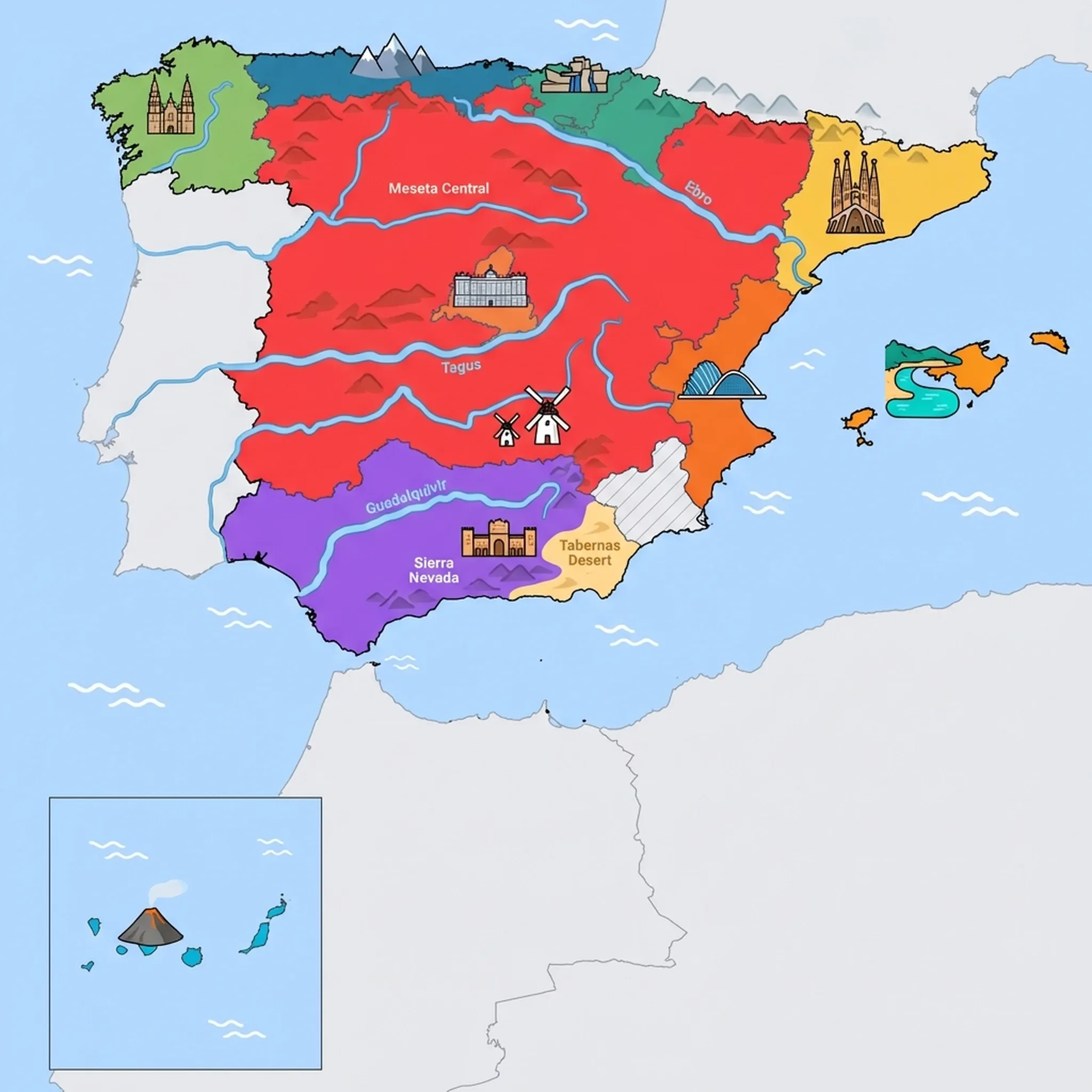
Click a region to explore
The Balearic Islands—Mallorca, Menorca, Ibiza, and Formentera—are often associated with summer nightlife, but for families, they are nothing short of paradise. Mallorca, the largest island, offers a diverse landscape ranging from the dramatic limestone peaks of the Serra de Tramuntana to sheltered, shallow coves ('calas') that are perfect for toddlers. Menorca is quieter and protected as a Biosphere Reserve, offering a more laid-back, nature-focused experience. Ibiza, while famous for clubs, has a surprisingly tranquil north with hippie markets and family-friendly agrotourism hotels. The islands share a distinctly Mediterranean pace of life where the sea is the center of daily activity.
What makes the Balearics special for children is the sheer accessibility of nature. You don't need to be an expert hiker to enjoy the pine forests or a professional diver to see fish in the crystal-clear waters. The infrastructure is highly developed for tourism, meaning medical facilities, supermarkets stocking baby supplies, and family-friendly restaurants are never far away. Yet, despite this convenience, it is easy to find 'wild' spots where you feel disconnected from the world. The islands have a rich history of pirates and knights that sparks children's imaginations, visible in the watchtowers dotting the coastline.
Key Attractions
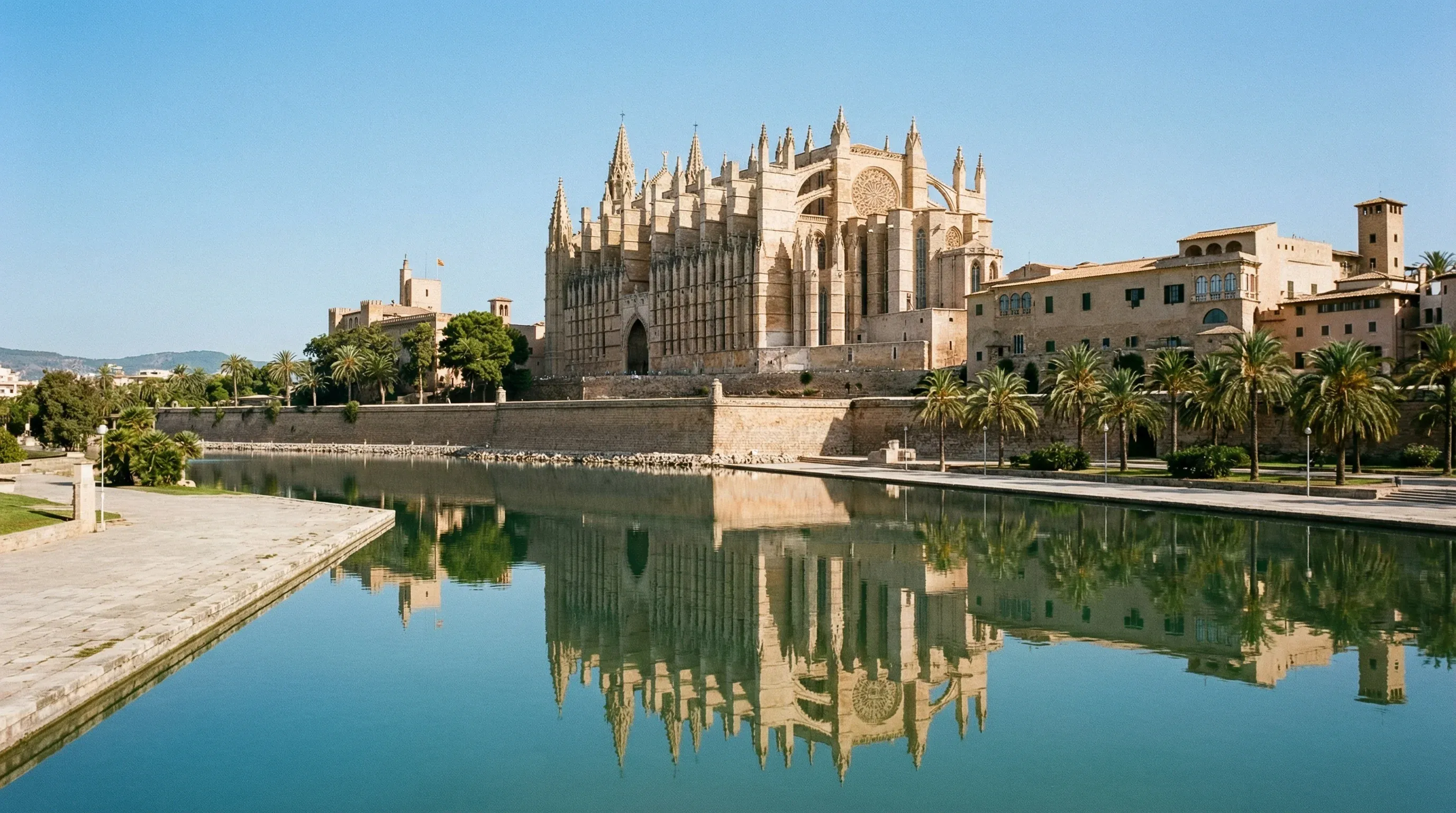
On Mallorca, the capital Palma is dominated by the massive Cathedral of Santa Maria of Palma (La Seu). Its sheer scale and the colorful light filtering through one of the world's largest rose windows are mesmerizing. Just outside the city, the circular Bellver Castle offers 360-degree views and a history museum that is easy for kids to digest, plus a surrounding forest perfect for a picnic.
For a true adventure, take a boat trip to the Cabrera Archipelago Maritime-Terrestrial National Park. This uninhabited island group feels like a deserted island expedition, with lizards scurrying across paths and untouched snorkeling spots. If you prefer staying on the main island, the Cuevas del Drach are a magical experience; the tour includes a classical music concert performed on a boat in an underground lake, which leaves children and adults alike in awe.
Practical Advice
The best time for families is June or September when the sea is warm but the crowds (and prices) are lower than in August. If renting a car—which is highly recommended—book months in advance as supply often runs out in peak season. Tap water is generally safe but can taste salty or mineral-heavy, so bottled water is often preferred for drinking.
Food & Drink
Typical meal times: Lunch 1:30 pm to 3:30 pm, Dinner 8:00 pm to 10:00 pm. Beach bars ('chiringuitos') often serve food all day.
Typical meal costs: A family meal runs €70–110 (approx. $75–120 USD / £60–95 GBP), slightly higher than mainland Spain due to import costs.
Dietary requirements: Very easy. Tourism has ensured a high availability of gluten-free, vegan, and allergen-aware menus, especially in Palma and major resorts.
Signature dishes:
- Ensaimada – A spiral-shaped, powdered sugar-dusted pastry made with lard (saïm). It’s the iconic breakfast or snack of Mallorca.
- Sobrassada – A soft, spreadable cured sausage seasoned with paprika, often eaten on toast with honey.
- Tumbet – A traditional vegetable dish similar to ratatouille, with layers of fried potatoes, aubergine, and red peppers in tomato sauce.
- Caldereta de Langosta – A rich lobster stew famous in Menorca (expensive but a local legend).
Why this score?
Adventure here is centered on coastal activities like sailing and exploring the Drach Caves, alongside hiking the Serra de Tramuntana. The islands are heavily developed, meaning true wilderness is limited and most outdoor areas are easily reached by car.
Why this score?
The islands feature a robust healthcare network, including modern private clinics in Palma and Ibiza Town that cater specifically to foreign residents and tourists. Emergency response is efficient, though services on smaller islands like Formentera are less comprehensive than on Mallorca or Ibiza city centers.
Why this score?
As a premier Mediterranean archipelago, Mallorca and Ibiza attract massive international crowds, particularly from Northern Europe. The region's tourism is highly concentrated in coastal resorts and historic Palma, maintaining consistently high visitor numbers year-round.

The Balearics are more expensive than mainland Spain. In July/August, accommodation prices skyrocket. Expect to pay €150–250 (approx. $160–270 USD / £128–215 GBP) per night for a family apartment. Car rental can be €50–80 (approx. $54–86 USD / £42–68 GBP) per day in peak season. Eating out ranges from €15 (approx. $16 USD / £13 GBP) for a 'menu del día' to very high prices in fashionable beach clubs.

Getting Here & Around
Getting Here
- Airports – Palma de Mallorca (PMI) is one of Europe's busiest holiday airports. Menorca (MAH) and Ibiza (IBZ) also have extensive international connections.
- Ferry – Ferries run from Barcelona, Valencia, and Denia to all major islands. The crossing from Denia to Ibiza takes as little as 2 hours.
Getting Around
- Car – Essential for reaching the best hidden beaches and the Cap de Formentor lighthouse.
- Train – The historic wooden train to Soller is a charming attraction, though not a primary transport mode.
- Bus – The TIB bus network on Mallorca is modern and efficient, connecting Palma to major resort towns.
Nearby Airports (3 airports)
Ibiza Airport
IBZIbiza
Menorca Airport
MAHMenorca
Palma De Mallorca Airport
PMIPalma de Mallorca
View full flight map for Spain →
Official Links

Packing List
Many coves are rocky or pebbled, and sea urchins can be present in rocky areas.
Crucial for protecting the fragile marine ecosystem in sheltered coves.
Roads in the Serra de Tramuntana and to northern beaches are extremely winding.
Rental prices add up; having your own means instant fun at any rocky cove.
Essential for hot summers; many shops and older transport lack strong AC.
To secure drying swimsuits on breezy hotel balconies (lines provided, pegs rarely).
Cash is still king for small purchases like ice cream kiosks and street vendors.
Hard to find in city express stores; useful for wet swimmers and unfinished snacks.
Café breakfasts are sweet (pastries/toast); healthy 'kid food' is hard to find in mornings.
Street noise, late-night dining, and local festivals can be loud well into the night.

Activities & Best Times

Hiking, wildlife, outdoor exploration, ecotourism
The Serra de Tramuntana and rural agrotourism offer sophisticated nature immersion and farm-to-table experiences for families. Spring and autumn provide the best temperatures for hiking and wildlife spotting, avoiding the intense mid-summer heat and winter rains.

Urban tourism, museums, historical sites, architecture
Palma is a sophisticated cultural hub featuring major galleries like Es Baluard and historic sites such as the Royal Palace of La Almudaina. Visiting during transitional seasons allows for comfortable exploration of the city's heritage without the overcrowding and heat of the peak beach season.

Sport tourism, fitness activities, active recreation
The region is an international hub for cycling and hiking, with world-class routes like the GR 221 Dry Stone Route. The moderate temperatures of spring and autumn are the peak periods for active sports tourists, avoiding the dangerous heat of the Balearic summer.

Amusement parks, family entertainment venues
Highly-rated family venues like Katmandu Park and Western Park offer internationally competitive entertainment for children. These facilities are strictly seasonal, providing peak enjoyment during the primary school summer holidays when water parks and outdoor attractions are fully operational.

Beach resorts, marine activities: diving, snorkelling, kite surfing, wind surfing, sailing
Crystal-clear sheltered coves (calas) like Cala Macarella and Platja de Ses Illetes offer world-class Mediterranean swimming conditions. Peak summer provides optimal water temperatures and calm seas, while the islands' beach infrastructure largely closes during the cool winter months.

Learning experiences, scientific sites, historical education
Significant marine and natural science facilities like the Palma Aquarium and the Mallorca Planetarium provide high-quality educational engagement. Access and programming are most consistent during the primary tourism season from spring through late autumn.

Scenic drives, countryside tours, route-based travel
Spectacular mountain routes such as the Ma-10 and Sa Calobra offer world-class driving through UNESCO-listed landscapes. Peak driving months provide the best visibility and conditions, whereas July and August can suffer from extreme traffic congestion on narrow mountain roads.

Events, celebrations, seasonal attractions
Ibiza's iconic opening and closing events are world-famous cultural markers, though primarily adult-focused. These windows capture the islands' unique atmosphere and seasonal energy before the significant winter wind-down when many venues close.

Spa retreats, wellness centers, peaceful getaways
Historic sites like the Arab Baths and high-end hotel spas offer relaxation, though the region lacks the dedicated wellness identity of global benchmarks. Wellness visits are most rewarding during the quieter, cooler months when the focus shifts away from mass-market coastal tourism.

Attractions (32 total)



Public Holidays & Calendar Next 12 months
Public holidays, festivals, cultural celebrations, and seasonal natural phenomena coming up in Balearic Islands over the next 12 months.
Loading holidays and events...

Travel Advisory
While Spain is a safe destination for most, half of the major advisory agencies recommend increased vigilance due to high rates of petty crime and a persistent domestic terrorism threat level.
Safety Topics
Traveller Advice (4 groups)

Spain has very progressive laws regarding sexual orientation and gender identity. Discrimination is rare in major cities, though standard discretion is advised in rural areas.

While generally safe, incidents of sexual assault occur; travellers are encouraged to stick with groups and avoid isolated areas after dark.

Accessibility is generally good in newer infrastructure and major cities, but historic districts may present mobility challenges due to cobblestone streets.

Keep copies of identification separate from originals. Be especially vigilant in high-traffic areas like Las Ramblas in Barcelona and the Madrid Metro where theft is common.
Agency Summaries
New Zealanders are advised to be more alert than usual due to the threat of terrorism and the high prevalence of petty theft targeting foreigners.
While general safety levels are high, tourists should maintain awareness regarding terrorism and the frequent occurrence of bag snatching in cities like Barcelona.
Visitors should take standard safety steps with a focus on protecting personal documents and being wary of pickpockets in crowded public spaces.
Most visits are trouble-free, though travellers should be aware of street crime, the general threat of terrorism, and seasonal environmental hazards like wildfires.
Canadians are advised to remain highly vigilant due to a sustained threat of terrorism. Petty crime remains a pervasive issue, particularly in urban tourist hubs.
Heightened caution is required primarily due to the ongoing risk of terrorist activity and occasional civil unrest in major metropolitan areas.
Information is provided for general guidance only and does not constitute travel, safety, medical, or legal advice. Conditions may change. Users are responsible for independently verifying information before travel.