
Basque Country
Ancient culture and avant-garde art by the sea 🌊🎨
Click a region to explore
The Basque Country (Euskadi) is unlike anywhere else in Spain. It is a land defined by its emerald green landscapes, misty mountains, and the wild Bay of Biscay. The region prides itself on its distinct language, Euskera, which predates Latin languages and adds a layer of mystery to every signpost. For families, the Basque Country offers a sophisticated yet grounded experience. The cities are modern, safe, and walkable, filled with parks and avant-garde architecture, while the countryside is dotted with traditional farmhouses (baserri) and sheep grazing on steep slopes.
The coast is a major draw, offering surf schools for older kids and protected bays for younger ones. The food culture here is legendary—possibly the best in the world per capita—and while it is famous for Michelin stars, the casual 'pintxo' (tapas) culture is fun for adventurous kids who enjoy picking small snacks from a counter. The climate is temperate and rainy, similar to Ireland or Oregon, which keeps the scenery lush but means you can't always count on beach weather. It is a region for active families who enjoy hiking, surfing, and exploring cultural identity.
Key Attractions
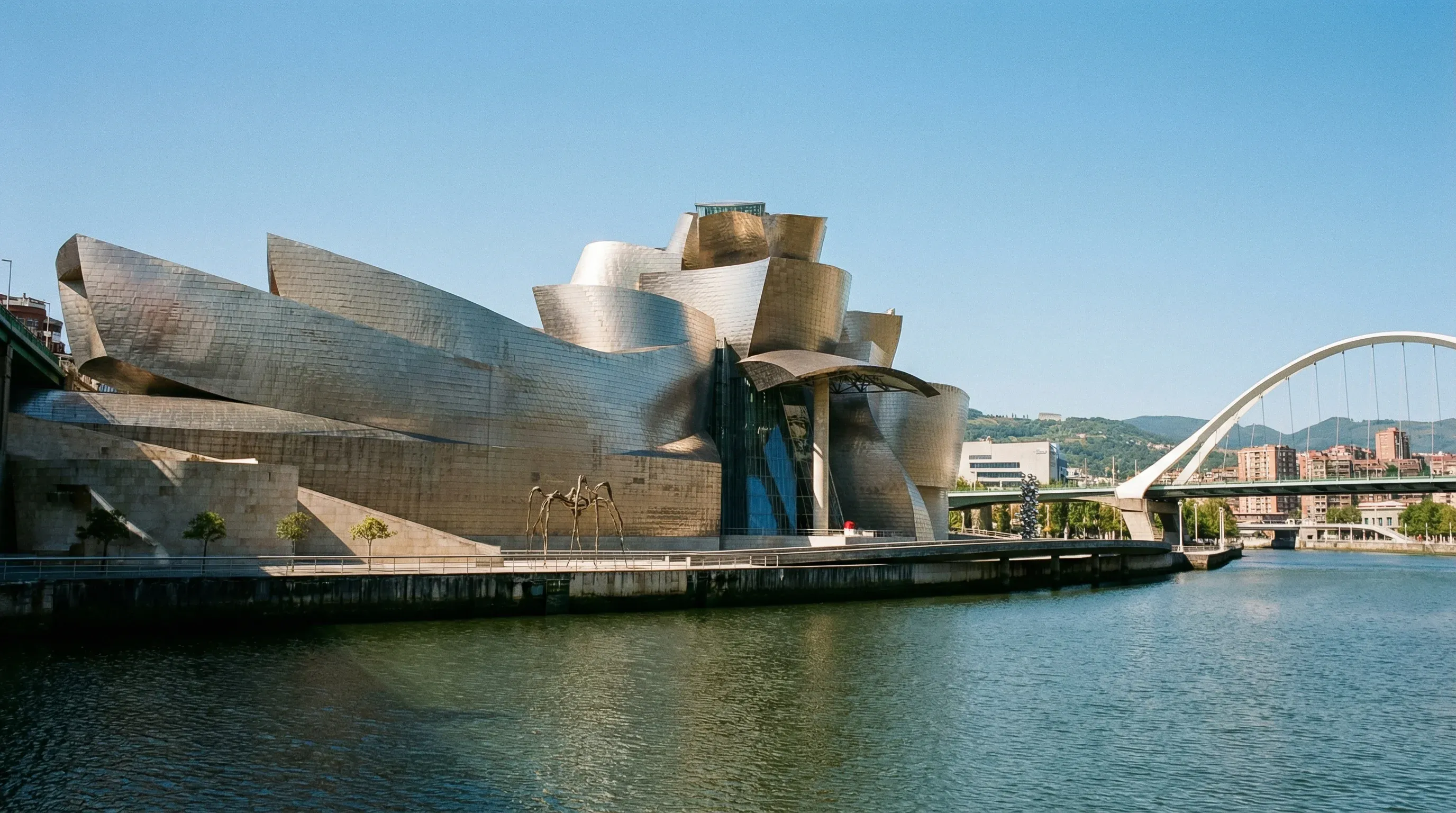
Bilbao's transformation is symbolized by the Guggenheim Museum Bilbao. While the art inside is contemporary, the building itself—a giant titanium ship/flower—is a playground for the imagination. Outside, 'Puppy', a giant floral dog sculpture by Jeff Koons, is an instant hit with every child. Nearby, the Itsasmuseum Bilbao (Maritime Museum) allows kids to explore the city's shipbuilding past with outdoor dry docks and interactive exhibits.
For a Game of Thrones connection, active families must visit San Juan de Gaztelugatxe. This hermitage sits atop a rocky islet connected by a winding stone bridge; the climb is steep but the adventure feels epic. In San Sebastián, La Concha Beach is frequently voted one of Europe's best city beaches—its calm, shell-shaped bay is safe for swimming and offers elegant views. Nature lovers should head to the Basque Coast UNESCO Global Geopark to see the 'flysch' rock formations, which look like dragon scales stretching into the sea.
Practical Advice
Rain is frequent year-round, so rain gear is non-negotiable. Summers are mild (20-25°C / 68-77°F), making it a great escape from the scorching heat of southern Spain. Public transport is excellent, with the 'Barik' card usable across mostly all transport modes in Biscay.
Food & Drink
Typical meal times: Similar to the rest of Spain, but pintxo bars are open all day/evening for grazing.
Typical meal costs: Pintxos cost €2.50–4.50 (approx. $2.70–4.80 USD / £2.15–3.80 GBP) each. It adds up! A sit-down meal is €70–120 (approx. $75–130 USD / £60–100 GBP) for a family.
Dietary requirements: Seafood and dairy are staples. Vegetarian options are available but can be limited in traditional cider houses. Gluten-free awareness is generally good.
Signature dishes:
- Pintxos – Small snacks served on bread, lined up on bar counters. The 'Gilda' (olive, pepper, anchovy) is the most iconic.
- Marmitako – A tuna and potato stew, hearty and mild, perfect for children.
- Txuleta – Huge, high-quality aged beef steak, usually shared by the whole table.
- Pastel Vasco – A crunchy, buttery cake filled with pastry cream or black cherry jam.
Why this score?
The rugged Bay of Biscay coastline and the green, hilly interior offer more untamed landscapes than the Mediterranean south. Families can engage in surfing or hike coastal cliffs like the Zumaia Flysch, which feel more wild and physically demanding.
Why this score?
The Basque Country boasts some of the highest-rated healthcare outcomes in Spain, with modern facilities in Bilbao and San Sebastián. Medical staff are highly trained and the system is very efficient, though English proficiency may be slightly lower than in Barcelona or Madrid's main hubs.
Why this score?
The region has seen a significant rise in international fame due to San Sebastián's culinary reputation and the Guggenheim Museum in Bilbao. While it receives fewer raw visitors than the southern coasts, it is a well-known destination for luxury and cultural tourism.

The Basque Country is one of the wealthiest and most expensive regions in Spain. Accommodation is pricey, with family rooms often exceeding €150 (approx. $160 USD / £128 GBP). However, the quality of infrastructure, food, and public spaces is exceptionally high, providing good value for money. Museums and transport are reasonably priced.

Getting Here & Around
Getting Here
- Airports – Bilbao Airport (BIO) is the main hub with a distinct design by Calatrava. San Sebastián (EAS) has fewer connections.
- Train – Connected to Madrid and Barcelona via Alvia trains. A scenic narrow-gauge train (Euskotren) connects Bilbao and San Sebastián.
- Driving – The A-8 highway along the coast offers stunning views but is twisty and prone to congestion in summer.
Getting Around
- Public Transport – The Euskotren is efficient and scenic. Bilbao has a modern metro designed by Norman Foster.
- Walking – Cities like Bilbao and San Sebastián are very walkable.
- Car – Useful for reaching rural farmhouses or the Gorbeia Natural Park.
Nearby Airports (3 airports)
Bilbao Airport
BIOBilbao
San Sebastian
EASSan Sebastian
Vitoria Airport
VITVitoria
View full flight map for Spain →
Official Links

Packing List
Rain (siri-miri) is frequent even in summer; locals carry umbrellas everywhere.
Trails can be muddy and steep, even short coastal walks.
Tap water is excellent quality and fountains are abundant in towns.
Water temperature is cool (20°C/68°F max), even in summer.
Essential for hot summers; many shops and older transport lack strong AC.
To secure drying swimsuits on breezy hotel balconies (lines provided, pegs rarely).
Cash is still king for small purchases like ice cream kiosks and street vendors.
Hard to find in city express stores; useful for wet swimmers and unfinished snacks.
Café breakfasts are sweet (pastries/toast); healthy 'kid food' is hard to find in mornings.
Street noise, late-night dining, and local festivals can be loud well into the night.

Activities & Best Times

Hiking, wildlife, outdoor exploration, ecotourism
Features diverse landscapes including the UNESCO Flysch cliffs and the Urdaibai Biosphere Reserve. Late spring and early autumn provide ideal trekking conditions, while the winter months are characterized by heavy rainfall that can make trails inaccessible.

Urban tourism, museums, historical sites, architecture
A global leader in gastronomy and art, anchored by the Guggenheim Bilbao and the vibrant old town of San Sebastián. Summer and the surrounding months offer the best atmosphere for street life, though heavy winter rains impact the urban experience.

Sport tourism, fitness activities, active recreation
A premier destination for surfing at Zarautz and Mundaka, as well as internationally recognized cycling and hiking routes. Active tourism thrives in the brighter, drier months from May to September.

Beach resorts, marine activities: diving, snorkelling, kite surfing, wind surfing, sailing
Home to iconic beaches like La Concha and Zarautz, offering high-quality amenities and scenic coastal views. The Atlantic waters are coolest and rainiest outside the mid-summer peak, limiting the window for traditional beach tourism.

Learning experiences, scientific sites, historical education
High-quality facilities like the San Sebastián Aquarium and Eureka! Zientzia Museoa provide significant educational value for families. Visitation peaks during summer school holidays, though indoor facilities remain viable in shoulder months.

Events, celebrations, seasonal attractions
San Sebastián Film Festival is an A-list international event (alongside Cannes, Venice, Berlin). BBK Live is also significant. 'Good' is more appropriate than 'marginal'.

Scenic drives, countryside tours, route-based travel
Offers spectacular driving along the Basque Coastal Road and through the Rioja Alavesa vineyards. Best visibility and road conditions are found from late spring through autumn, avoiding the frequent fog and heavy rain of winter.
Amusement parks, family entertainment venues
The historic Monte Igueldo Amusement Park offers unique vintage charm with world-class views, supplemented by regional water parks. These facilities are primarily seasonal, operating during the warmer summer months.

Attractions (29 total)



Public Holidays & Calendar Next 12 months
Public holidays, festivals, cultural celebrations, and seasonal natural phenomena coming up in Basque Country over the next 12 months.
Loading holidays and events...

Travel Advisory
While Spain is a safe destination for most, half of the major advisory agencies recommend increased vigilance due to high rates of petty crime and a persistent domestic terrorism threat level.
Safety Topics
Traveller Advice (4 groups)

Spain has very progressive laws regarding sexual orientation and gender identity. Discrimination is rare in major cities, though standard discretion is advised in rural areas.

While generally safe, incidents of sexual assault occur; travellers are encouraged to stick with groups and avoid isolated areas after dark.

Accessibility is generally good in newer infrastructure and major cities, but historic districts may present mobility challenges due to cobblestone streets.

Keep copies of identification separate from originals. Be especially vigilant in high-traffic areas like Las Ramblas in Barcelona and the Madrid Metro where theft is common.
Agency Summaries
New Zealanders are advised to be more alert than usual due to the threat of terrorism and the high prevalence of petty theft targeting foreigners.
While general safety levels are high, tourists should maintain awareness regarding terrorism and the frequent occurrence of bag snatching in cities like Barcelona.
Visitors should take standard safety steps with a focus on protecting personal documents and being wary of pickpockets in crowded public spaces.
Most visits are trouble-free, though travellers should be aware of street crime, the general threat of terrorism, and seasonal environmental hazards like wildfires.
Canadians are advised to remain highly vigilant due to a sustained threat of terrorism. Petty crime remains a pervasive issue, particularly in urban tourist hubs.
Heightened caution is required primarily due to the ongoing risk of terrorist activity and occasional civil unrest in major metropolitan areas.
Information is provided for general guidance only and does not constitute travel, safety, medical, or legal advice. Conditions may change. Users are responsible for independently verifying information before travel.