
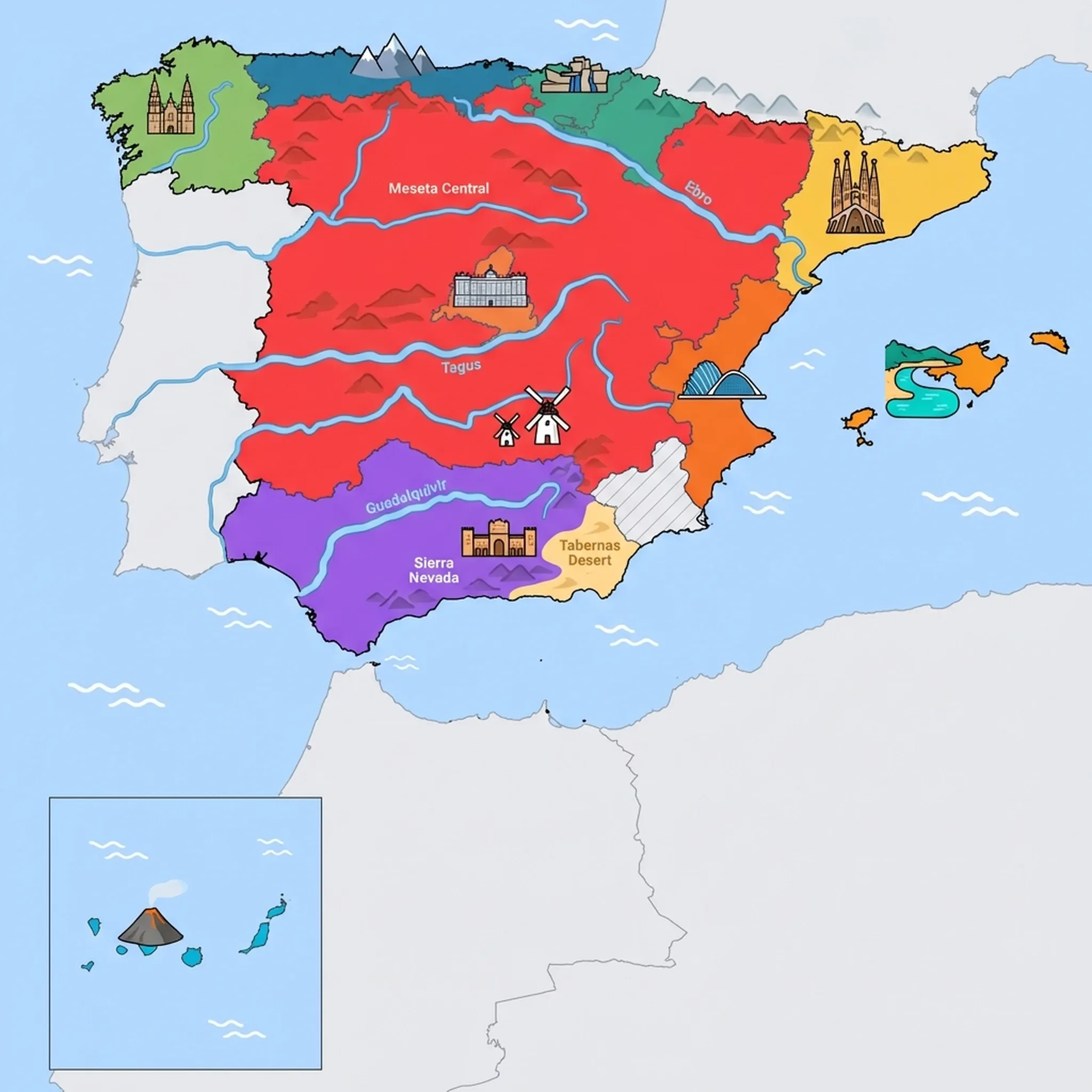
Click a region to explore
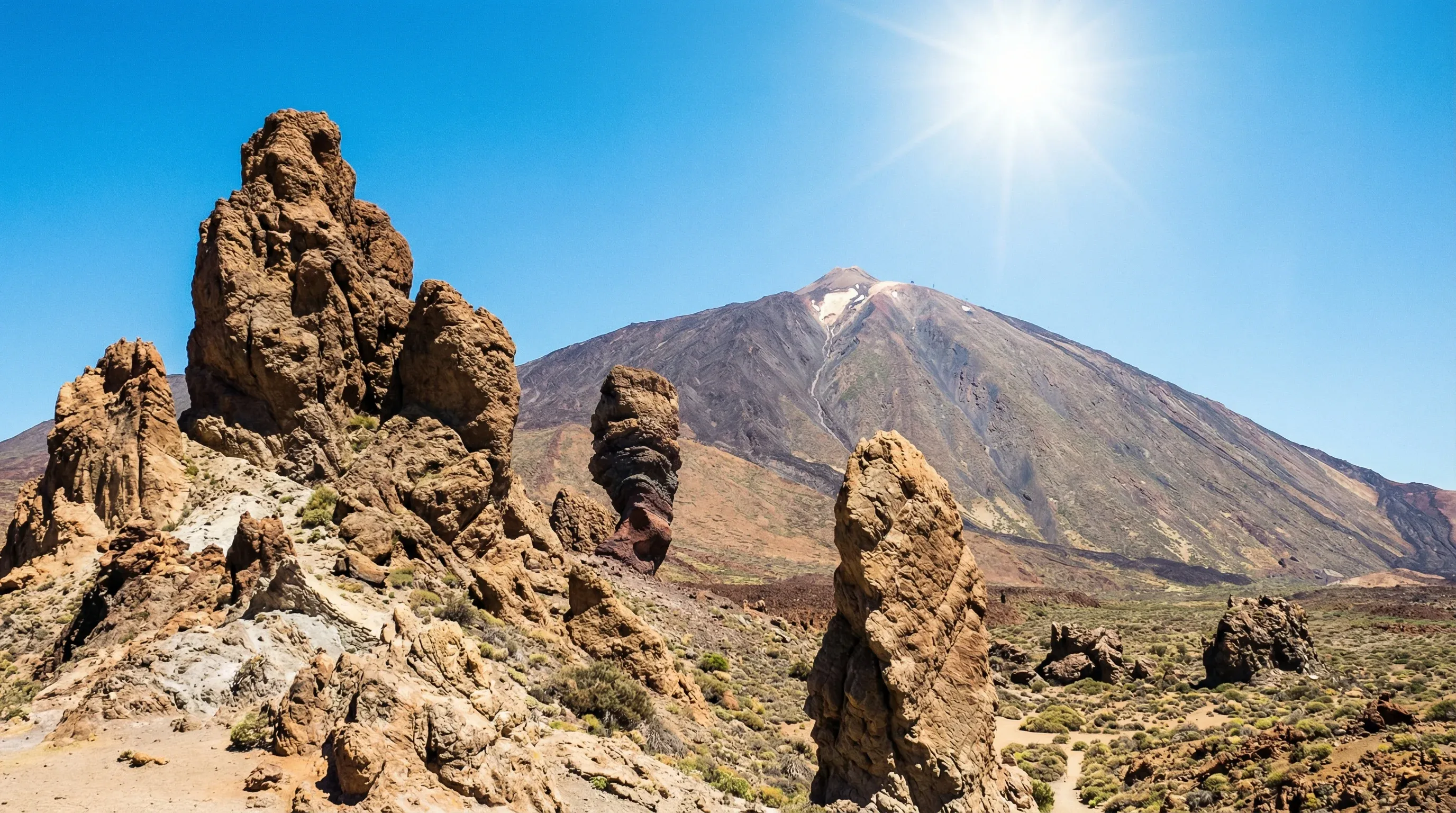
Geographically African but culturally Spanish, the Canary Islands offer a unique subtropical environment just a few hours' flight from mainland Europe. Known as the 'Islands of Eternal Spring,' they boast a climate that rarely drops below 18°C (64°F) or exceeds 30°C (86°F), making them the ultimate year-round family destination. The landscape is incredibly diverse: Tenerife is dominated by Spain's highest peak (Mount Teide); Gran Canaria is a 'miniature continent' with deserts and mountains; Lanzarote looks like Mars with its black lava fields; and Fuerteventura is lined with endless white beaches.
Families love the Canaries because they combine exotic landscapes with European safety and infrastructure. You can hike through a laurel forest that dates back to the Tertiary period in the morning and build sandcastles on a safe, lifeguard-patrolled beach in the afternoon. The islands are heavily geared towards tourism, meaning there is no shortage of theme parks, water parks, and family-friendly hotels with kids' clubs. However, stepping just a few miles away from the resorts reveals charming colonial towns, banana plantations, and stargazing spots that are among the best in the world.
Key Attractions
On Tenerife, Loro Parque is consistently voted one of the best zoos in the world, famous for its parrot conservation and massive aquatic exhibits that educate kids about ocean preservation. Nearby, the Lago Martianez is a stunning complex of saltwater swimming pools designed by artist César Manrique, offering a safe and beautiful alternative to the open ocean.
Gran Canaria boasts the spectacular Dunas de Maspalomas, a rolling desert of sand dunes by the sea where families can walk (or roll) down the sandy hills—a tiring but hilarious activity for kids. In Lanzarote, Jameos del Agua is a must-see: a volcanic tunnel transformed into an art, culture, and tourism center featuring an underground lake inhabited by tiny, blind albino crabs found nowhere else on earth. It’s a magical place that feels like a secret lair.
Practical Advice
Sun protection is critical here; the UV index is very high even on cloudy days due to the location near the equator. The 'Calima' (sandstorm from the Sahara) can occasionally reduce visibility and air quality. Tap water is desalinated and safe to drink but often tastes bad, so most locals drink bottled water.
Food & Drink
Typical meal times: Geared towards tourists in resorts (12:00 pm lunch, 6:00 pm dinner), but traditional times (2:00 pm lunch, 9:00 pm dinner) apply in local towns.
Typical meal costs: Very affordable. A family meal can cost €50–80 (approx. $54–86 USD / £42–68 GBP). Alcohol and tobacco are duty-free and cheap.
Dietary requirements: Generally good in tourist hubs. Gluten-free options are common in supermarkets.
Signature dishes:
- Papas arrugadas con mojo – Small potatoes boiled in very salty water until wrinkled, served with red (spicy) or green (coriander) sauce. Kids love them.
- Gofio – A toasted flour made from cereals, used in everything from breakfast milk to desserts.
- Queso asado – Grilled local goat cheese, often served with mojo sauce and honey.
- Sancocho – A traditional boiled fish dish with sweet potato and gofio, simple and nutritious.
Why this score?
The volcanic terrain of Tenerife and Lanzarote provides a unique and somewhat rugged backdrop for hiking and exploration. While resorts are highly developed, the dramatic verticality of the islands and the wind-swept dunes of Fuerteventura offer a genuine sense of outdoor adventure.
Why this score?
Due to the high volume of elderly European tourists and residents, the healthcare infrastructure is very well-adapted to foreigners. Hospitals in Tenerife and Gran Canaria are modern and frequently deal with international insurance and multi-language patient needs.
Why this score?
Functioning as a year-round 'eternal spring' destination, the islands attract millions of visitors seeking sun during the European winter. Major attractions like Teide National Park and Siam Park make it a staple for international family vacations.

The Canaries have a special tax status (low VAT), making dining, car rental, and fuel significantly cheaper than mainland Europe. A week's car hire can be as low as €150 (approx. $160 USD / £128 GBP). Accommodation varies wildly from budget apartments to luxury resorts, but generally, your money goes further here. A coffee is often under €1.50 (approx. $1.60 USD / £1.30 GBP).

Getting Here & Around
Getting Here
- Airports – Tenerife South (TFS) and Gran Canaria (LPA) have huge international connectivity. Lanzarote (ACE) and Fuerteventura (FUE) are also well-connected.
- Ferry – Inter-island ferries (Fred Olsen, Naviera Armas) are fast and fun, often allowing cars.
Getting Around
- Car – Highly recommended to escape the resorts and see the real island landscapes like Caldera de Taburiente National Park. Petrol is cheaper than on the mainland.
- Bus – 'Guaguas' (local buses) are reliable and cheap on the main islands.
Nearby Airports (5 airports)
Lanzarote Airport
ACELanzarote
Fuerteventura Airport
FUEPuerto del Rosario
Gran Canaria Airport
LPALas Palmas
Tenerife North
TFNTenerife
Tenerife South Airport
TFSTenerife
View full flight map for Spain →
Official Links

Packing List
UV index is extreme (often 11+) due to latitude; burn time is very short.
Essential for visiting Mt Teide or inland mountains where temps drop near freezing.
Car hire is the best and cheapest way to see the islands; don't get stuck in resorts.
Salt content in the Atlantic is high and can sting eyes; essential for kids.
Essential for hot summers; many shops and older transport lack strong AC.
To secure drying swimsuits on breezy hotel balconies (lines provided, pegs rarely).
Cash is still king for small purchases like ice cream kiosks and street vendors.
Hard to find in city express stores; useful for wet swimmers and unfinished snacks.
Café breakfasts are sweet (pastries/toast); healthy 'kid food' is hard to find in mornings.
Street noise, late-night dining, and local festivals can be loud well into the night.

Activities & Best Times

Hiking, wildlife, outdoor exploration, ecotourism
Home to three distinct National Parks including the world-class Teide and Timanfaya, offering unique volcanic landscapes and laurel forests. Spring and autumn provide optimal mild temperatures for strenuous trekking and exploration.

Urban tourism, museums, historical sites, architecture
Authentic UNESCO heritage sites like La Laguna and historic districts like Vegueta offer sophisticated urban culture. The experience is best during the mild months, while summer heat can make urban walking less comfortable.

Learning experiences, scientific sites, historical education
World-class facilities such as the Museum of Science and the Cosmos and major aquariums provide deep engagement for curious families. These indoor venues are accessible year-round but see peak attendance during vacation periods.

Events, celebrations, seasonal attractions
Carnival of Santa Cruz de Tenerife is UNESCO-recognized and the 2nd largest carnival globally after Rio. This is not a 'marginal' festival destination - it's internationally significant.

Sport tourism, fitness activities, active recreation
Outstanding infrastructure for high-altitude hiking and specialized adventure parks like Forestal Park. Peak months offer the stable, clear conditions required for technical ascents and outdoor activity centers.

Amusement parks, family entertainment venues
Features Siam Park and Loro Parque, which are globally recognized as top-tier family entertainment venues. Peak months correlate with international school holiday windows and warmer weather suitable for water parks.

Beach resorts, marine activities: diving, snorkelling, kite surfing, wind surfing, sailing
Diverse volcanic and golden sand beaches like Maspalomas and Las Teresitas offer year-round appeal. Peak demand aligns with European summer and the popular winter sun season in December and January.

Scenic drives, countryside tours, route-based travel
Dramatic scenic drives like the Masca road and the Teide TF-21 offer spectacular volcanic vistas. Winter brings visibility-limiting clouds to mountain passes, while peak summer traffic can make narrow mountain roads challenging.

Attractions (44 total)



Public Holidays & Calendar Next 12 months
Public holidays, festivals, cultural celebrations, and seasonal natural phenomena coming up in Canary Islands over the next 12 months.
Loading holidays and events...

Travel Advisory
While Spain is a safe destination for most, half of the major advisory agencies recommend increased vigilance due to high rates of petty crime and a persistent domestic terrorism threat level.
Safety Topics
Traveller Advice (4 groups)

Spain has very progressive laws regarding sexual orientation and gender identity. Discrimination is rare in major cities, though standard discretion is advised in rural areas.

While generally safe, incidents of sexual assault occur; travellers are encouraged to stick with groups and avoid isolated areas after dark.

Accessibility is generally good in newer infrastructure and major cities, but historic districts may present mobility challenges due to cobblestone streets.

Keep copies of identification separate from originals. Be especially vigilant in high-traffic areas like Las Ramblas in Barcelona and the Madrid Metro where theft is common.
Agency Summaries
New Zealanders are advised to be more alert than usual due to the threat of terrorism and the high prevalence of petty theft targeting foreigners.
While general safety levels are high, tourists should maintain awareness regarding terrorism and the frequent occurrence of bag snatching in cities like Barcelona.
Visitors should take standard safety steps with a focus on protecting personal documents and being wary of pickpockets in crowded public spaces.
Most visits are trouble-free, though travellers should be aware of street crime, the general threat of terrorism, and seasonal environmental hazards like wildfires.
Canadians are advised to remain highly vigilant due to a sustained threat of terrorism. Petty crime remains a pervasive issue, particularly in urban tourist hubs.
Heightened caution is required primarily due to the ongoing risk of terrorist activity and occasional civil unrest in major metropolitan areas.
Information is provided for general guidance only and does not constitute travel, safety, medical, or legal advice. Conditions may change. Users are responsible for independently verifying information before travel.