
Castile & Central Spain
Land of castles, knights, and legends 🏰⚔️
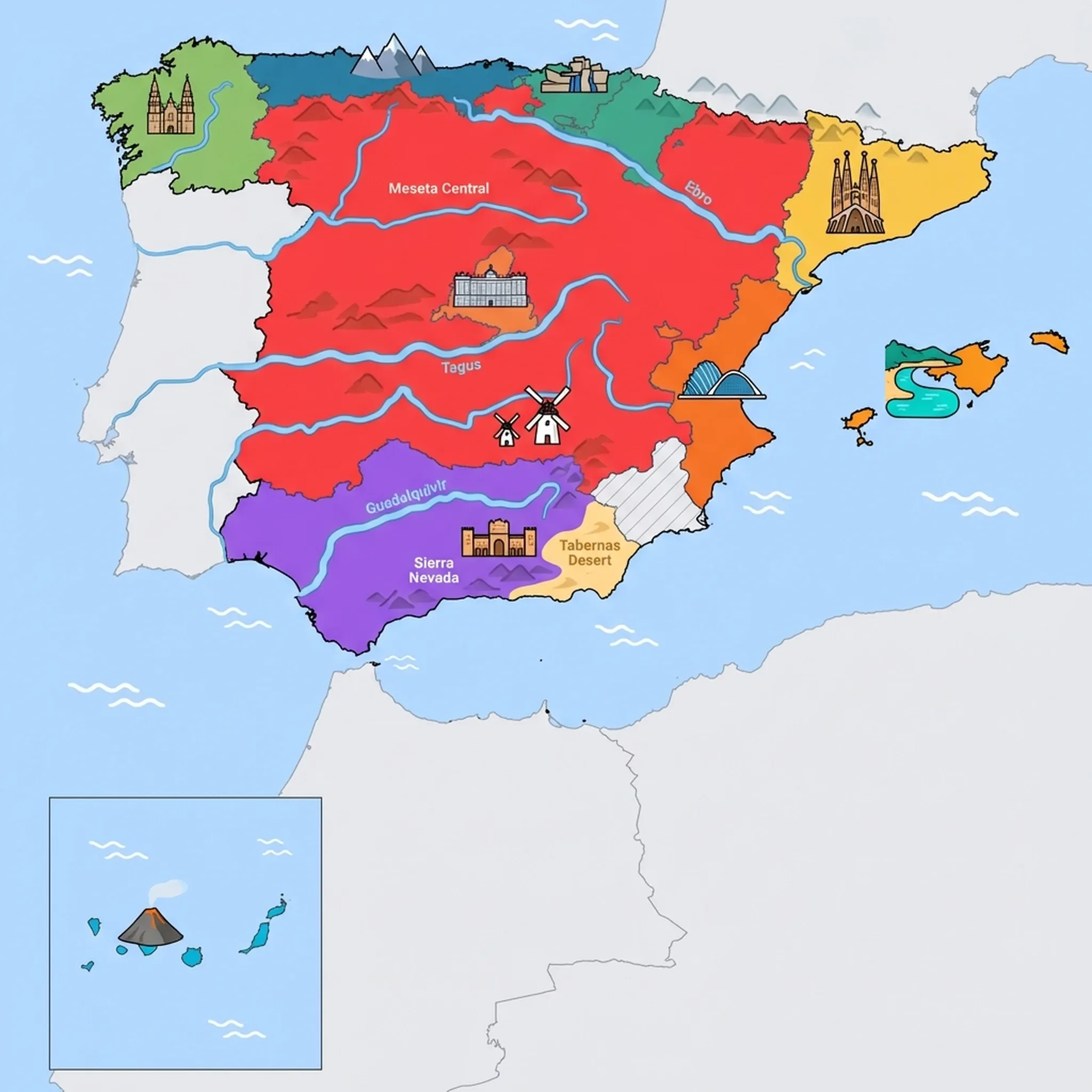
Click a region to explore
Surrounding Madrid lies the vast, high plateau of Central Spain (Meseta Central), the historic heartland of the country. This is the land of Don Quixote, characterized by golden wheat fields, medieval walled cities, and imposing castles (alcázares) that dot the horizon. For families, this region offers a deeply immersive dive into history without the overwhelming crowds of the coast. The cities here—Segovia, Ávila, Toledo, Salamanca—are UNESCO World Heritage sites that feel like open-air museums. They are compact, walkable, and packed with visual wonders that capture children's imaginations, from Roman engineering to medieval fortifications.
Beyond the cities, the landscape is starkly beautiful and vast. It allows for epic family road trips where you can drive for miles on empty roads, spotting birds of prey and stopping in sleepy villages where time seems to have stood still. The region is also home to surprising natural features, such as the wetlands of Tablas de Daimiel and the enchanted forest vibe of Faunia. The climate is continental: cold winters (often with snow) and hot, dry summers, with cool evenings that are perfect for strolling around illuminated plazas.
Key Attractions
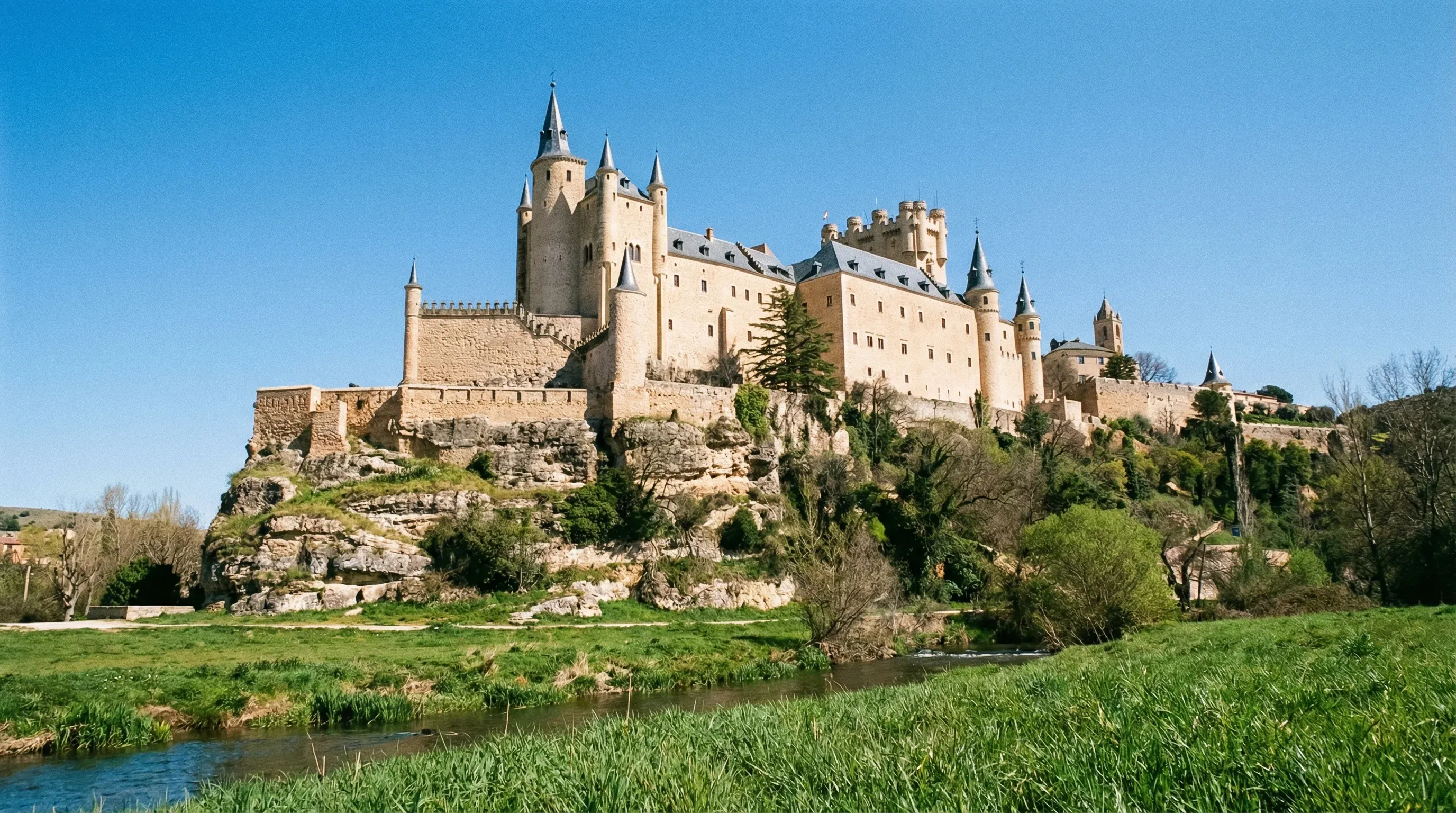
Segovia is a superstar for families. The Aqueduct of Segovia is a Roman engineering miracle that leaves kids questioning "how did they build that without glue?". Nearby, the Alcázar of Segovia, with its slate spires and deep moat, is said to be an inspiration for Disney's Cinderella castle; climbing the tower offers knights-eye views of the plains.
In Ávila, you can walk the entire perimeter of the city atop the Ávila City Walls. It is a 2.5km walk on medieval ramparts that makes kids feel like sentries guarding the town. Further south, the Cuenca Hanging Houses (Casas Colgadas) are wooden balconied houses built right over the sheer edge of a gorge—a thrilling sight that defies gravity. For a uniquely French-style theme park experience focused on history, Puy du Fou España near Toledo offers spectacular historical reenactment shows that are mesmerizing for all ages.
Practical Advice
Summers can be intensely hot during the day (35°C+ / 95°F+), so plan sightseeing for mornings and evenings. Spring and autumn are delightful. The terrain in historic centers often involves steep cobbled streets; a rugged stroller or carrier is better than a lightweight buggy.
Food & Drink
Typical meal times: Standard Spanish times. Lunch 1:30 pm–3:30 pm, Dinner 8:30 pm–10:30 pm.
Typical meal costs: Very reasonable. A hearty 3-course 'menu del día' can be found for €12–18 (approx. $13–19 USD / £10–15 GBP). Family dinner: €50–80 (approx. $54–86 USD / £42–68 GBP).
Dietary requirements: This is meat-heavy country. Roast meats are king. Vegetarians can rely on egg dishes (tortilla), salads, and cheese, but options may be limited in rural villages.
Signature dishes:
- Cochinillo Asado – Roast suckling pig with incredibly crispy skin and tender meat, cut with a plate in Segovia.
- Sopa de Ajo – Garlic soup with bread, paprika, and poached egg. Warm, comforting, and cheap.
- Manchego Cheese – The famous sheep's milk cheese from La Mancha, served everywhere as tapas.
- Marzipan – Toledo is famous for this sweet almond confection, often shaped into cute figures.
Why this score?
The vast, high-altitude plains of the Meseta offer a sense of space, but the terrain is largely agricultural and accessible by a dense road network. Adventure is found in exploring medieval walls and castles rather than navigating challenging wilderness.
Why this score?
Healthcare is solid, with regional hospitals in provincial capitals providing high standards of care. However, beyond the main cities like Salamanca or Valladolid, facilities are more rural and English-speaking staff are less common than in the major metropolitan areas.
Why this score?
This region is recognized for its historical significance, particularly the cities of Toledo, Segovia, and Ávila. While it receives heavy day-trip traffic from Madrid, it has fewer long-stay international tourists compared to Spain's coastal regions.

Central Spain is one of the most affordable regions for tourists. Accommodation offers great value, often in historic buildings or 'Paradores'. A night in a nice hotel can cost €60–100 (approx. $65–110 USD / £50–85 GBP). Dining is hearty and cheap; huge portions are the norm. Parking in historic centers can be the only annoying expense.

Getting Here & Around
Getting Here
- Train – High-speed Avant trains connect Madrid to Segovia (27 mins) and Toledo (33 mins). It is fast and comfortable.
- Driving – Madrid is the central hub; radial highways (A-1 to A-6) spread out to all corners of the region.
- Airports – Madrid-Barajas (MAD) is the primary entry point, just an hour or two drive from most key sites.
Getting Around
- Walking – The historic centers of Segovia, Toledo, and Ávila are best explored on foot.
- Car – Essential for a road trip to visit Las Médulas or the Cabañeros National Park.
- Bus – Reliable regional buses connect smaller towns (e.g., Avanza Bus).
Nearby Airports (8 airports)
Talavera La Real
BJZBadajoz
Leon Airport
LENLeon
Pamplona
PNAPamplona
Villafria Airport
RGSBurgos
Agoncillo Airport
RJLLogrono
Salamanca
SLMSalamanca
Valladolid
VLLValladolid
Zaragoza Ab
ZAZZaragoza
View full flight map for Spain →
Official Links

Packing List
Temperature swings are extreme; hot days turn into chilly nights quickly.
Toledo and Segovia are hilly with uneven cobblestones; no flip-flops.
The air is extremely dry on the plateau, which can be harsh on skin.
Birdwatching is excellent; look for griffon vultures circling the gorges.
Essential for hot summers; many shops and older transport lack strong AC.
To secure drying swimsuits on breezy hotel balconies (lines provided, pegs rarely).
Cash is still king for small purchases like ice cream kiosks and street vendors.
Hard to find in city express stores; useful for wet swimmers and unfinished snacks.
Café breakfasts are sweet (pastries/toast); healthy 'kid food' is hard to find in mornings.
Street noise, late-night dining, and local festivals can be loud well into the night.

Activities & Best Times

Urban tourism, museums, historical sites, architecture
Home to multiple UNESCO World Heritage cities like Toledo and Segovia, offering world-class architecture and history. Peak seasons avoid the extreme summer heat and winter frost, providing ideal walking conditions for exploring historic quarters.

Hiking, wildlife, outdoor exploration, ecotourism
Diverse landscapes ranging from the Sierra de Gredos to the unique Roman gold mines of Las Médulas. Optimal trekking and wildlife viewing occur in late spring and early autumn when temperatures are mild and trails are fully accessible.

Scenic drives, countryside tours, route-based travel
Iconic routes like the Don Quixote trail offer culturally rich driving experiences through the La Mancha plateau. Spring and autumn provide the best light and comfortable temperatures for scenic stops, while July and August are often too hot for pleasant rural touring.

Learning experiences, scientific sites, historical education
The Museum of Human Evolution is a globally significant site related to the Atapuerca archaeological discoveries. While museums are indoor, peak travel follows the general cultural season when guided tours and site accessibility are maximized.

Sport tourism, fitness activities, active recreation
Includes established hiking and cycling routes like the Canal de Castilla and several high-quality adventure parks. Late spring and early autumn offer the most stable conditions for active outdoor sports before the winter freeze or summer peak.

Amusement parks, family entertainment venues
Features Puy du Fou España, an internationally recognized historical theme park with world-class live performances. Visitation is best during the shoulder seasons to avoid long queues and the intense midday heat of the central plateau.

Beach resorts, marine activities: diving, snorkelling, kite surfing, wind surfing, sailing
While landlocked, the region offers high-quality inland freshwater recreation areas like Sanabria Lake. These serve as popular summer retreats for families but lack the international infrastructure of Spain's Mediterranean coasts.

Events, celebrations, seasonal attractions
Major religious and cultural events like Holy Week and Corpus Christi in Toledo attract international attention. Suitability is highly concentrated around specific liturgical dates in spring and early summer.

Spa retreats, wellness centers, peaceful getaways
Authentic Hammam experiences and thermal baths provide restorative escapes, particularly appealing during the cold Castilian winters. These indoor facilities remain operational year-round but lose seasonal appeal during the hot summer months.

Winter sports, ski resorts, snow activities
Several regional ski resorts provide winter sports opportunities during the brief window of reliable snow cover. While convenient for local residents, they lack the world-class scale and vertical drop of the Alps or Pyrenees.

Attractions (34 total)



Public Holidays & Calendar Next 12 months
Public holidays, festivals, cultural celebrations, and seasonal natural phenomena coming up in Castile & Central Spain over the next 12 months.
Loading holidays and events...

Travel Advisory
While Spain is a safe destination for most, half of the major advisory agencies recommend increased vigilance due to high rates of petty crime and a persistent domestic terrorism threat level.
Safety Topics
Traveller Advice (4 groups)

Spain has very progressive laws regarding sexual orientation and gender identity. Discrimination is rare in major cities, though standard discretion is advised in rural areas.

While generally safe, incidents of sexual assault occur; travellers are encouraged to stick with groups and avoid isolated areas after dark.

Accessibility is generally good in newer infrastructure and major cities, but historic districts may present mobility challenges due to cobblestone streets.

Keep copies of identification separate from originals. Be especially vigilant in high-traffic areas like Las Ramblas in Barcelona and the Madrid Metro where theft is common.
Agency Summaries
New Zealanders are advised to be more alert than usual due to the threat of terrorism and the high prevalence of petty theft targeting foreigners.
While general safety levels are high, tourists should maintain awareness regarding terrorism and the frequent occurrence of bag snatching in cities like Barcelona.
Visitors should take standard safety steps with a focus on protecting personal documents and being wary of pickpockets in crowded public spaces.
Most visits are trouble-free, though travellers should be aware of street crime, the general threat of terrorism, and seasonal environmental hazards like wildfires.
Canadians are advised to remain highly vigilant due to a sustained threat of terrorism. Petty crime remains a pervasive issue, particularly in urban tourist hubs.
Heightened caution is required primarily due to the ongoing risk of terrorist activity and occasional civil unrest in major metropolitan areas.
Information is provided for general guidance only and does not constitute travel, safety, medical, or legal advice. Conditions may change. Users are responsible for independently verifying information before travel.