
Click a region to explore
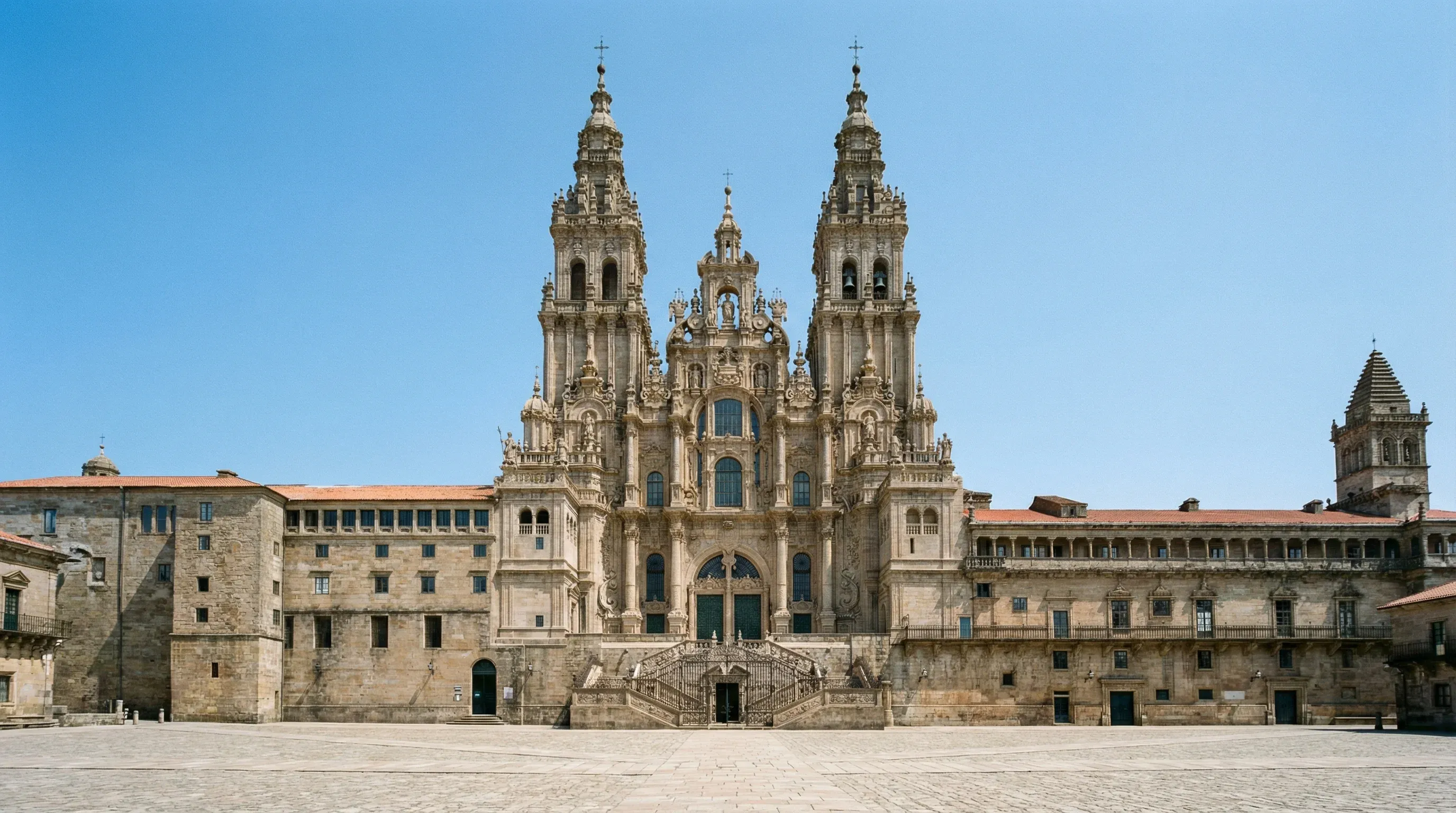
Galicia, perched on the damp, green shoulder of Spain, often reminds visitors more of Ireland or Brittany than the Mediterranean south. It is a land of legends (meigas, or witches), ancient stone horreos (granaries), and deep estuaries known as 'Rías' that carve into the coastline like Norwegian fjords. For families, Galicia offers a breath of fresh air—literally. The climate is mild and oceanic, avoiding the scorching heat of the rest of Spain, making it perfect for active summer holidays. The beaches range from wild, surf-pounded stretches to calm, Caribbean-like turquoise waters in the sheltered Rías Baixas.
Culturally, Galicia is distinct with its own language (Galego) and bagpipe music (gaita). It is the destination of the famous Camino de Santiago pilgrimage, and even if you aren't religious, the atmosphere of camaraderie and walking in nature is infectious. Families often walk the last few kilometers into Santiago together. The region is also a seafood paradise where children can learn exactly where their food comes from, watching shellfisherwomen (mariscadoras) working the sands at low tide.
Key Attractions
The crown jewel of Galician nature is the Illas Atlánticas de Galicia National Park, specifically the Cíes Islands. Often voted among the world's best beaches, Rodas Beach connects two islands with a crescent of blindingly white sand. Access is limited by daily quotas, so it never feels overcrowded. In A Coruña, the Aquarium Finisterrae is located right on the ocean's edge and includes an outdoor seal pool that integrates with the Atlantic tides—kids love watching the seals play in the rough waves.
History buffs will enjoy the Lugo Roman Walls, the only intact Roman city wall in the world that you can walk the entire circuit of (about 2km). It’s a flat, safe, and elevated walkway that gives a unique perspective of the city. For a mix of science and fun, the Domus in A Coruña is an interactive museum dedicated entirely to the human body, designed by Arata Isozaki, which engages kids with hands-on exhibits about genetics and senses.
Practical Advice
Rain is a given in Galicia, even in August. It’s what keeps it so green. Pack raincoats and plan for mixed weather. The sea temperature is cold (around 16-19°C / 60-66°F), so wetsuits are a good idea for kids who want to stay in the water for long periods.
Food & Drink
Typical meal times: Lunch 1:30 pm–3:30 pm, Dinner 9:00 pm–11:00 pm. Tapas culture is strong, often with free bites accompanying drinks.
Typical meal costs: Excellent value. A seafood feast for a family can cost €60–90 (approx. $65–100 USD / £50–75 GBP). Daily menus are €10–15 (approx. $11–16 USD / £8–13 GBP).
Dietary requirements: Seafood is everywhere. Gluten-free is understood ('sen glute'). Vegans may struggle in traditional marisquerías (seafood restaurants) but will find options in cities.
Signature dishes:
- Pulpo a la Gallega – Octopus boiled tender, sliced, and dressed with olive oil, paprika, and salt. Served on wooden plates.
- Empanada Gallega – A large, flat savory pie filled with tuna, meat, or cod and peppers. Great picnic food.
- Pimientos de Padrón – Small green peppers, fried and salted. "Some are hot, some are not" – a fun Russian roulette for brave kids.
- Tarta de Santiago – A dense, moist almond cake dusted with powdered sugar in the shape of the Cross of St. James. Naturally gluten-free.
Why this score?
The wild Atlantic coastline, often referred to as the 'Coast of Death,' offers a more rugged and unpredictable climate than the rest of Spain. Long-distance hiking and the remote nature of the Galician estuaries provide a moderate physical challenge for active families.
Why this score?
Santiago de Compostela and A Coruña have excellent hospitals that are well-versed in treating international visitors, particularly pilgrims. The regional health service is reliable, though specialized English-speaking support is more concentrated in the larger urban centers.
Why this score?
Galicia is a recognized destination primarily due to the Camino de Santiago, which draws hundreds of thousands of international pilgrims annually. Beyond the pilgrimage route, the Rías Baixas and Cíes Islands are becoming increasingly popular, though it remains a moderate flow compared to the south.

Galicia is one of the best value regions in Western Europe. You can dine on world-class shellfish for the price of a burger elsewhere. Accommodation is affordable, with rural 'Casas Rurales' offering great family stays for €70–100 (approx. $75–110 USD / £60–85 GBP). Coffee is often €1.20 (approx. $1.30 USD / £1.00 GBP).

Getting Here & Around
Getting Here
- Airports – Santiago (SCQ) is the main international airport. A Coruña (LCG) and Vigo (VGO) have mostly domestic flights.
- Train – High-speed rail connects Madrid to Ourense and Santiago in under 3.5 hours.
- Walking – Many arrive on foot via the Camino de Santiago - French Way (Galician Section)!
Getting Around
- Car – The best way to explore the 'Rías' and reach remote lighthouses like Cape Finisterre.
- Train – The 'Eje Atlántico' fast train connects A Coruña, Santiago, Pontevedra, and Vigo efficiently.
- Ferry – Essential for visiting the Cíes Islands (book in advance!).
Nearby Airports (3 airports)
A Coruna
LCGLa Coruna
Santiago
SCQSantiago De Compostela
Vigo
VGOVigo
View full flight map for Spain →
Official Links

Packing List
Galicia is the rainiest part of Spain; showers are frequent and sudden.
The Atlantic ocean is cold (15-19°C) even in peak summer.
Roads along the coast are winding, and ferries to islands can be choppy.
To keep your gear dry during hikes or city walks.
Essential for hot summers; many shops and older transport lack strong AC.
To secure drying swimsuits on breezy hotel balconies (lines provided, pegs rarely).
Cash is still king for small purchases like ice cream kiosks and street vendors.
Hard to find in city express stores; useful for wet swimmers and unfinished snacks.
Café breakfasts are sweet (pastries/toast); healthy 'kid food' is hard to find in mornings.
Street noise, late-night dining, and local festivals can be loud well into the night.

Activities & Best Times

Hiking, wildlife, outdoor exploration, ecotourism
Stunning natural diversity from the deep Sil Canyon to the maritime-terrestrial national parks. Best explored in late spring through early autumn to avoid the significant rainfall that characterizes the Galician winter.

Urban tourism, museums, historical sites, architecture
Santiago de Compostela is a world-class heritage site with a unique atmosphere, complemented by high-quality museums in A Coruña. Winters are often too damp and grey for pleasant urban exploration.
Scenic drives, countryside tours, route-based travel
The Costa da Morte and Ribeira Sacra offer some of Europe's most dramatic coastal and river drives. High rainfall and coastal fog make these routes less safe and scenic during the winter months.

Sport tourism, fitness activities, active recreation
The Camino de Santiago is a globally unique hiking infrastructure; late spring and early autumn offer the best conditions. Mid-summer can be overly crowded and hot for a sophisticated family experience.
Beach resorts, marine activities: diving, snorkelling, kite surfing, wind surfing, sailing
Home to the world-renowned Rodas Beach and the Cíes Islands, though Atlantic water temperatures remain brisk even in peak summer. The season is strictly limited to the warmest months due to high rainfall and wind in other periods.

Learning experiences, scientific sites, historical education
Features high-quality facilities like the Aquarium Finisterrae and Domus science museum that are excellent for families. Best visited when general travel conditions are favorable for combined outdoor city exploration.

Events, celebrations, seasonal attractions
Feast of Saint James is the culmination of a global pilgrimage route and draws massive international crowds. This is a destination-level festival event, not 'marginal'.

Spa retreats, wellness centers, peaceful getaways
Ourense is one of Europe's major thermal destinations; the contrast of hot springs is best enjoyed in cooler months. Peak summer is often too warm for thermal baths to be the primary draw.

Winter sports, ski resorts, snow activities
Manzaneda offers a boutique skiing experience, but snow reliability is low compared to the Pyrenees or Alps. It serves as a secondary activity rather than a primary international ski destination.
Amusement parks, family entertainment venues
Seasonal water parks like Cerceda provide family entertainment but lack the scale or international status of major European theme parks. Operations are strictly limited to the summer window.
Attractions (29 total)



Public Holidays & Calendar Next 12 months
Public holidays, festivals, cultural celebrations, and seasonal natural phenomena coming up in Galicia over the next 12 months.
Loading holidays and events...

Travel Advisory
While Spain is a safe destination for most, half of the major advisory agencies recommend increased vigilance due to high rates of petty crime and a persistent domestic terrorism threat level.
Safety Topics
Traveller Advice (4 groups)

Spain has very progressive laws regarding sexual orientation and gender identity. Discrimination is rare in major cities, though standard discretion is advised in rural areas.

While generally safe, incidents of sexual assault occur; travellers are encouraged to stick with groups and avoid isolated areas after dark.

Accessibility is generally good in newer infrastructure and major cities, but historic districts may present mobility challenges due to cobblestone streets.

Keep copies of identification separate from originals. Be especially vigilant in high-traffic areas like Las Ramblas in Barcelona and the Madrid Metro where theft is common.
Agency Summaries
New Zealanders are advised to be more alert than usual due to the threat of terrorism and the high prevalence of petty theft targeting foreigners.
While general safety levels are high, tourists should maintain awareness regarding terrorism and the frequent occurrence of bag snatching in cities like Barcelona.
Visitors should take standard safety steps with a focus on protecting personal documents and being wary of pickpockets in crowded public spaces.
Most visits are trouble-free, though travellers should be aware of street crime, the general threat of terrorism, and seasonal environmental hazards like wildfires.
Canadians are advised to remain highly vigilant due to a sustained threat of terrorism. Petty crime remains a pervasive issue, particularly in urban tourist hubs.
Heightened caution is required primarily due to the ongoing risk of terrorist activity and occasional civil unrest in major metropolitan areas.
Information is provided for general guidance only and does not constitute travel, safety, medical, or legal advice. Conditions may change. Users are responsible for independently verifying information before travel.