
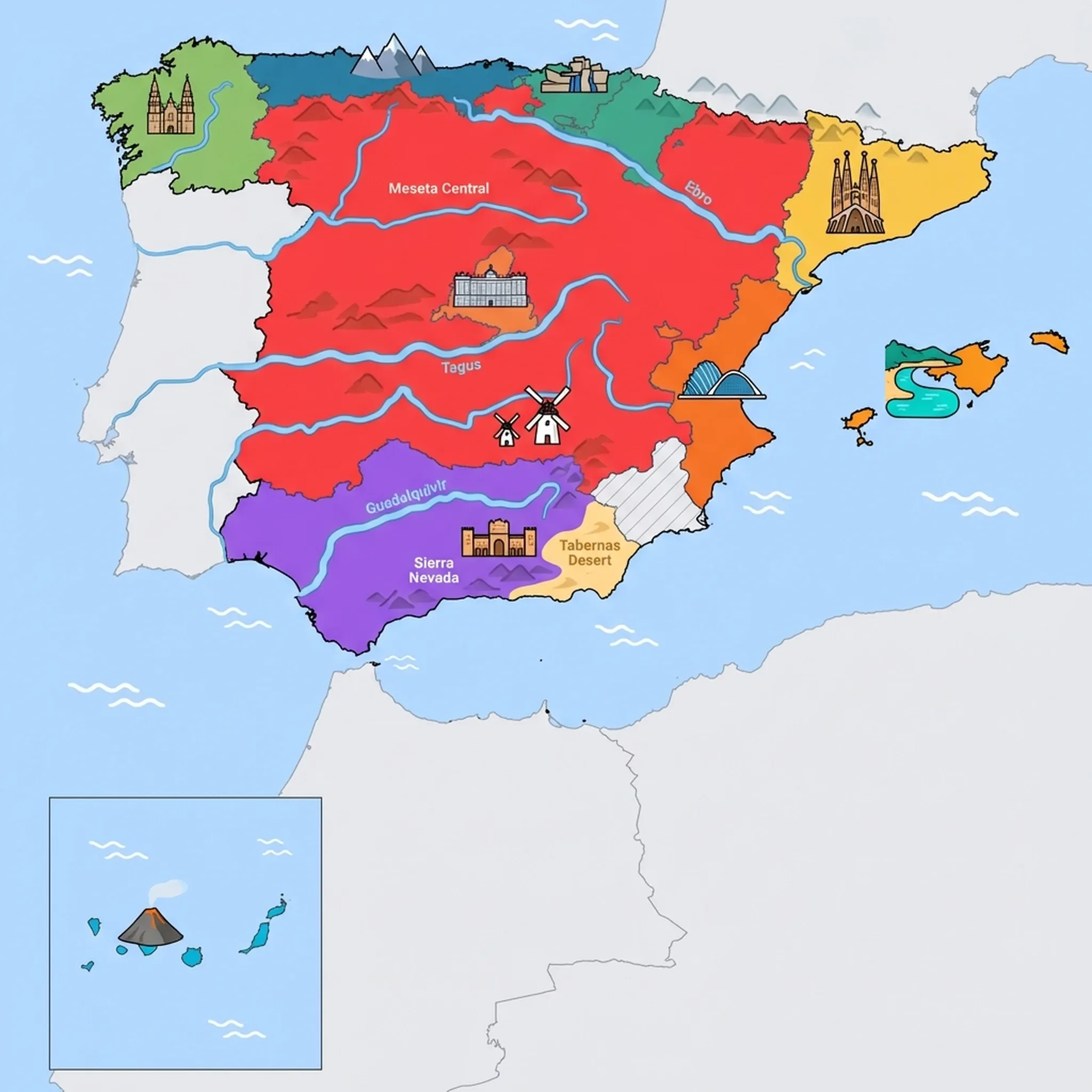
Click a region to explore
Madrid is the highest capital city in Europe, sitting on a plateau that gives it a crisp, bright light and an energy that is infectious. Unlike some capitals that feel rushed and business-like, Madrid is built for living. It is a city of plazas where families gather, wide boulevards, and an incredible amount of green space. For visiting families, it offers a perfect mix of cultural heavy-hitters and pure fun. You can spend the morning educating the kids about Velázquez and Goya, and the afternoon screaming on rollercoasters or zip-lining in the mountains just an hour away.
The city is incredibly safe and walkable, with a metro system that is clean, efficient, and stroller-friendly (mostly). Madrileños adore children; expect waiters to joke with your kids and locals to coo over babies. The lifestyle here is late—very late. Parks are full of kids playing soccer at 10 pm in summer. It’s a place to relax your schedule, embrace the chaos, and enjoy the 'buena vida'. Beyond the city limits, the region offers UNESCO towns like Aranjuez and the imposing El Escorial monastery, making for easy day trips.
Key Attractions
The El Retiro Park is the city's green lung and a daily ritual for locals. Families can rent a rowboat on the lake, watch puppet shows near the entrance, or let kids run wild in the numerous playgrounds. For art, the Museo del Prado offers specific family trails and 'detective' games to make viewing masterpieces like 'Las Meninas' engaging for younger eyes.
For pure entertainment, the Parque de Atracciones de Madrid is a classic city amusement park located in the Casa de Campo park. It has a dedicated Nickelodeon Land for smaller kids and intense coasters for teens. If you prefer nature, Faunia - La Granja is a biological park that recreates different ecosystems (polar, jungle, nocturnal) allowing kids to get close to penguins and monkeys in a respectful environment. A short train ride away, the Monastery of San Lorenzo de El Escorial is a massive, austere palace with a crypt of kings that fascinates older children with its spooky grandeur.
Practical Advice
Avoid August if possible—many locals leave, shops close, and the heat (35-40°C / 95-104°F) is stifling. Spring and Autumn are glorious. Late dinners are the norm; if your kids can't wait until 9 pm, look for places serving 'raciones' all day or stick to tourist-friendly zones.
Food & Drink
Typical meal times: Lunch 2:00 pm–4:00 pm, Dinner 9:00 pm–11:30 pm. This is the latest eating city in Europe.
Typical meal costs: Mid-range. Family lunch: €60–90 (approx. $65–100 USD / £50–75 GBP). 'Bocadillo' (sandwich) lunch: €5–7 per person (approx. $5.50–7.50 USD / £4–6 GBP).
Dietary requirements: Excellent. Madrid is a cosmopolitan hub with endless vegan, vegetarian, and allergy-friendly options.
Signature dishes:
- Cocido Madrileño – A massive chickpea-based stew with meat and vegetables, served in two or three courses (soup first, then solids).
- Bocadillo de Calamares – Fried squid rings in a crusty roll. The classic cheap eat around Plaza Mayor.
- Chocolate con Churros – Thick, hot chocolate for dipping fried dough sticks. Chocolatería San Ginés is the famous spot.
- Huevos Rotos – Fried eggs broken over a bed of french fries and ham. Simple, messy, and delicious.
Why this score?
Madrid is a heavily urbanized environment where the primary activities are cultural and culinary. While the Sierra de Guadarrama mountains are nearby for day trips, the city experience itself is entirely developed with little to no ruggedness.
Why this score?
Madrid is a world-class medical hub with some of the best hospitals in Europe, such as La Paz and Gregorio Marañón. Multilingual services, international patient departments, and cutting-edge technology make it an ideal location for families requiring medical peace of mind.
Why this score?
As the national capital, Madrid is a top-tier international destination with massive visitor numbers centered on its 'Golden Triangle' of art museums and vibrant nightlife. It serves as the primary gateway for international flights, ensuring a constant and diverse tourist population.

Madrid is cheaper than London, Paris, or New York, but pricier than rural Spain. Accommodation is the biggest cost; a central family apartment is €150–250 (approx. $160–270 USD / £128–215 GBP) per night. Transport and food are good value. Many museums have free entry hours in the evenings (e.g., Prado is free last 2 hours of the day).

Getting Here & Around
Getting Here
- Airports – Adolfo Suárez Madrid-Barajas (MAD) is a massive global gateway. The Metro connects it to the city center in 30 mins.
- Train – The hub of Spain's AVE high-speed network. Trains arrive from Barceloneta Beach (Barcelona) and Seville constantly.
Getting Around
- Public Transport – The Metro is one of the best in the world: fast, safe, and air-conditioned.
- Train – 'Cercanías' commuter trains are great for day trips to Alcalá de Henares or the Sierra.
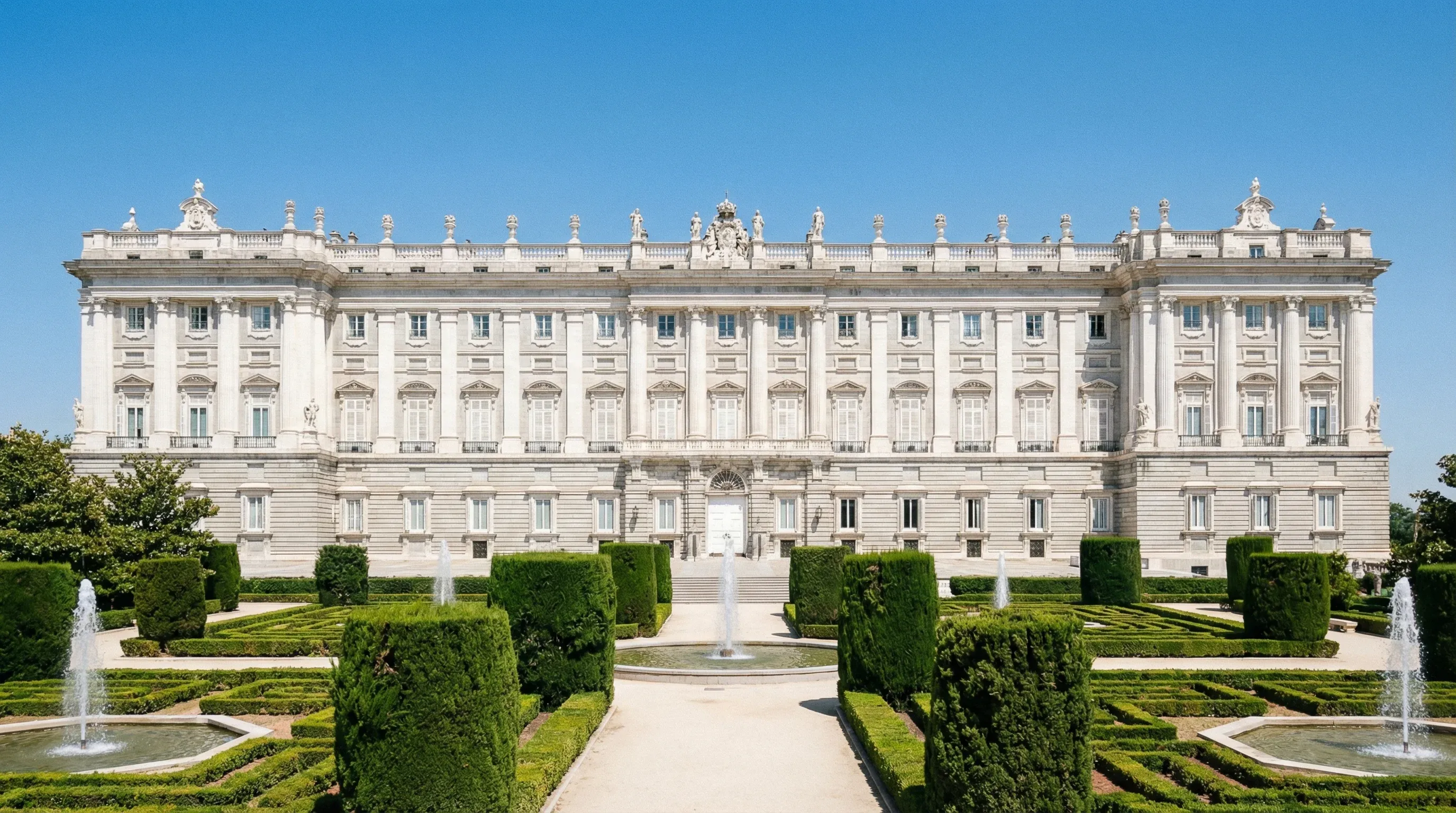
- Walking – The center is compact; walking from the Royal Palace to Museo del Prado is a pleasant 25-minute stroll.
Nearby Airports (1 airport)
Barajas
MADMadrid
View full flight map for Spain →
Official Links

Packing List
The Metro and streets can be stuffy in summer; do as the locals do.
Madrid has excellent tap water (Canal de Isabel II) and fountains are everywhere.
Locals dress smart-casual; flip-flops are rarely worn in the city, even in heat.
The city is noisy at night; street cleaning and garbage collection happen late.
Essential for hot summers; many shops and older transport lack strong AC.
To secure drying swimsuits on breezy hotel balconies (lines provided, pegs rarely).
Cash is still king for small purchases like ice cream kiosks and street vendors.
Hard to find in city express stores; useful for wet swimmers and unfinished snacks.
Café breakfasts are sweet (pastries/toast); healthy 'kid food' is hard to find in mornings.

Activities & Best Times

Urban tourism, museums, historical sites, architecture
Features the 'Golden Triangle' of art museums and a majestic Royal Palace. Peak periods offer pleasant temperatures for walking, while July-August heat and winter cold see fewer international visitors.

Hiking, wildlife, outdoor exploration, ecotourism
The Sierra de Guadarrama offers high-altitude hiking and diverse wildlife centers like Faunia. Avoid the intense summer heat and mid-winter snow for the best trail conditions.

Sport tourism, fitness activities, active recreation
Recognized cycling routes and adventure parks provide high-quality infrastructure for active families. Conditions are optimal in spring and autumn; summer heat makes intense activity difficult.

Learning experiences, scientific sites, historical education
Hosts significant science museums and world-class aquariums that provide deep learning opportunities. These indoor facilities are best visited during the city's temperate peak seasons.

Scenic drives, countryside tours, route-based travel
Scenic mountain loops and the 'Villas de Madrid' routes provide culturally rich driving experiences. Best explored when visibility is high and mountain passes are clear of ice.

Amusement parks, family entertainment venues
Home to Parque Warner and major water parks, offering high-standard family entertainment. Visit during spring or autumn to avoid the long queues and extreme temperatures of mid-summer.

Beach resorts, marine activities: diving, snorkelling, kite surfing, wind surfing, sailing
Inland reservoir beaches provide localized cooling but lack international coastal standards. Peak visitation is strictly limited to the hot summer months when water recreation is viable.

Events, celebrations, seasonal attractions
Host to internationally recognized events like ARCO and Madrid Pride. Timing is strictly dictated by the event calendar, with summer heat impacting outdoor festival comfort.

Winter sports, ski resorts, snow activities
Small resorts in the Sierra offer convenient skiing for those already in the capital, though scale is modest compared to the Pyrenees. Peak season is limited to the coldest months.

Attractions (28 total)



Public Holidays & Calendar Next 12 months
Public holidays, festivals, cultural celebrations, and seasonal natural phenomena coming up in Madrid over the next 12 months.
Loading holidays and events...

Travel Advisory
While Spain is a safe destination for most, half of the major advisory agencies recommend increased vigilance due to high rates of petty crime and a persistent domestic terrorism threat level.
Safety Topics
Traveller Advice (4 groups)

Spain has very progressive laws regarding sexual orientation and gender identity. Discrimination is rare in major cities, though standard discretion is advised in rural areas.

While generally safe, incidents of sexual assault occur; travellers are encouraged to stick with groups and avoid isolated areas after dark.
Accessibility is generally good in newer infrastructure and major cities, but historic districts may present mobility challenges due to cobblestone streets.

Keep copies of identification separate from originals. Be especially vigilant in high-traffic areas like Las Ramblas in Barcelona and the Madrid Metro where theft is common.
Agency Summaries
New Zealanders are advised to be more alert than usual due to the threat of terrorism and the high prevalence of petty theft targeting foreigners.
While general safety levels are high, tourists should maintain awareness regarding terrorism and the frequent occurrence of bag snatching in cities like Barcelona.
Visitors should take standard safety steps with a focus on protecting personal documents and being wary of pickpockets in crowded public spaces.
Most visits are trouble-free, though travellers should be aware of street crime, the general threat of terrorism, and seasonal environmental hazards like wildfires.
Canadians are advised to remain highly vigilant due to a sustained threat of terrorism. Petty crime remains a pervasive issue, particularly in urban tourist hubs.
Heightened caution is required primarily due to the ongoing risk of terrorist activity and occasional civil unrest in major metropolitan areas.
Information is provided for general guidance only and does not constitute travel, safety, medical, or legal advice. Conditions may change. Users are responsible for independently verifying information before travel.