
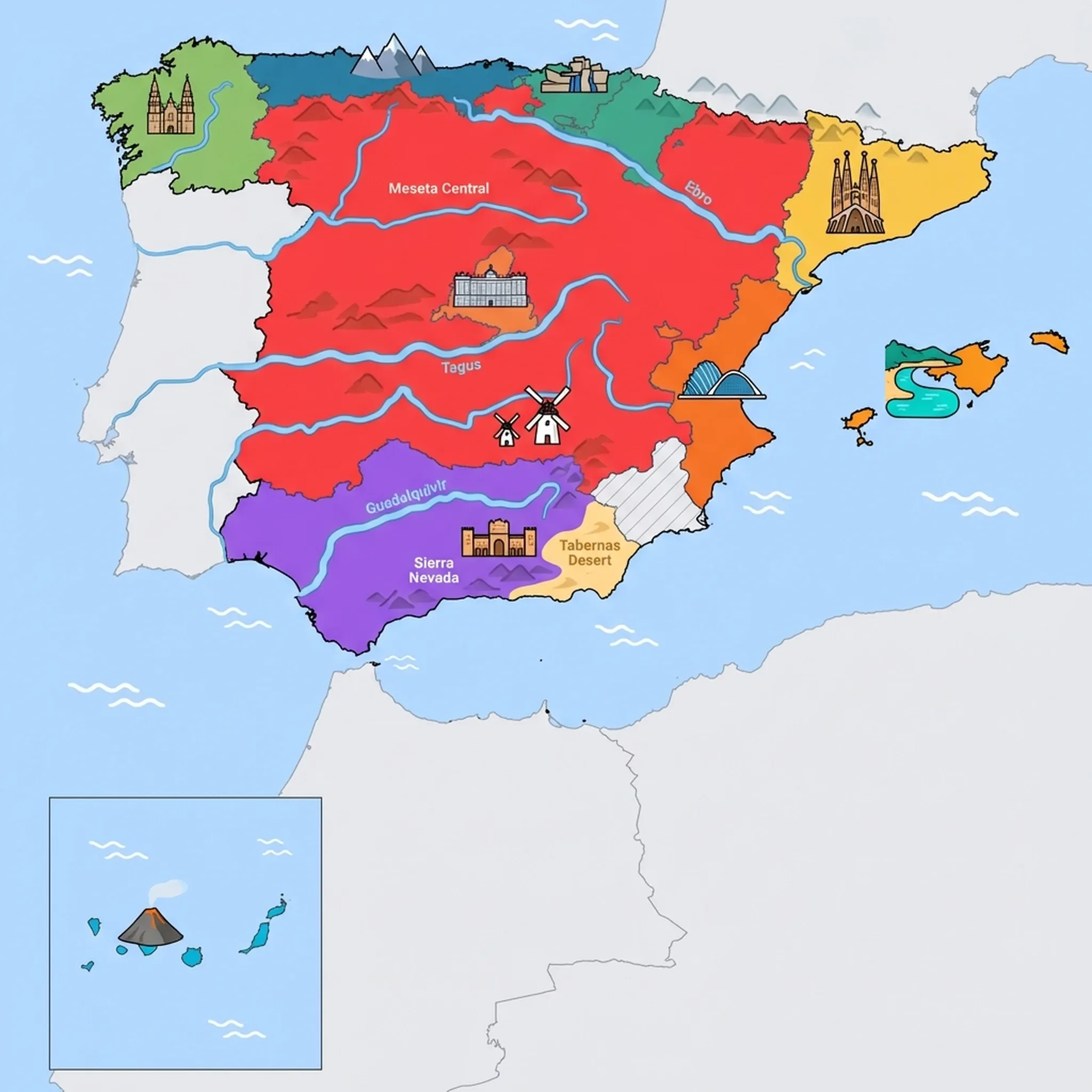
Click a region to explore
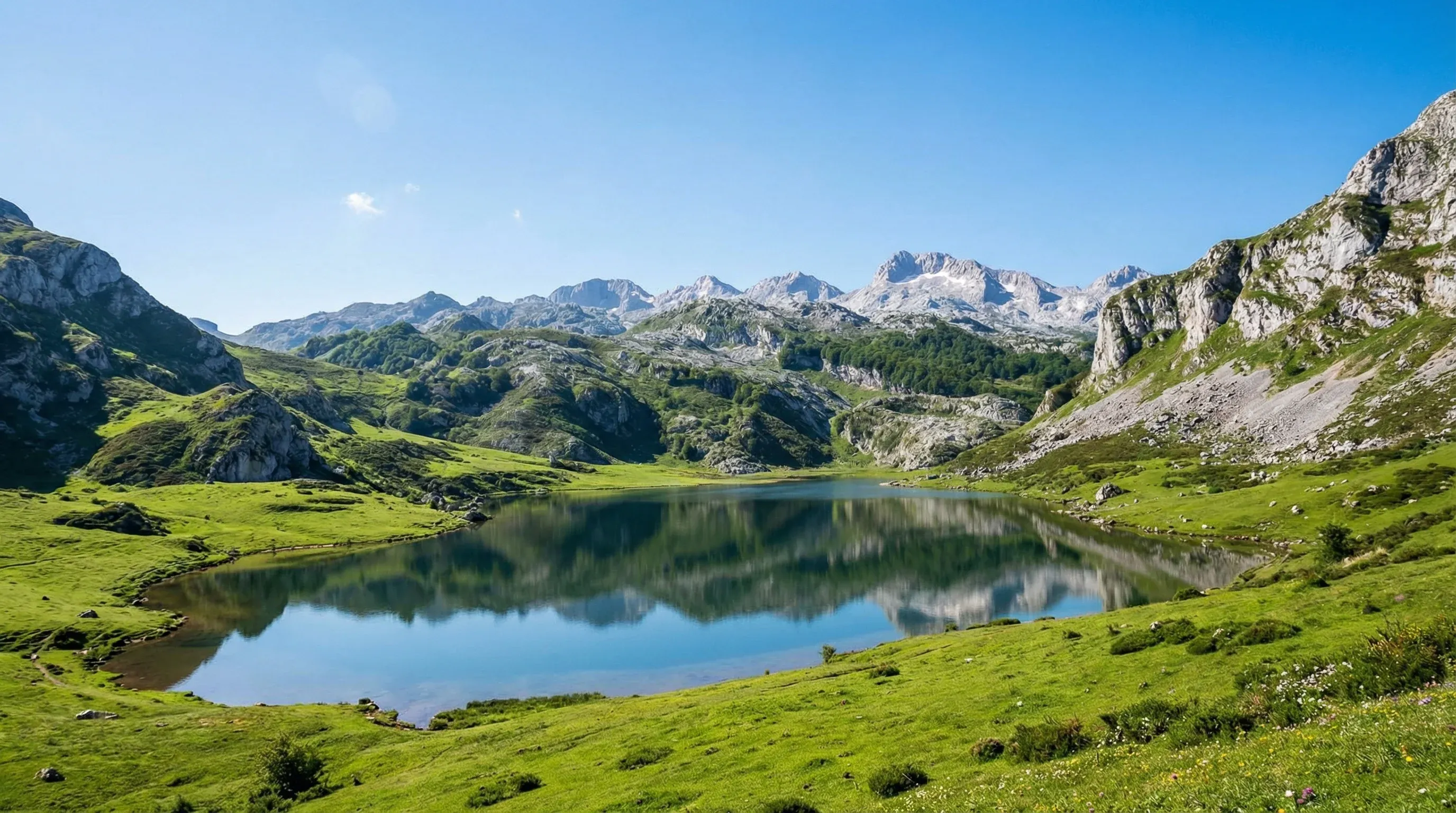
Known as 'Green Spain' (España Verde), the regions of Asturias and Cantabria offer a lush, dramatic alternative to the dry south. Here, the Picos de Europa mountains rise almost directly from the sea, creating a landscape of deep limestone gorges, foggy peaks, and hidden coves. For families who love the outdoors, this is arguably the best part of Spain. It feels like a mix of Switzerland and New Zealand, but with better food and beaches. The pace of life is slower, the crowds are thinner (mostly domestic tourists), and the focus is firmly on nature and rural traditions.
This region is also the cradle of Spanish history (the Reconquista started in Covadonga) and home to some of the world's most important prehistoric art. Kids can step back 15,000 years to see bison paintings in caves, or walk amidst dinosaur footprints on the 'Dinosaur Coast' of Asturias. The beaches are spectacular—wild, tidal, and clean—though the water is refreshing (brisk). It’s a place for road trips, eating cheese, drinking cider poured from a height, and letting kids run free in green meadows.
Key Attractions
The Cabárceno Natural Park in Cantabria is not a zoo; it's a massive reclamation of an old iron mine where animals like elephants, bears, and gorillas live in huge semi-wild enclosures. You drive your car through it (like a safari) or take the cable cars that crisscross the park for an aerial view. It is widely considered one of the best animal parks in Europe.
In Asturias, the Picos de Europa National Park is essential. The holy site of Basilica of Santa María la Real de Covadonga sits above a waterfall and a cave shrine that looks like fantasy fiction. From there, you can access the glacial lakes of Enol and Ercina (Lagos de Covadonga), where cows graze freely around the water—a picture-perfect picnic spot. For a cultural hit, the National Museum and Research Center of Altamira offers an exact replica (Neocave) of the famous prehistoric cave art, allowing families to see the masterpieces without damaging the original site.
Practical Advice
Weather is unpredictable. You can have four seasons in one day. Always pack layers. The roads in the Picos de Europa can be narrow and winding; if you are not a confident driver, use the bus services that run from Cangas de Onís to the lakes in summer (private cars are restricted in peak season).
Food & Drink
Typical meal times: Lunch 1:30 pm–3:30 pm, Dinner 9:00 pm–11:00 pm. Cider houses (sidrerías) are lively places to eat.
Typical meal costs: Moderate. A huge fabada stew for two costs €20–30 (approx. $22–32 USD / £17–25 GBP). Family meal: €60–90 (approx. $65–100 USD / £50–75 GBP).
Dietary requirements: Heavy on dairy and pork. Gluten-free is widely available ('sin gluten'). Vegetarians should watch out for ham in vegetable soups.
Signature dishes:
- Fabada Asturiana – A rich, creamy white bean stew with chorizo, blood sausage (morcilla), and pork shoulder. Heavy and delicious.
- Cachopo – Two large veal fillets breaded and fried, filled with ham and cheese. Enormous portions, often shared.
- Cabrales Cheese – A strong blue cheese matured in limestone caves. Intense!
- Sidra (Cider) – Natural apple cider, poured from overhead to aerate it. You drink it in one gulp ('culín'). Kids drink apple juice.
Why this score?
Home to the Picos de Europa, this region offers some of the most authentic and rugged mountain experiences in Spain. The steep limestone peaks and deep valleys provide a significant step up in adventure level compared to the more developed southern coastlines.
Why this score?
Provincial capitals like Santander and Oviedo have high-quality public healthcare facilities. While the system is very competent, there are fewer private clinics dedicated to international tourists compared to the Costa del Sol or Barcelona, meaning language barriers may be more frequent.
Why this score?
This region, comprising Asturias and Cantabria, is a moderate destination that primarily caters to domestic Spanish tourists. While the Picos de Europa and Altamira caves are internationally known, the area lacks the massive foreign visitor volumes found in the Mediterranean regions.

The North is excellent value compared to the Mediterranean coast. Accommodation in rural 'Casonas' is charming and affordable, around €80–120 (approx. $86–130 USD / £68–100 GBP) per night. Food portions are famously large, so you often order less. Museum entries are cheap (often €3–8).

Getting Here & Around
Getting Here
- Airports – Santander (SDR) and Asturias (OVD) have connections to Madrid, London, and other hubs.
- Ferry – Brittany Ferries run from Portsmouth/Plymouth (UK) directly to Santander. A relaxing way to arrive with your own car.
- Driving – The A-8 Autovía del Cantábrico runs the entire length of the coast. Spectacular but prone to fog.
Getting Around
- Car – Essential. Public transport to mountain villages and remote caves like El Soplao Cave is limited.
- Train – The FEVE narrow-gauge railway meanders along the coast. It's slow but incredibly scenic.
- Cable Car – The Fuente Dé Cable Car whisks you up 750 meters in 4 minutes for instant high-mountain views.
Nearby Airports (2 airports)
Asturias
OVDAsturias
Santander
SDRSantander
View full flight map for Spain →
Official Links

Packing List
Trails in Picos de Europa are rocky and often wet/muddy.
To spot bears (rare) or Chamois and vultures in the mountains.
Mountain roads and the coastal drive are very twisty.
Nights in the mountains and caves can be surprisingly cold.
Essential for hot summers; many shops and older transport lack strong AC.
To secure drying swimsuits on breezy hotel balconies (lines provided, pegs rarely).
Cash is still king for small purchases like ice cream kiosks and street vendors.
Hard to find in city express stores; useful for wet swimmers and unfinished snacks.
Café breakfasts are sweet (pastries/toast); healthy 'kid food' is hard to find in mornings.
Street noise, late-night dining, and local festivals can be loud well into the night.

Activities & Best Times

Hiking, wildlife, outdoor exploration, ecotourism
Home to the world-class Picos de Europa National Park and the unique Cabárceno Natural Park, offering rare wildlife encounters and high-altitude trekking. Winter conditions bring heavy rain and snow to the peaks, making late spring through early autumn the optimal window for exploration.

Urban tourism, museums, historical sites, architecture
Offers sophisticated urban experiences in Santander and Oviedo, featuring world-class institutions like Centro Botín and prehistoric art at Altamira. While museums are year-round, the vibrant street culture and botanical gardens are best experienced during the warmer, drier months.

Learning experiences, scientific sites, historical education
Boasts significant scientific sites including the Jurassic Museum of Asturias (MUJA) and the Altamira Research Center, which are primary motivators for families. These facilities offer world-class engagement with paleontology and prehistory, best accessed during the main tourism season.

Sport tourism, fitness activities, active recreation
The Camino del Norte and the Ruta del Cares are world-famous hiking corridors requiring specific infrastructure and planning. These routes are most accessible and safe for active families during the drier summer window when mountain transport like the Fuente Dé cable car is fully operational.
Beach resorts, marine activities: diving, snorkelling, kite surfing, wind surfing, sailing
Features dramatic urban beaches like El Sardinero and unique natural wonders like Gulpiyuri, though the Atlantic waters remain cool. The season is strictly limited to mid-summer when air temperatures and sea conditions are most favorable for families.

Scenic drives, countryside tours, route-based travel
Spectacular routes like the Dinosaur Coast and the Cares Gorge drive provide world-class scenery and well-maintained infrastructure. Mountain passes can be treacherous or closed due to snow and heavy rain during the winter months, making summer the safest and most scenic time for touring.

Winter sports, ski resorts, snow activities
Alto Campoo and Valgrande-Pajares provide reliable regional skiing with authentic Cantabrian mountain culture. The season is relatively short compared to the Pyrenees, with peak snow coverage typically occurring in January and February.
Amusement parks, family entertainment venues
Cabárceno is a standout internationally recognized wildlife park where animals roam in massive semi-natural karst enclosures. As most attractions are outdoors, visitation peaks during the summer school holidays with reduced appeal during the rainy northern winters.

Events, celebrations, seasonal attractions
The International Descent of the Sella in August and the Princess of Asturias Awards in October are high-profile events with global reach. These specific dates drive international interest, while the rest of the year features more localized traditional celebrations.

Spa retreats, wellness centers, peaceful getaways
Historic thermal sites like La Hermida offer authentic wellness experiences rooted in the region's Roman history. While facilities are indoor, the overall appeal is highest when combined with the region's seasonal scenic beauty.

Attractions (26 total)



Public Holidays & Calendar Next 12 months
Public holidays, festivals, cultural celebrations, and seasonal natural phenomena coming up in Northern Coast over the next 12 months.
Loading holidays and events...

Travel Advisory
While Spain is a safe destination for most, half of the major advisory agencies recommend increased vigilance due to high rates of petty crime and a persistent domestic terrorism threat level.
Safety Topics
Traveller Advice (4 groups)

Spain has very progressive laws regarding sexual orientation and gender identity. Discrimination is rare in major cities, though standard discretion is advised in rural areas.

While generally safe, incidents of sexual assault occur; travellers are encouraged to stick with groups and avoid isolated areas after dark.

Accessibility is generally good in newer infrastructure and major cities, but historic districts may present mobility challenges due to cobblestone streets.

Keep copies of identification separate from originals. Be especially vigilant in high-traffic areas like Las Ramblas in Barcelona and the Madrid Metro where theft is common.
Agency Summaries
New Zealanders are advised to be more alert than usual due to the threat of terrorism and the high prevalence of petty theft targeting foreigners.
While general safety levels are high, tourists should maintain awareness regarding terrorism and the frequent occurrence of bag snatching in cities like Barcelona.
Visitors should take standard safety steps with a focus on protecting personal documents and being wary of pickpockets in crowded public spaces.
Most visits are trouble-free, though travellers should be aware of street crime, the general threat of terrorism, and seasonal environmental hazards like wildfires.
Canadians are advised to remain highly vigilant due to a sustained threat of terrorism. Petty crime remains a pervasive issue, particularly in urban tourist hubs.
Heightened caution is required primarily due to the ongoing risk of terrorist activity and occasional civil unrest in major metropolitan areas.
Information is provided for general guidance only and does not constitute travel, safety, medical, or legal advice. Conditions may change. Users are responsible for independently verifying information before travel.