
Valencia & Costa Blanca
Home of paella, sun, and future science 🥘☀️
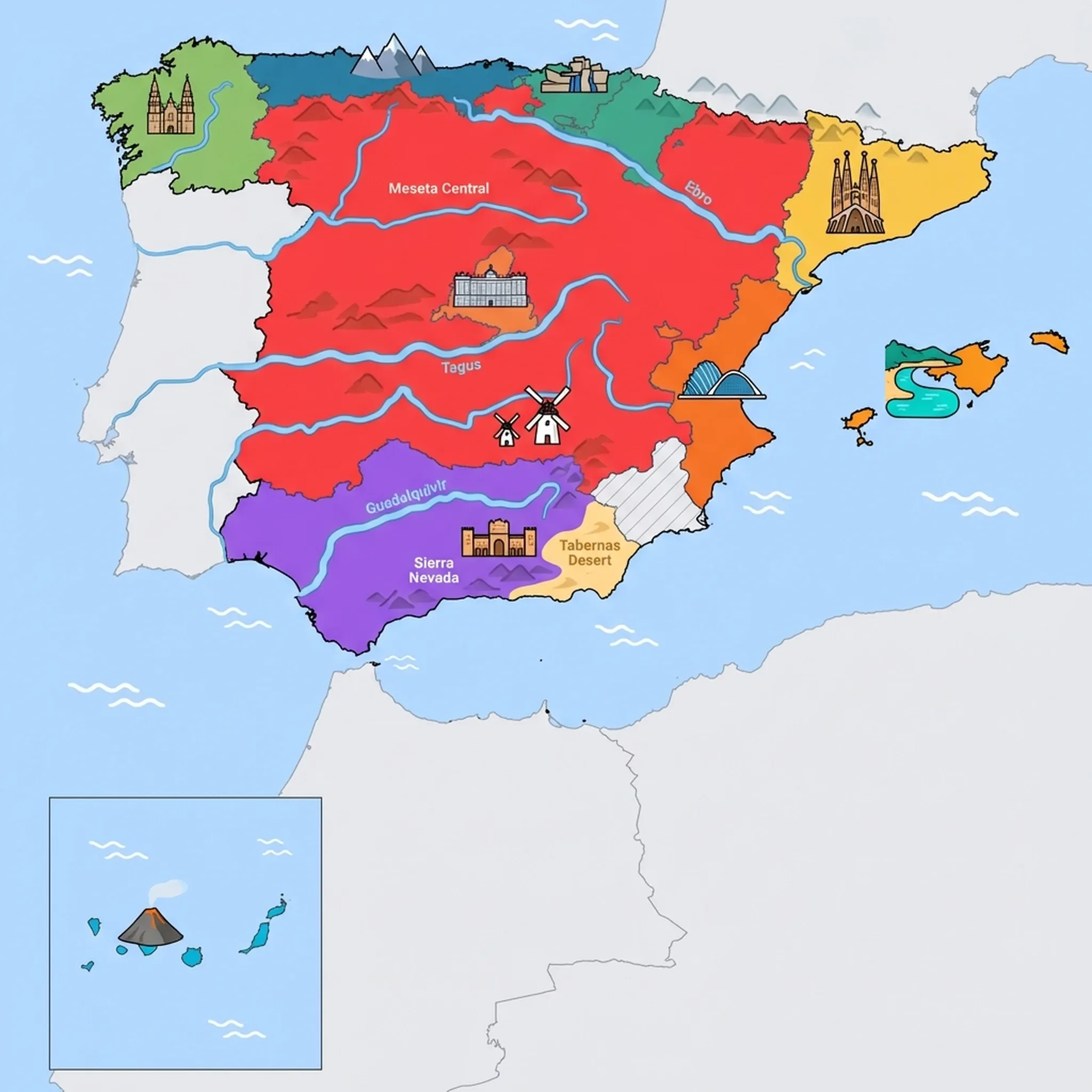
Click a region to explore
The Valencian Community, stretching down Spain's eastern coast, is a magnet for families for good reason. It offers a climate that is sunny for 300 days a year, wide sandy beaches with warm water, and a capital city, Valencia, that has reinvented itself as perhaps the most family-friendly city in Spain. The old riverbed of the Turia, diverted after a flood, has been turned into a 9km-long green ribbon of parks, playgrounds, and bike paths that winds through the city center—a traffic-free paradise for children.
Further south, the Costa Blanca (centered on Alicante and Benidorm) is famous for its resort tourism, but offers much more than just high-rises. You can find hidden coves, mountain castles like Guadalest, and expansive palm groves. The region is flat and fertile, known as the 'Orchard of Spain', famous for its oranges and rice paddies. Culturally, it is vibrant and loud—this is the land of 'Las Fallas', where giant sculptures are burnt in the streets, and colorful festivals are a way of life.
Key Attractions
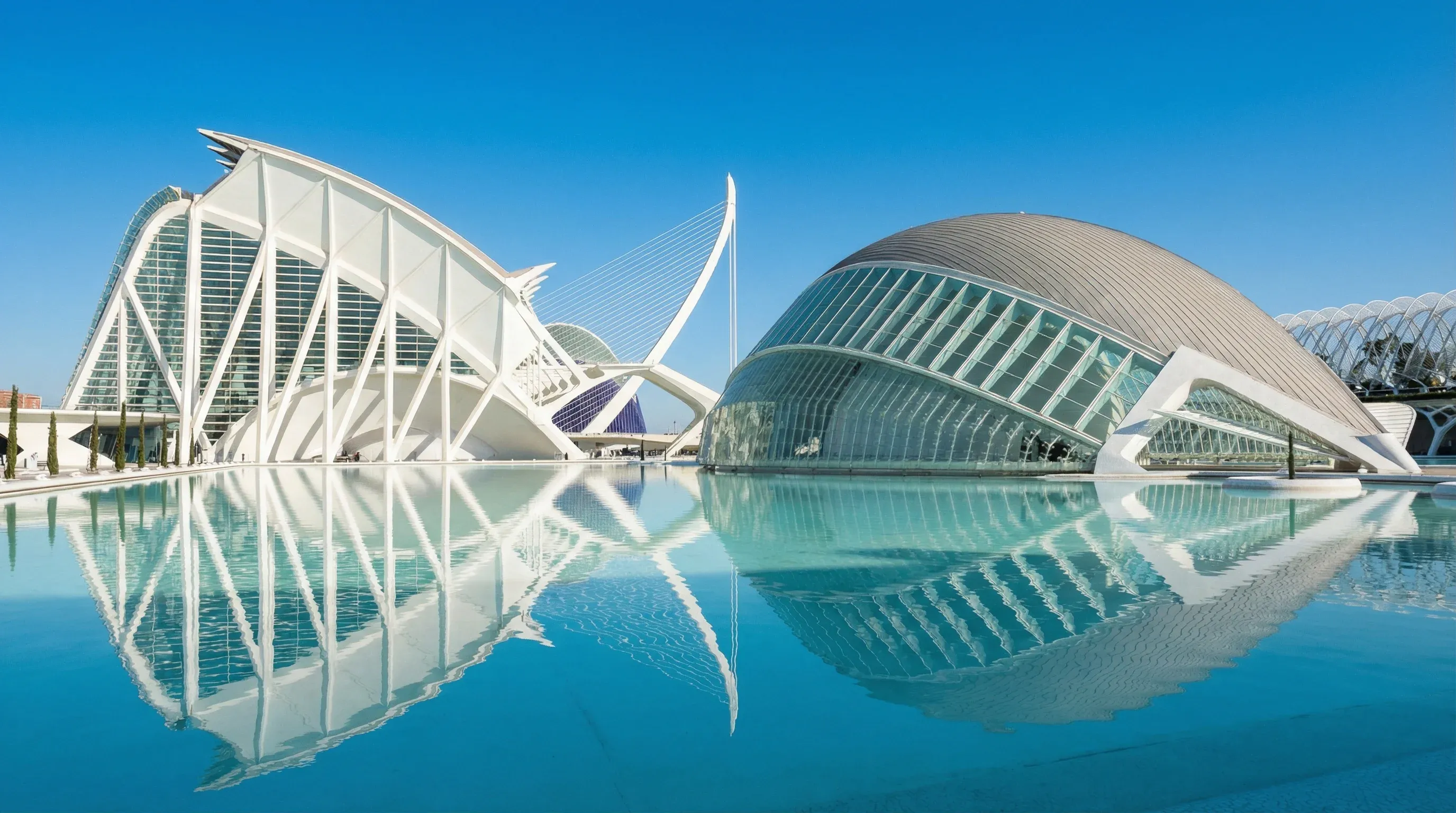
The City of Arts and Sciences in Valencia is an architectural wonder that looks like a space station. It houses the Science Museum (interactive and touch-friendly) and the Oceanogràfic, the largest aquarium in Europe, where families can walk through shark tunnels and see beluga whales. Just a bike ride away along the river park is Bioparc Valencia, a 'zoo-immersion' park where barriers are invisible, making you feel like you are walking inside the habitat with lemurs, gorillas, and giraffes.
South of the city, the Albufera Natural Park is a freshwater lagoon where paella was invented. Taking a boat trip here at sunset is a magical and calm experience. For thrill-seekers, Benidorm is home to Aqualandia, one of the world's oldest and best water parks, featuring slides that range from terrifying drops to gentle toddler rivers. Inland, the El Castell de Guadalest is a tiny village perched precariously on a rock pinnacle, accessible through a tunnel in the mountain—a real adventure to reach.
Practical Advice
Valencia is extremely bike-friendly; renting bikes is the best way to see the city. Summers are hot and humid (sticky), unlike the dry heat of Madrid. August is crowded on the coast; June and September are perfect. Book tickets for the Oceanogràfic in advance to avoid long queues.
Food & Drink
Typical meal times: Lunch 2:00 pm–4:00 pm (sacred paella time), Dinner 9:00 pm–11:00 pm.
Typical meal costs: Mid-range. An authentic Paella Valenciana costs €15–20 per person (approx. $16–22 USD / £13–17 GBP). Family meal: €70–100 (approx. $75–110 USD / £60–85 GBP).
Dietary requirements: Rice dishes are naturally gluten-free (check the stock). Vegetarian paella (Paella de Verduras) is widely available.
Signature dishes:
- Paella Valenciana – The original. Made with chicken, rabbit, green beans, and garrofón (butter beans). No seafood!
- Fideuà – Similar to paella but made with short pasta noodles and seafood. Kids often prefer the texture.
- Horchata (Orxata) – A sweet, milky drink made from tiger nuts (chufas), served ice-cold with 'fartons' (sugary dipping pastries).
- Agua de Valencia – A cocktail of orange juice, cava, vodka, and gin. (Strictly for parents!).
Why this score?
The region's tourism is defined by high-rise coastal developments and well-maintained beaches. Aside from some hiking in the Alicante mountains (like Barranc de l'Infern), the infrastructure is designed for maximum ease and comfort for families.
Why this score?
The presence of a massive expatriate population from the UK and Northern Europe has led to a highly developed network of private hospitals and clinics that offer English-speaking services. Public hospitals in Valencia and Alicante are equally excellent and well-equipped to handle tourists.
Why this score?
The Costa Blanca, centered on Benidorm and Alicante, is one of the world's most popular sun-and-sand destinations. The City of Arts and Sciences in Valencia also draws a significant international crowd, making the region a major player in global tourism statistics.

Valencia is generally cheaper than Barcelona or Madrid. You can find excellent family accommodation for €100–150 (approx. $110–160 USD / £85–128 GBP) per night. Eating out is affordable, especially 'Almuerzo' (mid-morning snack) which is a cultural institution. Benidorm offers options for every budget, from ultra-cheap to luxury.

Getting Here & Around
Getting Here
- Airports – Valencia (VLC) and Alicante-Elche (ALC) are both major international hubs. Alicante serves the resorts of Benidorm.
- Train – High-speed AVE connects Madrid to Valencia in 1 hour 40 mins and to Alicante in 2.5 hours.
- Ferry – Connections to the Balearic Islands from Valencia and Dénia.
Getting Around
- Bicycle – Valencia is flat with extensive bike lanes. Ideal for families.
- Tram – The TRAM d'Alacant is a scenic light rail connecting Alicante, Benidorm, and Dénia along the coast.
- Car – Useful for visiting inland castles like Castillo de Xàtiva or remote beaches.
Nearby Airports (3 airports)
Alicante–Elche Miguel Hernández Airport
ALCAlicante
Castellon-Costa Azahar Airport
CDTBenlloch
Valencia Arport
VLCValencia
View full flight map for Spain →
Official Links

Packing List
The Albufera rice paddies and warm climate mean mosquitoes are common.
You will likely spend a day biking the Turia gardens; dress for it.
Some beautiful coves in Alicante (like Granadella) are pebbly, not sandy.
Valencia city center has wide plazas with little shade; sun is intense.
Essential for hot summers; many shops and older transport lack strong AC.
To secure drying swimsuits on breezy hotel balconies (lines provided, pegs rarely).
Cash is still king for small purchases like ice cream kiosks and street vendors.
Hard to find in city express stores; useful for wet swimmers and unfinished snacks.
Café breakfasts are sweet (pastries/toast); healthy 'kid food' is hard to find in mornings.
Street noise, late-night dining, and local festivals can be loud well into the night.

Activities & Best Times

Hiking, wildlife, outdoor exploration, ecotourism
Diverse natural landscapes including the Albufera wetlands and the Barranc de l'Infern provide excellent trekking. Ideal conditions are found in the mild spring and autumn, whereas the intense humidity of July and August makes active exploration difficult.

Urban tourism, museums, historical sites, architecture
Valencia is a top-tier cultural hub featuring the futuristic City of Arts and Sciences and major art museums. Peak months include the high-energy Fallas festival in March and the pleasant walking weather of spring and autumn.

Learning experiences, scientific sites, historical education
The Oceanogràfic and the Príncipe Felipe Science Museum are internationally significant educational facilities. They are most vibrant during the international family travel window from spring through late summer.

Events, celebrations, seasonal attractions
Las Fallas (UNESCO) and La Tomatina are globally iconic festivals that define the region's international identity. Two world-famous festivals justify 'very_good' rating.

Sport tourism, fitness activities, active recreation
The region is a premier destination for cycling with routes like the Via Verde de Ojos Negros. Activity peaks during the shoulder seasons when weather is stable and cool enough for high-endurance sports.

Beach resorts, marine activities: diving, snorkelling, kite surfing, wind surfing, sailing
Features well-maintained Mediterranean stretches like Playa de la Malvarrosa and the unique Peñón de Ifach. Peak tourism aligns with warm sea temperatures from June to September, while winter months are too cool for a primary beach focus.

Spa retreats, wellness centers, peaceful getaways
Features authentic natural thermal experiences such as the Fuente de los Baños in Montanejos. These outdoor thermal sites are most enjoyable during the warmer months when the surrounding river swimming is also feasible.

Scenic drives, countryside tours, route-based travel
The Castle Route and the Guadalest Valley offer spectacular scenic driving opportunities through rugged terrain. Spring and autumn provide the best clarity for views and comfortable temperatures for frequent stops in hillside villages.

Amusement parks, family entertainment venues
Home to major parks like Terra Mítica and several significant water parks that appeal to families. These facilities are primarily summer-oriented, with water parks and many outdoor rides closing or operating on reduced schedules during the winter.

Attractions (33 total)



Public Holidays & Calendar Next 12 months
Public holidays, festivals, cultural celebrations, and seasonal natural phenomena coming up in Valencia & Costa Blanca over the next 12 months.
Loading holidays and events...

Travel Advisory
While Spain is a safe destination for most, half of the major advisory agencies recommend increased vigilance due to high rates of petty crime and a persistent domestic terrorism threat level.
Safety Topics
Traveller Advice (4 groups)

Spain has very progressive laws regarding sexual orientation and gender identity. Discrimination is rare in major cities, though standard discretion is advised in rural areas.

While generally safe, incidents of sexual assault occur; travellers are encouraged to stick with groups and avoid isolated areas after dark.

Accessibility is generally good in newer infrastructure and major cities, but historic districts may present mobility challenges due to cobblestone streets.

Keep copies of identification separate from originals. Be especially vigilant in high-traffic areas like Las Ramblas in Barcelona and the Madrid Metro where theft is common.
Agency Summaries
New Zealanders are advised to be more alert than usual due to the threat of terrorism and the high prevalence of petty theft targeting foreigners.
While general safety levels are high, tourists should maintain awareness regarding terrorism and the frequent occurrence of bag snatching in cities like Barcelona.
Visitors should take standard safety steps with a focus on protecting personal documents and being wary of pickpockets in crowded public spaces.
Most visits are trouble-free, though travellers should be aware of street crime, the general threat of terrorism, and seasonal environmental hazards like wildfires.
Canadians are advised to remain highly vigilant due to a sustained threat of terrorism. Petty crime remains a pervasive issue, particularly in urban tourist hubs.
Heightened caution is required primarily due to the ongoing risk of terrorist activity and occasional civil unrest in major metropolitan areas.
Information is provided for general guidance only and does not constitute travel, safety, medical, or legal advice. Conditions may change. Users are responsible for independently verifying information before travel.