

⚠️ SAFETY WARNING: Exercise increased caution due to the potential for civil unrest and economic instability. While tourism infrastructure is fully operational and welcoming, demonstrations can occur. Avoid all political gatherings and protests, monitor local media, and follow the advice of local authorities.
Overview
Sri Lanka, the teardrop-shaped island in the Indian Ocean, packs an incredible variety of experiences into a compact area, making it ideal for families who want to see a lot without endless travel days. You can start your morning exploring the ancient ruins of the Cultural Triangle, spot wild elephants on a jeep safari in the afternoon, and be relaxing by a hotel pool in the evening. The island’s geography shifts dramatically from the humid, palm-fringed coasts to the cool, misty heights of the Kandy & Hill Country, offering a natural playground for children of all ages.
Culturally, Sri Lanka is incredibly welcoming to children. Families are the heart of local life, and you will find that kids are greeted with warm smiles everywhere you go. The vibe is laid-back but adventurous-perfect for families who want to move beyond resort-only holidays but still value comfort. Whether you are taking the famous blue train to Ella, watching stilt fishermen at sunset, or climbing the lion-clawed steps of Sigiriya, the country offers a sense of discovery that feels safe and manageable for parents.
Key Attractions
No family trip is complete without visiting the Sigiriya Rock Fortress. This ancient palace atop a massive rock column is like a real-life adventure set; older kids will love the climb past the giant lion paws to the summit ruins, which offer panoramic views of the jungle below. Nearby, Minneriya National Park is famous for 'The Gathering,' where hundreds of wild elephants congregate around the reservoir-a wildlife spectacle that rivals African safaris and is easily accessible for children.
Head into the hills to experience the Temple of the Sacred Tooth Relic in Kandy, a vibrant cultural site that introduces kids to Buddhist traditions with drumming and colourful rituals. Further south, the Nine Arch Bridge near Ella looks like something from a Harry Potter movie; families can walk along the tracks (safely, between trains) or watch the blue train curve over the viaduct. Finally, the South Coast is home to Galle Fort, a UNESCO-listed fortified city where you can walk the ramparts at sunset and fly kites with local children, before heading to Mirissa Beach for whale watching.
Practical Advice
The best time to visit the west and south coasts is December to April, while the east coast is best from May to September. For families, hiring a private car with a driver is the most stress-free way to get around; it is surprisingly affordable and offers total flexibility for pit stops. Visas are required for most nationalities and should be applied for online (ETA) before travel. Dengue fever is a risk, so diligent mosquito protection is essential.
Food & Drink
Typical meal times: 12:00 pm to 2:30 pm (Lunch), 7:00 pm to 9:30 pm (Dinner).
Typical meal costs: 1,500–4,500 LKR (approx. $5–15 USD / €4.50–13.50 EUR).
Dietary requirements: Vegetarian options are abundant and excellent, with dhal (lentil curry) and vegetable curries available everywhere. Vegan food is also easy to find due to coconut milk replacing dairy in many dishes. Gluten-free travelers should watch out for wheat in roti and kottu, but rice-based dishes like hoppers are safe.
Family-friendly dining: Sri Lankan food can be spicy, so always ask for "no spice" or "white curry" (made with coconut milk and mild spices) for children. Hoppers (bowl-shaped pancakes) are a huge hit with kids, especially when served with egg. Highchairs are common in tourist hotels but less so in local eateries.
Signature dishes:
- Hoppers (Appa) – Bowl-shaped pancakes made from fermented rice flour and coconut milk, crispy on the edges and soft in the centre, often served with a fried egg inside.
- Kottu Roti – A rhythmic street food dish made of chopped flatbread stir-fried with vegetables, eggs, and meat (or cheese for kids) on a hot griddle.
- Rice and Curry – The staple meal consisting of a mound of rice surrounded by 3–5 different vegetable, meat, or fish curries and sambols.
- Curd and Treacle – A thick, creamy buffalo yoghurt topped with sweet kithul (palm) syrup, a favourite natural dessert.
Safety
Sri Lanka is generally safe for tourists, but the economic situation has led to sporadic protests in the past. It is vital to avoid all demonstrations and large political gatherings. Petty theft can occur in crowded areas, so keep an eye on bags. Swimming conditions on the coast vary seasonally; always check for red flags and strong currents, as the ocean can be rough. When visiting temples, ensure you dress modestly (covering shoulders and knees) to avoid offense.
Family Travel Notice
Review specific requirements for travelling with minors and ensure all family members are enrolled in relevant safety notification programs.

A family of four can expect to spend around 45,000–75,000 LKR (approx. $150–250 USD / €140–230 EUR) per day. This typically covers a private driver, mid-range family hotels with pools, entry fees to major sites like Sigiriya, and hearty meals. Local street food is incredibly cheap, while western-style restaurants and luxury lodges will increase the budget significantly.
Age Suitability





Did you know? Sri Lanka welcomes approximately 720,000 international visitors per year. Most visitors come from Europe.

Explore Regions
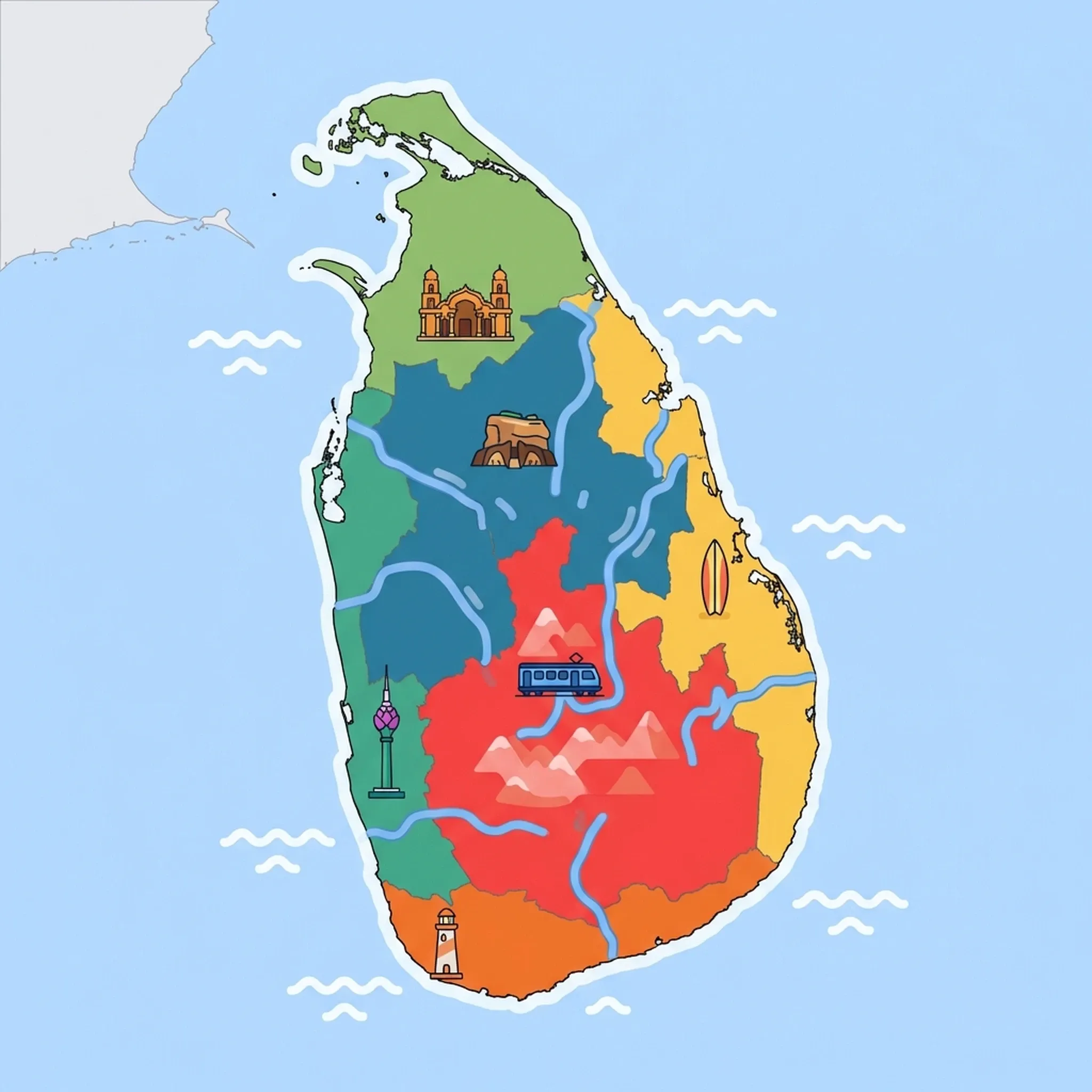
6 Regions
Colombo & West Coast
Urban energy meets golden Indian Ocean sunsets 🌇🌊
Cultural Triangle (Sigiriya, Polonnaruwa, Anuradhapura)
Ancient ruins, rock fortresses, and wild elephants 🐘🛕
East Coast (Trincomalee, Arugam Bay)
Untouched beaches, surfing waves, and whale watching 🐋🏄♂️
Kandy & Hill Country
Misty mountains, scenic trains, and endless tea 🚂🍃
Northern Sri Lanka (Jaffna)
Rich Tamil culture and untouched islands 🛕🏝️
South Coast (Galle, Mirissa)
Colonial charm, turquoise bays, and sea turtles 🐢🏰
Click on a region marker to explore details. Use the dropdown to color regions by activity suitability.

Getting There & Around
Getting There
- By Air – Bandaranaike International Airport (CMB) is the primary gateway, located 30km north of Colombo. It is well-connected to major hubs in the Middle East, Asia, and Europe.
- By Sea – Cruise ships occasionally dock at the port of Colombo, allowing day trips to nearby attractions like the National Museum of Colombo.
- Entry Requirements – Most visitors need an Electronic Travel Authorization (ETA) before arrival. A fee waiver program applies to citizens of several countries (check current status). Check your government website for the latest visa requirements, or use the IATA Travel Centre entry-requirements checker.
Getting Around
- Private Driver – The most popular choice for families. Hiring a car with a dedicated driver-guide typically costs 18,000–25,000 LKR (approx. $60–85 USD) per day and offers safety, air-conditioning, and the flexibility to stop for photos or bathroom breaks whenever needed.
- Trains – Famous for scenic beauty, especially the route through Kandy & Hill Country to Ella. While stunning, trains can be crowded; reserved First or Second Class tickets are essential for families and must be booked weeks in advance.
- Tuk-tuks – Three-wheeled auto-rickshaws are fun for short hops within towns like Galle. Always agree on the price before getting in or ensure the meter is used.
Official Links

Packing List
You must remove shoes at temples, and the stone floors can be scorching hot or gravelly.
Dengue fever is a risk, so high-strength repellent is essential for the whole family.
Eating with your hands is common, and soap isn't always available at local eateries.
Roads in the hill country are extremely winding and can upset children's stomachs.
White is the respectful colour for temples, and clothes must cover shoulders and knees.
Sri Lanka uses a mix of plug types (D, G, and M), so a versatile adapter is crucial.

Activities & Best Times

Adventure & Nature
ExcellentHiking, wildlife, outdoor exploration, ecotourism
Home to the world-renowned Pekoe Trail and Horton Plains, this region offers exceptional hiking through misty tea estates and biodiverse cloud forests. Peak months align with the driest windows for safe trekking, while the heavy monsoonal rains in October and November create hazardous trail conditions.
Home to world-class wildlife spectacles like 'The Gathering' of elephants in Minneriya and iconic geological features like Sigiriya and Pidurangala. Peak conditions align with the dry season and the elephant migration; October and November see heavy monsoonal rains that can restrict park access.
A premier destination for marine and terrestrial wildlife, featuring world-renowned blue whale watching in Mirissa and proximity to leopard-dense Yala National Park. Peak wildlife viewing coincides with the dry season when ocean conditions are calmest and animals congregate at waterholes in the parks.

City & Cultural
ExcellentUrban tourism, museums, historical sites, architecture
Kandy is the cultural heart of Sri Lanka, anchored by the Temple of the Sacred Tooth Relic and magnificent botanical gardens. The city experience is most authentic during the clear winter months and the vibrant mid-year festival period, though heavy late-year rains can hinder urban exploration.
Offers an unparalleled density of UNESCO World Heritage sites including ancient cities, rock fortresses, and cave temples. High demand coincides with dry winter months and the summer festival season, while the October-November Maha monsoon makes outdoor site exploration difficult.
Galle Fort is a globally unique UNESCO site blending 17th-century colonial Dutch architecture with a vibrant living culture and world-class boutique hospitality. The dry season from December to March offers the best conditions for exploring the historic ramparts and museums without the disruption of heavy monsoon rains.

Sports & Active
Very GoodSport tourism, fitness activities, active recreation
Boasts significant infrastructure for mountain sports, including the Flying Ravana adventure park and established cycling segments of the Pekoe Trail. The pilgrimage climb of Adam's Peak is a world-class active challenge specifically optimized for the drier months of January through March.
The region features world-class cycling loops through ancient ruins and segments of the internationally recognized Pekoe Trail. Peak months offer the most stable conditions for hiking and hot air ballooning, whereas monsoonal rains create slippery conditions and safety risks on rock climbs.
Offers high-quality active infrastructure including renowned surfing breaks at Mirissa and Weligama, alongside well-maintained nature trails through the Rumassala Sanctuary. The sports season is strictly defined by the swell conditions, with the best surfing and hiking conditions found during the drier winter months.

Beach & Sea
GoodBeach resorts, marine activities: diving, snorkelling, kite surfing, wind surfing, sailing
Shallow, calm waters at Casuarina and Charty beaches provide a safe environment for families, though facilities are rustic rather than luxury-oriented. The dry season from February to August offers the clearest waters and most reliable beach conditions.
Bentota and Negombo offer established beach resort infrastructure with good amenities for families. International travelers should avoid May through October when the southwest monsoon creates dangerous sea conditions and poor visibility.
Features high-quality coastal stretches like Nilaveli and Pasikudah with unique snorkeling at Pigeon Island. The season is strictly defined by the Southwest Monsoon, offering calm, clear waters while the rest of the island experiences rough seas.

Relaxation & Wellness
GoodSpa retreats, wellness centers, peaceful getaways
Famous for ancient bathing complexes and a high concentration of luxury Ayurvedic retreats integrated into the natural landscape. While wellness facilities operate year-round, the peak experience relies on the pleasant weather of the dry seasons.
The Keerimalai Mineral Springs offer a culturally authentic and historic site for restorative bathing. While unique, it lacks the comprehensive infrastructure of dedicated international wellness retreats.
Offers rustic, authentic wellness experiences at natural thermal sites like Kanniya Hot Springs. While culturally significant, these lack the high-end infrastructure found in global spa hubs, making them supplementary to a beach or nature itinerary.

Road Trips & Scenic
GoodScenic drives, countryside tours, route-based travel
The A32 coastal highway and the scenic causeways connecting the Jaffna islands offer dramatic, remote landscapes ideal for family touring. Driving is best during the dry months to ensure safe road conditions and clear coastal views.
The winding drives through tea country and the 18-Bend Road offer some of Asia's most spectacular mountain scenery. Driving is most enjoyable in the first quarter of the year when visibility is high; the year-end monsoon brings significant risks of landslides and heavy mountain fog.
Well-established scenic routes like the Heritage Route connect the triangle's points through lush landscapes and rural vistas. Driving conditions are best during the dry season; heavy rains in late autumn can lead to localized flooding and poor visibility on secondary roads.

Educational & Exploratory
GoodLearning experiences, scientific sites, historical education
The Ceylon Tea Museum offers a high-quality, specialized look into the global tea industry and colonial history that is unique to this region. While largely indoor, the experience is best paired with the harvest cycles in drier months when plantation activity is at its most visible.
Internationally recognized sea turtle conservation projects and the national natural history museum provide solid educational value. Though many facilities are indoor, peak visitation aligns with the general tourist season when supporting services are most reliable.
Provides destination-level educational sites including the Maritime Archaeology Museum and internationally significant sea turtle conservation centers. These facilities offer high-quality learning engagement for children, remaining accessible most of the year except during the peak rainfall of the inter-monsoon season.

Festivals & Seasonal
GoodEvents, celebrations, seasonal attractions
The Kandy Esala Perahera is genuinely world-renowned and the Great Elephant Gathering at Minneriya is a unique natural spectacle. The region deserves 'good' rating, though not 'excellent' as these are seasonal events rather than year-round festival infrastructure.
The Kandy Esala Perahera is a globally significant religious event featuring elaborate parades that draw massive crowds in July or August. Outside of this specific window and the Sinhalese New Year in April, there are few festival events of international scale.
The Vesak Festival is a major international cultural event featuring elaborate lanterns and displays throughout Colombo in May. Outside of this specific religious window, the region lacks high-tier international festival draws.

Theme Park & Entertainment
MarginalAmusement parks, family entertainment venues
MGM Water Park provides basic local-scale entertainment suitable for a quick family break. It is best visited during the long dry season, though it does not meet the standards of international destination theme parks.
Gregory Park provides basic family entertainment and water activities in Nuwara Eliya, primarily catering to domestic tourism. Peak visitation occurs during the local 'April Season' and August holidays, but the facilities lack the scale or innovation of international theme parks.
Excel World and local water parks provide entertainment but lack the global scale of top-tier international theme parks. Peak months align with school holiday periods and the dryer weather windows.

Public Holidays & Calendar Next 12 months
Public holidays, festivals, cultural celebrations, and seasonal natural phenomena coming up in Sri Lanka over the next 12 months.
Loading holidays and events...

Climate & Weather
Colombo & West Coast
Show Details
| Month | Temp °C | Rain | Humidity |
|---|
Cultural Triangle (Sigiriya, Polonnaruwa, Anuradhapura)
Show Details
| Month | Temp °C | Rain | Humidity |
|---|
East Coast (Trincomalee, Arugam Bay)
Show Details
| Month | Temp °C | Rain | Humidity |
|---|
Kandy & Hill Country
Show Details
| Month | Temp °C | Rain | Humidity |
|---|
Northern Sri Lanka (Jaffna)
Show Details
| Month | Temp °C | Rain | Humidity |
|---|
South Coast (Galle, Mirissa)
Show Details
| Month | Temp °C | Rain | Humidity |
|---|

Travel Advisory
All major agencies recommend exercising increased caution or a high degree of vigilance. Primary concerns include civil unrest, the threat of terrorism, and localized safety risks.
Safety Topics
Traveller Advice (4 groups)

Ensure you have an Electronic Travel Authorization (ETA) before arrival and maintain situational awareness during festivals or near political gatherings.

Female travellers should be aware of reports of verbal and physical harassment, particularly on public buses and in crowded areas. It is recommended to dress conservatively and avoid travelling alone at night.

Same-sex sexual activity is technically criminalized under colonial-era laws, and while rarely prosecuted, LGBTQ+ individuals may face social stigma and discrimination.

Review specific requirements for travelling with minors and ensure all family members are enrolled in relevant safety notification programs.
Agency Summaries
While no nationwide travel ban is in place, visitors are warned of a heightened threat of terrorism and likely demonstrations. Staying alert in public spaces and monitoring local news is strongly advised.
Increased caution is recommended because of civil unrest, the risk of terrorism, and potential landmine hazards in specific northern regions. Demonstrations can occur unexpectedly and disrupt essential services.
A high level of caution is necessary due to the threat of public protests and ongoing security risks. Terrorist attacks remain a possibility, potentially targeting areas frequented by foreigners.
The country has stabilized but significant security concerns remain, including the risk of terrorism and civil unrest. Economic issues continue to cause sporadic shortages of some basic goods.
Vigilance is required regarding personal security and local political developments. Visitors should ensure they have proper electronic travel authorizations and remain aware of local safety conditions.
Travellers should remain highly vigilant due to frequent public demonstrations, a persistent threat of terrorist activity, and general crime. Particular care is advised in remote areas where landmines may still exist.
Information is provided for general guidance only and does not constitute travel, safety, medical, or legal advice. Conditions may change. Users are responsible for independently verifying information before travel.