

Suriname is one of South America's smallest yet most culturally and ecologically diverse countries. Covering 93% of its land with pristine rainforest, it offers families a true jungle adventure combined with a warm, multicultural atmosphere. Unlike its Spanish and Portuguese-speaking neighbours, Suriname speaks Dutch and Sranan Tongo, and its capital features a synagogue standing peacefully next to a mosque. For families, the appeal lies in the accessibility of the Amazon: you can be comfortable in a city hotel in the morning and swimming in a jungle creek or spotting monkeys by the afternoon.
The vibe here is laid-back and "tranquilo." Children will be fascinated by the mix of faces and foods-Creole, Hindustani, Javanese, Chinese, and Indigenous influences blend seamlessly. While the infrastructure is simpler than in mass-tourism destinations, the rewards are immense. You can take longboats (korjaals) upriver to meet Maroon communities, watch sea turtles lay eggs on the beaches of Nature Reserves, or simply enjoy the tropical birdsong that fills the air even in the city centre. It is an educational and sensory playground for older children and teenagers especially.
Key Attractions
Start your journey in the capital, where the Historic Inner City of Paramaribo offers a lesson in colonial history with its unique wooden architecture. A visit to Fort Zeelandia is essential for understanding the country's past; the onsite museum is informative, and the views over the Suriname River are sweeping. Just a short walk away is the Palmentuin, a royal palm garden where families can stroll under towering trees-often spotting capuchin monkeys high in the branches.
For wildlife, a boat trip to Braamspunt at the river mouth is a highlight, famous for sightings of inquisitive Guiana dolphins (Profosu) that often jump near the boats. Heading inland, Brownsberg Nature Park is the most accessible slice of Amazon rainforest for families. A day trip here involves a drive up the mountain for stunning views over the Brokopondo Reservoir and hikes to refreshing waterfalls where you can swim. For a deeper immersion, the Interior & Rainforest offers lodges reachable by boat, providing a safe but thrilling jungle experience.
Practical Advice
Suriname has a tropical rainforest climate, hot and humid year-round with two rainy seasons (roughly December–January and April–August). The best time to visit is the long dry season from mid-August to mid-November, or the shorter dry spell in February–March. Families should note that while the coast is generally malaria-free (and the country was certified malaria-free by the WHO in 2025), seeking medical advice for deep interior travel is still smart due to other insect-borne risks. Yellow Fever vaccination certificates are strictly required for entry if arriving from a risk country (which includes most neighbours). English is widely spoken in tourism, but learning a few Dutch or Sranan Tongo words goes a long way.
Food & Drink
Typical meal times: Lunch is usually eaten between 12:00 pm and 2:00 pm, often the main meal of the day. Dinner is served from 7:00 pm to 9:00 pm, though warungs (Indonesian stalls) and roti shops stay open later.
Typical meal costs: Street food and warung meals cost around 200–400 SRD (approx. $5–10 USD / €4.50–9 EUR). Sit-down dinners in mid-range restaurants run from 800–1,200 SRD (approx. $20–30 USD / €18–28 EUR).
Dietary requirements: Vegetarian options are abundant thanks to the strong Hindu influence; roti shops always have potato and vegetable curries. Vegan food is found in Javanese warungs (tofu/tempeh), though ask about shrimp paste. Gluten-free can be harder to guarantee in street food due to soy sauce usage.
Family-friendly dining: Informal "warungs" are perfect for kids-atmosphere is relaxed, service is fast, and dishes like fried rice (nasi) or noodles (bami) are familiar favourites. Highchairs are rare outside major hotels.
Signature dishes:
- Pom – A festive oven dish made from pomtayer (a local root vegetable), chicken, and citrus juices, reflecting Jewish and Creole heritage.
- Roti – A flatbread served with curry (chicken, duck, or vegetable) and long beans; usually eaten with your hands, which kids love.
- Moksi Alesi – A "mixed rice" dish cooked with coconut milk, salted meat, shrimp, or fish, originally a meal invented by slaves using leftovers.
- Bakabana – Ripe plantain fried in batter, often served with a spicy peanut sauce; a sweet-savoury snack perfect for children.
- Saoto Soup – A hearty Javanese chicken soup with rice cubes, bean sprouts, and a hard-boiled egg, topped with crispy potato sticks.
Safety
Suriname is generally safe for families, but exercise normal precautions. In Paramaribo, avoid walking in quiet areas like the Palmentuin or the Palm Garden after dark, as robberies can occur. Petty theft is a risk in crowded markets. When travelling to the interior, always use reputable tour operators and do not venture into illegal mining areas. River travel is common; ensure your boat operator provides life jackets for all family members, especially children.
Family Travel Notice
Parents should closely supervise children due to the presence of rabies in local dogs and wildlife. Ensure all routine vaccinations are up to date before visiting.

Travel in Suriname is moderately priced. A family of four can expect to spend around 6,000–10,000 SRD (approx. $150–250 USD / €140–230 EUR) per day for mid-range hotels, meals, and excursions. Interior jungle tours are the biggest expense, often costing 8,000–12,000 SRD (approx. $200–300 USD / €185–275 EUR) per person for multi-day all-inclusive packages. Street food is very cheap, helping to balance the budget.
Age Suitability





Did you know? Suriname welcomes approximately 278,000 international visitors per year. Most visitors come from Europe.

Explore Regions
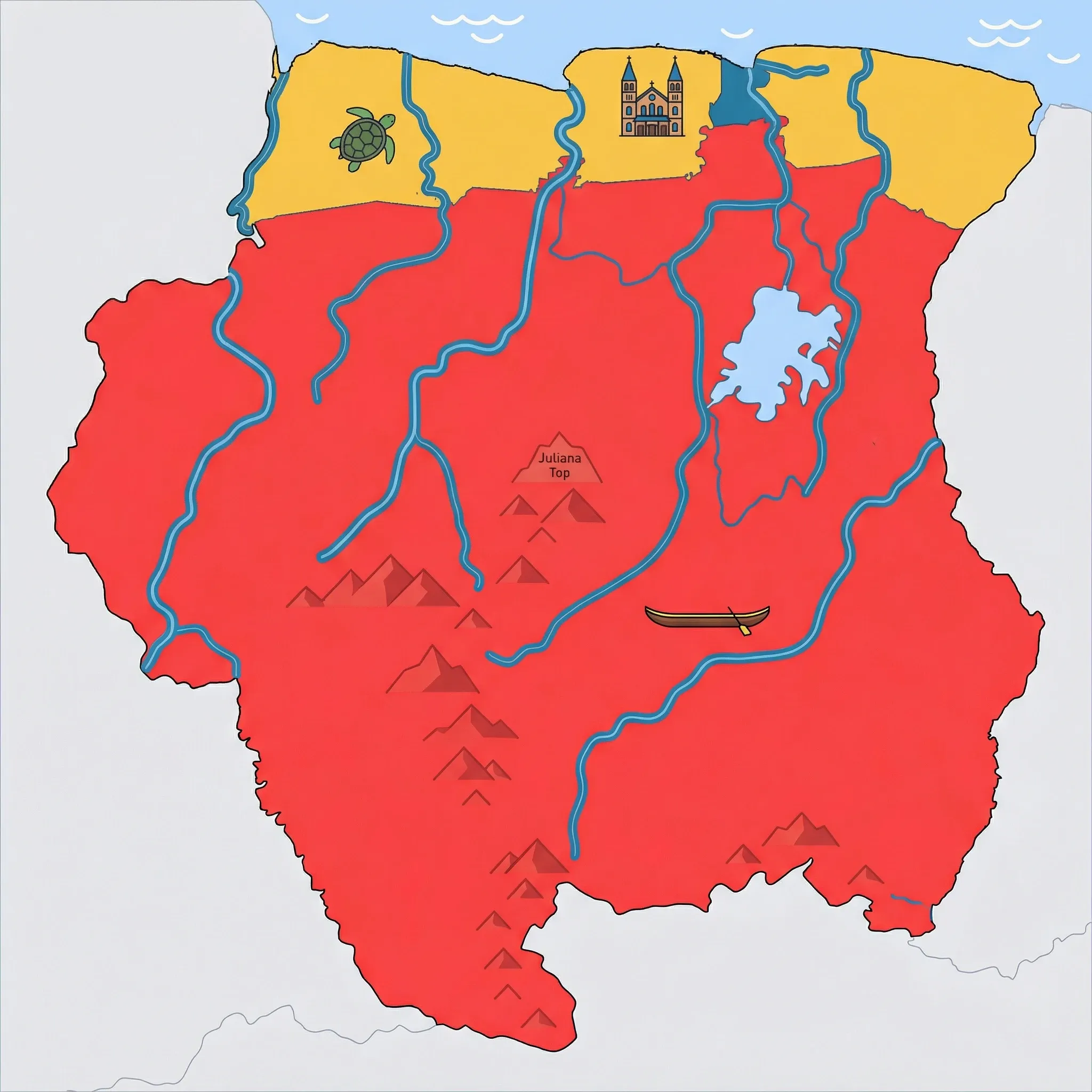
3 Regions
Interior & Rainforest
Deep jungle adventures and vibrant river culture 🐒🌿
Nature Reserves
Where giant turtles nest and granite mountains rise 🐢⛰️
Paramaribo
A colorful melting pot of history and flavors 🕌🕍🌴
Click on a region marker to explore details. Use the dropdown to color regions by activity suitability.

Getting There & Around
Getting There
- By Air – Johan Adolf Pengel International Airport (PBM) is the main gateway, located 45km south of Paramaribo. Key connections include KLM from Amsterdam, Suriname Airways from Miami and Amsterdam, and Copa Airlines from Panama City.
- By Land – You can enter from French Guiana via the ferry at Albina (east) or from Guyana via the ferry at South Drain (west). These routes are adventurous and take time.
- Entry Requirements – Most tourists (including US, UK, and EU citizens) must pay an Entry Fee (approx. $25–50 USD / €25–50 EUR) online before travel. Check your government website for the latest visa requirements, or use the IATA Travel Centre entry-requirements checker.
Getting Around
- Taxis – The safest and most convenient way to move around Paramaribo. Most do not have meters, so negotiate the fare in SRD before getting in. A typical city ride costs 200–400 SRD (approx. $5–10 USD).
- Domestic Flights – Small planes from Zorg en Hoop Airport are the fastest way to reach deep jungle lodges in the Interior & Rainforest. Operators like Gum Air and Blue Wing serve remote airstrips.
- Boats – Long, wooden motorized canoes (korjaals) are the buses of the interior. They are essential for visiting river villages and nature sites like Braamspunt. Always insist on life jackets for children.
- Car Hire – Available in the capital, but driving is on the left and traffic can be chaotic. Useful for self-driving to Brownsberg Nature Park, but a 4x4 is recommended for unpaved roads.

Packing List
Jungle lodges often rely on generators that turn off at night; essential for navigating cabins in the dark.
River travel in dugout canoes (korjaals) is frequent; keeps cameras and phones safe from splashes and sudden rain.
ATMs are scarce outside Paramaribo; interior lodges and villages often only accept cash for tips and souvenirs.
Tuck trousers into socks during jungle hikes to prevent tick bites and keep insects out.
Wildlife like sloths, monkeys, and toucans is often high in the canopy; essential for kids to see the action.

Activities & Best Times

Adventure & Nature
Very GoodHiking, wildlife, outdoor exploration, ecotourism
Suriname's interior offers pristine primary rainforest and highly authentic Maroon lodge experiences that appeal to sophisticated travelers. Peak visitation aligns with dry seasons when river navigation is predictable and wildlife visibility at sites like Brownsberg and Raleighvallen is highest.
Home to pristine primary rainforest and the UNESCO-listed Central Suriname Nature Reserve, offering high biodiversity and authentic jungle immersion. The experience is best during dry seasons when river levels are manageable and trails are accessible.
Only 2 attractions in database, both cultural (Fort Zeelandia, Historic Town). 'Very good' requires stronger nature/adventure infrastructure. If Peperpot Nature Park and plantation sites are added, this could remain very_good, but current evidence doesn't support it.

City & Cultural
Very GoodUrban tourism, museums, historical sites, architecture
A UNESCO-listed historic center with unique Dutch colonial wooden architecture and a vibrant multi-ethnic food scene. Best visited during the major dry season and the festive December period when the city's atmosphere is most lively.
Features unique Maroon cultural immersion in villages like Jaw Jaw and the UNESCO-significant Jewish heritage at Jodensavanne. Travel is best during drier months to facilitate the boat transfers required to reach these culturally rich interior settlements.
Offers unique cultural heritage at Jodensavanne and Galibi Indigenous villages, providing authentic insights into the region's complex history. Travel to these remote sites is significantly easier outside the heavy rainy season.

Sports & Active
Very GoodSport tourism, fitness activities, active recreation
Features challenging, internationally recognized hiking routes such as the Voltzberg Dome summit and Brownsberg trails. Peak dry months are essential for navigating these rugged jungle terrains safely.
Offers established infrastructure for adventure sports including canopy zip-lining at Berg en Dal and challenging trekking to the Voltzberg summit. Activities are frequently suspended or significantly degraded during the heavy May-July rains due to trail safety and flooding.
Established cycling routes through historic plantations and nature park discovery trails offer unique active exploration for families. These activities are best enjoyed when humidity is lower and trails are firm during the dry seasons.

Road Trips & Scenic
GoodScenic drives, countryside tours, route-based travel
The East-West Connection and Afobakaweg provide gateways to the country's diverse interior and coastal districts. Dry seasons are essential for safe driving conditions and clear views of the changing landscapes.
Scenic routes like the Afobakaweg offer dramatic jungle views, though road infrastructure is basic and requires the driest conditions for a smooth family experience. The long dry season from August to November provides the best driving conditions.
The route to Atjoni provides a paved conduit through the jungle landscape, though it serves more as an access artery than a dedicated scenic drive. Road conditions and visibility are optimal during the long dry season from August to November.

Beach & Sea
MarginalBeach resorts, marine activities: diving, snorkelling, kite surfing, wind surfing, sailing
Focuses on rugged coastal recreation and turtle nesting sites like Braamspunt rather than luxury resorts. Conditions are most reliable for boat access during the primary dry seasons.
Galibi Nature Reserve is a world-class site for nesting leatherback and green turtles. This specific seasonal phenomenon peaks between March and June, though the beaches are silty and unsuitable for traditional diving or snorkeling.

Educational & Exploratory
MarginalLearning experiences, scientific sites, historical education

Theme Park & Entertainment
MarginalAmusement parks, family entertainment venues

Public Holidays & Calendar Next 12 months
Public holidays, festivals, cultural celebrations, and seasonal natural phenomena coming up in Suriname over the next 12 months.
Loading holidays and events...

Climate & Weather
Interior & Rainforest
Show Details
| Month | Temp °C | Rain | Humidity |
|---|
Nature Reserves
Show Details
| Month | Temp °C | Rain | Humidity |
|---|
Paramaribo
Show Details
| Month | Temp °C | Rain | Humidity |
|---|

Travel Advisory
The majority of international agencies classify Suriname as a destination requiring standard safety awareness. While Ireland maintains a higher caution level, the consensus among five other major agencies supports a baseline risk assessment, provided travelers remain vigilant against local crime in the capital.
Safety Topics
Traveller Advice (4 groups)

All visitors must pay an entry fee prior to arrival and complete a digital immigration form. It is recommended to use only licensed hotel taxis and avoid the Palm Garden area after sunset.

Female travelers should be particularly cautious when traveling alone, especially at night in Paramaribo. Harassment and petty crime are reported risks in secluded areas or near major tourist hotels.

While same-sex acts are not illegal, social acceptance remains limited. Travelers should be mindful of local cultural sensitivities regarding public displays of affection.

Parents should closely supervise children due to the presence of rabies in local dogs and wildlife. Ensure all routine vaccinations are up to date before visiting.
Agency Summaries
Australia recommends standard vigilance. Travelers should be aware of high crime levels in Paramaribo, including armed robbery and theft. Ensure comprehensive travel insurance is obtained before departure.
The overall security situation is stable, though street crime and occasional political demonstrations in the capital require vigilance. Specific attention is given to road safety and the risk of flooding during rainy seasons.
No specific travel warning is in effect, but travelers are urged to maintain common sense security practices. Focus is placed on health risks in the region and the necessity of medical evacuation coverage.
Visitors should maintain standard safety awareness. Common concerns include petty crime in urban centers and limited medical infrastructure in remote areas. Health alerts are active for mosquito-borne illnesses such as Chikungunya.
Travelers are advised to follow standard safety measures. While the country is generally safe, urban areas like Paramaribo experience pickpocketing and robberies. Avoid displaying wealth and walking alone after dark.
Ireland advises increased vigilance due to risks associated with serious crime, potential civil unrest, and limited healthcare facilities. Travelers should avoid large gatherings and monitor local news.
Information is provided for general guidance only and does not constitute travel, safety, medical, or legal advice. Conditions may change. Users are responsible for independently verifying information before travel.