
Interior & Rainforest
Deep jungle adventures and vibrant river culture 🐒🌿
Click a region to explore
Overview
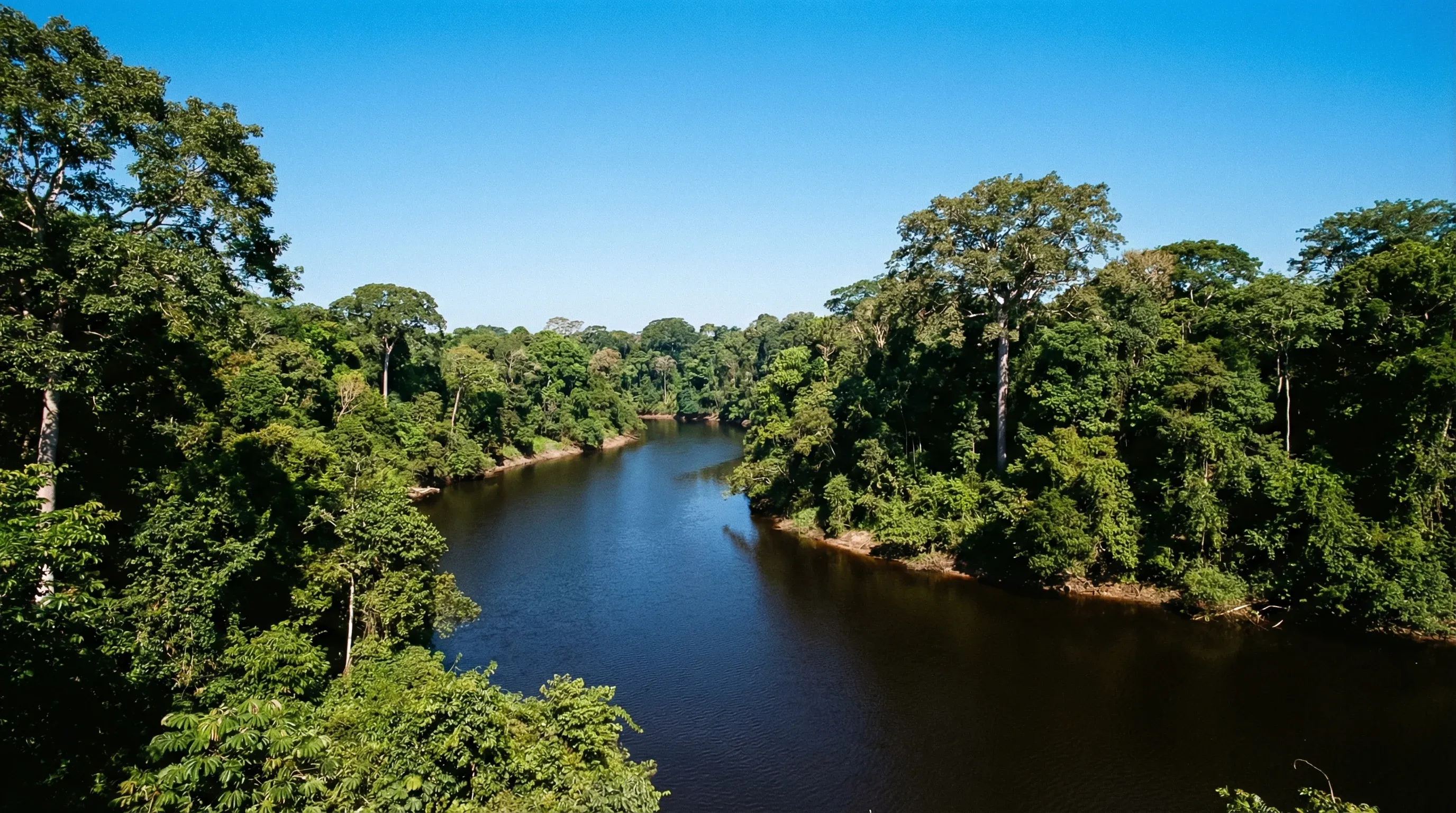
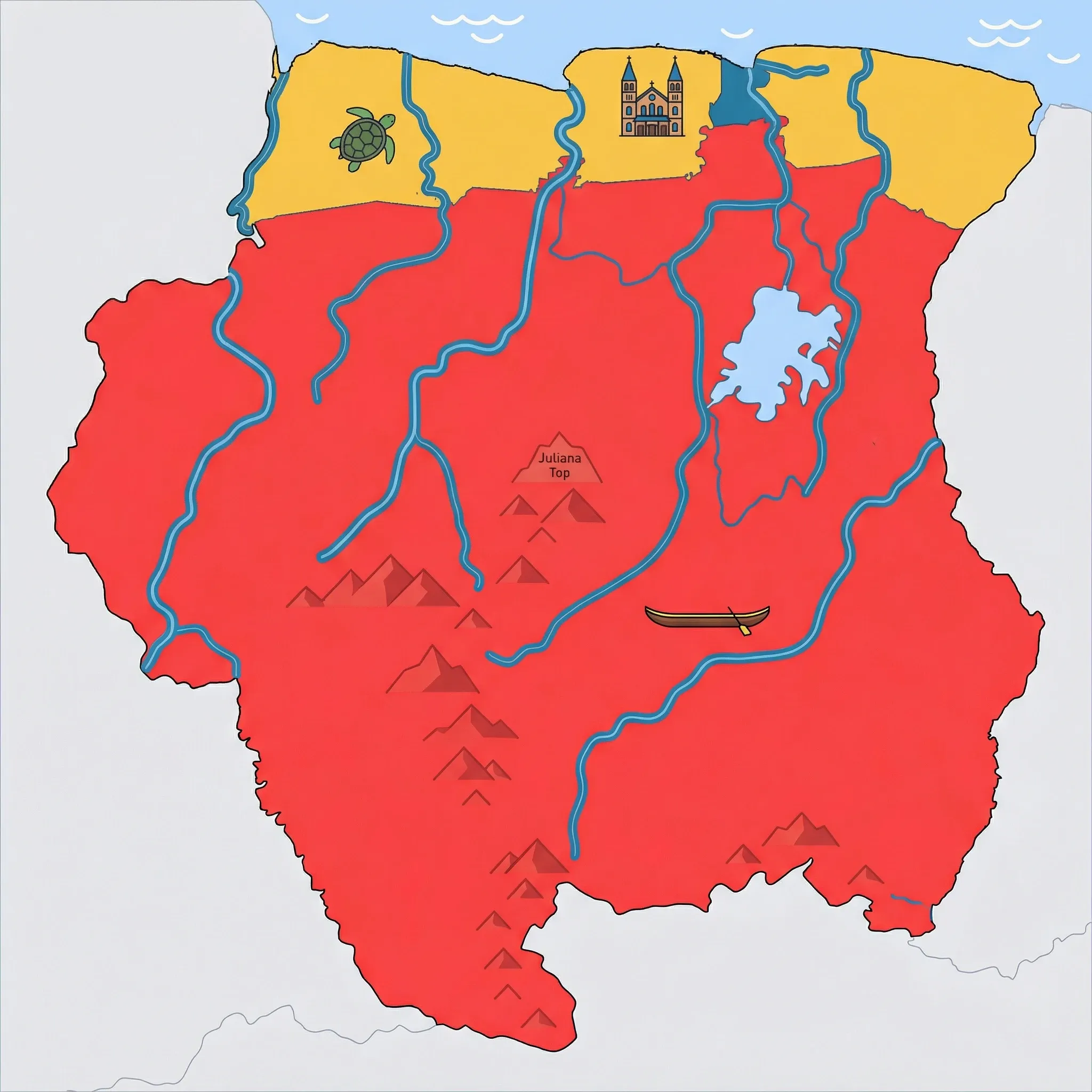
The Interior and Rainforest region of Suriname is not merely a destination; it is an immersion into one of the world's most pristine environments. Covering the vast majority of the country, this area is defined by the dense Guiana Shield rainforest, winding river systems, and the rich cultural heritage of the Maroon communities who have lived here for centuries. For families, visiting the interior is a transformative experience. The journey itself is an adventure, often involving a transition from small Cessna planes or bumpy 4x4 rides to long, slender dugout canoes known as korjaals. As you travel deeper into the Upper Suriname River basin, the noise of the modern world fades, replaced by the screech of macaws and the roar of rapids. The climate here is tropical and humid, with heavy rainforest showers that clear the air and feed the lush greenery.
This region is particularly special for children because it offers a living classroom on biology and anthropology without walls. Unlike manicured zoos, the wildlife here is wild and free; spotting a sloth, a toucan, or a troop of squirrel monkeys feels like a genuine discovery. The cultural aspect is equally engaging. Families often stay in lodges near Maroon villages like Jaw Jaw or Pikin Slee, where descendants of escaped enslaved people have preserved African traditions, languages, and artistic styles. Kids can learn how cassava bread is baked on open fires, watch intricate wood carving, and play in the river rapids which serve as the community's natural water park. It is a place of raw beauty and profound quiet, offering a family bonding experience that is difficult to replicate elsewhere.
Key Attractions
The crown jewel of the interior is the Central Suriname Nature Reserve, a UNESCO World Heritage site that protects a staggering amount of tropical forest. While parts are inaccessible, the areas open to visitors offer pristine hiking and wildlife watching opportunities that define the Amazonian experience. For a surreal landscape that captures the imagination of all ages, the Brokopondo Reservoir is a must-see. This massive man-made lake flooded a forest in the 1960s, and today, the petrified treetops of thousands of trees still poke through the water's surface. Boat trips here involve navigating a labyrinth of dead trees while looking for piranhas and caimans.
Closer to the capital but still feeling worlds away, Brownsberg Nature Park sits on a plateau overlooking the reservoir. It is the most accessible rainforest experience for families, offering manageable hikes to waterfalls where you can cool off under the canopy. History enthusiasts should visit Jodensavanne, the ruins of an early Jewish settlement and synagogue in the jungle, which tells a poignant story of Suriname's diverse colonial past. For more active families, a hike to the granite dome of Voltzberg offers a challenging climb rewarded with 360-degree views over the unbroken rainforest canopy.
Practical Advice
The interior is best visited during the dry seasons (February to April and mid-August to November) when river levels are stable and hiking trails are less muddy. Travel here requires planning; most lodges are all-inclusive due to the remote location. Malaria prophylaxis is generally recommended for the deep interior, so consult a travel doctor. Families should pack lightweight, long-sleeved clothing to protect against sun and insects.
Food & Drink
Typical meal times: Breakfast is served early, around 7:00 am to 8:30 am, to make use of daylight. Lunch is typically 12:30 pm to 2:00 pm, and dinner is served from 7:00 pm to 8:30 pm.
Typical meal costs: Most tourism in the interior is all-inclusive via lodges. However, independent meals at transit hubs like Atjoni are roughly SRD 150–250 (approx. $5–8 USD / €4.50–7.50 EUR) per person.
Dietary requirements: Lodges can cater to vegetarian and gluten-free needs if notified in advance, as supplies are shipped in from the city. Vegan options may be limited to rice, beans, and vegetables.
Signature dishes:
- Pepre Watra – A spicy, indigenous fish soup made with river water, cassava water, and peppers, often eaten with cassava bread.
- Braffu – A hearty soup packed with root vegetables like cassava, sweet potato, and plantain, often with salted meat or fish.
- Anjumara – A large, prehistoric-looking river fish (Wolf Fish) caught locally and usually grilled or stewed; a staple of the interior diet.
Why this score?
Visiting this region involves significant adventure, including travel via motorized dugout canoes on the Upper Suriname River and stays in remote jungle lodges with limited amenities. The dense Amazonian terrain, lack of paved roads, and the need to navigate river rapids provide a high level of ruggedness for travelers.
Why this score?
Medical facilities in the deep interior are extremely limited, often restricted to basic clinics in larger villages that are not equipped for tourist emergencies. Serious medical issues require expensive and time-consuming evacuation by small aircraft or boat back to Paramaribo, as there are no major hospitals in the Sipaliwini District.
Why this score?
As part of the sparsely populated Guiana Shield, this region receives very few international visitors, mostly consisting of niche eco-tourists and cultural researchers. While lodges exist near Maroon villages like Pikin Slee, the low total visitor numbers to Suriname and the logistical difficulty of reaching the deep interior keep this score low.

Visiting the interior is the most expensive part of a Suriname trip due to logistics. All-inclusive jungle lodges typically charge SRD 4,500–9,000 (approx. $150–300 USD / €140–280 EUR) per person per night, covering transport, food, and guided tours. Budget options (hammock stays) exist for around SRD 1,500–2,100 (approx. $50–70 USD / €45–65 EUR).
Family Travel Notice
Parents should closely supervise children due to the presence of rabies in local dogs and wildlife. Ensure all routine vaccinations are up to date before visiting.

Getting Here & Around
Getting Here
- Airports – Small charter flights leave from Zorg en Hoop Airport (ORG) in Paramaribo to various jungle airstrips like Kajana or Botopasi.
- Road & River – The primary route involves driving south to Atjoni (approx. 3 hours from the capital) and transferring to a motorized dugout canoe (korjaal) to travel up the Upper Suriname River.
- Driving – While you can drive to the edge of the interior (like Brokopondo Reservoir), the deep rainforest is generally not accessible by private rental car.
Getting Around
- River Boat (Korjaal) – The main highway of the region is the river. Long, narrow canoes fitted with outboard motors ferry families between lodges and villages.
- Walking – Once at a lodge, all exploration is done on foot via jungle trails.
- Small Aircraft – For covering vast distances between different river systems, charter planes are the only option.
Nearby Airports (1 airport)
Johan A Pengel International
PBMParamaribo
View full flight map for Suriname →
Official Links

Packing List
Essential for protecting electronics and clothes during open canoe transfers where splashing is constant.
Electricity is often generator-limited; red light avoids attracting insects at night.
Humidity prevents cotton from drying; long pants protect against mosquitoes and razor grass.
Wildlife (sloths, toucans, monkeys) is often high in the canopy and invisible to the naked eye.
Jungle lodges often rely on generators that turn off at night; essential for navigating cabins in the dark.
ATMs are scarce outside Paramaribo; interior lodges and villages often only accept cash for tips and souvenirs.
Tuck trousers into socks during jungle hikes to prevent tick bites and keep insects out.

Activities & Best Times

Hiking, wildlife, outdoor exploration, ecotourism
Suriname's interior offers pristine primary rainforest and highly authentic Maroon lodge experiences that appeal to sophisticated travelers. Peak visitation aligns with dry seasons when river navigation is predictable and wildlife visibility at sites like Brownsberg and Raleighvallen is highest.

Urban tourism, museums, historical sites, architecture
Features unique Maroon cultural immersion in villages like Jaw Jaw and the UNESCO-significant Jewish heritage at Jodensavanne. Travel is best during drier months to facilitate the boat transfers required to reach these culturally rich interior settlements.

Sport tourism, fitness activities, active recreation
Offers established infrastructure for adventure sports including canopy zip-lining at Berg en Dal and challenging trekking to the Voltzberg summit. Activities are frequently suspended or significantly degraded during the heavy May-July rains due to trail safety and flooding.

Scenic drives, countryside tours, route-based travel
The route to Atjoni provides a paved conduit through the jungle landscape, though it serves more as an access artery than a dedicated scenic drive. Road conditions and visibility are optimal during the long dry season from August to November.

Attractions (10 total)



Public Holidays & Calendar Next 12 months
Public holidays, festivals, cultural celebrations, and seasonal natural phenomena coming up in Interior & Rainforest over the next 12 months.
Loading holidays and events...

Travel Advisory
The majority of international agencies classify Suriname as a destination requiring standard safety awareness. While Ireland maintains a higher caution level, the consensus among five other major agencies supports a baseline risk assessment, provided travelers remain vigilant against local crime in the capital.
Safety Topics
Traveller Advice (4 groups)

All visitors must pay an entry fee prior to arrival and complete a digital immigration form. It is recommended to use only licensed hotel taxis and avoid the Palm Garden area after sunset.

Female travelers should be particularly cautious when traveling alone, especially at night in Paramaribo. Harassment and petty crime are reported risks in secluded areas or near major tourist hotels.

While same-sex acts are not illegal, social acceptance remains limited. Travelers should be mindful of local cultural sensitivities regarding public displays of affection.

Parents should closely supervise children due to the presence of rabies in local dogs and wildlife. Ensure all routine vaccinations are up to date before visiting.
Agency Summaries
Australia recommends standard vigilance. Travelers should be aware of high crime levels in Paramaribo, including armed robbery and theft. Ensure comprehensive travel insurance is obtained before departure.
The overall security situation is stable, though street crime and occasional political demonstrations in the capital require vigilance. Specific attention is given to road safety and the risk of flooding during rainy seasons.
No specific travel warning is in effect, but travelers are urged to maintain common sense security practices. Focus is placed on health risks in the region and the necessity of medical evacuation coverage.
Visitors should maintain standard safety awareness. Common concerns include petty crime in urban centers and limited medical infrastructure in remote areas. Health alerts are active for mosquito-borne illnesses such as Chikungunya.
Travelers are advised to follow standard safety measures. While the country is generally safe, urban areas like Paramaribo experience pickpocketing and robberies. Avoid displaying wealth and walking alone after dark.
Ireland advises increased vigilance due to risks associated with serious crime, potential civil unrest, and limited healthcare facilities. Travelers should avoid large gatherings and monitor local news.
Information is provided for general guidance only and does not constitute travel, safety, medical, or legal advice. Conditions may change. Users are responsible for independently verifying information before travel.