

Overview
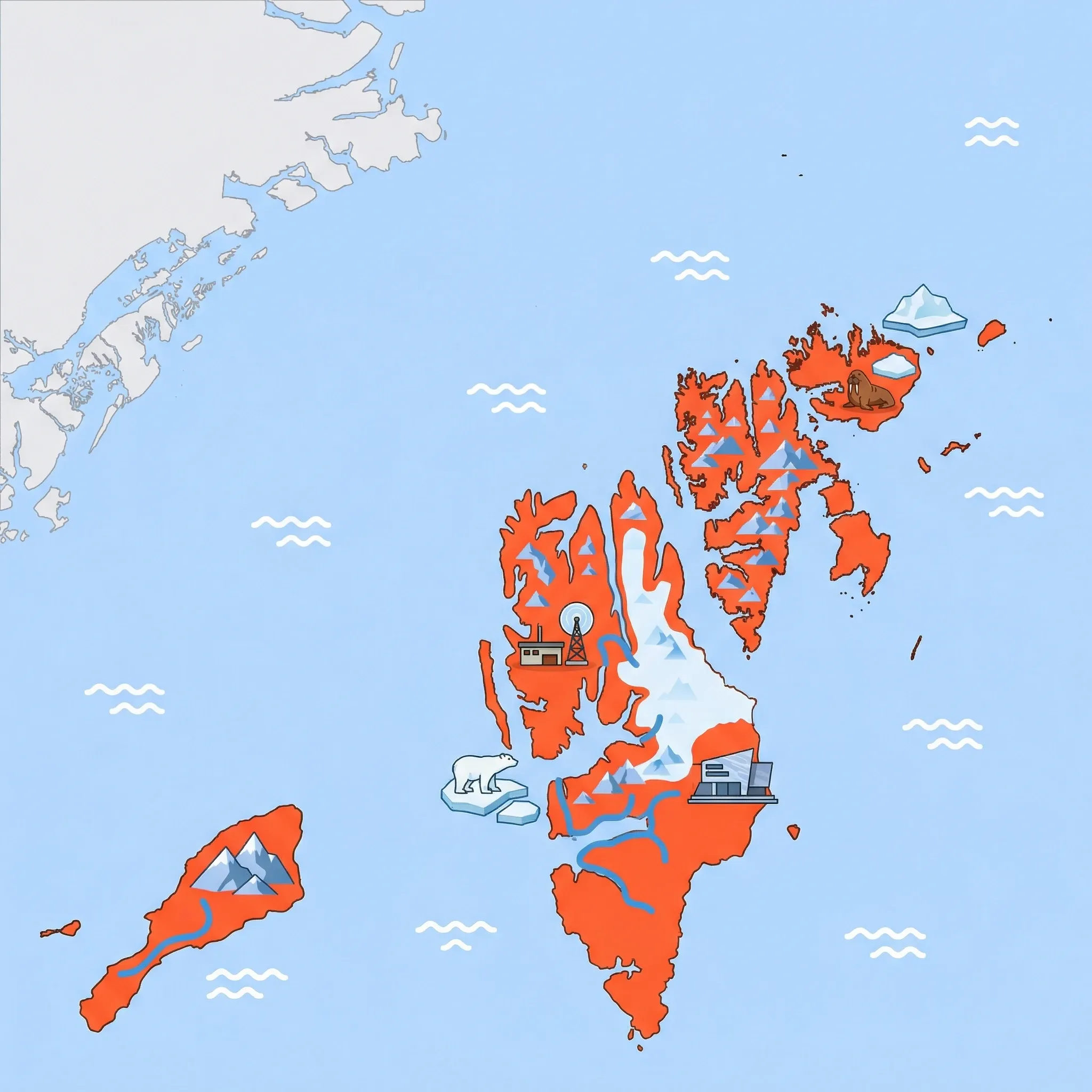
Located halfway between mainland Norway and the North Pole, Svalbard and Jan Mayen represents one of the world's most unique family travel destinations. While it may seem extreme, the main settlement of Longyearbyen is surprisingly comfortable and well-equipped for families, offering modern hotels, excellent food, and a safe base from which to explore the raw Arctic wilderness. This is a place where the sun doesn't set for four months in summer and doesn't rise for four months in winter, creating two completely different magical worlds for children to experience.
For families, Svalbard offers an education in nature and climate that no textbook can match. The landscape is a dramatic mix of jagged mountains, vast glaciers, and frozen fjords. While the environment is harsh, guided tours make it accessible even for children (usually aged 6+ for snowmobiles/boats). Whether you are spotting wild reindeer wandering through town or sailing past blue icebergs, the sense of adventure is constant. It is a destination that demands respect and preparation, but rewards families with memories of a pristine world few ever get to see.
Key Attractions
Start your journey in Longyearbyen at the Svalbard Museum. This award-winning facility is exceptionally family-friendly, featuring interactive exhibits where kids can crawl through a replica coal mine, touch polar bear fur, and learn about the early whalers and trappers. It provides the perfect context for everything else you will see on the islands.
Just outside town lies one of the world's most iconic structures: the Svalbard Global Seed Vault. While visitors cannot enter the vault itself (it is sealed to protect the world's crop diversity), families can take guided tours to the illuminated entrance. It is a powerful sight for older children and a great opportunity to discuss global sustainability. The view from the site over the fjord is also spectacular.
To truly experience the Arctic nature, book a boat cruise to the Nordvest-Spitsbergen National Park. These tours often stop at Magdalenefjorden, a breathtaking fjord surrounded by jagged peaks and glaciers. It is a historic site with remains of 17th-century whaling stations, and the calm waters are ideal for spotting walruses hauling out on the beaches-a highlight for any wildlife-loving child.
Practical Advice
Best time to visit: For families, the "Sunny Winter" (March–May) is ideal for snow activities like dog sledding, while summer (June–August) offers milder temperatures (around 5°C/41°F) and 24-hour daylight for boat trips. The "Polar Night" (November–January) is dark 24/7 and less suitable for young children due to limited outdoor options.
Clothing: Wool is essential. Dress kids in multiple wool layers, not cotton. You will need windproof and waterproof outer layers. Most tour operators provide heavy thermal suits and boots for excursions, but bring your own high-quality base layers.
Food & Drink
Typical meal times: Lunch is typically served from 11:30 am to 1:30 pm, and dinner from 5:00 pm to 9:00 pm. Kitchens often close earlier than in mainland Europe.
Typical meal costs: Dining is expensive due to import costs. A main dish costs 200–400 NOK (approx. $19–38 USD / €17–35 EUR). A family dinner can easily reach 1,200–1,600 NOK (approx. $115–150 USD / €105–140 EUR).
Dietary requirements: Longyearbyen has a surprisingly international food scene. Vegetarian and gluten-free options are widely available in hotels and restaurants, though fresh fruit and vegetables are expensive. Notify tour operators of allergies in advance for expedition meals.
Family-friendly dining: Most restaurants in Longyearbyen are welcoming to children. Kroa is particularly popular with families for its cozy, trapper-cabin atmosphere and hearty portions. Highchairs are generally available.
Signature dishes:
- Svalbard Reindeer – Often served as a steak, stew, or sausage. The local reindeer are smaller and the meat is very lean and tender.
- Arctic Char – A local cold-water fish similar to salmon but with a finer flake, usually pan-fried or cured.
- Seal Meat – Traditional Arctic fare, often served as a dark, rich steak. It has a strong, gamey flavor that adventurous eaters might want to try.
- Svalbard Waffles – Served in cafes and on boat trips, these heart-shaped waffles are a comforting snack, usually topped with jam and sour cream.
Safety
Polar Bears: This is the most critical safety rule. You must never leave the settlement of Longyearbyen without a professional guide equipped with a rifle and flare gun. Polar bears can appear anywhere. Within the town center (the "safe zone"), you are safe, but do not cross the invisible borders marked by polar bear signs without a guide.

Svalbard is one of the most expensive destinations in the world. High operating costs and remote logistics mean high prices. A family of four should budget 4,000–6,000 NOK (approx. $380–570 USD / €350–525 EUR) per day. This covers accommodation, meals, and one guided activity per day. Organized tours are the biggest expense but are mandatory for leaving the town safely.
Age Suitability





Why this score?
Svalbard represents one of the world's most accessible high-Arctic wildernesses, where visitors must carry firearms for polar bear protection when leaving settlements. The terrain is dominated by glaciers, fjords, and rugged mountains, offering extreme activities like multi-day dog sledding, snowmobile expeditions, and ice cave exploration. The environment is physically demanding and subject to extreme weather, placing it firmly in the top tier of global adventure travel.
Why this score?
Longyearbyen has a small, modern hospital capable of handling basic emergencies and primary care with high-quality Norwegian standards. However, the facility lacks specialized departments and advanced surgical capabilities, meaning serious or complex medical cases require expensive emergency aero-medical evacuation to mainland Norway. Jan Mayen has virtually no public medical infrastructure, consisting only of basic facilities for stationed personnel.
Why this score?
While a bucket-list destination for Arctic enthusiasts, Svalbard sees relatively low absolute visitor numbers, typically under 100,000 annually, due to its remote location and high cost of access. Most tourism is concentrated in Longyearbyen or on expedition cruise ships, making it a niche destination compared to mainstream European regions. Infrastructure is highly specialized and capacity-constrained, preventing the mass tourism seen in lower-latitude destinations.
Svalbard is a high-cost destination due to its remote location. Budget accommodation is scarce. A standard hotel room costs 2,000–3,500 NOK (approx. $190–330 USD / €175–305 EUR) per night. Guided activities are the biggest expense; a day trip (snowmobile or boat) typically costs 2,500–4,500 NOK (approx. $235–425 USD / €220–395 EUR) per person. Children under 12 often get a discount of 30–50% on tours.

Getting There & Around
Getting There
- By Air – Flights arrive at Svalbard Airport (LYR) from Oslo (OSL) or Tromsø (TOS). SAS and Norwegian operate daily flights. The flight from Oslo takes about 3 hours.
- Visa / Entry Requirements – Svalbard is a visa-free zone, but you must transit through Norway (Schengen Area) to reach it. Crucial: If you are from a country requiring a Schengen visa, you MUST have a double-entry visa to enter Norway, fly to Svalbard (leaving Schengen), and re-enter Norway on the way back. Check your government website for the latest visa requirements, or use the IATA Travel Centre entry-requirements checker.
- By Sea – In summer, expedition cruises sail to Svalbard from Northern Europe, often visiting Magdalenefjorden and other remote coastal sites.
Getting Around
- Walking – Longyearbyen is small and walkable. You can walk between most hotels, shops, and the Svalbard Museum safely. Reflective vests are essential in winter.
- Organized Tours – To leave town, you must use organized transport. In winter, this means snowmobiles or dog sleds; in summer, boats and enclosed wetland wagons. Most families book full-day or half-day excursions which include pick-up from hotels.
- Taxis – There is a local taxi service in Longyearbyen which is useful for getting to the airport or restaurants if the weather is bad. Car hire is available but of very limited use as there are only about 40km of roads and you cannot drive out of town without safety equipment.

Packing List
Local tradition requires removing outdoor boots at hotels, museums, and restaurants to keep floors clean.
Essential for walking in town during the Polar Night (Oct-Feb) as street lighting is minimal.
The Midnight Sun shines 24/7 from April to August; heavy curtains aren't always enough for kids.
The Arctic air is extremely dry; water-based creams can freeze on the face or cause stinging.
Cold drains phone batteries in minutes. Keep a charger in a warm inner pocket for family photos.

Activities & Best Times

Adventure & Nature
ExcellentHiking, wildlife, outdoor exploration, ecotourism
A premier global destination for polar wilderness, featuring glacier trekking, polar bear sightings, and expert-led dog sledding. Peak seasons align with the return of spring light for snow activities and the summer thaw for trekking.

Educational & Exploratory
Very GoodLearning experiences, scientific sites, historical education
Svalbard hosts globally unique educational attractions: the Svalbard Global Seed Vault (major international significance), world's northernmost research station at Ny-Ålesund, and specialized Arctic research facilities. 'Marginal' severely underrates this internationally significant educational destination.

City & Cultural
GoodUrban tourism, museums, historical sites, architecture
While culturally fascinating (Soviet mining heritage, Arctic history), Longyearbyen and Barentsburg are tiny settlements with limited cultural infrastructure. 'Very_good' suggests major urban cultural destinations - inappropriate for Arctic frontier towns. Good rating better reflects specialized cultural interest.

Sports & Active
GoodSport tourism, fitness activities, active recreation
Features challenging Arctic hiking and mountaineering on recognized routes like Nordenskiöldtoppen and Platåberget. These activities are strictly seasonal, limited to the brief summer window for safety and terrain accessibility.
Beach & Sea
UnsuitableBeach resorts, marine activities: diving, snorkelling, kite surfing, wind surfing, sailing
Arctic waters with near-freezing temperatures year-round are not beach destinations by any international standard. Coastal experiences here are wildlife/glacier focused, not beach recreation. No beach/coastal recreation areas in database.

Attractions (7 total)



Public Holidays & Calendar Next 12 months
Public holidays, festivals, cultural celebrations, and seasonal natural phenomena coming up in Svalbard over the next 12 months.
Loading holidays and events...

Travel Advisory
The majority of global agencies classify Svalbard and Jan Mayen as a low-risk destination where standard safety awareness is sufficient for most travellers. However, extreme environmental hazards are noted.
Safety Topics
Agency Summaries
Standard precautions are recommended. For those visiting Svalbard, be aware that the U.S. Embassy has no physical presence on the islands, limiting emergency support. Harsh weather, polar bear threats, and isolated infrastructure pose unique risks to visitors.
No specific travel restrictions are in place. Visitors to Svalbard must adhere to safety protocols issued by the local Governor, particularly regarding protection against polar bear encounters and navigating hazardous terrain like glaciers and avalanche zones.
Irish citizens are advised to follow standard safety measures. Note that while Svalbard is Norwegian territory, it operates outside the Schengen Area, requiring a passport for entry and exit through mainland Norway.
Travellers should maintain standard safety awareness. In the Svalbard archipelago, specific dangers include the significant presence of polar bears and extreme Arctic conditions. Rescue services are very limited in remote sections, making self-sufficiency and proper equipment essential.
New Zealanders should maintain general vigilance. Specific attention should be paid to the local terrorism threat levels in the region and the physical challenges presented by the Arctic environment in the far north.
Australia advises a baseline level of safety awareness. While there is a reciprocal healthcare agreement, comprehensive insurance is vital for Svalbard due to the high costs of potential medical evacuations from remote Arctic areas.
Information is provided for general guidance only and does not constitute travel, safety, medical, or legal advice. Conditions may change. Users are responsible for independently verifying information before travel.