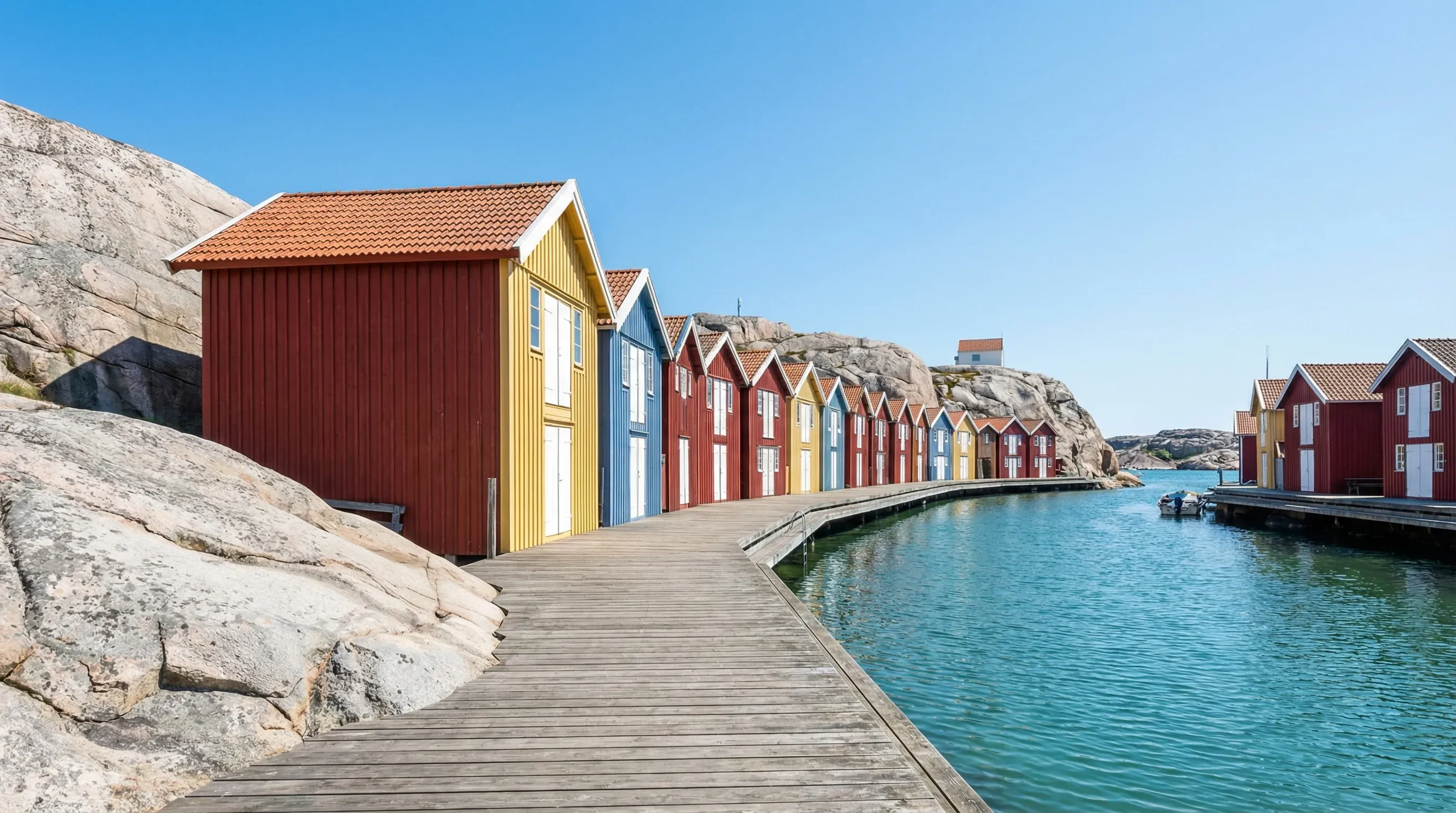

Gothenburg & West Coast
Salty splashes, fresh seafood, and island adventures 🦀⛵
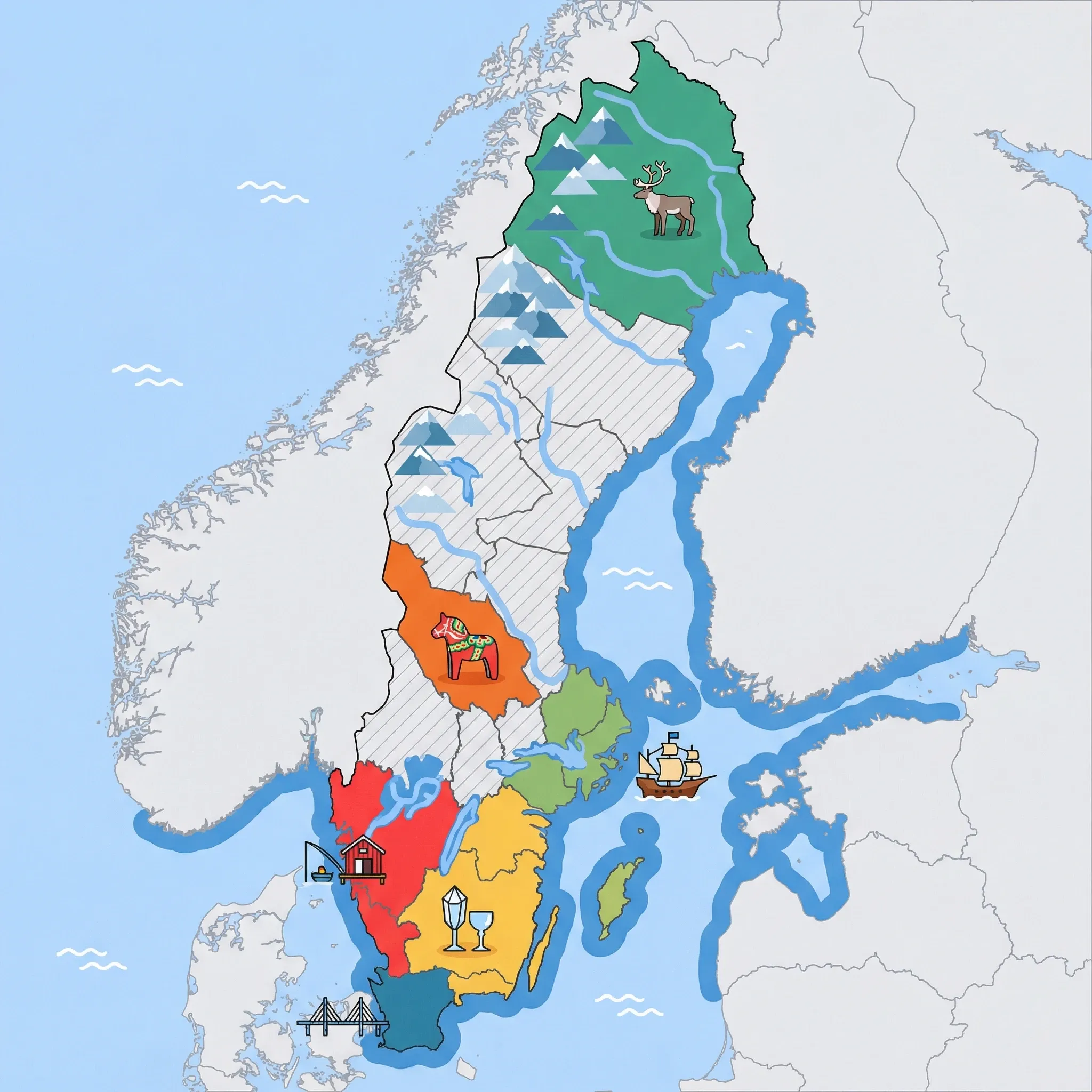
Click a region to explore
Gothenburg (Göteborg) and the surrounding Bohuslän coast offer a distinctive alternative to the capital. While Stockholm is built on islands, the West Coast is defined by the open sea, granite cliffs, and a vibrant fishing culture. Gothenburg itself is known as Sweden's "friendly" city, with a walkable centre, Dutch-style canals, and wide boulevards. For families, it is arguably the best city break in the country thanks to an abundance of centralized, high-quality attractions. Beyond the city limits, the coast fragments into thousands of pink granite islands. This is the Bohuslän archipelago, a world of fishing villages, smooth rocks perfect for sunbathing, and waters teeming with marine life.
The lifestyle here revolves around the ocean. Families can take "oyster safaris," kayak through marine national parks, or engage in the region's favourite pastime: crab fishing (krabbfiske) from the docks using nothing more than a string, a clothespin, and a piece of bacon. The pace of life is relaxed, the air is salty, and the light is spectacular. It is a region that encourages active play—climbing rocks, sailing boats, and exploring historic fortresses—followed by cozy "fika" (coffee and cake) in wooden harbour towns.
Key Attractions
The crown jewel for families is Liseberg in the heart of Gothenburg. Consistently voted one of the best amusement parks in the world, it offers everything from adrenaline-pumping rollercoasters to the beautiful "Rabbit Land" for toddlers, all set within landscaped gardens. Just a short tram ride away is Slottsskogen Barnens Zoo, a massive park where families can see moose, seals, and penguins for free. It also features one of the city's best adventure playgrounds, Plikta.
Heading north along the coast, Carlsten Fortress on the car-free island of Marstrand is a must. Kids love the ferry ride over and the guided tours that tell spooky tales of the fortress's most famous prisoner, Lasse-Maja. Further north, Nordens Ark is a unique wildlife sanctuary dedicated to endangered species. Unlike a typical zoo, it is set in a wild forest environment where you walk on raised wooden walkways to spot snow leopards, wolves, and red pandas. For a deep dive into marine life, the Sjöfartsmuseet Akvariet (Maritime Museum and Aquarium) in Gothenburg has recently been renovated and offers fantastic interactive exhibits on the ocean.
Practical Advice
The best time to visit is summer (June to August) when the archipelago ferries are running frequently and the weather allows for swimming. However, the coast can be windy year-round, so windproof jackets are essential. Gothenburg is very stroller-friendly with low-floor trams. If visiting the islands, be aware that some (like Marstrand and the Koster Islands) are car-free, requiring parking on the mainland.
Food & Drink
Typical meal times: Lunch is 11:30 am to 1:30 pm. Dinner is typically 6:00 pm to 9:00 pm. On the islands, restaurants may close earlier (around 8:00 pm) on weekdays outside of July.
Typical meal costs: Expect to pay 180–320 SEK (approx. $17–30 USD / €15–28 EUR) for a fresh seafood main course. A "Dagens Lunch" in the city is around 125–150 SEK (approx. $11–14 USD / €11–13 EUR).
Dietary requirements: Extremely easy. Gothenburg is a foodie capital with endless vegan and allergy-friendly options. However, seafood restaurants on the islands may have fewer non-fish options.
Signature dishes:
- Räkmacka (Shrimp Sandwich) – A mountain of hand-peeled Atlantic prawns piled high on rye bread with egg, mayonnaise, and lettuce. The version at Gothia Towers is legendary.
- West Coast Mackerel – Often smoked or fried, this is a summer staple, best eaten fresh from a harbour smokehouse.
- Hagabullen – A plate-sized cinnamon bun found specifically in the Haga district of Gothenburg. One is enough to feed a whole family.
- Halv Special – A Gothenburg street food classic: a hot dog in a bun topped with a scoop of mashed potato and shrimp salad.
Why this score?
The granite archipelago offers excellent sea kayaking and rock scrambling, providing a sense of coastal exploration. However, the region is highly developed with luxury marinas and accessible fishing villages, keeping the overall adventure level moderate and safe for families.
Why this score?
Gothenburg is home to Sahlgrenska University Hospital, one of Northern Europe's leading medical facilities. The region offers world-class healthcare with specialized tourist-facing services and universal English proficiency among medical professionals.
Why this score?
As Sweden's second-largest city and home to Liseberg, Scandinavia's most popular amusement park, Gothenburg is a major international draw. The Bohuslän coast is a premier destination for sailing and seafood tourism, particularly among Norwegian, German, and British visitors.

Gothenburg is slightly more affordable than Stockholm, but the popular coastal towns (like Smögen and Marstrand) have "resort pricing" in July. A family hotel room costs 1,400–2,200 SEK (approx. $130–205 USD / €120–190 EUR). Public transport is good value; a 24-hour family ticket covers trams, buses, and some ferries.
Family Travel Notice
Sweden has exceptionally strict laws prohibiting all forms of corporal punishment. Any physical discipline or even the threat of it can lead to legal prosecution and the removal of children by local social authorities.

Getting Here & Around
Getting Here
- Airports – Gothenburg Landvetter Airport (GOT) is well-connected internationally. The airport bus (Flygbussarna) takes 20 minutes to the city centre.
- Train – Fast trains connect Stockholm to Gothenburg in 3 hours. Trains from Copenhagen (via the Öresund bridge) take about 3.5 hours.
- Ferry – Stena Line ferries run from Frederikshavn (Denmark) and Kiel (Germany) directly into Gothenburg harbour.
Getting Around
- Public Transport – Gothenburg has an iconic blue tram network that covers the whole city. Kids under 7 travel free. The same ticket works on the commuter ferries to the southern archipelago.
- Ferry – Essential for the coast. Västtrafik runs commuter ferries, while private boats serve tourist routes to islands like the Kosterhavet National Park.
- Walking – Gothenburg is compact. The islands are best explored on foot or bike.
Nearby Airports (2 airports)
Göteborg Landvetter Airport
GOTGothenburg
Halmstad
HADHalmstad
View full flight map for Sweden →

Packing List
A plastic winder with a clothespin; the #1 activity for kids on the docks. Buy locally or pack one.
The coastal wind (västanvind) can be cold even on sunny summer days.
Beaches are often rocky or have sharp shells; essential for protecting little feet.
Necessary if you plan to visit the outer islands or Kosterhavet by ferry.
Summer nights are extremely bright (nearly 24h daylight in the north), making it hard for kids to sleep.
Ticks are very common in Swedish grass and forests; quick removal is essential to prevent Lyme/TBE.
Tap water is pristine and free everywhere; buying bottled water is unnecessary and expensive.
Many bathing spots, especially on the West Coast, have rocky granite shores rather than sandy beaches.
Essential for a Swedish 'fika' (coffee/hot chocolate break) outdoors in the forest or park.

Activities & Best Times

Hiking, wildlife, outdoor exploration, ecotourism
Offers world-class immersion in unique coastal ecosystems, including Sweden's first marine national park and the extensive Bohusleden trails, best explored during the long daylight hours of summer.

Urban tourism, museums, historical sites, architecture
Gothenburg provides a sophisticated urban experience with world-class botanical gardens and a renowned seafood scene, peaking during summer festivities and the atmospheric December Christmas markets.

Learning experiences, scientific sites, historical education
Home to Universeum and the Maritime Museum, the region offers top-tier scientific and maritime engagement that serves as a standalone motivator for traveling families.

Sport tourism, fitness activities, active recreation
Features the award-winning Kattegattleden cycling route and extensive coastal sailing infrastructure, providing high-quality active tourism conditions from May to September.
Beach resorts, marine activities: diving, snorkelling, kite surfing, wind surfing, sailing
Features pristine granite archipelagos and clear waters in Kosterhavet and Marstrand, though swimming is strictly limited to the short mid-summer window when water temperatures are tolerable.

Spa retreats, wellness centers, peaceful getaways
Historic cold-bath houses (Kallbadhus) and urban spas like Hagabadet offer a deeply authentic Swedish wellness culture that is most evocative during the summer heat or winter cold.

Scenic drives, countryside tours, route-based travel
The Bohuslän coastal scenic route is celebrated for its views of fishing villages and rocky coastlines, requiring the clear visibility and dry roads of late spring through summer.

Amusement parks, family entertainment venues
Liseberg is an internationally recognized theme park that is a primary draw for families, operating seasonally with major peaks for the summer season, Halloween, and Christmas.

Events, celebrations, seasonal attractions
The Gothia Cup and Way Out West attract international crowds in summer, while the Christmas season offers traditional Swedish markets, though the festival calendar is quiet otherwise.

Winter sports, ski resorts, snow activities
Small local hills like Alebacken provide basic winter recreation but lack the elevation, infrastructure, and reliable snow depth to compete with international alpine destinations.
Attractions (26 total)



Public Holidays & Calendar Next 12 months
Public holidays, festivals, cultural celebrations, and seasonal natural phenomena coming up in Gothenburg & West Coast over the next 12 months.
Loading holidays and events...

Travel Advisory
While several agencies recommend normal precautions, a significant number of others have elevated their warnings due to credible threats of terrorism and a rise in urban gang violence. Travellers should exercise increased vigilance, especially in major cities.
Safety Topics
Traveller Advice (3 groups)
Sweden has exceptionally strict laws prohibiting all forms of corporal punishment. Any physical discipline or even the threat of it can lead to legal prosecution and the removal of children by local social authorities.

Travellers visiting remote Arctic regions should be prepared for extreme weather and limited access to search and rescue services. Emergency medical evacuations in these areas can be delayed by several days.

Sweden is a highly progressive society where same-sex relationships are legal and social acceptance is very high. No specific safety concerns for this group have been identified.
Agency Summaries
The advisory level was recently lowered to the baseline, though travelers are still urged to be cautious of the 'elevated' national terrorism threat level and common petty crime.
Heightened vigilance is recommended because of the threat of terrorism. Extremist groups continue to target public spaces, transit hubs, and tourist locations with little to no warning.
Visitors should follow standard safety protocols, stay informed of local news, and be aware of their surroundings in crowded areas where petty theft may occur.
While no specific travel restrictions are in place, there is a persistent threat of terrorism and reports of organized crime activity in larger cities like Stockholm and Gothenburg.
Safety and security concerns are higher than in New Zealand, primarily due to the threat of terrorism and incidents of violent organized crime in major metropolitan regions.
Travellers should remain highly vigilant due to the ongoing risk of terrorist attacks and a significant increase in gang-related violence, including shootings and the use of explosives in major urban areas.
Information is provided for general guidance only and does not constitute travel, safety, medical, or legal advice. Conditions may change. Users are responsible for independently verifying information before travel.