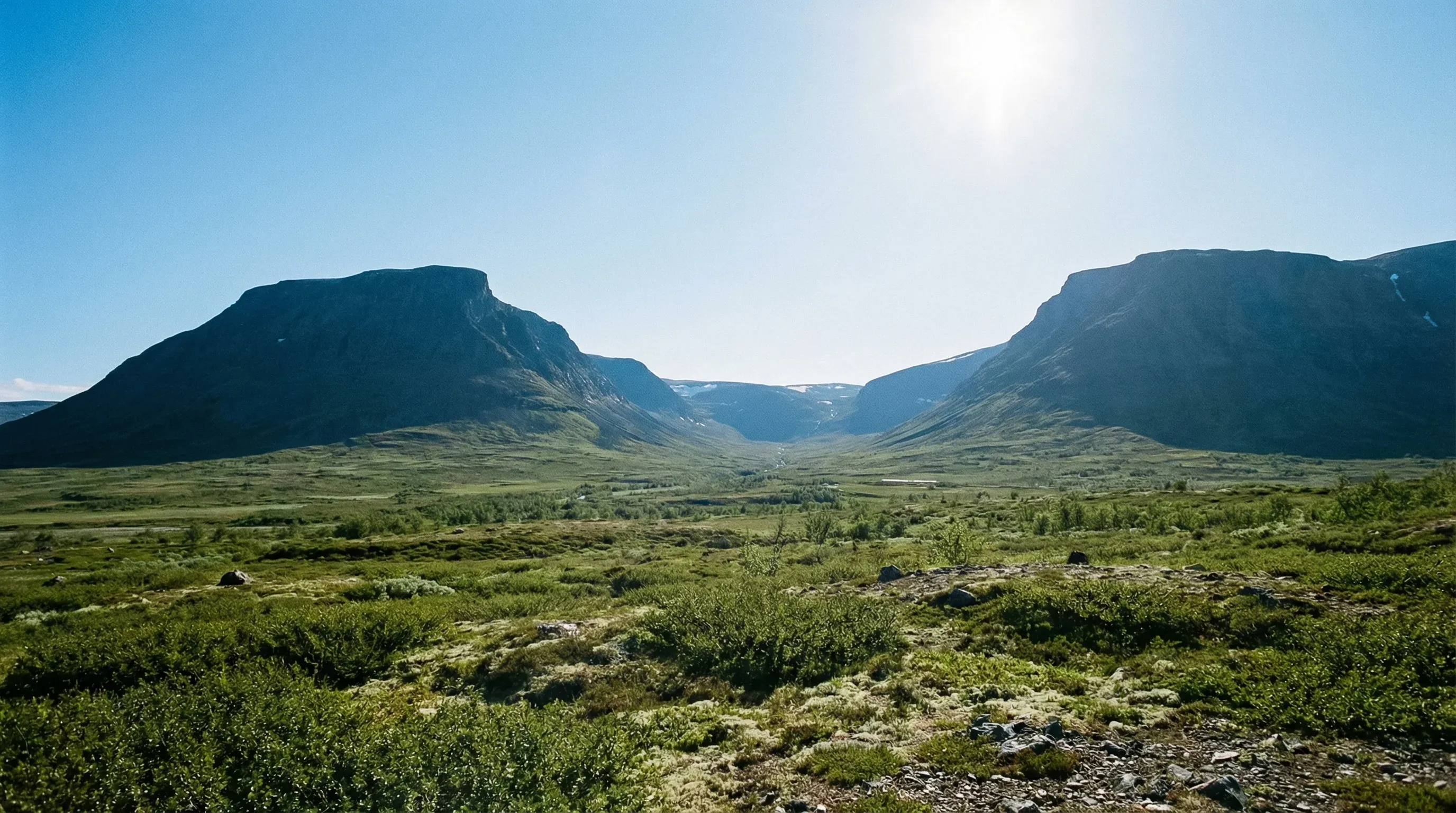

Swedish Lapland
Arctic adventures, Northern Lights, and Midnight Sun ❄️🌌
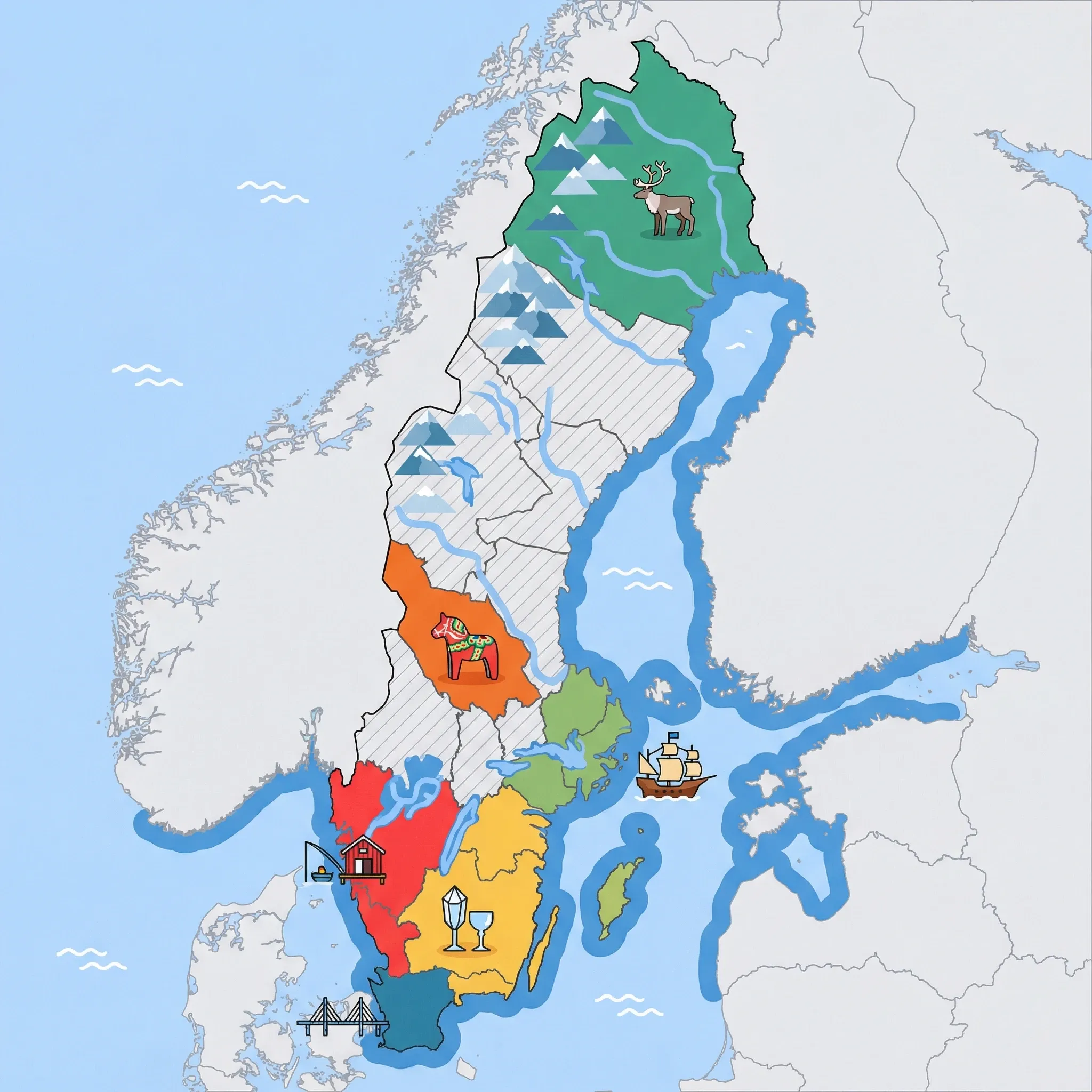
Click a region to explore
TRAVEL ADVISORY: Extreme cold weather warning. In winter, temperatures can drop below -30°C (-22°F). Families must ensure they have professional-grade thermal clothing and be aware of frostbite risks for young children.
Swedish Lapland is Europe's last true wilderness. It is a vast, untamed region covering a quarter of the country but inhabited by very few people. For adventurous families, this is a bucket-list destination. The landscape shifts from deep taiga forests and rushing rivers in the east to dramatic, snow-capped mountains in the west near the Norwegian border. Culturally, this is Sápmi, the land of the indigenous Sámi people, who have herded reindeer here for thousands of years. Visitors can experience a way of life that is deeply connected to nature's rhythm.
The region offers two completely different experiences depending on the season. Winter (November to April) is the time of the "blue light," snowy silence, dog sledding, and the Aurora Borealis (Northern Lights). It is a magical, Narnia-like world, though it requires serious preparation for the cold. Summer (June to August) brings the Midnight Sun, where the sun never sets. This allows for hiking at 2:00 am, fishing in crystal-clear rivers, and road trips along the The Wilderness Road (Vildmarksvägen). While logistics here are more challenging due to the vast distances, the reward is an experience of nature so pure and powerful that it stays with children forever.
Key Attractions
The world-famous Icehotel Art Exhibition in Jukkasjärvi is a must. Even if you don't stay the night (which can be cold for little ones), you can take day tours to explore the incredible ice suites. For the best chance of seeing the Northern Lights, head to the Aurora Sky Station in Abisko National Park; its microclimate ensures clear skies more often than anywhere else. The chairlift ride up the mountain in the dark is a thrill in itself.
To understand the region's soul, visit Ájtte, Swedish Mountain and Sámi Museum in Jokkmokk. It is an outstanding museum that explains Sámi culture and Arctic survival in a way accessible to kids. In Luleå, the UNESCO-listed Gammelstad Church Town is a collection of over 400 red cottages used by churchgoers in centuries past—it looks like a fairy village. For a fun family day, Teknikens Hus in Luleå is Sweden's northernmost science centre, focusing on local industries like mining and hydropower with great hands-on play.
Practical Advice
Distances are huge. A drive from Luleå to Kiruna takes 4 hours. In winter, driving requires experience with ice and reindeer on roads. Booking activities (dog sledding, snowmobiles) in advance is essential. Winter clothing is often provided by tour operators, but bring your own high-quality base layers. Summer mosquitoes can be intense in the forest; bring strong repellent.
Food & Drink
Typical meal times: Lunch 11:00 am to 1:00 pm. Dinner 5:00 pm to 8:00 pm. Options are limited outside main towns, so plan ahead.
Typical meal costs: Expensive due to transport costs. Main courses 250–390 SEK (approx. $23–36 USD / €22–34 EUR). Reindeer meat dishes are premium priced.
Dietary requirements: Vegetarian options exist but are less varied than in the south. The local diet is heavy on game meat, fish, and dairy.
Signature dishes:
- Suovvas – Sliced, smoked reindeer meat, traditionally fried over an open fire and served on flatbread (gáhkku) with lingonberries. The ultimate Arctic street food.
- Arctic Char (Röding) – A delicious pink-fleshed fish from cold mountain lakes, usually grilled or pan-fried with butter.
- Cloudberries (Hjortron) – The "Gold of the Arctic." Tart, amber-coloured berries served warm with vanilla ice cream or squeaky cheese (kaffeost).
- Kalix Löjrom – Vendace roe from the Bothnian Bay. A luxury item with Protected Designation of Origin status, often served on toast.
Why this score?
This is Sweden's most rugged region, featuring Arctic conditions, the country's highest peaks, and vast national parks like Abisko. Winter activities like dog sledding and summer trekking on the Kungsleden provide genuine wilderness experiences that can be physically demanding.
Why this score?
Quality of care in cities like Kiruna and Luleå is excellent, but the immense distances between settlements present challenges for emergency services. While helicopter rescues are well-coordinated, the region's extreme environment and sparse population lower its overall medical accessibility score compared to the south.
Why this score?
Despite its remote location, Swedish Lapland has a strong international brand built on the Icehotel and the Northern Lights. It attracts high-spending niche travelers from around the world, though its total visitor numbers are constrained by its vast geography and limited transport links.

Lapland is an expensive region. Guided activities (essential for winter) drive up costs significantly; a family dog-sledding tour can cost 4,000–6,000 SEK (approx. $370–560 USD / €350–520 EUR). Accommodation ranges from 1,500 SEK ($140/€130) for simple cabins to over 8,000 SEK ($750/€700) per night for ice rooms or glass igloos.
Family Travel Notice
Sweden has exceptionally strict laws prohibiting all forms of corporal punishment. Any physical discipline or even the threat of it can lead to legal prosecution and the removal of children by local social authorities.

Getting Here & Around
Getting Here
- Airports – Kiruna (KRN) and Luleå (LLA) are the main gateways. Flight time from Stockholm is approx. 90 minutes.
- Train – The Night Train (Vy Tåg) from Stockholm to Kiruna/Abisko takes 15–17 hours. It is an adventure in itself, with cozy sleeper cabins for families.
- Driving – The E4 highway runs up the coast, and the E10 cuts inland. Roads are good but watch for wildlife.
Getting Around
- Car – Essential for freedom. Rental cars in winter come with studded tires and heater plugs.
- Train – The Iron Ore Line connects Luleå, Kiruna, Abisko National Park, and Riksgränsen. It is scenic but infrequent.
- Bus – Länstrafiken Norrbotten connects towns, but schedules are sparse (sometimes one bus a day).
Nearby Airports (4 airports)
Arvidsjaur
AJRArvidsjaur
Gallivare
GEVGallivare
Kiruna
KRNKiruna
Kallax
LLALulea
View full flight map for Sweden →
Official Links

Packing List
Cotton kills in the Arctic. You need Merino wool next to the skin, even in chilly summers.
In June/July, the mosquitoes in the interior forests are ferocious. A net hat is a sanity saver.
The dry, cold air and reflection from snow can crack lips and cause burns quickly.
Cold weather drains phone batteries instantly. Keep a charger warm in an inside pocket.
Summer nights are extremely bright (nearly 24h daylight in the north), making it hard for kids to sleep.
Ticks are very common in Swedish grass and forests; quick removal is essential to prevent Lyme/TBE.
Tap water is pristine and free everywhere; buying bottled water is unnecessary and expensive.
Many bathing spots, especially on the West Coast, have rocky granite shores rather than sandy beaches.
Essential for a Swedish 'fika' (coffee/hot chocolate break) outdoors in the forest or park.

Activities & Best Times

Hiking, wildlife, outdoor exploration, ecotourism
A world-class destination for Northern Lights in winter and the Midnight Sun in summer, offering authentic Sami-led wildlife and wilderness encounters. Peak summer months provide prime hiking in Abisko, while winter peaks align with reliable snow and high aurora visibility.

Urban tourism, museums, historical sites, architecture
One UNESCO site (Gammelstad Church Town) and a significant Sami museum represent nationally important heritage, but do not constitute globally exceptional cultural density. 'Very good' better reflects the authentic, high-quality but regionally focused cultural offering.

Sport tourism, fitness activities, active recreation
Features internationally recognized long-distance trekking routes like the Kungsleden and the challenge of Kebnekaise. Peak months offer the only safe, snow-free windows for high-alpine trekking and mountain climbing.

Learning experiences, scientific sites, historical education
Houses significant facilities like Teknikens Hus and the Abisko Naturum, which provide destination-level Arctic science engagement. Visiting peaks align with the main summer and winter tourism seasons for program availability.

Scenic drives, countryside tours, route-based travel
Offers iconic routes like the Wilderness Road and Silver Road through dramatic Arctic landscapes. Travel is best in summer when mountain passes are fully clear of snow and daylight is perpetual.
Winter sports, ski resorts, snow activities
Famous for high-latitude spring skiing at Riksgränsen, where lifts operate under the Midnight Sun in late spring. Peak season is delayed compared to the Alps due to extreme winter darkness, with the best conditions found from March through May.
Beach resorts, marine activities: diving, snorkelling, kite surfing, wind surfing, sailing
Features the 'Riviera of the North' at Pite Havsbad, offering a unique but brief Arctic beach experience. Only suitable during the peak of summer when water temperatures reach manageable levels for domestic recreation.

Events, celebrations, seasonal attractions
Anchored by the world-famous Jokkmokk Winter Market, a 400-year-old tradition that is a significant cultural event for international visitors. The rating is conservative due to the extreme concentration of festival activity in a single month.

Amusement parks, family entertainment venues
Limited to regional-standard indoor water parks like Pite Havsbad Äventyrsbadet, which serve as rainy-day or deep-winter escapes for families. Not a primary motivator for international travel but provides supplemental entertainment during school holidays.

Attractions (20 total)



Public Holidays & Calendar Next 12 months
Public holidays, festivals, cultural celebrations, and seasonal natural phenomena coming up in Swedish Lapland over the next 12 months.
Loading holidays and events...

Travel Advisory
While several agencies recommend normal precautions, a significant number of others have elevated their warnings due to credible threats of terrorism and a rise in urban gang violence. Travellers should exercise increased vigilance, especially in major cities.
Safety Topics
Traveller Advice (3 groups)
Sweden has exceptionally strict laws prohibiting all forms of corporal punishment. Any physical discipline or even the threat of it can lead to legal prosecution and the removal of children by local social authorities.
Travellers visiting remote Arctic regions should be prepared for extreme weather and limited access to search and rescue services. Emergency medical evacuations in these areas can be delayed by several days.

Sweden is a highly progressive society where same-sex relationships are legal and social acceptance is very high. No specific safety concerns for this group have been identified.
Agency Summaries
The advisory level was recently lowered to the baseline, though travelers are still urged to be cautious of the 'elevated' national terrorism threat level and common petty crime.
Heightened vigilance is recommended because of the threat of terrorism. Extremist groups continue to target public spaces, transit hubs, and tourist locations with little to no warning.
Visitors should follow standard safety protocols, stay informed of local news, and be aware of their surroundings in crowded areas where petty theft may occur.
While no specific travel restrictions are in place, there is a persistent threat of terrorism and reports of organized crime activity in larger cities like Stockholm and Gothenburg.
Safety and security concerns are higher than in New Zealand, primarily due to the threat of terrorism and incidents of violent organized crime in major metropolitan regions.
Travellers should remain highly vigilant due to the ongoing risk of terrorist attacks and a significant increase in gang-related violence, including shootings and the use of explosives in major urban areas.
Information is provided for general guidance only and does not constitute travel, safety, medical, or legal advice. Conditions may change. Users are responsible for independently verifying information before travel.