
Basel & Northwest
Where culture flows as freely as the Rhine 🇨🇭🇩🇪🇫🇷
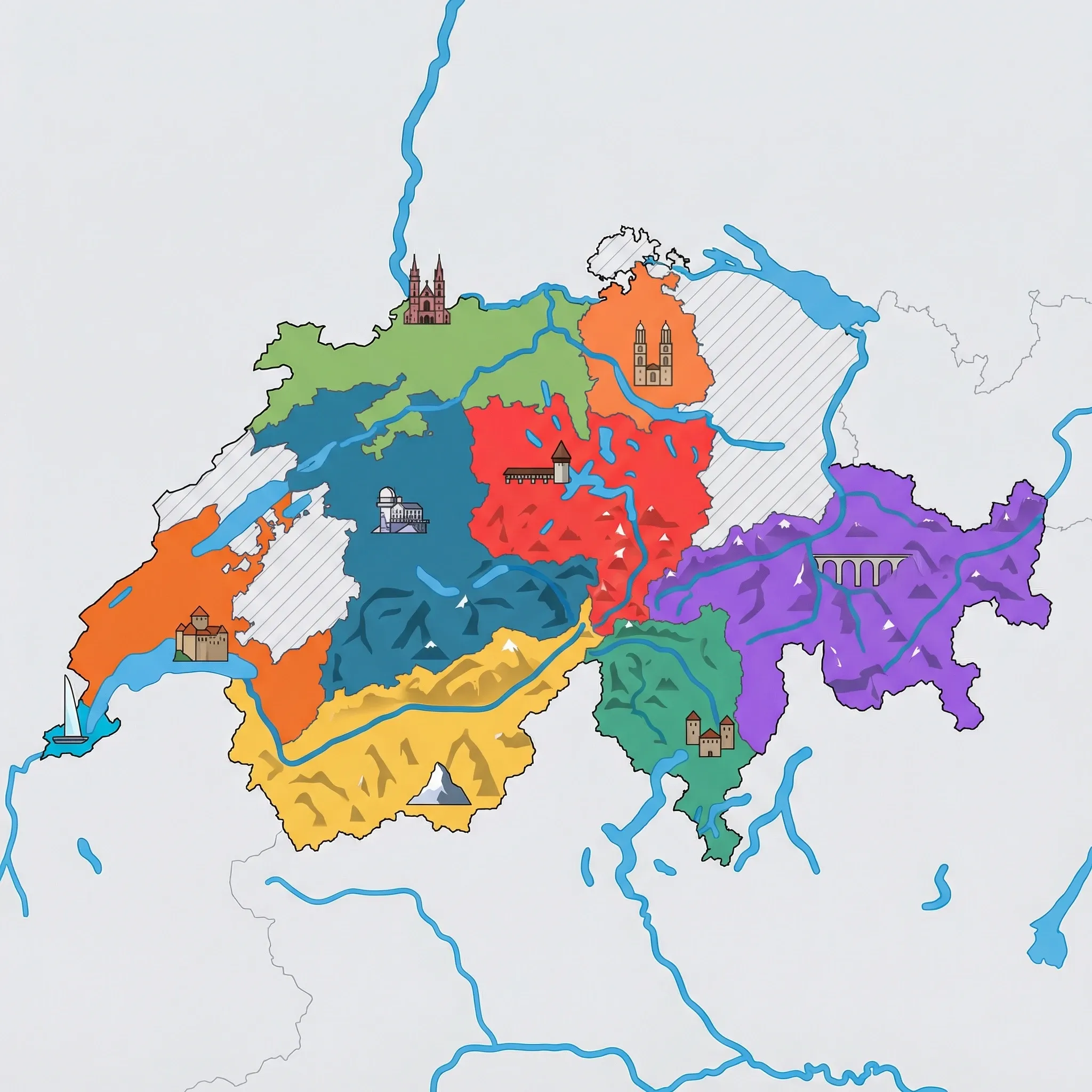
Click a region to explore
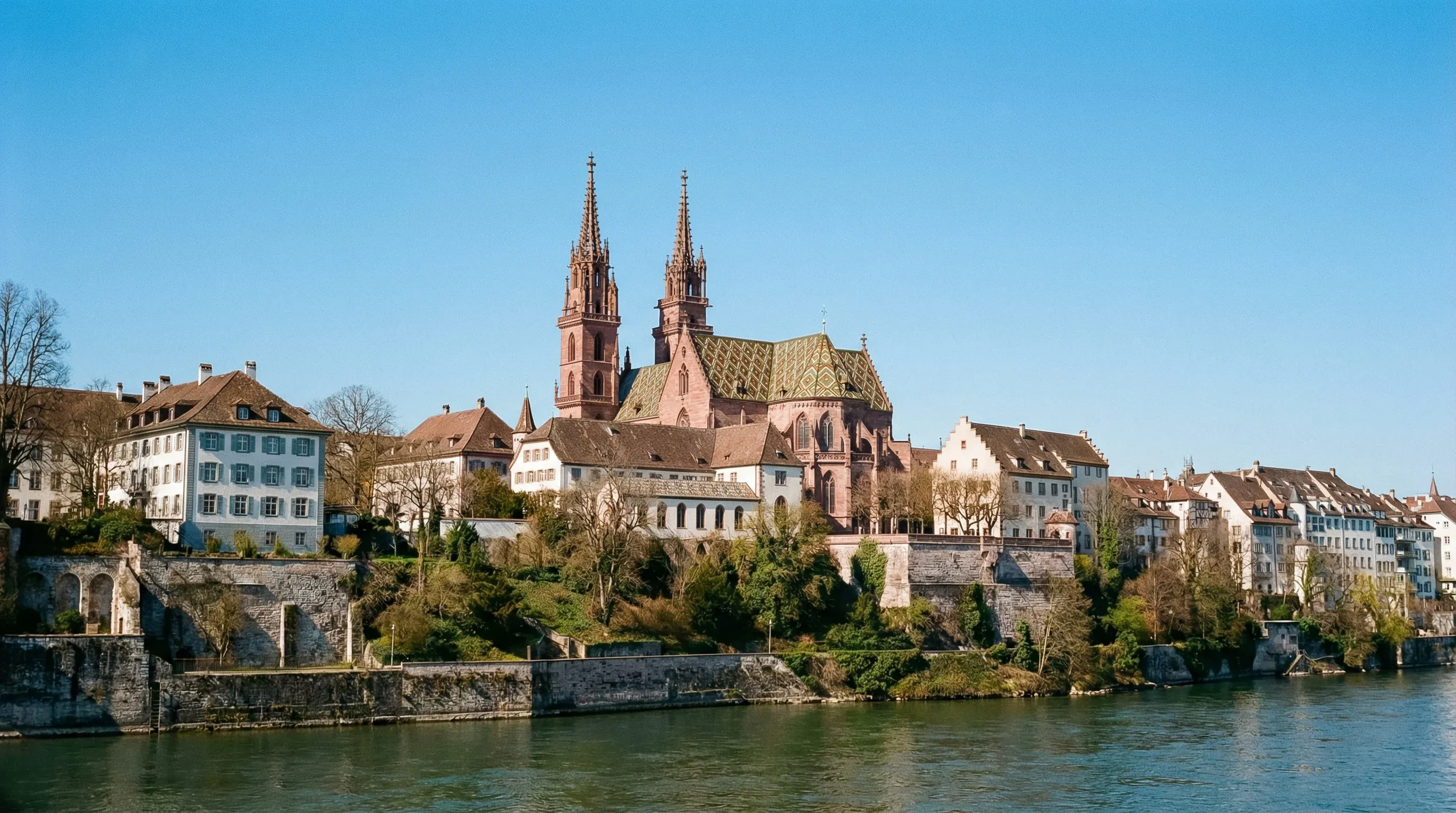
Basel & Northwest is a region that defies the typical Swiss stereotype of snowy peaks and cowbells. Instead, it offers a vibrant, cosmopolitan atmosphere centred around the mighty Rhine River, which serves as the region's lifeblood and summer playground. For families, this is arguably the most relaxed and culturally accessible corner of Switzerland. The city of Basel itself is known as the country's cultural capital, boasting the highest concentration of museums in the nation, yet it remains surprisingly compact and navigable with a stroller. The climate here is mild and sunny, often referred to as the 'Mediterranean of the North' by locals, making it perfect for outdoor exploration from spring through autumn.
Beyond the city limits, the landscape rolls gently into the cherry orchards of the Baselland and the verdant hills of the Jura Mountains. This is not the terrain of extreme alpinism, but rather of gentle family hikes, castle ruins hidden in forests, and river banks perfect for picnicking. The unique tri-national location means you can technically eat breakfast in Switzerland, cycle into Germany for lunch, and buy pastries in France for dinner—a geographical novelty that never fails to impress older children. The atmosphere is distinctively laid-back; in summer, the official business of the day involves packing your clothes into a waterproof 'Wickelfisch' bag and floating down the Rhine current, a beloved local tradition that active families will adore.
Key Attractions
The crown jewel for visiting families is undoubtedly Zoo Basel (Kinderzoo). Known affectionately by locals as 'Zolli', it is one of the oldest and most respected zoos in Europe, located right in the city centre. It is intimate enough to cover in a day but diverse enough to keep children mesmerised, featuring a fantastic aquarium and a dedicated children's zoo where interaction is encouraged. Just outside the city, history becomes a tactile adventure at Augusta Raurica. This is the best-preserved Roman theatre north of the Alps. It isn't just a pile of stones; families can bake bread in a Roman oven, explore a genuine Roman house, and visit the animal park filled with ancient livestock breeds.
For a change of pace, the Natural History Museum Basel is a rainy-day saviour, famous for its 'mammoth' appeal and engaging, child-friendly exhibits that dig deep into the earth's history. If you are visiting during the warm months, a trip to the Merian Gärten offers a stunning botanical escape with vast playgrounds and well-kept paths. Finally, active families should head to the Weissenstein in the Jura range. A panoramic gondola lifts you to sweeping views that stretch as far as the Alps on a clear day, offering easy ridge hikes that are manageable for school-aged children.
Practical Advice
Best Time to Visit: May to September is ideal for enjoying the Rhine and outdoor parks. However, if you want a spectacle, visit in February or March for the Basler Fasnacht (Basler Carnival)—a UNESCO-listed cultural explosion of masks, drums, and lanterns that is incredibly atmospheric, though loud.
Family Logistics: Guests staying in a Basel hotel receive a free 'BaselCard', which offers free public transport and 50% off many museums and the zoo—a massive money-saver for families.
Food & Drink
Typical meal times: Lunch is strictly 12:00 pm to 1:30 pm. Dinner usually starts from 6:30 pm to 7:00 pm. Finding hot food between 2:00 pm and 6:00 pm can be difficult outside of fast-food chains.
Typical meal costs: A main course in a standard restaurant costs CHF 25–40 (approx. $28–45 USD / €24–38 EUR). A family dinner for four will likely run CHF 120–160 (approx. $135–180 USD / €115–150 EUR).
Dietary requirements: Basel is very progressive; vegetarian, vegan, and gluten-free options are standard in the city. In rural Jura inns, options may be limited to salads or cheese dishes.
Signature dishes:
- Basler Läckerli – A hard, spiced gingerbread biscuit made with honey, hazelnuts, and candied peel, invented in the 15th century.
- Basler Mehlsuppe – A hearty, brown flour soup traditionally eaten at 4:00 am during Carnival, but available year-round in traditional guild houses.
- Wähe – A flat fruit or vegetable tart (plum, apricot, or cheese/onion) often eaten for lunch or a light dinner.
Why this score?
The terrain is dominated by the gentle rolling hills of the Jura Mountains and the urban Rhine valley, which are more suitable for light cycling and walking than rugged adventure. Most activities are highly structured and safe, such as the current-powered ferries and developed Roman ruins. It offers a very controlled environment for families with minimal physical challenge or wilderness exposure.
Why this score?
As a global center for the pharmaceutical industry, Basel boasts exceptionally high standards of healthcare and specialized facilities. The city’s hospitals are world-class with a high density of English-speaking staff and efficient emergency services. It provides some of the most advanced medical care in Europe, easily accessible to any visiting traveler.
Why this score?
While Basel is a major cultural hub hosting the world-famous Art Basel, it lacks the massive year-round appeal of the Swiss Alps. Most international visitors are here for business, transit, or niche museum tours rather than general leisure. It sees significant domestic and regional European flow, but fewer long-haul tourists compared to Lucerne or Zermatt.

While Switzerland is generally expensive, Basel offers better value than the Alpine resorts. The free 'BaselCard' for overnight guests significantly reduces transport costs. Budget meals are available at department store restaurants (Manora, Migros). Expect to pay CHF 180–250 (approx. $200–280 USD / €170–240 EUR) per night for a family room in a 3-star hotel.
Family Travel Notice
Minors travelling alone or with only one legal guardian should carry a notarized letter of consent from the non-travelling parent to facilitate smooth border crossings.

Getting Here & Around
Getting Here
- Airports – EuroAirport Basel-Mulhouse-Freiburg (BSL) is unique, located on French soil but serving the Swiss city. It is a 15-minute bus ride to the city centre.
- Train – Basel is a major European rail hub with two main stations: Basel SBB (Swiss/French trains) and Basel Badischer Bahnhof (German trains). Direct high-speed trains connect from Paris (TGV) and Frankfurt (ICE).
- Driving – The A2 and A3 motorways connect Basel to the rest of Switzerland. It is roughly 1 hour from Zurich and 1 hour from Bern.
Getting Around
- Public Transport – The tram network (Drämmli) is exceptional. The green-and-yellow trams reach every corner of the city and even cross the border into France and Germany.
- Ferry – Four historic wooden ferries (Fähri) cross the Rhine River using only the current—no motors. It is a magical, cheap, and slow way to cross the river.
- Cycling – The region is very flat and bike-friendly. The Rhine Route (EuroVelo 15) offers safe, segregated cycling paths perfect for families.
No airports in this region. See the country flight map for nearby connections.
Official Links

Packing List
Essential for the local summer pastime of swimming down the Rhine with your clothes.
The Rhine riverbed can be pebbly and slippery; vital for kids swimming.
Basel has over 200 historic fountains with pristine drinking water.
Dining out is pricey; riverside barbecues and picnics are the local norm.
Switzerland uses a unique hexagonal 3-pin socket. Standard European (Type F) plugs will not fit.
Ticks are common in Swiss forests and tall grass below 1500m; quick removal is important.
Floating down the Aare (Bern) or Limmat (Zurich) rivers is a popular summer family activity.

Activities & Best Times

Urban tourism, museums, historical sites, architecture
A global hub for art with the Fondation Beyeler and Kunstmuseum, plus the exceptionally preserved Roman site of Augusta Raurica. June is peak due to Art Basel, while late spring and autumn offer the best conditions for urban exploration.

Events, celebrations, seasonal attractions
Art Basel is the world's premier contemporary art fair, and Basler Fasnacht is one of Europe's major carnival events. This is a globally significant festival destination, not marginal.

Hiking, wildlife, outdoor exploration, ecotourism
Features the scenic Jura Mountains and the Doubs river, offering high-quality hiking and immersion in limestone karst landscapes. Peak visitation aligns with the warmer, drier months optimal for exploring the Etang de la Gruère nature reserve.

Sport tourism, fitness activities, active recreation
The region features the Jura Crest Trail and the EuroVelo 15 Rhine Route, which are premier European long-distance paths. May, June, and September offer the best balance of moderate temperatures and daylight for active touring.

Learning experiences, scientific sites, historical education
Hosts internationally significant facilities including the Novartis Pavillon and Zoo Basel's Vivarium. While indoor venues allow year-round visits, peak travel occurs during shoulder and summer seasons when paired with wider cultural travel.

Spa retreats, wellness centers, peaceful getaways
Boasts significant thermal bath complexes like Wellness-Welt Sole Uno and Zurzach. These facilities see peak international appeal during the colder months when the contrast between frigid air and thermal waters is most restorative.

Scenic drives, countryside tours, route-based travel
Incorporates key segments of the Grand Tour of Switzerland through the Aargau castles and the Rhine valley. Peak visibility and safe driving conditions are best in late spring and autumn when the landscape is most vibrant.
Amusement parks, family entertainment venues
Home to major indoor water parks like Aquabasilea and the Camille Bloch chocolate experience, providing reliable family entertainment. Summer months see the highest attendance for both indoor and seasonal outdoor amusement features.

Winter sports, ski resorts, snow activities
Small-scale ski hills like Balmberg provide local winter recreation but lack the elevation and world-class infrastructure found in the nearby Alps. Snow reliability is limited outside the core winter months of January and February.

Attractions (23 total)



Public Holidays & Calendar Next 12 months
Public holidays, festivals, cultural celebrations, and seasonal natural phenomena coming up in Basel & Northwest over the next 12 months.
Loading holidays and events...

Travel Advisory
All major international agencies agree that Switzerland requires only standard safety awareness. There are no significant security threats or travel restrictions currently in place for the country.
Safety Topics
Traveller Advice (4 groups)

Maintain standard personal security awareness in urban centers and crowded areas. Carry identification and ensure all travel documents meet Schengen area validity requirements.
Alpine activities carry significant risk. Travellers should check local weather and avalanche forecasts daily, stay on marked trails, and ensure insurance covers mountain rescue and medical evacuation.

Switzerland is generally very welcoming and safe for sexual and gender minorities, with strong legal protections and social acceptance.
Minors travelling alone or with only one legal guardian should carry a notarized letter of consent from the non-travelling parent to facilitate smooth border crossings.
Agency Summaries
Maintains a baseline risk level. Visitors are advised to be aware of the general threat of terrorism across Europe and to keep a close watch on personal belongings at major transport interchanges and popular tourist sites.
Switzerland is considered a low-risk destination. Primary recommendations include staying vigilant in busy transit hubs and being adequately prepared for the physical demands and inherent risks of mountain activities and high-altitude environments.
Travellers should maintain standard safety awareness as they would in their home country. While Switzerland is safe, urban protests in major cities like Zurich and Bern can occasionally disrupt transit, and petty theft remains a factor in crowded tourist locales.
A safe destination for visitors. Advice emphasizes winter driving safety, including the necessity of winter tires, and ensures that families travelling with minors have proper documentation to avoid border delays.
No major safety warnings are in place. Guidance focuses on common sense precautions against pickpocketing, particularly on public transport between major cities, and adhering to regional regulations such as face-covering prohibitions in specific cantons.
Overall security is high, though petty crime is slightly increasing in metropolitan areas. Travellers are reminded that medical costs are exceptionally high and lack reciprocal agreements with Australia, making comprehensive insurance essential.
Information is provided for general guidance only and does not constitute travel, safety, medical, or legal advice. Conditions may change. Users are responsible for independently verifying information before travel.