
Central Switzerland
Steep trains, deep lakes, and the birthplace of Switzerland ⛴️🏔️
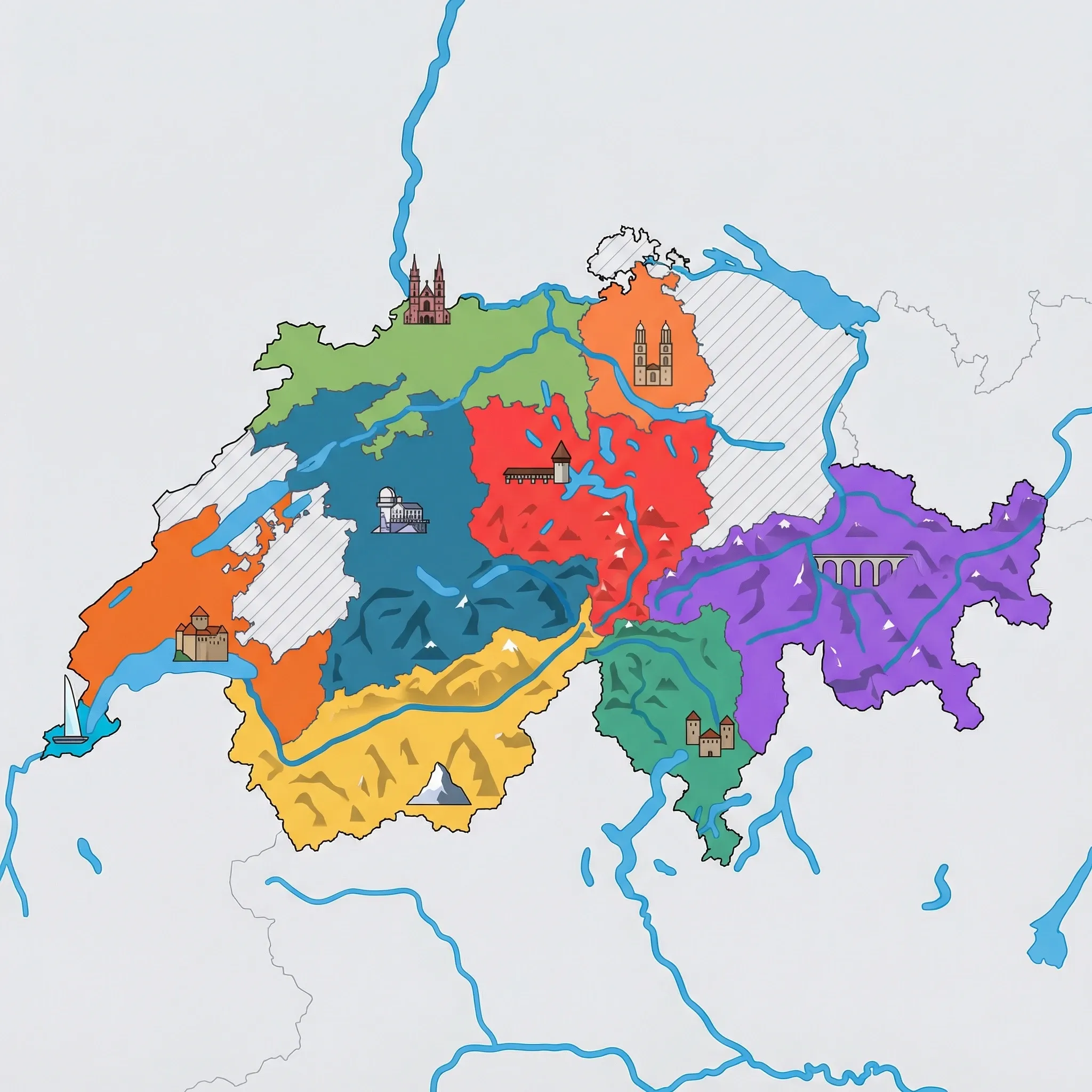
Click a region to explore
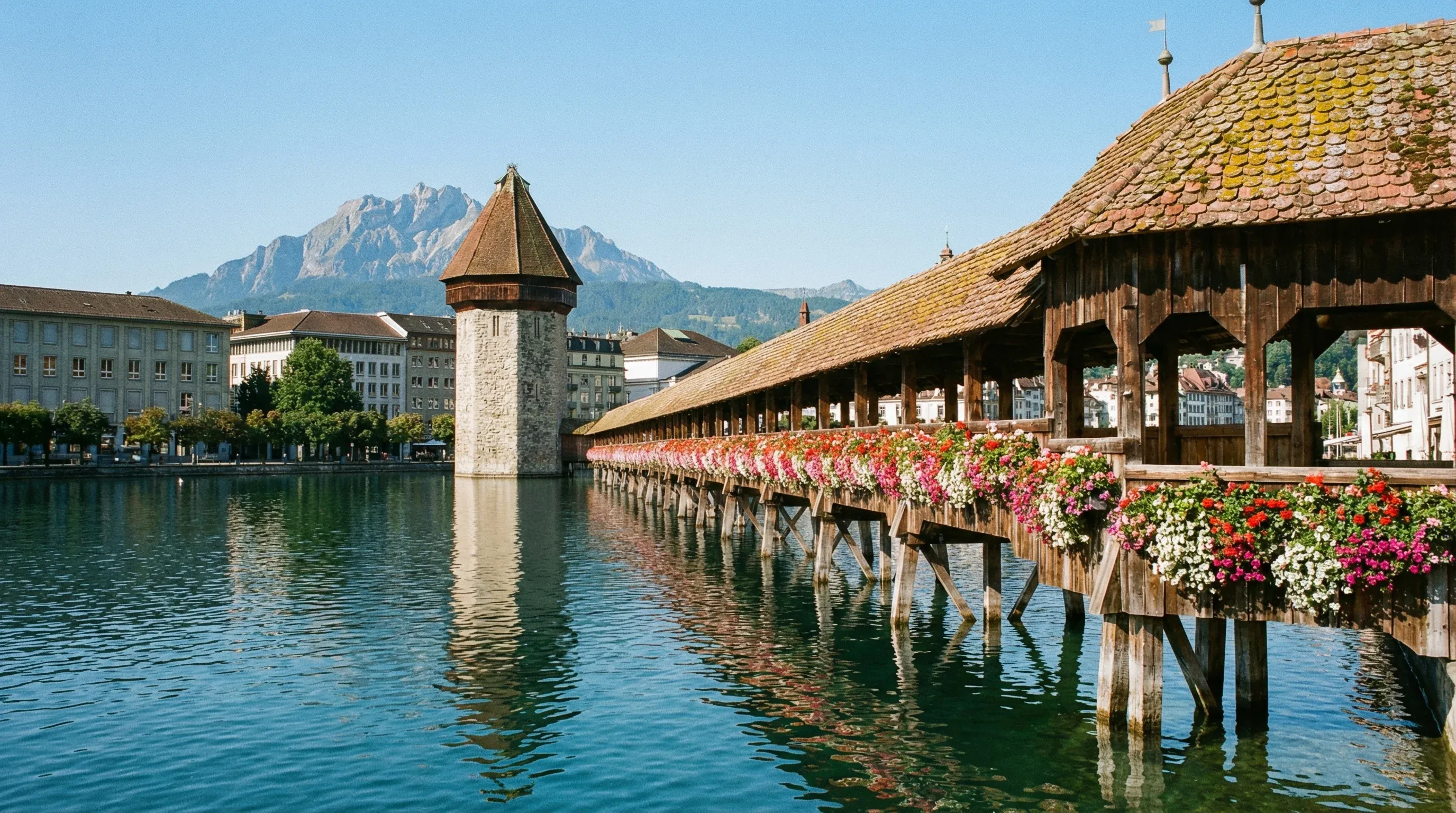
Central Switzerland is where the Swiss Confederation was born, and it feels like a concentration of everything the country is famous for packed into one accessible region. Centred around the shapeshifting Lake Lucerne, the landscape is a dramatic interplay of deep blue water and precipitous mountains that shoot straight up from the shore. For families, this geography is a gift: it means you can combine a relaxing boat cruise with a high-alpine adventure in a single afternoon. The city of Lucerne serves as the chic, historical base camp, with its medieval Old Town and iconic bridges providing a fairytale backdrop that captures children's imaginations.
The region is technically innovative and transport-obsessed, which is a huge plus for kids who love moving vehicles. Here you will find the world's steepest cogwheel railway, the first rotating cable car, and historic paddle steamers. It is an area that rewards movement; the journey is often the attraction itself. Beyond the mechanics, there is a deep sense of history—this is William Tell country. The meadows and hollow ways are steeped in legends of apple-shooting and oath-swearing that can bring history lessons to life. Whether you are exploring the pre-Alpine hills of the UNESCO Biosphere Entlebuch or watching animals at a gold-rush era landslide site, the variety keeps boredom at bay.
Key Attractions
Lucerne's Chapel Bridge (Kapellbrücke) is the must-see landmark, but for families, the real fun lies in the mountains. Mount Pilatus offers the 'Golden Round Trip'—a boat ride, a terrifyingly steep cogwheel train up, and a cable car down. The summit has a 'Dragon Path' through the rocks that is thrilling for kids. Across the lake, Mount Rigi is gentler, known as the 'Queen of the Mountains', offering wide, safe paths and spectacular barbecue spots with views over 13 lakes.
For an encounter with wildlife, the Natur- und Tierpark Goldau is exceptional. Located on a massive historic landslide site, Sika deer roam freely among the visitors and can be hand-fed, which is often the highlight of the holiday for younger children. If the weather turns wet, Alpamare near Pfäffikon is Switzerland's largest indoor water park, featuring high-speed slides and warm thermal pools that appeal to teens and exhausted parents alike. For a quiet moment of history, a boat trip to the Rütli Meadow allows you to picnic on the very spot where Switzerland was founded in 1291.
Practical Advice
Best Time to Visit: May to October for the full range of mountain transport and boats. Winter offers snow play at lower altitudes like Rigi, which is great for toddlers.
Family Logistics: The 'Tell Pass' is an all-inclusive regional transport ticket that covers trains, buses, boats, and most cable cars. It offers incredible value for families planning active days.
Food & Drink
Typical meal times: Lunch 11:30 am to 1:30 pm. Dinner 6:00 pm to 9:00 pm. Lucerne has many tourist-oriented places serving all day, but quality varies.
Typical meal costs: Main dishes CHF 28–45 (approx. $31–50 USD / €26–42 EUR). Lakeside dining commands a premium. Budget CHF 100–140 (approx. $110–155 USD / €95–130 EUR) for a family meal.
Dietary requirements: Very easy in Lucerne and tourist towns. Gluten-free bread is available in most supermarkets (Coop/Migros).
Signature dishes:
- Luzerner Chügelipastete – A puff pastry shell filled with a creamy ragout of veal and mushrooms. A historic and visually impressive dish.
- Älplermagronen – The Central Swiss version often includes potato cubes and is topped with roasted onions.
- Birnweggen – A pear bread pastry roll, perfect for hiking energy.
Why this score?
The region offers excellent outdoor recreation, but it is almost entirely supported by heavy infrastructure like the world's steepest cogwheel railway and large lake steamers. Most 'adventure' here consists of well-marked trails and family-friendly theme parks like Mount Titlis's glacier park. It provides a moderate level of physical activity in a very safe and developed setting.
Why this score?
Lucerne hosts high-quality cantonal hospitals and numerous private clinics that provide excellent care with strong English proficiency. The region is compact, meaning emergency services and medical facilities are rarely more than a short distance away. It offers a very high standard of medical security for families traveling with children.
Why this score?
Centered around Lake Lucerne, this region is a primary stop for almost every international tour group visiting Switzerland. The Chapel Bridge and Mount Pilatus are global landmarks that maintain high visitor volumes year-round. It is arguably the heart of Swiss tourism, blending lake cruises with accessible mountain peaks.

Lucerne is a premium tourist destination. While not quite as expensive as St. Moritz, it is costly. Hotel rates spike in summer. To save money, stay in satellite towns like Brunnen or Horw rather than Lucerne centre. Family meals: CHF 80–120 (approx. $90–135 USD / €75–115 EUR) in modest restaurants.
Family Travel Notice
Minors travelling alone or with only one legal guardian should carry a notarized letter of consent from the non-travelling parent to facilitate smooth border crossings.

Getting Here & Around
Getting Here
- Train – Lucerne is 50 minutes from Zurich and 1 hour from Bern. Direct trains run from Zurich Airport (1 hour).
- Driving – Central Switzerland is a major crossroads. The A2 motorway (north-south axis) runs right through it. Beware of heavy traffic around the Gotthard tunnel during holidays.
- Boat – You can arrive in style by taking a boat from Flüelen to Lake Lucerne towns if coming from the Gotthard scenic train route.
Getting Around
- Boat – The fleet on Lake Lucerne connects all major mountain railways. It is slow but scenic.
- Train – The Zentralbahn connects Lucerne to Engelberg and Interlaken. It is a panoramic narrow-gauge line.
- Bus – Yellow PostBuses serve the rural valleys and the UNESCO Biosphere Entlebuch.
No airports in this region. See the country flight map for nearby connections.
Official Links

Packing List
Essential for curvy mountain roads and bobbing boats on the lake.
Boats on the lake create a cold draft even on hot summer days.
Designated 'Feuerstelle' (fire pits) with free wood are everywhere; buy food beforehand.
Station and attraction lockers often still require 2 or 5 CHF coins.
Switzerland uses a unique hexagonal 3-pin socket. Standard European (Type F) plugs will not fit.
Ticks are common in Swiss forests and tall grass below 1500m; quick removal is important.
Families heavily use the immaculate public 'Feuerstelle' (BBQ pits) found on hiking trails.
There are thousands of public fountains with pristine mountain spring water; buying water is unnecessary.
Floating down the Aare (Bern) or Limmat (Zurich) rivers is a popular summer family activity.

Activities & Best Times

Hiking, wildlife, outdoor exploration, ecotourism
Features the UNESCO Biosphere Entlebuch and iconic peaks like Pilatus and Rigi, offering world-class Alpine hiking and wildlife observation. Peak summer months provide optimal trail access and clear visibility, while winter snow renders higher-altitude nature exploration difficult for families.

Urban tourism, museums, historical sites, architecture
Lucerne is a premier destination with remarkably preserved medieval architecture, the iconic Chapel Bridge, and high-end cultural institutions. Summer and the festive December period represent peak vibrancy, whereas the late autumn and early spring can be damp and less atmospheric.

Sport tourism, fitness activities, active recreation
Includes several major high-altitude rope and adventure parks such as Titlis and Pilatus, providing structured active challenges for families. These facilities are seasonally dependent, with peak operations during the warm, dry summer window.

Amusement parks, family entertainment venues
Offers high-quality mountain adventure worlds and Alpamare, one of Europe's largest water parks, catering well to active families. Outdoor adventure parks are primarily a summer draw, while the shoulder months offer decent accessibility before winter closures.

Attractions (19 total)



Public Holidays & Calendar Next 12 months
Public holidays, festivals, cultural celebrations, and seasonal natural phenomena coming up in Central Switzerland over the next 12 months.
Loading holidays and events...

Travel Advisory
All major international agencies agree that Switzerland requires only standard safety awareness. There are no significant security threats or travel restrictions currently in place for the country.
Safety Topics
Traveller Advice (4 groups)

Maintain standard personal security awareness in urban centers and crowded areas. Carry identification and ensure all travel documents meet Schengen area validity requirements.
Alpine activities carry significant risk. Travellers should check local weather and avalanche forecasts daily, stay on marked trails, and ensure insurance covers mountain rescue and medical evacuation.

Switzerland is generally very welcoming and safe for sexual and gender minorities, with strong legal protections and social acceptance.
Minors travelling alone or with only one legal guardian should carry a notarized letter of consent from the non-travelling parent to facilitate smooth border crossings.
Agency Summaries
Maintains a baseline risk level. Visitors are advised to be aware of the general threat of terrorism across Europe and to keep a close watch on personal belongings at major transport interchanges and popular tourist sites.
Switzerland is considered a low-risk destination. Primary recommendations include staying vigilant in busy transit hubs and being adequately prepared for the physical demands and inherent risks of mountain activities and high-altitude environments.
Travellers should maintain standard safety awareness as they would in their home country. While Switzerland is safe, urban protests in major cities like Zurich and Bern can occasionally disrupt transit, and petty theft remains a factor in crowded tourist locales.
A safe destination for visitors. Advice emphasizes winter driving safety, including the necessity of winter tires, and ensures that families travelling with minors have proper documentation to avoid border delays.
No major safety warnings are in place. Guidance focuses on common sense precautions against pickpocketing, particularly on public transport between major cities, and adhering to regional regulations such as face-covering prohibitions in specific cantons.
Overall security is high, though petty crime is slightly increasing in metropolitan areas. Travellers are reminded that medical costs are exceptionally high and lack reciprocal agreements with Australia, making comprehensive insurance essential.
Information is provided for general guidance only and does not constitute travel, safety, medical, or legal advice. Conditions may change. Users are responsible for independently verifying information before travel.