
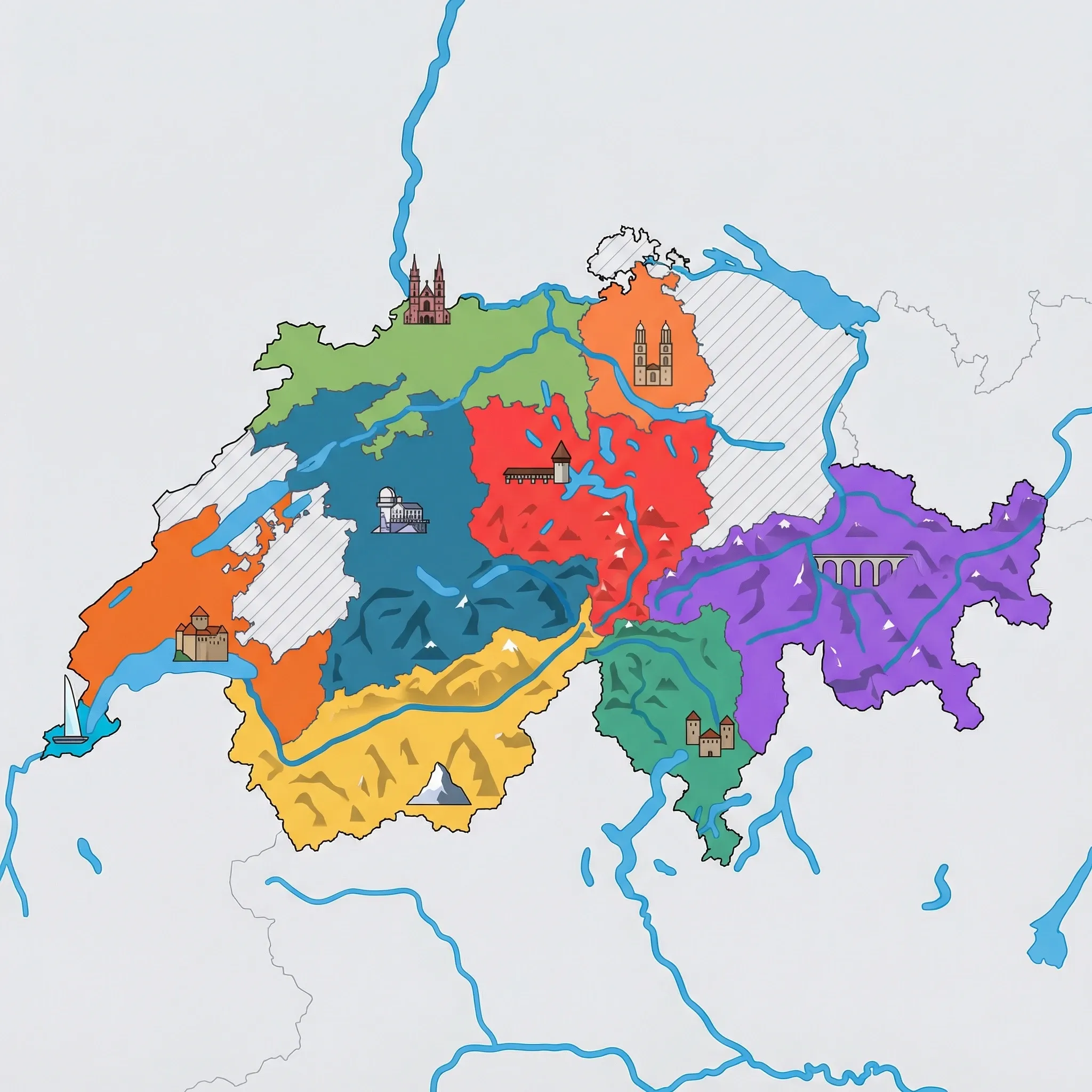
Click a region to explore
Geneva is often misunderstood as merely a business hub for diplomats, but for families, it is a surprisingly playful and green city. Nestled between the Alps and the Jura mountains at the tip of Western Europe's largest lake, it offers a cosmopolitan atmosphere that feels distinct from the rest of Switzerland. The city is compact, safe, and incredibly clean, with a public transport system that is free for tourists staying in hotels. The dominant feature is Lake Geneva (Lac Léman); the waterfront is the city's living room, filled with parks, ice cream stalls, and swimming spots that come alive in summer.
What sets Geneva apart is its 'brainy' appeal. It is the home of the internet (born at CERN) and the Red Cross, offering educational opportunities that are genuinely engaging for school-aged children. Yet, it also has a charming Old Town with secret passages and cannons that kids love to climb. The influence of France is strong here, from the language to the food, giving it a sophisticated flair. While it is an expensive city, many of its best assets—the parks, the lake, the botanical gardens—are completely free, making it manageable for a family city break.
Key Attractions
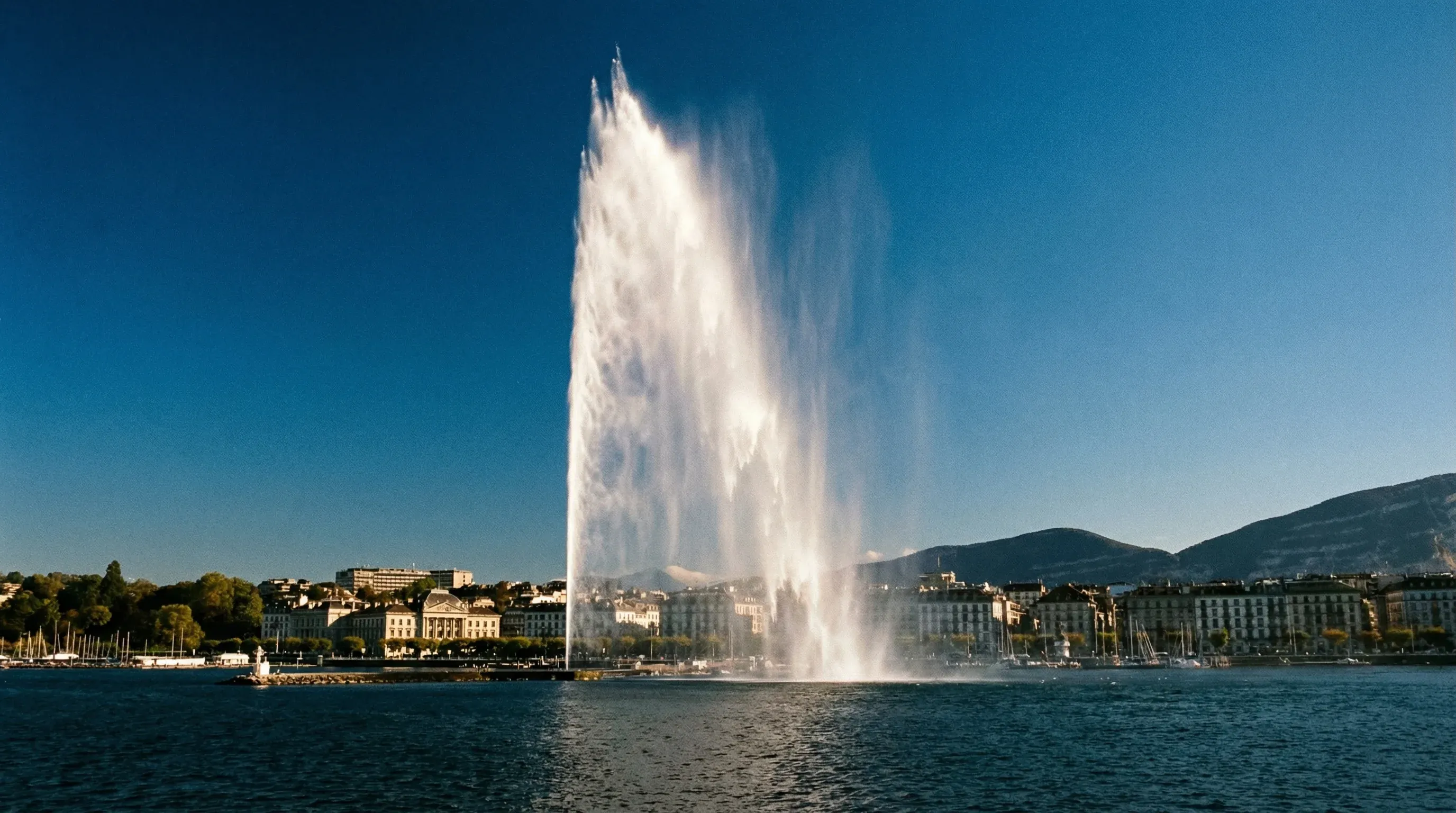
The undisputed icon is the Jet d'Eau, a fountain shooting water 140 metres into the air. Walking the pier to stand underneath it (and getting soaked if the wind shifts) is a rite of passage. For curious minds, the CERN Science Gateway is a must-visit. Located just outside the city, this newly expanded visitor centre makes particle physics accessible with hands-on labs and exhibitions that explain the Large Hadron Collider in a way kids can grasp.
In the city centre, the Bains des Pâquis is a man-made peninsula offering lake swimming, diving boards, and the best fondue in town during winter—it is unpretentious and beloved by locals. For a run-around, the Conservatory and Botanical Garden of the City of Geneva offers a magical escape with aviaries and a carousel. History buffs should climb the towers of St. Pierre Cathedral for the best view in town, then explore the The Reformation Wall in the park below, where the giant stone figures loom large over the playground.
Practical Advice
Best Time to Visit: July and August for swimming and the 'Fêtes de Genève'. December for the 'Escalade' festival (celebrating a historic victory with chocolate cauldrons).
Family Logistics: All visitors staying in a hotel, hostel, or campsite receive a 'Geneva Transport Card' for free use of buses, trams, and yellow mouettes (water taxis).
Food & Drink
Typical meal times: Lunch 12:00 pm to 2:00 pm. Dinner is later than Swiss-German areas, typically 7:30 pm to 9:30 pm.
Typical meal costs: Geneva is pricey. A pizza costs CHF 22–30 (approx. $25–34 USD / €21–28 EUR). A casual family meal: CHF 120–160 (approx. $135–180 USD / €115–150 EUR).
Dietary requirements: excellent. As an international hub, vegan, halal, and gluten-free options are widespread and clearly marked.
Signature dishes:
- Filets de Perche – Small, delicate freshwater perch fillets from the lake, usually served in butter sauce with fries.
- Longeole – A pork sausage with fennel seeds, protected by a grand culinary heritage designation.
- Marmite de l'Escalade – A chocolate pot filled with marzipan vegetables, smashed by the youngest and oldest family member in December.
Why this score?
The region is almost entirely urbanized or consists of manicured lakeside parks, offering virtually no rugged or off-the-beaten-path experiences. Tourism here focuses on museums, international organizations, and luxury shopping rather than outdoor exploration. For families, the 'adventure' is limited to water taxis and city walks.
Why this score?
As home to various international organizations including the WHO, Geneva offers world-leading medical services and highly specialized hospitals. The medical staff are exceptionally multilingual and the facilities are designed to cater to an international elite. It is one of the safest cities globally regarding the quality and availability of healthcare.
Why this score?
Geneva is a globally recognized city due to its role as a diplomatic hub and its iconic lakeside landmarks like the Jet d'Eau. It attracts a steady stream of international business and leisure travelers, though it is often a shorter stay for those heading into the Alps. Its popularity is bolstered by being a major international gateway with its own large airport.

Geneva consistently ranks as one of the most expensive cities in the world. Hotels are tailored to diplomats and bankers. However, the free transport card and cheap 'Bains des Pâquis' entry (CHF 2) help. Avoid eating near the station or the prime lakeside promenade to save money. Budget CHF 200–300 (approx. $220–335 USD / €190–285 EUR) per day for a family (excluding hotel).
Family Travel Notice
Minors travelling alone or with only one legal guardian should carry a notarized letter of consent from the non-travelling parent to facilitate smooth border crossings.

Getting Here & Around
Getting Here
- Airports – Geneva Airport (GVA) is incredibly convenient, located just 4km from the city centre. A free train ticket to the city is available from a machine in the baggage claim area.
- Train – Cornavin Station connects to Paris (TGV Lyria, 3 hours) and Milan. It is the gateway to the French Alps.
- Driving – Traffic in Geneva is notoriously bad. Park at a P+R (Park and Ride) on the outskirts and use the free public transport.
Getting Around
- Public Transport – Trams and buses are frequent. The 'Mouettes' (yellow shuttle boats) are part of the network and are a fun way to cross the lake.
- Walking – The city centre and Old Town are best explored on foot, though the Old Town has steep cobbled streets (challenging for flimsy strollers).
- Cycling – 'Genèveroule' offers free bike rentals in summer for up to 4 hours.
Nearby Airports (1 airport)
Geneva Airport
GVAGeneva
View full flight map for Switzerland →
Official Links

Packing List
You might accidentally or intentionally cross into France while hiking or cycling.
Geneva is dressier than the mountain regions; adults may feel underdressed in hiking gear at dinner.
Swiss plugs (Type J) differ from EU plugs; many older hotels don't have USB ports.
Switzerland uses a unique hexagonal 3-pin socket. Standard European (Type F) plugs will not fit.
Ticks are common in Swiss forests and tall grass below 1500m; quick removal is important.
Families heavily use the immaculate public 'Feuerstelle' (BBQ pits) found on hiking trails.
There are thousands of public fountains with pristine mountain spring water; buying water is unnecessary.
Floating down the Aare (Bern) or Limmat (Zurich) rivers is a popular summer family activity.

Activities & Best Times

Hiking, wildlife, outdoor exploration, ecotourism
Features major international hiking and cycling routes like the Rhône Route and Via Jacobi alongside urban river rafting. The experience is best from late spring to early autumn when trails are clear and nature parks are fully operational.

Urban tourism, museums, historical sites, architecture
A world-class cultural hub featuring the Palais des Nations, Old Town heritage, and elite art museums like MAMCO. Summer offers the most vibrant street life, while December is highlighted by the authentic L'Escalade traditions.

Sport tourism, fitness activities, active recreation
Strong infrastructure for active tourism including professional rafting centers and major EuroVelo cycling connections. The seasonal peak corresponds with the driest and warmest months suitable for high-intensity outdoor activity.

Learning experiences, scientific sites, historical education
Home to CERN's Globe of Science and world-class museums of natural history and science. Peak months align with facility availability and pleasant conditions for academic exploration, avoiding mid-winter maintenance shutdowns.

Scenic drives, countryside tours, route-based travel
Serves as a key gateway for the Grand Tour of Switzerland with scenic vineyard drives in Mandement. Optimal conditions occur during peak summer when visibility is highest and the lakeside scenery is most picturesque.

Events, celebrations, seasonal attractions
Anchor events include the prestigious Watches and Wonders in April and the historic L'Escalade in December. These specific windows provide the only reason for internationally experienced families to visit specifically for events.

Amusement parks, family entertainment venues
Limited to high-quality local aquatic centers like Piscine de la Fontenette which provide summer entertainment for resident families. Lacks the scale of an internationally recognized destination theme park.

Attractions (20 total)



Public Holidays & Calendar Next 12 months
Public holidays, festivals, cultural celebrations, and seasonal natural phenomena coming up in Geneva over the next 12 months.
Loading holidays and events...

Travel Advisory
All major international agencies agree that Switzerland requires only standard safety awareness. There are no significant security threats or travel restrictions currently in place for the country.
Safety Topics
Traveller Advice (4 groups)

Maintain standard personal security awareness in urban centers and crowded areas. Carry identification and ensure all travel documents meet Schengen area validity requirements.
Alpine activities carry significant risk. Travellers should check local weather and avalanche forecasts daily, stay on marked trails, and ensure insurance covers mountain rescue and medical evacuation.

Switzerland is generally very welcoming and safe for sexual and gender minorities, with strong legal protections and social acceptance.
Minors travelling alone or with only one legal guardian should carry a notarized letter of consent from the non-travelling parent to facilitate smooth border crossings.
Agency Summaries
Maintains a baseline risk level. Visitors are advised to be aware of the general threat of terrorism across Europe and to keep a close watch on personal belongings at major transport interchanges and popular tourist sites.
Switzerland is considered a low-risk destination. Primary recommendations include staying vigilant in busy transit hubs and being adequately prepared for the physical demands and inherent risks of mountain activities and high-altitude environments.
Travellers should maintain standard safety awareness as they would in their home country. While Switzerland is safe, urban protests in major cities like Zurich and Bern can occasionally disrupt transit, and petty theft remains a factor in crowded tourist locales.
A safe destination for visitors. Advice emphasizes winter driving safety, including the necessity of winter tires, and ensures that families travelling with minors have proper documentation to avoid border delays.
No major safety warnings are in place. Guidance focuses on common sense precautions against pickpocketing, particularly on public transport between major cities, and adhering to regional regulations such as face-covering prohibitions in specific cantons.
Overall security is high, though petty crime is slightly increasing in metropolitan areas. Travellers are reminded that medical costs are exceptionally high and lack reciprocal agreements with Australia, making comprehensive insurance essential.
Information is provided for general guidance only and does not constitute travel, safety, medical, or legal advice. Conditions may change. Users are responsible for independently verifying information before travel.