
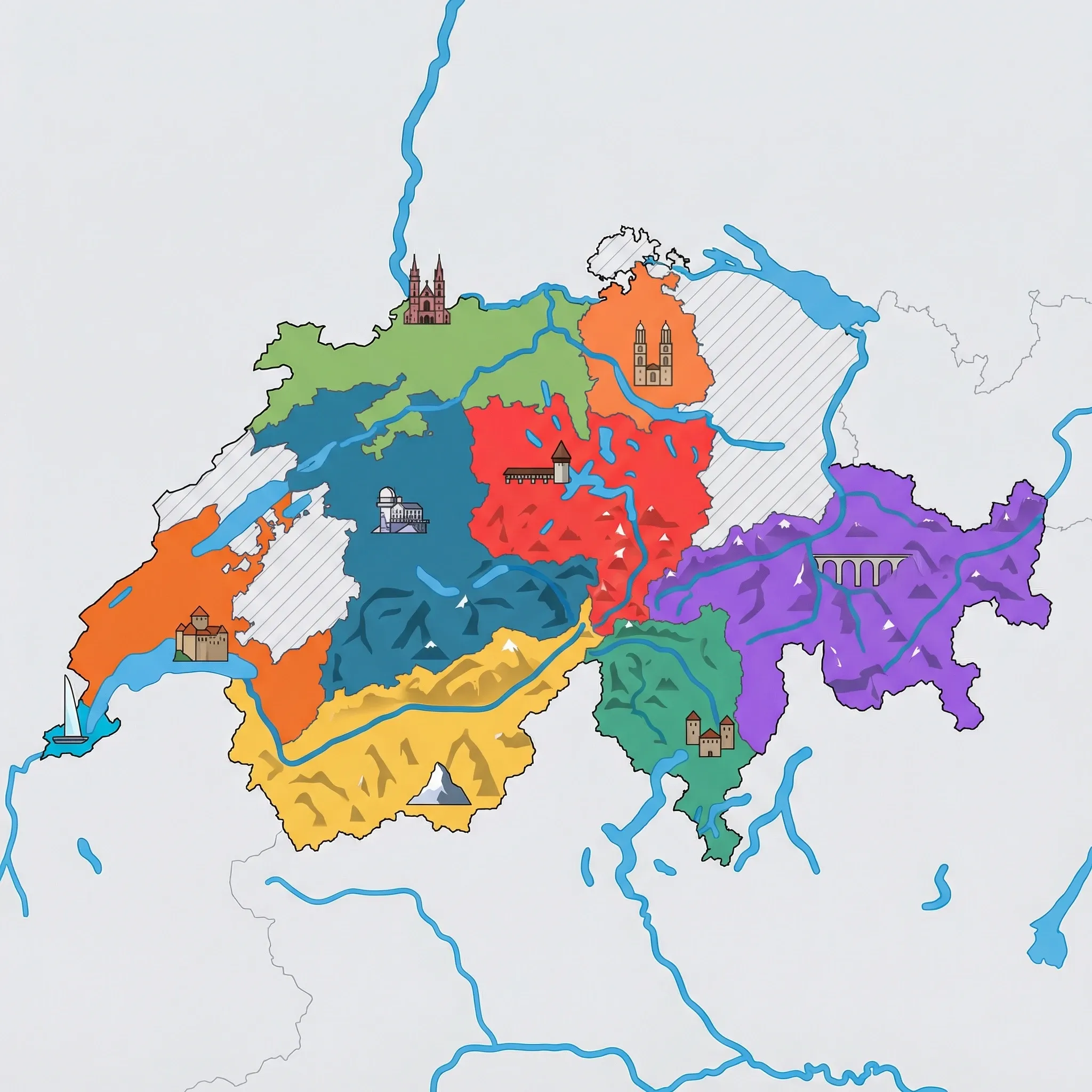
Click a region to explore
Graubünden is the largest canton in Switzerland, yet it remains one of the most sparsely populated and wildest. For families who love nature, this is the ultimate destination. It is a region of superlatives: the oldest town in Switzerland (Chur), the only Swiss National Park, and the most spectacular railway journeys in the world. The landscape is rugged and diverse, ranging from the glitzy lakes of St. Moritz to the primal, forested cliffs of the Rhine Gorge. What adds to the magic is the culture; this is the home of Romansh, Switzerland's fourth language, which sounds like a mix of Latin and Italian and adds a mysterious, ancient feel to the villages.
This region is the spiritual home of 'Heidi', and the wholesome, outdoor lifestyle depicted in the book is still very much alive. Families can visit the actual village that inspired the story, but the real joy is living the lifestyle: hiking from hut to hut, spotting ibex and bearded vultures, and swimming in crystal-clear mountain lakes. Winter here is legendary, offering everything from the high-society slopes of St. Moritz to sleepy, family-focused villages where kids can learn to ski on empty runs. The 'Rhaetian Railway'—the red trains that snake through the mountains—is a UNESCO World Heritage site and an attraction that thrills children and parents alike.
Key Attractions
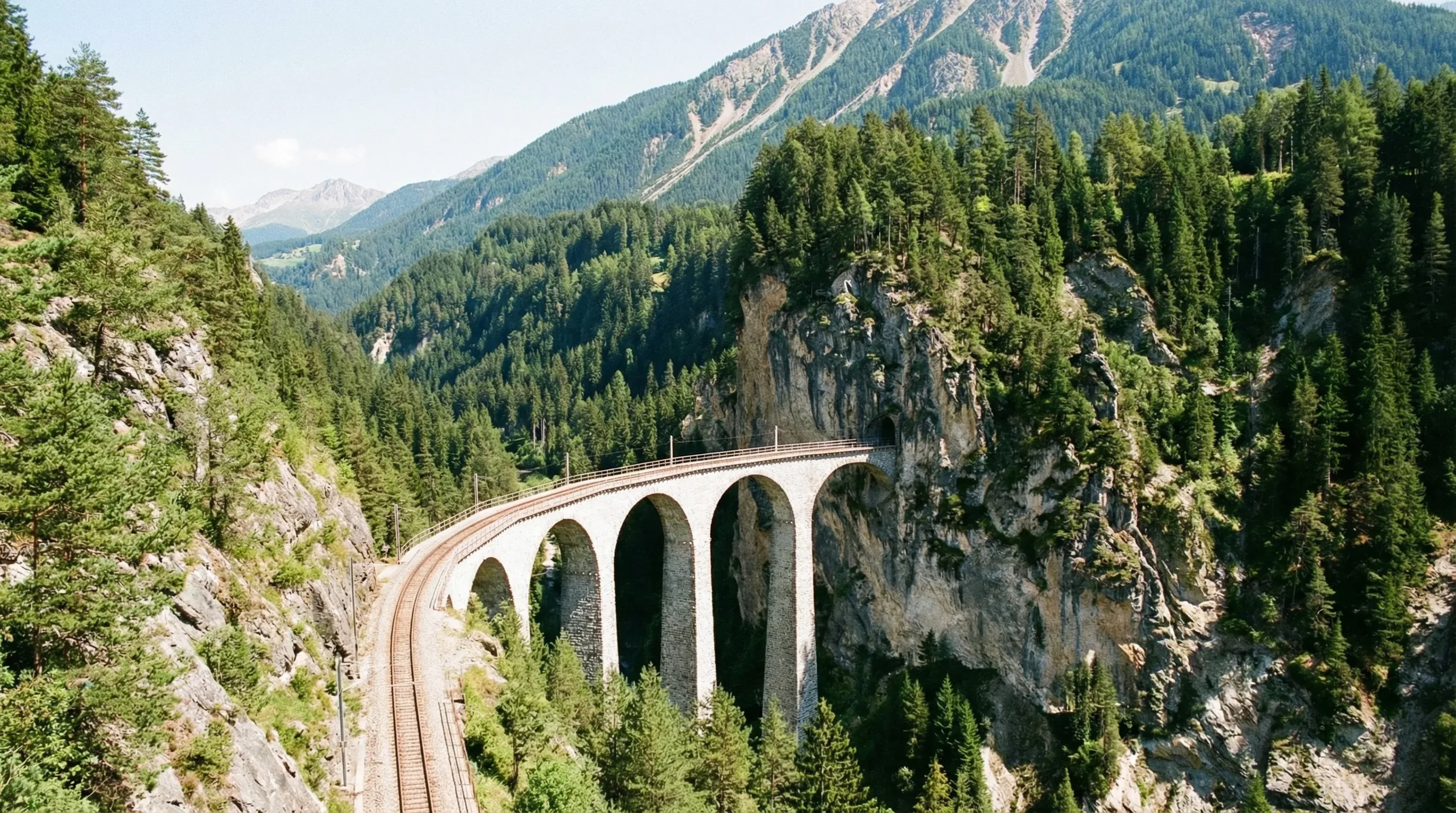
No visit is complete without riding the train over the Landwasser Viaduct. This curving limestone bridge plunges into a tunnel and is the cover star of Swiss guidebooks; seeing it from the train window is a thrill. For a nature experience that feels prehistoric, hike the Rhine Gorge (Ruinaulta). The white cliffs and turquoise river are accessible via easy walking paths or, for older kids, by rafting. Younger children will demand a trip to Heididorf in Maienfeld, where they can feed goats and explore Heidi's cabin.
Wildlife lovers should head to the Swiss National Park in the Engadin. Strict rules apply (stay on the path!), but the reward is a high chance of seeing marmots, deer, and golden eagles in untamed wilderness. For a unique animal encounter, the Arosa Bärenland allows you to see rescued bears living in a high-alpine sanctuary, accessible by cable car. Finally, seeing the turquoise waters of Lake Cauma is a must—it's cold, but the colour is mesmerizing.
Practical Advice
Best Time to Visit: Late June to October for hiking (snow lingers late). January to March for winter sports.
Family Logistics: The 'GraubündenPASS' offers unlimited travel on the incredible train and bus network. Distances are long here, so plan travel times carefully.
Food & Drink
Typical meal times: Standard Swiss times (Lunch 12:00 pm–1:30 pm). In remote valleys, options are scarce outside these hours.
Typical meal costs: Varies wildly. St. Moritz is ultra-luxury, while rural taverns are moderate. Main dish: CHF 22–35 (approx. $25–39 USD / €21–33 EUR). Family meal: CHF 100–150 (approx. $110–165 USD / €95–140 EUR).
Dietary requirements: Vegetarian options like Capuns (meat-free version) and polenta are common. Gluten-free requires asking, as barley is a staple grain here.
Signature dishes:
- Capuns – Spätzle dough mixed with dried meat, wrapped in chard leaves and baked in milky gravy. (Ask for the veggie version if needed).
- Bündner Nusstorte – A rich, heavy shortcrust tart filled with caramelized walnuts. The ultimate hiking energy bar.
- Pizokel – Buckwheat pasta dumplings often served with vegetables and cheese.
Why this score?
This is Switzerland's most rugged canton, containing the country's only National Park and vast areas of wilderness. The terrain is genuinely wild in places, with extensive trail networks that require more self-reliance than those in the central regions. It offers a higher level of adventure for families looking to escape the crowds and explore deep Alpine valleys.
Why this score?
The healthcare infrastructure is very strong, particularly in Chur, Davos, and St. Moritz, which have clinics experienced in sports medicine. Given the region's size and ruggedness, some areas are remote, but the REGA air rescue service ensures rapid transport to major facilities. Medical services are highly reliable but slightly less dense than in the major city cantons.
Why this score?
Home to world-renowned luxury resorts like St. Moritz and Davos, this region attracts a high-spending international crowd. However, its geographic size means many areas remain much quieter and more focused on domestic or regional European hikers. It is well-known but lacks the sheer visitor density of the Bernese Oberland or Lucerne.

Graubünden has a dual personality. St. Moritz is 'luxury' level, but the rest of the canton is 'mid'. Farmstays (Agrotourismus) and youth hostels (Jugendherberge) are excellent and plentiful here, offering budget-friendly family options. A simple dinner of Capuns and water is affordable at CHF 25 (approx. $28 USD / €24 EUR) per person.
Family Travel Notice
Minors travelling alone or with only one legal guardian should carry a notarized letter of consent from the non-travelling parent to facilitate smooth border crossings.

Getting Here & Around
Getting Here
- Train – The gateway is Chur. Direct trains run from Zurich (1 hour 15 mins). From Chur, the Rhaetian Railway connects the valleys.
- Driving – The A13 motorway runs north-south. Reaching Davos or St. Moritz involves mountain passes (Flüela, Julier) which are scenic but require confident driving.
- Bus – The yellow PostBus connects remote villages to the train stations.
Getting Around
- Train – The Rhaetian Railway (RhB) is an attraction in itself. The lines to St. Moritz and the Brusio Spiral Viaduct are UNESCO-listed.
- Car – Useful for flexibility, but parking in car-free zones or upscale resorts is expensive.
- Hiking – Often the best way to get between close villages. Luggage transport services are available.
No airports in this region. See the country flight map for nearby connections.
Official Links

Packing List
Wildlife spotting is a major activity here (ibex, vultures, marmots).
Fun for kids to learn 'Allegra' (hello) in Switzerland's rare 4th language.
Hiking in lower grassy valleys carries a tick risk; check kids daily.
Switzerland uses a unique hexagonal 3-pin socket. Standard European (Type F) plugs will not fit.
Ticks are common in Swiss forests and tall grass below 1500m; quick removal is important.
Families heavily use the immaculate public 'Feuerstelle' (BBQ pits) found on hiking trails.
There are thousands of public fountains with pristine mountain spring water; buying water is unnecessary.
Floating down the Aare (Bern) or Limmat (Zurich) rivers is a popular summer family activity.

Activities & Best Times

Hiking, wildlife, outdoor exploration, ecotourism
Home to the Swiss National Park and rugged alpine landscapes, the region offers world-class hiking and wilderness immersion that is best experienced during the clear, snow-free summer and early autumn months.

Urban tourism, museums, historical sites, architecture
Rich in Romansh heritage and home to UNESCO sites like the Benedictine Convent of Saint John, the region provides sophisticated cultural exploration, with peak vibrancy during the summer festival season and festive December period.

Sport tourism, fitness activities, active recreation
Offers specialized infrastructure including major adventure parks and toboggan runs in Davos and Pradaschier, providing structured active tourism for families throughout the warmer months.
Amusement parks, family entertainment venues
High-end thermal aquatic complexes like 7132 Therme and Bogn Engiadina Scuol serve as destination-level entertainment hubs, particularly popular during peak winter and summer family vacation windows.

Attractions (22 total)



Public Holidays & Calendar Next 12 months
Public holidays, festivals, cultural celebrations, and seasonal natural phenomena coming up in Graubünden over the next 12 months.
Loading holidays and events...

Travel Advisory
All major international agencies agree that Switzerland requires only standard safety awareness. There are no significant security threats or travel restrictions currently in place for the country.
Safety Topics
Traveller Advice (4 groups)
Maintain standard personal security awareness in urban centers and crowded areas. Carry identification and ensure all travel documents meet Schengen area validity requirements.
Alpine activities carry significant risk. Travellers should check local weather and avalanche forecasts daily, stay on marked trails, and ensure insurance covers mountain rescue and medical evacuation.

Switzerland is generally very welcoming and safe for sexual and gender minorities, with strong legal protections and social acceptance.
Minors travelling alone or with only one legal guardian should carry a notarized letter of consent from the non-travelling parent to facilitate smooth border crossings.
Agency Summaries
Maintains a baseline risk level. Visitors are advised to be aware of the general threat of terrorism across Europe and to keep a close watch on personal belongings at major transport interchanges and popular tourist sites.
Switzerland is considered a low-risk destination. Primary recommendations include staying vigilant in busy transit hubs and being adequately prepared for the physical demands and inherent risks of mountain activities and high-altitude environments.
Travellers should maintain standard safety awareness as they would in their home country. While Switzerland is safe, urban protests in major cities like Zurich and Bern can occasionally disrupt transit, and petty theft remains a factor in crowded tourist locales.
A safe destination for visitors. Advice emphasizes winter driving safety, including the necessity of winter tires, and ensures that families travelling with minors have proper documentation to avoid border delays.
No major safety warnings are in place. Guidance focuses on common sense precautions against pickpocketing, particularly on public transport between major cities, and adhering to regional regulations such as face-covering prohibitions in specific cantons.
Overall security is high, though petty crime is slightly increasing in metropolitan areas. Travellers are reminded that medical costs are exceptionally high and lack reciprocal agreements with Australia, making comprehensive insurance essential.
Information is provided for general guidance only and does not constitute travel, safety, medical, or legal advice. Conditions may change. Users are responsible for independently verifying information before travel.