
Lake Geneva region
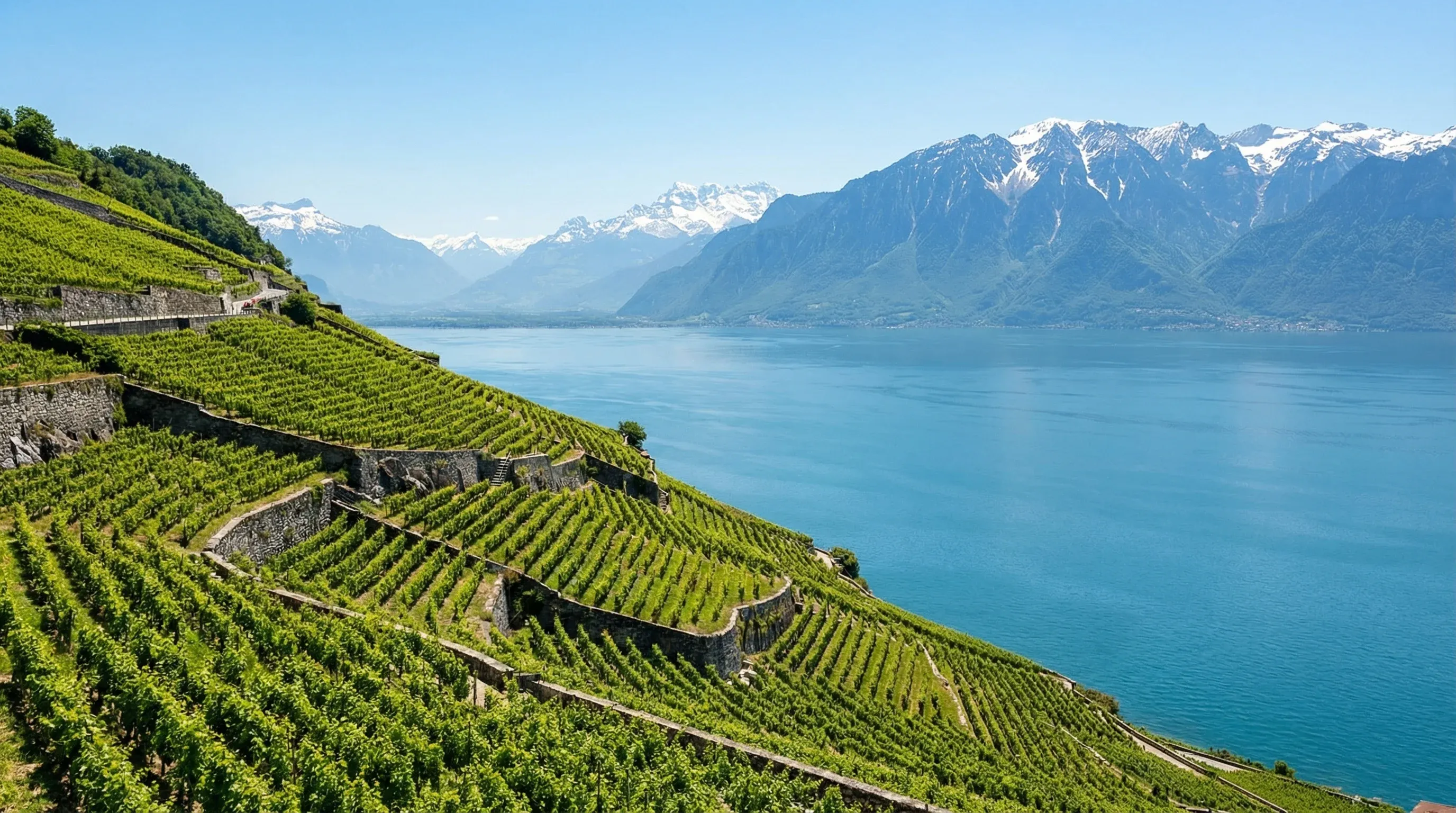
Where the vineyards meet the lake and the mountains 🍇⛵
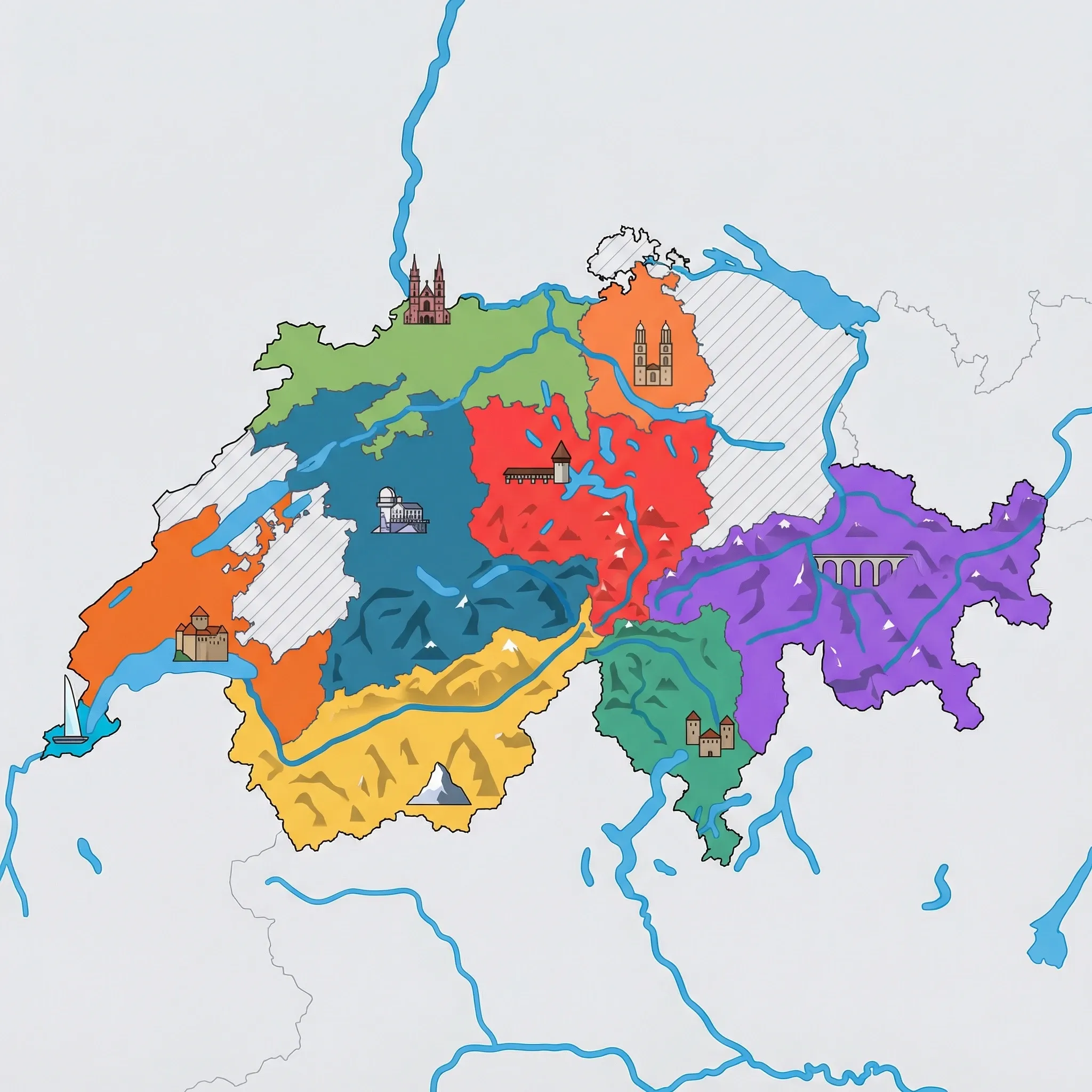
Click a region to explore
The Lake Geneva region, or Canton Vaud, offers a distinctly Mediterranean feel compared to the rest of Switzerland. The microclimate along the lake allows palm trees and vineyards to flourish, giving the towns of Montreux and Vevey a Riviera-like atmosphere. For families, this is a region of gentle pleasures and high culture made accessible. You can spend the morning following the footsteps of Charlie Chaplin, the afternoon swimming in the lake, and the evening taking a cogwheel train up to a narcissus-filled meadow. The capital, Lausanne, is the Olympic capital, a hilly, vibrant city that celebrates sport and youth.
Geographically, the region is diverse. The Lavaux Vineyard Terraces, a UNESCO site, rise steeply from the water, offering paved paths that are surprisingly stroller-friendly and offer some of the best views in Europe. To the east, the Vaudois Alps offer a softer, more family-oriented skiing and hiking experience than the jagged peaks of Valais. The region has a rich history of welcoming famous residents (from Freddie Mercury to Chaplin), and this legacy translates into excellent interactive museums that engage children rather than bore them.
Key Attractions
The most visited historic building in Switzerland is here: Chillon Castle. Sitting on a rocky island near Montreux, it is the perfect medieval fortress, complete with dark dungeons, great halls, and weapon displays that captivate children. Just up the road in Vevey, Chaplin's World is an immersive museum located in the star's former home. It features waxworks and recreations of his film sets where kids can play and act; it is incredibly well done.
In Lausanne, AQUATIS Aquarium-Vivarium Lausanne is the largest freshwater aquarium in Europe, taking families on a journey through the world's rivers with stunning displays of piranhas, gar, and reptiles. Sports-mad families must visit The Olympic Museum, which is highly interactive and set in a beautiful park filled with sculptures. For a mountain experience, take the train from Montreux to Rochers de Naye to see the marmot colonies and a view that encompasses the entire lake.
Practical Advice
Best Time to Visit: June for the Narcissus flowers; July for the Montreux Jazz Festival (busy but fun); September for the grape harvest.
Family Logistics: The 'Vaud-Alpes' region offers the 'Free Access Card' in summer if you stay in resorts like Villars, covering trains and cable cars. In Montreux/Lausanne, hotels give a transport card for the local city network.
Food & Drink
Typical meal times: Lunch 12:00 pm to 2:00 pm. Dinner 7:00 pm to 9:30 pm. This is French-speaking Switzerland, so dining is a serious, lingering affair.
Typical meal costs: Expensive. A fondue costs CHF 26–32 (approx. $29–36 USD / €24–30 EUR) per person. A family lunch: CHF 110–150 (approx. $120–165 USD / €105–140 EUR).
Dietary requirements: Generally good. Vegan options are growing in Lausanne. In traditional 'Pinte' (inns), the menu is meat-heavy.
Signature dishes:
- Saucisson Vaudois – A smoked pork sausage, usually served on a bed of papet vaudois (leeks and potatoes stewed in cream).
- Malakoff – Fried cheese balls (gruyère on bread), a heavy but delicious specialty of the La Côte wine region.
- Tomme Vaudoise – A small, soft cow's milk cheese with a creamy centre, often eaten with crusty bread.
Why this score?
The region offers a mix of sophisticated lakeside promenades and accessible mountain activities at Glacier 3000. While there are skiing and hiking opportunities, the infrastructure is highly developed and designed for comfort rather than rugged exploration. It is a very safe and refined environment for families to experience the outdoors.
Why this score?
Lausanne is a major European center for medical research and education, home to the CHUV university hospital. The region offers top-tier healthcare services that are highly accessible to foreigners, with exceptional facilities across the Canton of Vaud. Families can expect some of the best medical care available in the Western world here.
Why this score?
The Vaud region is a major draw due to the Chillon Castle—Switzerland's most visited historic site—and the scenic Lavaux vineyards. Cities like Montreux and Lausanne host major festivals and have a strong international brand as the 'Swiss Riviera.' It maintains a high level of international visitor traffic throughout the year.

The Swiss Riviera (Montreux/Vevey) is prestigious and priced accordingly. However, value can be found in the mountain villages like Leysin or Les Diablerets in summer. Museums are high quality but expensive (CHF 18–30 / $20–33 USD per adult). Budget CHF 220–350 (approx. $245–390 USD / €210–330 EUR) per day for a family.
Family Travel Notice
Minors travelling alone or with only one legal guardian should carry a notarized letter of consent from the non-travelling parent to facilitate smooth border crossings.

Getting Here & Around
Getting Here
- Airports – Geneva Airport (GVA) is the main hub, just 45 minutes by train from Lausanne.
- Train – Excellent connections. The line running along the lake from Geneva to Montreux offers beautiful views. Sit on the right side for the lake view.
- Ferry – CGN boats connect France (Evian/Thonon) to Lausanne and Montreux.
Getting Around
- Train – The RER Vaud network around Lausanne is like a metro. Scenic mountain trains connect the lakeshore to the Alps (e.g., Bex to Villars).
- Boat – The CGN paddle steamers are the most romantic way to travel. They are included in the Swiss Travel Pass.
- Metro – Lausanne has the only metro in Switzerland (M2), which climbs steeply from the lake to the forest.
No airports in this region. See the country flight map for nearby connections.
Official Links

Packing List
If visiting in Sept/Oct, kids love mimicking the harvest in the Lavaux (safely).
Lake Geneva beaches are often pebbly, not sandy.
If you plan to visit the luxury hotel bars in Montreux or attend the Jazz Festival evening concerts.
Switzerland uses a unique hexagonal 3-pin socket. Standard European (Type F) plugs will not fit.
Ticks are common in Swiss forests and tall grass below 1500m; quick removal is important.
Families heavily use the immaculate public 'Feuerstelle' (BBQ pits) found on hiking trails.
There are thousands of public fountains with pristine mountain spring water; buying water is unnecessary.
Floating down the Aare (Bern) or Limmat (Zurich) rivers is a popular summer family activity.

Activities & Best Times

Urban tourism, museums, historical sites, architecture
Home to the UNESCO-listed Lavaux vineyards and the iconic Chillon Castle, offering a dense concentration of world-class heritage and fine art museums. Peak season aligns with the summer vineyard beauty and December's internationally renowned Montreux Christmas markets.

Hiking, wildlife, outdoor exploration, ecotourism
Features a diverse range of immersive experiences from high-altitude glaciers to well-curated animal parks like Servion and La Garenne. The region is best explored during stable summer months or peak winter for alpine nature exploration, avoiding the transitional mud of November.

Amusement parks, family entertainment venues
Offers unique, high-standard recreation including the specialized Tobogganing Park and premium aquatic complexes like Lavey-les-Bains. Best visited during summer for outdoor recreation or winter for snow-based attractions and thermal wellness, with November seeing facility closures.

Sport tourism, fitness activities, active recreation
Provides premium infrastructure for active families, including major alpine adventure parks and high-altitude activities at Glacier 3000. Peak conditions occur in summer when all adventure rope parks and outdoor facilities are fully operational and weather is most stable.

Learning experiences, scientific sites, historical education
Features AQUATIS, Europe's largest freshwater aquarium-vivarium, providing a significant scientific draw for families. While indoor facilities make it accessible year-round, it is most conveniently visited during the broader regional tourism peak in the summer months.

Attractions (18 total)



Public Holidays & Calendar Next 12 months
Public holidays, festivals, cultural celebrations, and seasonal natural phenomena coming up in Lake Geneva region over the next 12 months.
Loading holidays and events...

Travel Advisory
All major international agencies agree that Switzerland requires only standard safety awareness. There are no significant security threats or travel restrictions currently in place for the country.
Safety Topics
Traveller Advice (4 groups)

Maintain standard personal security awareness in urban centers and crowded areas. Carry identification and ensure all travel documents meet Schengen area validity requirements.
Alpine activities carry significant risk. Travellers should check local weather and avalanche forecasts daily, stay on marked trails, and ensure insurance covers mountain rescue and medical evacuation.

Switzerland is generally very welcoming and safe for sexual and gender minorities, with strong legal protections and social acceptance.
Minors travelling alone or with only one legal guardian should carry a notarized letter of consent from the non-travelling parent to facilitate smooth border crossings.
Agency Summaries
Maintains a baseline risk level. Visitors are advised to be aware of the general threat of terrorism across Europe and to keep a close watch on personal belongings at major transport interchanges and popular tourist sites.
Switzerland is considered a low-risk destination. Primary recommendations include staying vigilant in busy transit hubs and being adequately prepared for the physical demands and inherent risks of mountain activities and high-altitude environments.
Travellers should maintain standard safety awareness as they would in their home country. While Switzerland is safe, urban protests in major cities like Zurich and Bern can occasionally disrupt transit, and petty theft remains a factor in crowded tourist locales.
A safe destination for visitors. Advice emphasizes winter driving safety, including the necessity of winter tires, and ensures that families travelling with minors have proper documentation to avoid border delays.
No major safety warnings are in place. Guidance focuses on common sense precautions against pickpocketing, particularly on public transport between major cities, and adhering to regional regulations such as face-covering prohibitions in specific cantons.
Overall security is high, though petty crime is slightly increasing in metropolitan areas. Travellers are reminded that medical costs are exceptionally high and lack reciprocal agreements with Australia, making comprehensive insurance essential.
Information is provided for general guidance only and does not constitute travel, safety, medical, or legal advice. Conditions may change. Users are responsible for independently verifying information before travel.