
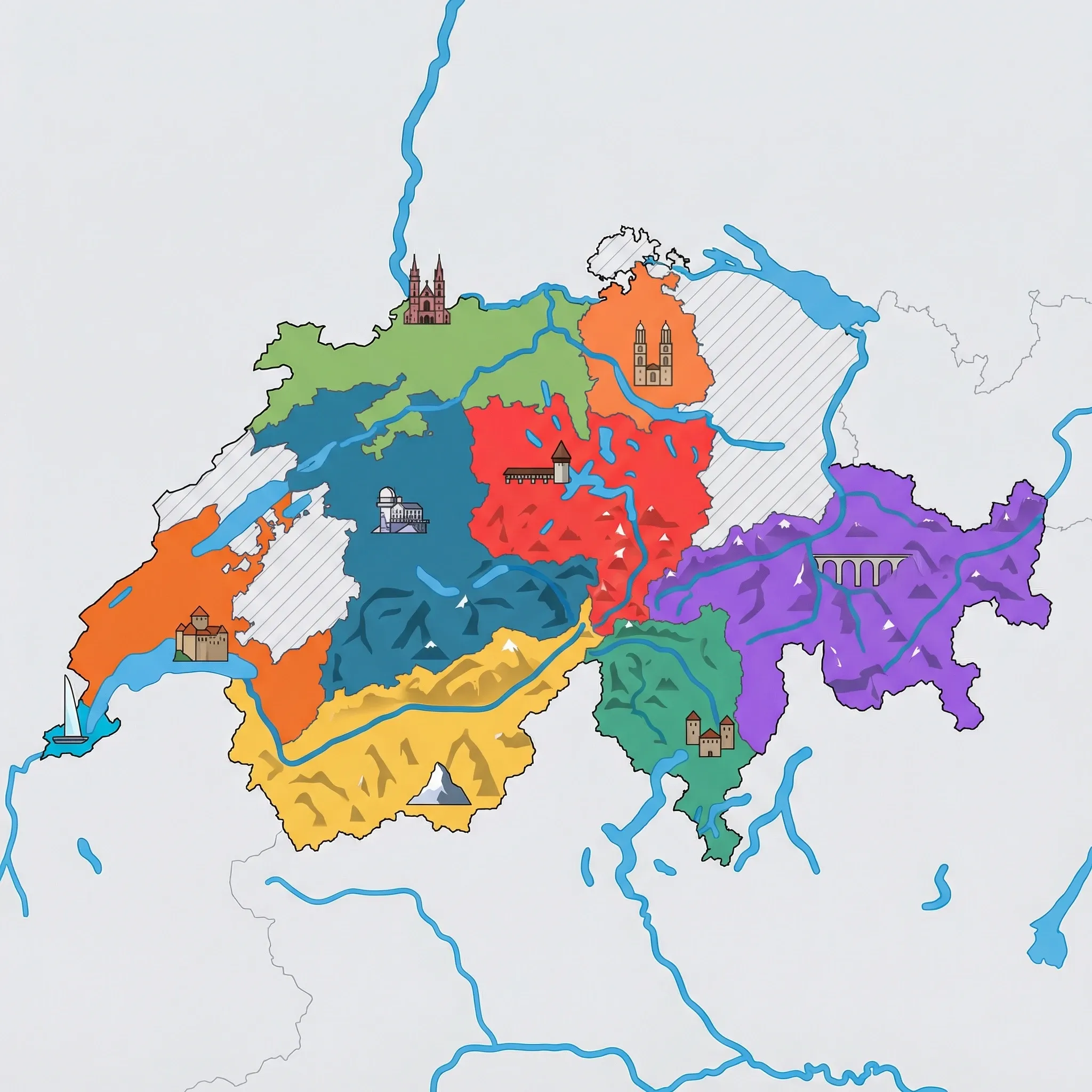
Click a region to explore
Ticino is where Switzerland loosens its tie. Crossing the Gotthard tunnel from the north, you emerge into a different world: the sun shines brighter, the language changes to Italian, and the architecture shifts to terracotta tiles and piazzas. For families, this is the holiday feel of Italy combined with Swiss safety and efficiency. It is the warmest region in the country, boasting subtropical vegetation in the lakeside parks where kids can play under magnolias and camellias. The lifestyle here is outdoorsy but relaxed; days are spent lingering over lunch in a 'Grotto' (rustic stone tavern) while children play in the shade of chestnut trees.
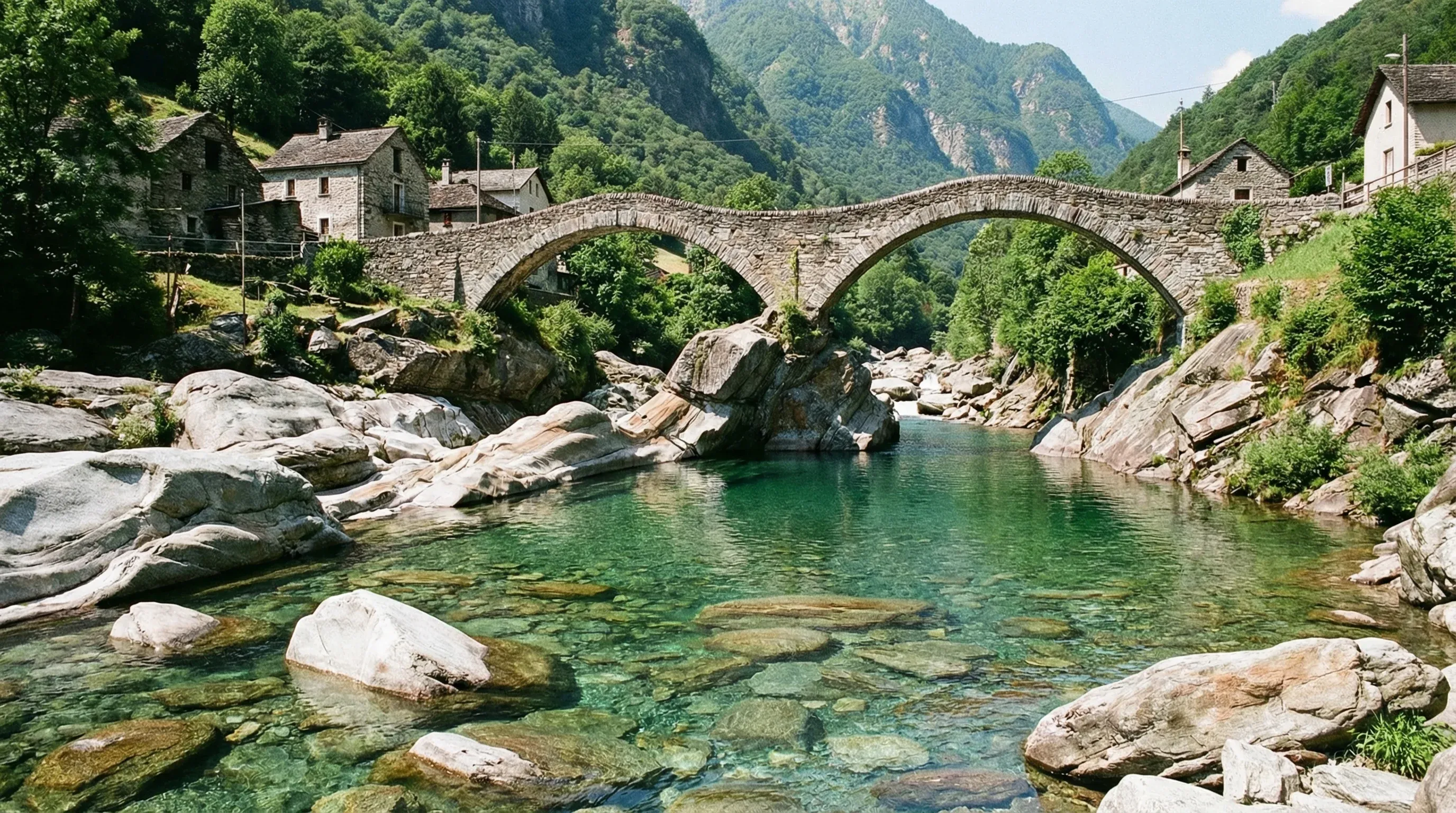
Water is the main attraction. Apart from the two major lakes (Lugano and Maggiore), the region is famous for its magical river valleys like the Verzasca and Maggia. Here, the water is an impossible shade of emerald green, flowing over smooth, sun-warmed granite rocks that form natural waterslides and diving pools—nature's own water park. However, do not underestimate the mountains; steep funiculars whisk you from the palm-lined promenades up to rugged peaks in minutes, offering views that stretch to Milan. Cultural exploration is easy here too, with medieval castles that feel like movie sets and open-air miniature parks that delight toddlers.
Key Attractions
The Three Castles of Bellinzona are a UNESCO World Heritage site and a childhood fantasy come true. You can walk the ramparts, explore secret tunnels, and picnic on the manicured lawns connecting the fortresses. For thrill-seekers, the Ponte Tibetano Carasc is a 270-metre suspension bridge hanging high above a valley—safe, but heart-pounding. Accessing it involves a cable car ride and a hike, making for a full adventure day.
In Lugano, taking the funicular up Monte San Salvatore offers the classic 'Sugarloaf' view of the lake. For a more active day, Monte Tamaro is designed for families, featuring an adventure park, a coaster bob run, and a large splash park at the base (Splash e Spa). If you want a calmer vibe, a boat trip to the Isole di Brissago (Botanical Islands) on Lake Maggiore lets kids explore exotic plants from six continents on a treasure hunt map.
Practical Advice
Best Time to Visit: Spring (April/May) for flowers; Summer for swimming (it gets hot!); Autumn for the chestnut festivals.
Family Logistics: The 'Ticino Ticket' is given free to overnight guests (hotels, campsites, hostels). It offers free trains and buses across the entire canton and discounts on cable cars—one of the best deals in Switzerland.
Food & Drink
Typical meal times: Lunch 12:00 pm to 2:00 pm. Dinner 7:00 pm to 10:00 pm. Pizzerias are often open all day.
Typical meal costs: Slightly cheaper than Zurich/Geneva. Pizza CHF 18–24 (approx. $20–27 USD / €17–23 EUR). Risotto CHF 22–28 (approx. $25–31 USD / €21–26 EUR).
Dietary requirements: Italian cuisine is vegetarian-friendly (pasta, pizza, risotto). Gluten-free pizza crusts are increasingly common.
Signature dishes:
- Polenta – Cornmeal porridge, often served with braised beef or gorgonzola. It's the staple of the region.
- Risotto – Usually saffron-infused or with mushrooms (funghi porcini).
- Gazzosa – A fizzy, sweet lemonade that comes in a glass bottle with a flip-top; traditional flavours include lemon, mandarin, and raspberry.
Why this score?
The region features dramatic valleys like Verzasca and Maggia which offer swimming and hiking in rugged, granite-walled landscapes. However, most tourist areas are well-developed with excellent roads and funiculars, making the adventure level moderate and family-friendly. It provides a Mediterranean-style outdoor experience in a high-infrastructure Swiss setting.
Why this score?
Major centers like Lugano, Locarno, and Bellinzona have modern, high-quality hospitals that provide excellent care. The healthcare system is seamlessly integrated with the rest of Switzerland, offering high standards and good English-speaking capabilities in major clinics. Emergency services are efficient and well-prepared for both urban and mountain incidents.
Why this score?
Ticino is a beloved destination for its unique Italian-Swiss culture and sunny microclimate, particularly for German and Swiss domestic tourists. While it has iconic spots like the Bellinzona castles, it is often seen as a secondary destination for long-haul international travelers. It remains a popular summer retreat but feels more regional than the high-Alpine hotspots.

Ticino offers 'Swiss quality at Italian prices' (almost). While still pricey compared to Italy just across the border, it is better value than the German-speaking Swiss cities. Campsites on Lake Maggiore are very popular and offer a budget way to stay. Family dinner: CHF 100 (approx. $110 USD / €95 EUR).
Family Travel Notice
Minors travelling alone or with only one legal guardian should carry a notarized letter of consent from the non-travelling parent to facilitate smooth border crossings.

Getting Here & Around
Getting Here
- Train – The Gotthard Base Tunnel (world's longest) makes Ticino accessible from Zurich in just under 2 hours. The scenic 'Gotthard Panorama Express' uses the old mountain route.
- Driving – The Gotthard road tunnel is a notorious bottleneck with long jams on weekends. Consider the San Bernardino route as an alternative.
- Airports – Milan Malpensa (MXP) in Italy is often the most convenient international airport, just 1 hour by shuttle bus from Lugano.
Getting Around
- Train & Bus – Free with the Ticino Ticket. The TILO regional trains connect majestic valleys to the cities.
- Funiculars – Essential for getting up the steep slopes around the lakes.
- PostBus – The yellow horns sound on the winding roads up the Valle Verzasca—a hair-raising but scenic ride.
No airports in this region. See the country flight map for nearby connections.
Official Links

Packing List
The warmer, humid climate means mosquitoes are far more common here than in the high Alps.
River rocks in the Verzasca/Maggia valleys are slippery and the water is freezing.
While Swiss plugs are standard, the proximity to Italy means some devices might need Type C/L awareness.
Switzerland uses a unique hexagonal 3-pin socket. Standard European (Type F) plugs will not fit.
Ticks are common in Swiss forests and tall grass below 1500m; quick removal is important.
Families heavily use the immaculate public 'Feuerstelle' (BBQ pits) found on hiking trails.
There are thousands of public fountains with pristine mountain spring water; buying water is unnecessary.
Floating down the Aare (Bern) or Limmat (Zurich) rivers is a popular summer family activity.

Activities & Best Times

Hiking, wildlife, outdoor exploration, ecotourism
Ticino offers a dramatic mix of wild alpine valleys like Verzasca and sub-tropical peaks such as Monte Generoso, providing world-class hiking and nature immersion. Peak season spans late spring to early autumn when mountain trails are fully accessible and the iconic waterfalls are most impressive.

Urban tourism, museums, historical sites, architecture
The region features a unique Swiss-Italian cultural fusion, anchored by the UNESCO-listed medieval castles of Bellinzona and the refined waterfronts of Lugano and Ascona. Peak visitation occurs when the Mediterranean-style piazza culture and lake transport systems are fully operational.

Sport tourism, fitness activities, active recreation
Home to the world-famous 007 bungee jump at Verzasca Dam and high-quality adventure infrastructure at Monte Tamaro, Ticino is a solid choice for active families. These specialized facilities operate primarily during the warmer months, mirroring the broader Alpine adventure season.
Amusement parks, family entertainment venues
While featuring high-quality regional facilities like the Monte Tamaro alpine coaster and Splash & Spa, these lack the international scale of major global theme parks. Accessibility is highly seasonal, with outdoor attractions closing during the winter months.

Attractions (18 total)



Public Holidays & Calendar Next 12 months
Public holidays, festivals, cultural celebrations, and seasonal natural phenomena coming up in Ticino over the next 12 months.
Loading holidays and events...

Travel Advisory
All major international agencies agree that Switzerland requires only standard safety awareness. There are no significant security threats or travel restrictions currently in place for the country.
Safety Topics
Traveller Advice (4 groups)

Maintain standard personal security awareness in urban centers and crowded areas. Carry identification and ensure all travel documents meet Schengen area validity requirements.
Alpine activities carry significant risk. Travellers should check local weather and avalanche forecasts daily, stay on marked trails, and ensure insurance covers mountain rescue and medical evacuation.
Switzerland is generally very welcoming and safe for sexual and gender minorities, with strong legal protections and social acceptance.
Minors travelling alone or with only one legal guardian should carry a notarized letter of consent from the non-travelling parent to facilitate smooth border crossings.
Agency Summaries
Maintains a baseline risk level. Visitors are advised to be aware of the general threat of terrorism across Europe and to keep a close watch on personal belongings at major transport interchanges and popular tourist sites.
Switzerland is considered a low-risk destination. Primary recommendations include staying vigilant in busy transit hubs and being adequately prepared for the physical demands and inherent risks of mountain activities and high-altitude environments.
Travellers should maintain standard safety awareness as they would in their home country. While Switzerland is safe, urban protests in major cities like Zurich and Bern can occasionally disrupt transit, and petty theft remains a factor in crowded tourist locales.
A safe destination for visitors. Advice emphasizes winter driving safety, including the necessity of winter tires, and ensures that families travelling with minors have proper documentation to avoid border delays.
No major safety warnings are in place. Guidance focuses on common sense precautions against pickpocketing, particularly on public transport between major cities, and adhering to regional regulations such as face-covering prohibitions in specific cantons.
Overall security is high, though petty crime is slightly increasing in metropolitan areas. Travellers are reminded that medical costs are exceptionally high and lack reciprocal agreements with Australia, making comprehensive insurance essential.
Information is provided for general guidance only and does not constitute travel, safety, medical, or legal advice. Conditions may change. Users are responsible for independently verifying information before travel.